Celeste
Extremely OK Games · Indie, Action, Platformer
Overview
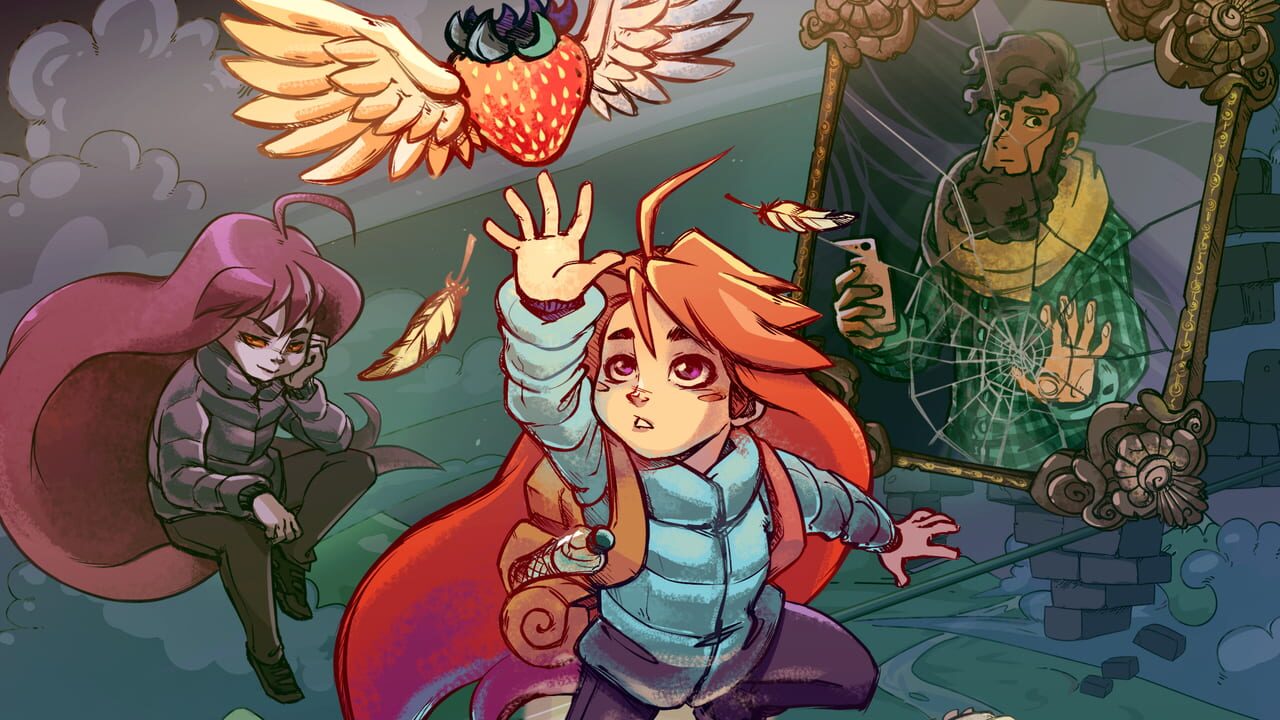
Help Madeline survive her inner demons on her journey to the top of Celeste Mountain, in this super-tight platformer from the creators of TowerFall. Brave hundreds of hand-crafted challenges, uncover devious secrets, and piece together the mystery of the mountain.
THE GAMEQ VERDICT10,000 reviews analyzed
What players are actually saying
1. Summary
Players hold Celeste up as a model of 2D platforming, and 4% of all the reviews call it the best or greatest platformer outright. The praise centres on difficulty that feels hard but fair: deaths are instant, rooms are short, and some reviewers say every failure felt like their own mistake. The soundtrack, the pixel art and a short story about anxiety and self-acceptance also draw a lot of praise, and some reviewers say the climb mirrors the story so closely that the frustration becomes part of the point. Long-term players name the B-sides, C-sides, golden strawberries and a large modding scene as reasons they kept playing for hundreds of hours.
Negative reviews most often come down to the difficulty itself: some players hit a wall early, or find it tedious to repeat one room until it is perfect. The final chapter, Farewell, divides even devoted fans. Some call it the best level in the game, and others say it demands speedrunner tricks. Smaller groups complain about keyboard defaults that ignore the mouse, analog-stick dashes going the wrong way, startup crashes on the latest version, and collectibles hidden so well that a guide feels mandatory. Reviewers who warn about the difficulty often point to Assist Mode for players who don't want to die a lot.
2. What keeps coming up
What players praise
Hard, but fair and quick to retryHigh
Difficulty comes up in 45% of the longer reviews, and mostly with respect. Reviewers credit the near-instant respawn, short rooms and frequent checkpoints for keeping frustration in check. One wrote: "You know this is a good platformer because every time you die, you know it's your fault." Another called it proof "that »hard« and »frustrating« are two very different things". Several add that people with little platformer experience can beat the main story, and that the real punishment is saved for optional content. For a minority, the same precision demands are why they quit (see the frustrations below).
A soundtrack people keep listening toHigh
The music appears in 25% of the longer reviews, usually as a highlight. Reviewers name composer Lena Raine, the B-side remixes have their own fans, and several players say the soundtrack kept them calm through hundreds of deaths. One reviewer wrote: "The OST and the instant respawn makes it impossible to rage." A few negative reviews call the music overrated, or repetitive when you're stuck on one screen for a long time.
A story about anxiety that matches the climbHigh
The story is mentioned in 39% of the longer reviews, mostly with warmth. Players describe it as simple but affecting: Madeline's anxiety, her conflict with the part of herself called Badeline, and the friends she meets on the way up. In 10% of the longer reviews players talk about its themes of anxiety or depression, say they related to it, or say it made them cry, and some credit it with helping them through hard times. Some reviewers tie the story directly to the difficulty: "This game has the audacity to make me hate myself after failing the same jump over and over, but then hit me with a heartfelt message about self improvement." Some players, trans players especially, also read Madeline's journey as being about gender identity. One wrote that "The trans message is kinda between the lines however, so anyone else can also end up feeling seen from a mental health journey standpoint". A smaller group finds the story weak or too on the nose. One player who didn't recommend the game wrote that "I found it thin and not especially relatable", and a few disliked the dialogue interrupting play.
Pixel art and presentationHigh
Art, graphics or visuals come up in 20% of the longer reviews, mostly as praise. Players single out the distinct look and mood of each chapter and the expressive character animation. A handful of dissenters find the pixel art dated or dislike the switch to high-resolution portraits during dialogue.
Post-game content that lasts for yearsMedium
The B-sides, C-sides, golden strawberries and the moon berry come up in 13% of the longer reviews. For these players the credits were only the start; one reviewer noted that after the main game "you're about 20% in and we're just getting started". They describe climbing a skill ceiling they did not know they had, learning advanced movement tech and replaying old rooms with ease. This content also draws some of the angriest reactions, covered under Farewell and the chapter grudges below.
A huge modding communityMedium
Mods are mentioned in 10% of the longer reviews. Players single out the Everest mod loader and the Strawberry Jam collab, and a few bought the game a second time on PC to mod it after playing it elsewhere. One wrote: "Once you're done with everything and try out the mods, you realise the base game is just the tutorial."
Movement that feels tight and responsiveMedium
About 8% of the longer reviews specifically praise how the movement or controls feel: tight, snappy, precise. One player wrote: "Playing other platformers is annoying now, nobody else jumps, dashes, moves, climbs like Madeline." Keyboard players are more divided (see below).
Value for the priceMedium
Price or sales come up in 9% of the longer reviews, mostly from players who bought it cheaply and felt they got far more than they paid for. One wrote simply: "Best 20 bucks I've ever spent." A small number say it is only worth buying on sale, or felt the main story was short for the price.
Assist Mode lets anyone see the endingMedium
Assist Mode is mentioned in 5% of the longer reviews, mostly as a reason to recommend the game to players who fear the difficulty. Players use it to slow the game down, add dashes or skip a single wall, and some with slower reflexes thank the developers for it. A minority feel using it is cheating or that it makes their achievements meaningless; one negative review simply says "remove the assist mode and the game will be better".
Runs on almost anythingLow
About 2% of the longer reviews praise how well it runs on weak laptops, old PCs and the Steam Deck. One wrote: "Optimization is great for my potato-laptop."
Where players are split
Farewell, the final chapterMedium
Farewell (Chapter 9) comes up in 8% of the longer reviews, and reactions to it are sharply opposed. Its fans call it the emotional and mechanical peak: "Farewell is the single greatest level I've ever played. I also never want to do that again." Its critics, often players who finished everything else, say it abandons the fairness of the rest of the game, requires techniques that began as speedrun exploits, and locks its story behind an extreme difficulty wall. One player who beat it anyway and then gave the game a negative review wrote: "The final chapter was basically designed to challenge speed runners instead of the average player." Several wish the game had taught those techniques earlier, and some otherwise glowing reviews advise stopping after the main story if you don't enjoy that kind of challenge.
Strawberries, crystal hearts and hidden secretsMedium
Collectibles appear in 10% of the longer reviews. Players who like the strawberries treat them as optional challenges that reward exploration. Others say chasing them wrecks the pacing, and several complain that some secrets, and the crystal hearts needed to unlock the later chapters, are too well hidden. As one player put it, "theres alot of secrets that are way too hard to find without using a guide or getting lucky and you need to do them in order to access the epilogue chapters". A few also dislike rooms where taking the main path locks you out of going back for a missed collectible.
What frustrates players
Difficulty walls and a repetitive loop for some playersMedium
Difficulty is the main reason behind the negative reviews: 37% of the game-focused negative reviews raise difficulty or frustration. Some players quit early on, others after a specific chapter, and several say the game's cute look set the wrong expectation. One wrote that "you need a lot of skill or a lot of patience (or both) to really extract what this game has to offer", and added that "there is usually no payoff for completing each room. Just another room." Another said it "felt like doing the same trick over and over for very little payoff". Positive reviews carry warnings too, such as "Don't buy this expecting a chill game".
Keyboard defaults and no mouse supportLow
Keyboard and mouse setup is mentioned in about 3% of the longer reviews, and the complaints cluster among negative reviews from players with under two hours on record. They describe confusing default keys, no way to bind actions to mouse buttons, no mouse in the menus, and a title screen that some didn't realise needs the C key. One noted: "Enter for example, isnt the confirm option, but C is." Several positive reviews simply advise using a controller, while some keyboard players say it works fine once rebound.
Grudges against specific chapters and mechanicsLow
About 2.5% of the longer reviews single out a chapter or mechanic they hated, usually in an otherwise positive review. The usual targets are Chapter 3 and Mr. Oshiro's hotel, the wind in Chapter 4, the seekers in Chapter 5, the Core, the feather and the Pico-8 minigame. One player wrote that "chapter 4 treats wind pushing as a feature which is more annoying than fun".
Crashes and startup problemsLow
A small group report the game crashing on launch or getting stuck at the title screen on what reviewers identify as version 1.4, or losing progress after a crash. Several reviews pass along the same workaround: switching to the "opengl" version under the game's Betas tab in Steam. Linux and Mac players add a few reports of broken native versions.
Analog stick dashes and controller supportLow
A handful of reviewers say the analog stick sends dashes in the wrong direction, which matters in a game that depends on precise dashes. One wrote that "there definitly is a significant wobbliness to the analogue input". Others report that PlayStation controllers are not supported natively in the latest version without switching to an older build or Steam Input.
Missing PC optionsLow
A few players ask for a borderless window mode, an option to uncap the frame rate, and colorblind settings for hazards that blend into the background.
3. The player conversation
The conversation is affectionate and often playful. The one-line reviews are mostly in-jokes and shorthand: "peak", strawberry jokes, complaints about Mr. Oshiro, death counts worn as badges, and a long-running joke about the game and gender identity, some of it written by trans players themselves. Some of the longer reviews read like testimonials, with players describing how the game changed how they handle failure or anxiety, and several mention buying it again on Steam after finishing it on Switch, PlayStation or Xbox.
The disagreement is mostly about who the game is for. Complaints about keyboard controls, menus and launching the game come mainly from players who dropped it within the first couple of hours. The debate over Farewell, B-sides and golden strawberries happens among dedicated players, who have usually put dozens of hours into the game before writing about Farewell. Some players who did not enjoy the game add that they can see why others love it. Across the weeks these reviews cover, the share of positive reviews held steady at roughly 95% to 99% per week, with no shift in what players praise or criticise.
4. What the developers could do
- Make keyboard play friendlier out of the box. Negative reviews from players who quit early cite confusing default keys, no mouse-button binding, no mouse in menus and a title screen that needs the C key.
- Fix the version 1.4 startup crash and controller regressions. Players keep passing around the OpenGL beta workaround for crashes, and some say PlayStation controllers only work on an older build.
- Add analog stick dash settings. Controller players describe dashes going in the wrong direction, so an adjustable dead zone or angle window would address a complaint that undercuts the game's precision.
- Signpost crystal hearts and the hardest-to-find secrets. Players say they needed a guide to unlock the later chapters and that some strawberries hide behind invisible walls with no hint.
- Teach Farewell's advanced techniques earlier or offer practice for them. Critics of the final chapter say it suddenly requires speedrun movement the rest of the game never trained.
- Make the dialogue skip option easier to find. Some players thought the cutscenes were unskippable and found the interruptions slowed replays and the early game.
- Add borderless window, frame rate and colorblind options. These are small requests, but they come from players for whom their absence was a dealbreaker or made hazards hard to see.