Europa Universalis IV
Paradox Development Studio · Strategy, Simulation
Overview
Rule your land and dominate the world with unparalleled freedom, depth and historical accuracy. Write a new history of the world and build an empire for the ages.
Read moreShow less
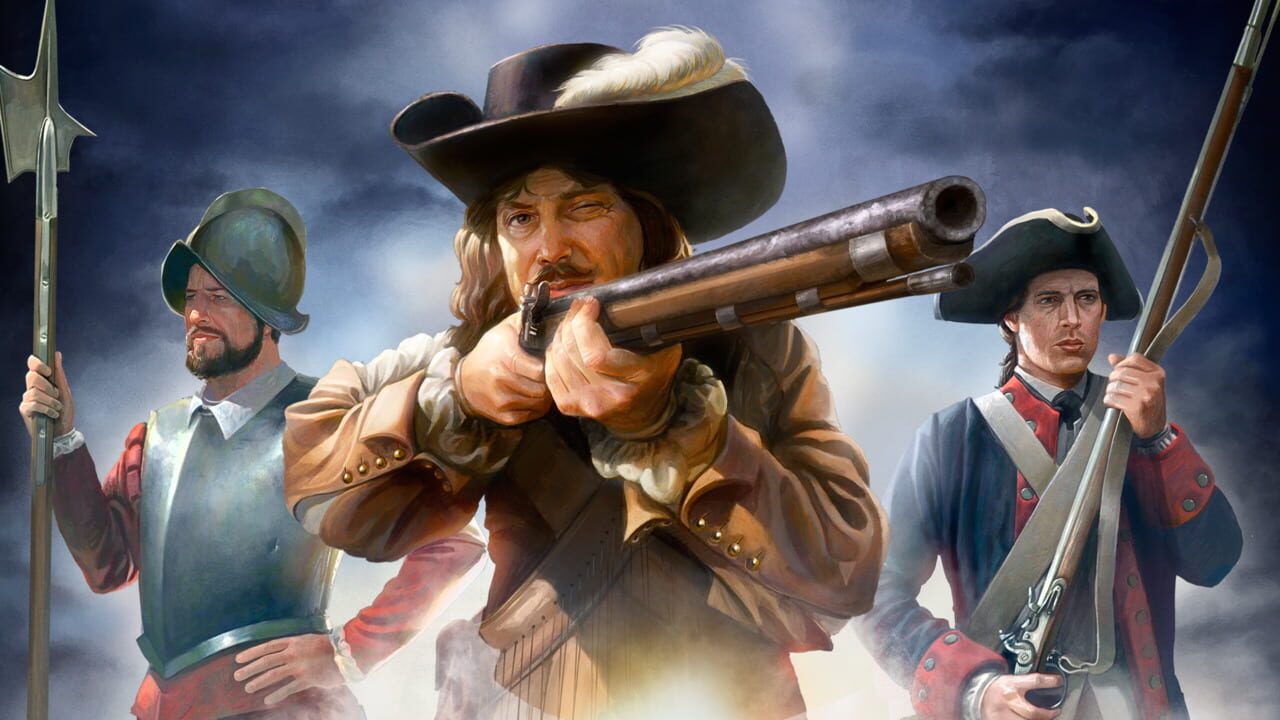
Developed by Paradox Tinto, the fourth instalment of the award-winning Europa Universalis series gives you a chance to control any nation in the world and lead it through four dramatic centuries - starting from the late middle ages and culminating in the Napoleonic era. Rule your land and dominate the world with unparalleled freedom, depth and historical accuracy. Write a new history of the world and build an empire for the ages.
Europa Universalis IV includes the base game, three expansion packs and one cosmetic compilation pack.
Europa Universalis IV: Control any nation in the world across four centuries of history, writing a new history of humankind from the Age of Discovery to the Age of Revolutions. Accumulate wealth, land and prestige in a fierce competition for global dominance.
Art of War: Centered on the 30 Years War and bubbling political instability between church and state, this expansion features improved gameplay mechanics that puts warfare at the forefront of your quest for domination on the continent.
Common Sense: This expansion focuses on diplomacy and the internal development of nations. It allows you to peacefully develop your nation and build a 'tall' empire, whilst also giving you the tools to execute grand diplomacy. Game changing religious features add depth and intriguing complexity to the gameplay.
Rights of Man: This expansion adds greater depth and detail to a host of game systems. New Great Power diplomatic options give them more flexibility, monarch personality traits add more flavour to the power of the throne and there are new religious options for Coptic and Fetishist religions.
Digital Extreme Edition Upgrade Pack: This compilation pack includes mostly cosmetic content, including new unit art, event art and game music drawn from content packs inspired by Islamic, Ottoman, Central European and American History. It also includes unique events from the American Dream pack.
Start before the Renaissance on a map of the world as it was then. Choose from any of hundreds of nations and then rule up to the Age of Revolutions. Or, if you wish, start your game at any date in the span, with historical monarchs and other leaders.
Hundreds of dynamic historical events are yours to experience, from merely troubling civil wars to world changing moments like the Protestant Reformation. Discover and settle the New World, or resist European conquest.
Control the flow of trade by developing your trade power in key provinces, using ships and governmental policy to bring the wealth of the world to your own ports.
Build alliances into iron bonds, cemented by royal marriage or play a flexible hand, keeping your options open. Strike when your enemies are weak, using your armies to grab new land and new potential riches.
Your nation’s pace of development will be heavily influenced by the person on the throne. Experience rapid development under a skilled monarch only to see things slow down when a less competent heir takes over. Plan for the future by spending monarch power wisely.
Four hundred years of research into new ways of war, administration and trade are available. Unlock new weapons, new buildings and new ship types. Over time, you can embrace national ideas that represent both your historic legacy and your ambitions for the future.
From grand voyages of discovery to religious wars to revolutionary governments, the entire history of the early modern world waits for you to rewrite it in Europa Universalis IV.
From the game's Steam store page.
THE GAMEQ VERDICT9,914 reviews analyzed
What players are actually saying
1. Summary
Europa Universalis IV is a sandbox running from 1444 to 1821 where any nation on the map is playable and campaigns unfold differently each time. Veterans with thousands of hours say they are still learning how its systems interact. 85.4% of reviews recommend it. The praise centres on depth and replayability (12% of reviews with written detail), on the history itself (11%), and on mods, led by total conversions such as Anbennar (6%). A running joke is never getting past the "tutorial", even after hundreds of hours.
DLC is what frustrates players most. A quarter of detailed reviews (25%) bring it up, and it appears in 43% of detailed negative reviews. Those players describe a base game that feels thin without expansions, a full catalogue that costs hundreds, and a subscription they say has gone up in price. Recommending reviews raise DLC too, usually with advice to buy on sale, in a bundle, or through the subscription. The learning curve comes up in 13% of both positive and negative detailed reviews: fans call the climb worth it, while others quit over a weak tutorial and a dense interface. Smaller groups report Mac crashes, a slow late game and an AI that seems to play by different rules.
2. What keeps coming up
What players praise
A deep sandbox where any nation and any outcome is possibleHigh
12% of detailed reviews (603) praise the game's depth and replayability. Reviewers list the campaigns they ran: Korea colonising the Pacific, a restored Byzantium, an Iceland or Luxembourg turned world power, a one-province minor fighting to survive. Random events, rival coalitions and shifting alliances keep two runs as the same nation from playing out alike, or as one reviewer put it, "Each playthrough (i.e. each country you pick) is unique and presents different challenges to overcome." Veterans say the depth is what keeps them playing. Six separate reviews use the phrase "still learn new things", one of them "after a 1000+ hours you can still learn new things". Some go further: 6.7% of all game-focused reviews (667) call it the best strategy game, a masterpiece, or a favourite game of all time. The few negative reviews in this theme accept the depth but say it costs too much time or fun to reach.
A history lesson players enjoyMedium
11% of detailed reviews (564) talk about history, and most of them do so warmly. Players say the game taught them geography and the early modern period, sent them to history books, or turned them into "history nerds". One wrote that "It has sparked my love for the early modern era of history". Alternate history is part of the appeal: reviewers enjoy rewriting events and watching the world drift away from the real timeline. A smaller group of negative reviews says the drift goes too far, for example that "it has Great Britain all united (Ireland included) by 1480 which is ridiculous", or that colonial and native nations behave unhistorically.
Mods that extend its lifeMedium
6% of detailed reviews (310) mention mods, almost always positively. Anbennar, a fantasy total conversion, is named in 102 reviews, and others cite Extended Timeline, MEIOU and Ante Bellum. Some players say the Steam Workshop makes installing mods easy, and that mods are what they turn to once the base experience wears thin: "Solid mod support and library helps to keep things interesting once base game gets stale." The few complaints are that updates break mod compatibility and that some mods need DLC to run.
Multiplayer with friendsLow
2.5% of detailed reviews (127) talk about playing with friends, nearly all of them fondly: long sessions of alliances, betrayals and "negotiating". One practical tip comes up more than once: the host's DLC applies to the whole session, so one reviewer suggests a group chip in "as the host shares the DLCs with every other player." A handful of reviews report desyncs, or note that Ironman achievements aren't available in multiplayer.
The soundtrackLow
1% of detailed reviews (50) mention the music, mostly to praise its orchestral, regional flavour. A player trying the game for the first time warned that "The music is grand, but turn it off, as it gets annoyingly repetitive".
Where players are split
The learning curve and the tutorialHigh
13% of detailed reviews (689) discuss how hard the game is to learn, and positive and negative reviews raise it at the same rate. Recommending players usually concede the curve is steep and say it pays off, suggesting an easy start such as the Ottomans plus YouTube guides and the wiki. The difficulty has also become a joke: 110 game-focused reviews say they are "still in the tutorial", or only just finished it, after hundreds or thousands of hours. Negative reviews describe the same climb as a wall. They call the tutorial shallow or broken and say the in-game help doesn't explain what is going on: "Requires more time watching videos from others (in game help is useless) to learn how to play the game than you spend actually playing the game." Returning players hit it too. One who came back after a break of a couple of years "Spent an hour and change clicking around different menus before quitting in confusion."
Europa Universalis IV next to EU5Medium
7.7% of detailed reviews (396) mention the sequel, and the share grew over time: EU5 comes up in 2.6% of reviews written in the first half of 2024 and in 8.1% of those written in the first half of 2026. Before EU5 launched, reviews were split between farewell tributes to "the greatest strategy game of all time" and advice to newcomers to wait for the sequel rather than buy into EU4's DLC. Players who compare the two directly mostly side with EU4: 65 reviews say it is better than EU5 or that they went back to it, against 8 that prefer EU5. One short review reads "Better than EU V at its current state." Others recommend EU4 while granting the sequel its strengths; one calls EU4 a legendary game that "shows its age and it lacks the dynamism of EU5." A few reviews note that EU4 no longer gets updates, and one concludes it is now worth buying only on a steep sale with all the DLC.
Map painting, monarch points and dice rollsMedium
6.6% of detailed reviews (343) discuss how abstract the game is: painting the map, spending monarch points, watching numbers rise, and living with random rulers and events. Fans embrace it, and some recommending reviews say no more than that it is the best map painter around. Critics find the same systems hollow. One said rulers "are literally just static stat-sticks (mana generators)", and another that you can "get a trash ruler who will hinder your nations development until his death". The theme turns up somewhat more often in negative reviews (8.5%) than in positive ones (6.2%), and players who call it a "spreadsheet" game use the word both as a joke and as a complaint.
Mission trees and nation balanceLow
3.3% of detailed reviews (173) talk about mission trees and balance. Supporters like that so many nations have their own missions and flavour. Critics point to power creep and to certain nations being lopsided, such as "Portugal is so annoyingly overpowered at colonising". Others say the branching missions are hard to read; one player on a Teutonic Order run said "the mission trees did nothing but confuse me".
What frustrates players
DLC cost and a thin base gameHigh
25% of detailed reviews (1,302) bring up DLC, including 43% of detailed negative reviews (432 of 995), far more than raise any other complaint. These reviewers describe a base game they consider incomplete: religions, diplomatic options and quality-of-life features such as automatic naval exploration sit in paid expansions, and buying everything costs hundreds even on sale. One player wrote that "you will need all dlc's for the game to be even remotely enjoyable". Older reviews press the point harder: DLC comes up in 22.5% of all reviews dated before 2024, against 9% to 12% in each half-year from 2024 through mid-2026. The subscription (4.2% of detailed reviews, 215) divides people. Some recommend it as the cheapest way in: "The DLC subscription is cheap enough that, for a month or two, you could play and see if you want to purchase them without risking too much." Others object to renting an old game, and one long post reports that "They uppen the price from 4.99€ a month to 7.99€ a month". When recommending reviews mention DLC, it is often as a warning: 34% of those 870 (295) advise waiting for a sale, buying a bundle or subscribing. One sums the advice up as "Do not even consider getting the DLCs at full-price."
Crashes, Mac problems and a slow engineMedium
5% of detailed reviews (258) report technical problems, and they make up 14.5% of detailed negative reviews. Mac players stand out: 51 detailed reviews mention the Mac, 37 of them negative. A handful date the trouble to patch 1.36, one describing "constant crashes from 1.36 onwards" that no fix has addressed, so that buyers of the newest DLC can't play it. Another wrote that it is "so buggy on Mac that it's unplayable". On PC the complaints are crashes to desktop, long load times and late-game slowdown ("The Engine is so unbearably slow, especially when loading/restarting/birding."). A smaller set of reviews blames the Paradox launcher for updates that broke installs and for DLC showing as corrupted, and one objects to a new user agreement it had to accept before playing.
Warfare and an AI that plays by different rulesMedium
4.7% of detailed reviews (245) take issue with warfare or the AI, and they make up 10.9% of detailed negative reviews. The specific complaints are allies who won't help in a war, sieges that drag on for years, and enemy armies that seem to ignore the rules the player has to follow: under the fort rules, "the AI just ignores them entirely and walks right through your border defenses". Others find battles too hands-off: "You don't control the outcome of actual battles at all, only the setup to a dice roll." One positive review counts the AI's weakness in its favour, listing a "dumb exploitable AI" among the ingredients of a great sandbox.
A cluttered interface that scales poorlyLow
3.1% of detailed reviews (161) criticise the interface, and they make up 7.6% of detailed negative reviews. Players describe layers of menus, inconsistent tooltips and too little feedback on what is happening: "it's really impossible to tell what is actually happening". A distinct group, some of whom refunded within an hour, could not make the text readable: on high-resolution or laptop screens the UI scaling blurs everything, and one wrote that "The interface/text is so blurry on high resolution screen" that the game was close to unplayable.
A late game that turns into a choreLow
2.1% of detailed reviews (107) say campaigns lose their tension after the first century or two. Once a nation snowballs there is little left to fear: "There is no challenge after 1600s and game becomes repetitive." Even a fan with a soft spot for the game noted that your "game will be almost over by 1600 not the end date of 1820". Reviewers also complain about managing dozens of armies and fleets by hand in the final ages.
3. The player conversation
Almost half the reviews are one-liners ("Peak of all map games", "An all timer"), and the longer ones are often tributes from players with years of history with the game. The tone is warm, and players joke at their own expense about lost weekends, ruined sleep and being "still in the tutorial" after a thousand hours. Some negative reviews open by saying they love the game before turning to the price.
What people raise depends on how far they got. Players with only a few hours tend to write about the learning wall, the tutorial, cluttered menus and unreadable UI scaling. Players with hundreds or thousands of hours write about the DLC bill, the late game, power creep, Mac crashes that broke a game they already owned, and how EU4 compares with EU5. DLC is the one complaint both groups share.
Over time the tone held steady and then dipped. Reviews dated before 2024 recommend the game 80% of the time and dwell on DLC more than later ones. From 2024 through mid-2026, each half-year landed between 86% and 89% positive, while talk of EU5 rose from farewell posts before its launch to direct comparisons after it. From late September 2026 the game-focused reviews turned sharply negative: 42% of those 156 recommend the game. Many of the negatives in that stretch are blunt dismissals with no game detail. The rest repeat the familiar complaints about the tutorial, the cluttered interface, the AI's zone-of-control rules and bugs, and a quarter of all reviews in the stretch (40 of 156) mention DLC, mostly to complain about its price.
4. What the developers could do
- Fold the oldest expansions into the base game or cut the price of the full catalogue. DLC comes up in far more negative reviews than any other complaint, and reviewers single out years-old features (religions, diplomacy options, quality-of-life tools) as things that should no longer cost extra.
- Keep the subscription cheap and predictable. Recommending players name it as the best way in, while critics point to its price rise from 4.99€ to 7.99€ a month and dislike renting a game that is no longer updated.
- Rebuild the tutorial and in-game help. 13% of detailed reviews discuss the learning curve, and negative ones say they had to learn from YouTube and the wiki because the tutorial and tooltips did not explain the game.
- Fix the Mac crashes. Mac players report constant crashes since patch 1.36 that later patches did not fix, and 37 of the 51 detailed reviews that mention the Mac are negative.
- Add proper UI scaling and readable text on high-resolution screens. Players on laptops and high-resolution monitors refunded or gave up because scaling the interface blurred all the text.
- Make the AI follow the same war rules as the player. Negative reviews cite allies who won't join wars, enemy armies that ignore fort zones of control, and battles that feel like pure dice rolls.
- Lighten late-game management and performance. Reviewers describe the final ages as a slow, low-challenge chore of moving dozens of armies by hand, made worse by late-game lag and long load times.
- Keep the launcher out of the way. A smaller set of reviews reports launcher updates that broke installs or flagged DLC as corrupted, and one objects to a user agreement it had to accept before playing.