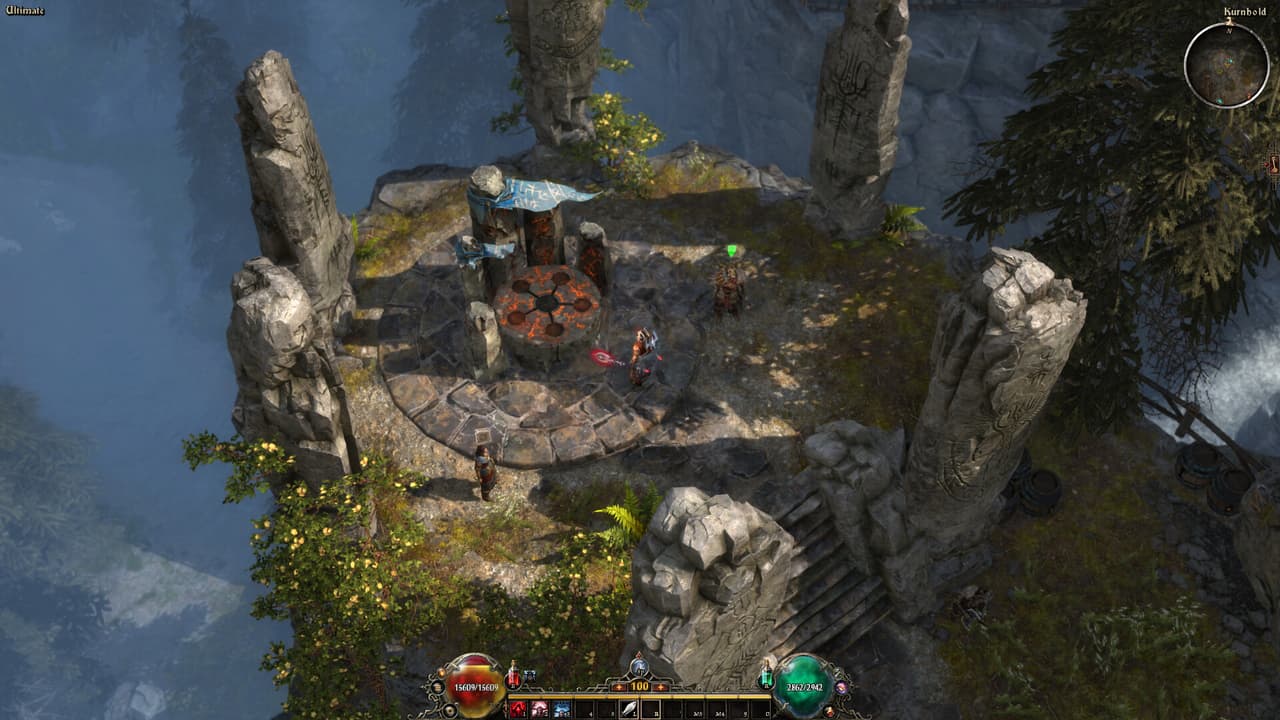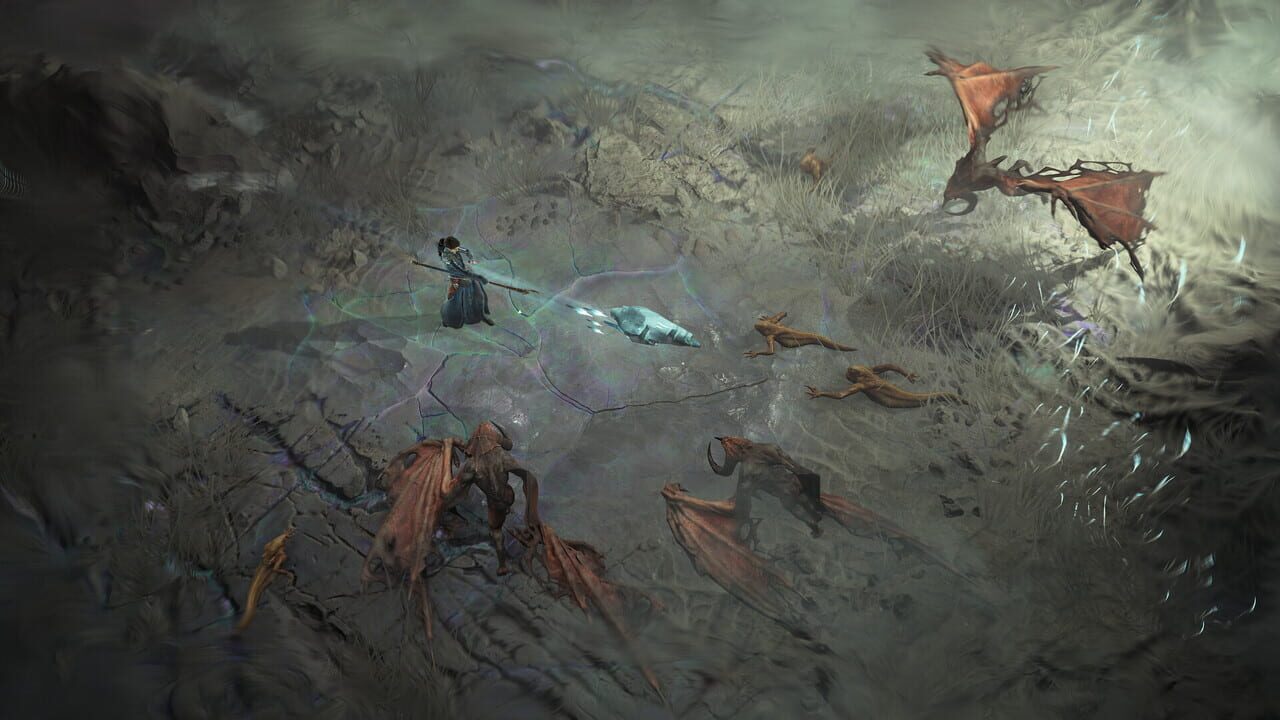
Grim Dawn
Crate Entertainment · ARPG, RPG, Dungeon Crawler
Overview
Enter an apocalyptic fantasy world where humanity is on the brink of extinction, iron is valued above gold and trust is hard earned. This ARPG features complex character development, hundreds of unique items, crafting and quests with choice & consequence.
Read moreShow less
Key Features
- Dual Class - Combine any of six distinct classes with over 25 skills and modifiers per class. Base classes include Soldier, Demolitionist, Occultist, Nightblade, Arcanist and Shaman.
- Hundreds of Item Skills - Augment your class build with a diverse array of over 250 unique skills granted by items and equipment add-ons.
- Collect hundreds of Items - Common, magical, rare, epic and legendary classes of loot. Plus over 20,000 possible magical affix combinations and over 200 rare affixes.
- Quests with Choice and Consequence - You will face tough decisions that leave significant impacts upon the world. Strangers on the road, desperate families and even entire villages may live or perish based on your actions. Currently over 35 quests with 75+ lore notes to be collected.
- Friendly and Enemy Factions - Earn favor with human factions to unlock additional quest lines, vendor discounts and special faction-based items and augments. Some neutral factions can be turned into allies but aiding one will make the enemy of another. Hostile factions will remember your deeds and deepen their hatred of you, sending out large packs and elite heroes to hunt you down.
- Devotion, an additional layer of skill customization allows you to acquire bonuses and powerful secondary effects for your class skills. These are unlocked from a giant constellation map with points acquired by finding and restoring destroyed or corrupted shrines hidden throughout the world.
- Rebuild the World - Help human enclaves survive and flourish by securing vital necessities, rebuilding structures and rescuing survivors who can then lend their services to your cause.
- 4 Person Multiplayer - Connect with Friends or make new allies in glorious multiplayer. Multiplayer encounters will put your teamwork to the ultimate challenge.
- Fast-paced Visceral Combat - Enemy blood spatters, ragdoll physics and satisfying enemy death effects. Smash in doors and fight house to house, leaving a path of demolished furniture in your wake.
- Rotatable Camera - If you choose to survey the full beauty of the world and always fight from the most optimal angle. Levels are still designed so that players are not forced to rotate the camera; it is purely optional.
- Secrets and Perils Abound - 200+ Enemy heroes and bosses, hand-configured with their own unique arrays of deadly skills. 20+ secret areas hidden behind crumbling walls, hidden gaps and mysterious locked doors. Explode obstacles or repair structures to open new paths.
- Rogue-Like Dungeons - Descend into special locked challenge dungeons that require a rare crafted key, where enemy levels increase as you progress and player teleport is disabled. There is no way out except to complete the dungeon or die trying.
- Dynamic Weather - The world is brought to life with region-specific climates and a variety of weather effects. A sunny day can cloud over with mild rain showers that builds into a booming thunderstorm. Variable wind gusts blow grass and affect objects like windmills.
- Recipe Based Crafting - Collect over 250 crafting recipes that allow you to combine salvaged components into unique crafted items and then, later, use those basic crafted items with higher-tiered recipes to complete items of amazing power.
- Reclaim Skill Points - The ability to pay to reclaim points alleviates the fear and frustration of having to make early, uninformed skill choices that could permanently gimp a character.
Crate Entertainment is a small indie studio founded by the lead gameplay designer of Titan Quest and includes veterans from such companies as Blizzard North, Irrational and Harmonix. Join the Grim Dawn community and provide feedback on the ongoing development of the game. Help shape the future of development and be among the first to receive news about Grim Dawn by participating in polls and discussions on our forum.
From the game's Steam store page.
THE GAMEQ VERDICT9,999 reviews analyzed
What players are actually saying
1. Summary
Grim Dawn is a ten-year-old action RPG, and a large share of its reviewers measure it against Diablo 2, Titan Quest and Path of Exile, usually to its credit. Character building gets the most praise. Every character combines two classes, spends points in a star map of devotions and bends its skills with item modifiers, and players say almost any idea they try can carry them through the campaign without a guide. Reviewers also like the bleak Victorian world with its lore notes and hidden areas, the low sale price, and a buy-once game that plays offline with no seasons or shop. Some long-time owners credit Crate with a decade of patches and expansions.
Of the complaints counted in negative reviews, a slow and repetitive loop comes up most. Technical problems follow: crashes and black screens after updates, characters lost to cloud saves, controller support that reviewers say falls short of the store page, and co-op that breaks when friends own different expansions. Fangs of Asterkarn and the 1.3 update drew the loudest argument. Returning players who like it praise the new content, WASD movement and quality-of-life changes, while a vocal group of veterans says bosses now one-shot tanky builds and the game expects a dodge it never used to need. The visuals divide people too, though many who mention their age say it stopped mattering once they were playing.
2. What keeps coming up
What players praise
Compared with Diablo, Path of Exile and Titan Quest, usually in its favourHigh
Diablo comes up in 40% of longer reviews, Path of Exile in 20% and Titan Quest in 10%. The usual framing is that Grim Dawn is the Diablo 2 successor the later Diablo games were not, and reviewers point out that it comes from Titan Quest veterans whose two-class system it inherits. Players place it between the big names in complexity: "Not kindergarten simple as D3 and not PhD complex as PoE." Another calls it a "Diablo fix without selling your soul", and a few dozen reviews set it against the monetization of the newer Diablo games. Negative reviews use the same comparisons the other way: one calls it "like Diablo 3 but slow", and some Path of Exile players find it too simple. For several new players it was their first ARPG, or the first one that hooked them.
Two classes, devotions and gear that bend skillsHigh
Players start with one class, add a second at level 10, and like that most combinations can finish the campaign: "Many skills, many builds, almost all viable." The dual-class system, the devotion constellations or build variety get named in 23% of longer reviews. Several contrast this with chasing meta builds elsewhere ("In PoE, I would only do meta builds - because they are the only ones that function."), and some describe abandoning a character to try a combination inspired by an item that just dropped. Summoner players are split, with some calling it the best pet game in the genre and others saying minions die too easily. A smaller group says most builds come down to one or two skills plus passive procs, and that some classes only work with specific items.
A bleak world worth exploringHigh
The atmosphere, lore, setting or music comes up in 24% of longer reviews, and 12% talk about exploration, secrets and hidden areas. Players describe Cairn as a Lovecraftian, Victorian, weird-west apocalypse and say the scattered notes carry most of the story: "Some of the lore notes you find are mini horror stories that are really well written." Reviewers like finding breakable walls, missable quests and secret dungeons, and some mention the faction choices and the fully rotating camera. The soundtrack is mostly liked, though a few find it repetitive or muddy.
Huge value, especially on saleMedium
Reviewers who bring up price (14% of longer reviews) usually bought the base game for a few dollars in a Steam sale and got dozens of hours from it: "Finished the main story in 22 hours so worth the $7 purchase price." Some say they bought every expansion soon after starting. Complaints about price are aimed at the expansions and are covered under the split themes below.
Buy once, play offline, no seasons or shopMedium
What the game leaves out gets praise in 8% of longer reviews: microtransactions, battle passes, seasonal resets and an online requirement. One sums it up as "No seasons, no cash shop, Buy the game, play the game, enjoy." Players with jobs and families like being able to pause, stop and return months later to the same characters, and some play it when their internet is down or on long flights.
Mods that add classes and whole campaignsMedium
Mods come up in 7% of longer reviews. Players recommend Grimarillion and Dawn of Masteries for extra classes, Reign of Terror for a Diablo 2 remake inside the game, texture packs such as GrimTex, and DPYes for WASD and camera options; one reviewer says "The Reign of Terror mod is the reason I bought this". A few suggest Item Assistant to get around the limited stash.
Ten years of updatesLow
The long support is praised outright in 4% of longer reviews, some of them mentioning Steam's Labor of Love award: "9 years support (and counting) with extra dlcs thrown in every now and again". Returning players say they came back after years away to find quality-of-life changes, a reworked interface and new content. The same stream of rebalancing is what some veterans object to further down.
Where players are split
The expansions: core content, priced and gatedHigh
Expansions and DLC come up in 33% of longer reviews. Some players treat Ashes of Malmouth and Forgotten Gods as part of the real game, for their new classes, acts and endgame modes, and say they bought the full bundle after a few hours: "The expansions are somewhat mandatory imo for quality of life, but everything is regularly on sale and well worth the price." The other side objects to exactly that. Players complain that classes such as the Necromancer sit behind DLC, that the base game caps their level and difficulty options, that Fangs of Asterkarn requires owning the earlier expansions, and that the base story ends without resolving its mystery. Respecs come up here too: "A proper respec will cost you a DLC." Several call the Crucible arena add-on optional.
Fangs of Asterkarn and the 1.3 combat changesMedium
Fangs of Asterkarn and the 1.3 update that reviewers say shipped with it come up in 11% of longer reviews, and they split returning players. Fans praise its new areas, the Berserker class and its werewolf form, WASD movement ("The new WASD movement is much appreciated") and the quality-of-life changes, and some rank it the best expansion yet. A vocal group of veterans says the patch rebalanced the game around the dodge, which reviewers say first arrived in a 2024 update: much larger boss health pools, more sunder attacks, faster Nemesis spawns and one-shots that tanky builds cannot survive. About 12% of all negative reviews complain about one-shots, mandatory dodging, sunder, boss health or level scaling, and most of them tie it to these updates. One edited review reads: "The latest DLC changed this gem of a game into a POE2-esque soulslike where you will get oneshot unless you use a poorly made dodge mechanic at the exact right time." Another says "Nemesis mobs now spawn much faster and spam sunder over and over." Defenders answer that "this isnt dark souls or close to it, theres no penalty for dying", and one player who was put off at launch wrote later that "several patches and hotfixes have tightened that up". The new interface split players in a smaller way, with some calling it cleaner and others finding its contrast hard on the eyes.
Dated graphics and an old engineMedium
Reviewers who call the game dated, old or ugly (6% of longer reviews) often shrug it off in the same breath: "It is starting to show its age, and the graphics are honestly kind of ugly (personal taste), but the gameplay is smooth as silk." Players say the art direction holds up, that it runs on old laptops and handhelds, and that texture mods help. For others the look is the deal-breaker ("Grim Dawn is old and it's not visually pleasant."), usually alongside stiff animations, effects that hide enemy attacks, and an engine some say leans on a single CPU core.
Deep systems, thinly explainedMedium
Complexity, the learning curve or poor explanations come up in 7% of longer reviews, and resistances and damage types in 5%. Some players enjoy learning by doing and say the campaign can be finished without a guide. Others hit a wall: "There is A LOT to understand and I definitely had a few moments where I had no idea what I was doing", or more bluntly, "No instruction about anything so you dont know how anything works". The usual sticking points are capping a long list of resistances ("Too many Damage sources made the game just a resistance management simulator."), tooltips players say do not match what skills do, devotion routes, and the lack of any log showing what killed you. Some point newcomers to the community planner Grim Tools.
Co-op with friends and partnersMedium
Couples, siblings and friend groups describe whole campaigns played together ("A very good co-op game that I play with my wife."), and co-op comes up in 9% of longer reviews. The complaints are practical. Everyone in a game needs the same expansions, which catches out players who bought the DLC and then tried to bring in a friend on the base game ("if one person has DLC and the other doesn't, you cannot play multiplayer together"). Others report lag and desync, connections that only work after changing network settings, crashes when another player opens the stash, and quest dialogue that only the player who started it hears; one writes that "multiplayer is plagued with consistent lag issues".
Controllers and the Steam DeckMedium
Controllers, handhelds and the Steam Deck come up in 5% of longer reviews, and the reports point both ways. Some play mainly on the Deck and praise the battery life and smooth performance; one writes that "Recent updates have really improved the Steam Deck experience." Others, often in their first hours, complain about a cursor that vanishes in menus, inventory that is awkward with a pad, too few bindable skill slots and small text, and a few say they refunded: "Controller 'support' is mouse emulation, text is small and unreadable from any distance." One Deck player warns that "A recent patch made the cursor invisible on Steam Deck", and some players with non-Steam controllers or a ROG Ally describe trouble getting the controls to work at all. Some Linux players report that the 1.3 update stopped the game launching until a SteamOS and Linux launch option was added.
Respecs: cheap for skills, locked for classesLow
Players like that skill points can be refunded cheaply mid-campaign, and new players appreciate being able to fix mistakes. The complaint is that the second class cannot be swapped once chosen ("I cannot respec the second class I've chosen") and that, according to reviewers, resetting attributes and devotions needs an expansion, so trying a new combination means leveling another character through the campaign.
Normal difficulty and how harder modes unlockLow
Some players say Normal is far too easy and that harder difficulties stay locked until the campaign is finished, so the game only pushes back on a second or third run. One newcomer gave up early: "Game is way too easy, i was holding left click in place for the first two hours". Others dislike that moving up to Elite and Ultimate resets world progress for that character. A different group says the difficulty felt right, recommends the Veteran option for a first run, and calls Hardcore the best way to play.
The main storyLow
Players who read the lore notes are generally happy, but 2% of longer reviews call the main plot weak, bland or abruptly finished. Several say the base game ends without answering its central question, and one asks "the story feels unfinished. Am I supposed to buy all the DLCs?" Others mention mostly unvoiced dialogue and walls of quest text.
What frustrates players
Slow and repetitive for players it never hookedMedium
Boredom and repetition come up in 19% of negative reviews, more than any other complaint counted, and often from players early in the game. They describe holding one attack while enemies melt, long walks between fights, the same few enemy types and loot that rarely changes how a character plays. One calls the game "the unbuttered white toast of ARPGs" because "it's just painfully average and repetitive." Some add that the walk back after dying and enemies respawning on every reload make it worse. Even some positive reviews say the game took several attempts to click and that the opening stretch drags before a build comes together.
Crashes, black screens and lost charactersMedium
Players describe a black screen after selecting a character once the expansion launched, crashes on the loading screen after an early-October 2026 patch ("Unplayable after last update. It crashes on load screen"), and graphics settings that will not save. Crashes, freezes, stutter and black screens come up in 6% of longer reviews and in 13% of negative ones, many of them tied to an update. A smaller group lost characters or stash data to Steam Cloud sync, sometimes for good and sometimes until a later patch restored them ("After an update the data is back."). Older reports include crashes during Shattered Realm and Crucible runs, stutter when rotating the camera, and freezes on handhelds.
Finding your wayMedium
The navigation complaints are specific: quest markers and points of interest that only show when you are close, no transparent overlay map, and blocked bridges, rubble and dead ends that force long detours. One player writes, "The markers on your map disappear when you're more than 8 feet away from them". Map and quest navigation come up in 5% of longer reviews and in 7% of negative ones. Others simply want a tracker ("this game would be perfect if it had a good quest traker"), and some end up searching online for quest locations. A few players like reading the quest log instead of following arrows and say it rewards exploring.
Tiny interface text at high resolutionsLow
Players on 4K and ultrawide screens say menus stay small even with UI scaling ("UI is too small on a 4k screen"), and some have to edit settings files after changing monitors.
Stash spaceLow
Hoarders say the stash is too small for all the set and legendary items worth keeping, and resent needing third-party tools or mule characters: "Forcing players to use external software for inventory space instead of just adding more space in game."
3. The player conversation
Most reviews are short and warm: "best arpg", "Diablo but better", the odd joke about grimming the dawn or lost sleep. The criticism sits in the long reviews, which are more divided, and in edits from long-time owners who changed their verdict.
Who raises what follows how far players got. Newcomers, often arriving through a sale, are the ones who find the campaign slow or confusing, struggle with controllers and the Steam Deck, or get lost on the map. The complaints about combat changes come from the other end: most of the negative reviews about one-shots, dodging and sunder come from players with 100 or more hours in the game, and several are owners who rewrote reviews they had kept positive for years. The mismatched-expansion complaints come from friends and couples trying to start a co-op run together.
The expansion moved the mood a little. Reviews written in the year before its launch week were 92.9% positive (3,325 reviews), and those written from that week on were 90.1% positive (1,800 reviews). That gap understates the reaction among veterans, because an edited review keeps its original date, and several negative reviews about the expansion carry dates from 2014 to 2023. The weakest week after launch was the one starting 5 October 2026, at 84% positive, when reviewers reported black screens and load crashes after a patch. Over the same weeks, some returning players wrote that Fangs of Asterkarn brought them back.
4. What the developers could do
- Retune the post-1.3 combat for builds that do not rely on dodging. About 12% of negative reviews, mostly from veterans, say one-shots, frequent sunder, swollen boss health and faster Nemesis spawns turned a build-and-positioning game into one about timing a dodge.
- Test patches for stability and stop cloud sync overwriting local characters. Crashes and black screens after the expansion and the early-October 2026 patch appear in 13% of negative reviews, and some players lost characters with hundreds of hours on them to Steam Cloud sync.
- Let players with different expansions play together. Some couples and friends describe uninstalls and refunds when one owns a DLC and the other does not, and others report lag, desync and failed connections in co-op.
- Make controller and Steam Deck play match the full-support claim. New players complain about vanishing cursors, menus that need a mouse, too few skill bindings and tiny text, a few of them refunding, and some Deck players say a patch broke a setup that used to work.
- Show quest markers and points of interest on the full map, with an overlay option. Players get lost because markers vanish at range and blocked paths force long detours, and some end up looking up quest locations online.
- Explain resistances, damage types and deaths inside the game. Newcomers ask for clearer tooltips, an early guide to resistances and devotions, and a death recap that shows what killed them.
- Allow a full respec of the second class and attributes in the base game. Players resent that changing a second mastery means a new character and that attribute and devotion resets sit in an expansion.
- Let players pick a harder difficulty from the start. Some players call Normal a tutorial and say they get bored before Elite unlocks, since reaching the real challenge means replaying the campaign.