Order of the Sinking Star
Thekla, Inc · Puzzle, Indie, Adventure
Overview
From director Jonathan Blow (Braid, The Witness), Order of the Sinking Star is a massive puzzle adventure set in a realm of magic and enigma. Solve over 1000 interconnected, hand-crafted puzzles, discover unique playable heroes, master evolving gameplay mechanics, and decipher a grand mystery.
Read moreShow less
From legendary director Jonathan Blow (Braid, The Witness) comes Order of the Sinking Star, a massive puzzle adventure featuring more than one thousand hand-crafted puzzles designed to put your intellect to the test. You are transported to a realm of curious magic, dangerous contraptions, and vicious monsters. Explore four distinct worlds, each with its own mechanics, characters, and stories, and then watch as they all collide. As the worlds merge, and characters meet one another, puzzle systems intertwine, creating surprising new gameplay possibilities. Explore at your own pace, revisit worlds and return to challenges as you see fit. Discover unique playable characters, master evolving gameplay mechanics, and decipher the deep mysteries of a sprawling, interconnected game world. Blending exploration, storytelling, and ever-progressing mechanics, Order of the Sinking Star invites you into a mysterious, living puzzle unlike anything you've played.
Master a Thousand Interwoven Challenges
Embark on an innovative puzzle adventure with dozens of game mechanics and hundreds of hours of unique gameplay. Each puzzle builds on the last, introducing new game mechanics that reward curiosity and persistence.
Choose Your Path, Roam at Your Pace
Explore four mysterious worlds, each with its own characters, rules, dangers, and secrets waiting to be uncovered. Come and go as you like, you are free to take on the puzzles you discover at your own pace.
Take the Helm of Some Unlikely Heroes
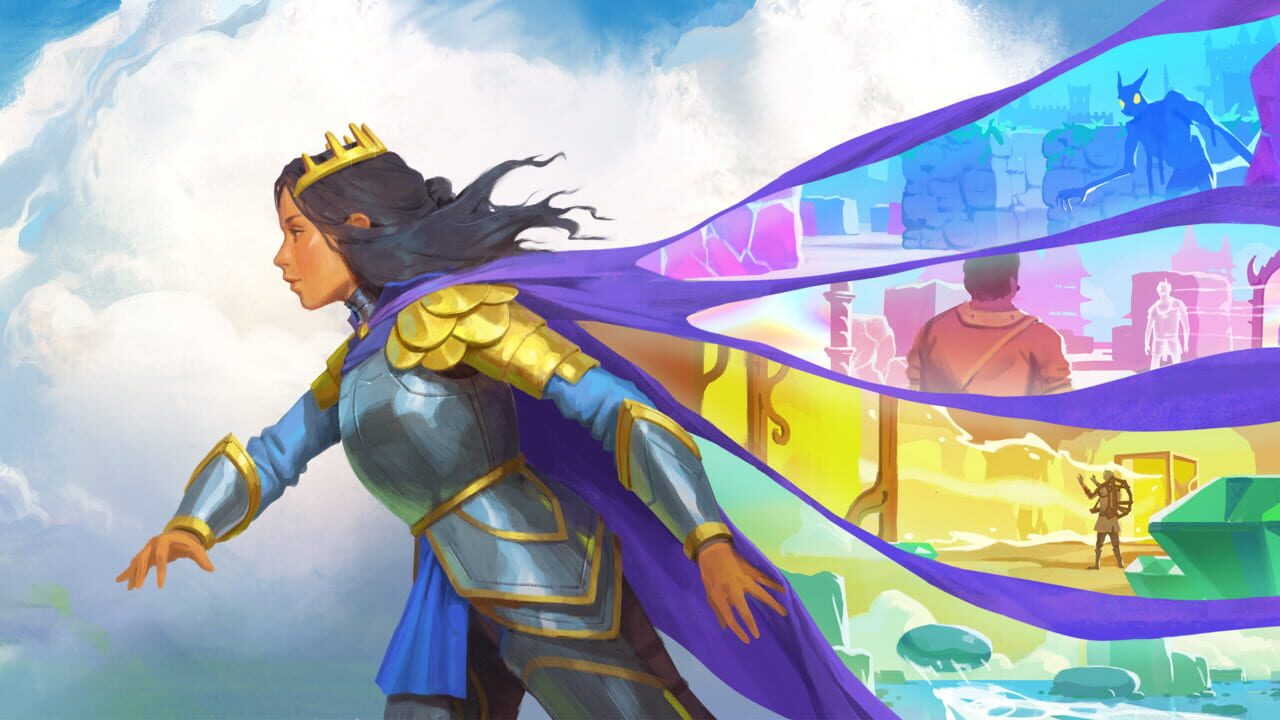
A queen, a thief, a warrior, a wizard, and a talking boat are just some of the heroes of this tale. Each character wields complementary abilities and has captivating stories to tell.
Decipher an Epic Tale
As playable characters begin to meet and worlds collide, the mystery untangles. Through gameplay and notes you collect you learn more about this enigmatic realm. Piece by piece and clue by clue, you’ll uncover the secrets of the Order of the Sinking Star.
History, Foundation & Design Contributions
Order of the Sinking Star has been in the making for nearly a decade since the release of The Witness, born from a desire to push puzzle game design past its traditional limits to create the largest and greatest puzzle game ever made. With Order of the Sinking Star, the development team created a "game design supercollider" – smashing together the ideas from multiple puzzle game designers to create a puzzle landscape that's much more intricate and vast than what has come before.
The foundation of Order of the Sinking Star is built upon these four brilliant titles:
Skipping Stones to Lonely Homes by Alan Hazelden: A serene puzzle game about throwing stones into water to create stepping paths.
Mirror Isles by Alan Hazelden: A clever top-down game focused on swapping places with reflections across islands.
Promesst 1-3 by Sean Barrett: An abstract grid-puzzler about exploring a cave filled with mysterious beams of light.
Heroes of Sokoban (1, 2, & 3) by Jonah Ostroff: A fantasy-themed puzzle game where you manage distinct hero classes (like warriors and mages) with unique movement and pushing mechanics to reach the exit.
While these games inspire and comprise the very beginning of Order of the Sinking Star and lay the foundation of its gameplay, the game as a whole explores the endless, unexpected possibilities of merging these worlds together.
The game also showcases design contributions from Zach Polansky (Enigmash), Patrick Traynor (Patrick's Parabox), Marc ten Bosch (Miegakure), and several others – including design contributions from Twitch followers over the years.
The Thekla, Inc. team is incredibly thankful for all the support they’ve had for the game over the course of development!
From the game's Steam store page.
THE GAMEQ VERDICT1,336 reviews analyzed
What players are actually saying
1. Summary
The praise centres on puzzle design. Reviewers describe level after level built around one new idea, taught without tutorials, that looks impossible until it clicks. The size of the game (four Sokoban-style games that later merge, with around a thousand puzzles) comes up again and again, and most reviewers who mention the price call it a bargain. The art, music and sound also draw a lot of praise, and several reviews come from players who say they normally dislike block-pushing games and were won over.
The story and voiced dialogue split players: some enjoy the characters and the voice cast, others find the writing childish and the chatter intrusive, and it is the complaint that turns up most often in the negative reviews. Smaller groups report performance drops (mostly on the zoomed-out overworld map), sluggish movement, a lack of puzzle names, dialogue logs or hints, and no colorblind support. A few players hit crashes or lost progress to save bugs. Several of the negative reviews still call the puzzles good.
2. What keeps coming up
What players praise
Puzzle design that teaches through playHigh
Players say each puzzle exists to show one idea, with nothing wasted, and that the solution, once found, feels obvious and fair: "The game is extremely fair." One review describes the feeling of being outthought: "You'll think of solutions, only to realize in horror that the designers thought of it too, and have removed the one piece needed to make it work." Reviewers like that there are no pop-up tutorials, that bare intro levels make you discover a mechanic yourself, and that the four character-based rule sets (pushing, pulling, swapping, mirrors, skipping stones, beams) combine into new interactions. A few describe a solution arriving away from the screen ("Woke up in the night with the answer."). Some players disagree: they found that a few solutions depend on an edge case nobody showed them, or that later puzzles turn into trial and error (see the regions and difficulty items below).
Enormous scale and value for the priceHigh
Reviewers 30 to 70 hours in report reaching a first ending and rolling credits, then finding whole new areas unlocking and much of the map still ahead. Most who mention the $30 price call it cheap for what it holds ("$30 for this feels like I committed highway robbery."). For a few players the size wears thin, covered under length below, and a few think the price is too high (under frustrations).
Art, music and soundHigh
Reviewers describe each puzzle as a small hand-built diorama, a few say the levels are good enough to use as wallpapers, and the soundtrack is praised for staying calm and out of the way while you think. Some reviews point to specific touches, such as the lute layered over the score when you control the bard. One player wants a grating metallic sound effect in the Mirror Isles area toned down, and another asks for the sound of a fly to be patched out.
An open overworld that gives you somewhere else to goMedium
When one puzzle stumps them, several reviewers say, they walk to another region, and the stuck puzzle often falls when they come back. One reviewer who has made a game in this genre put it this way: "In this game, there's always a seam to pull on in some other direction." A self-described casual puzzle player wrote that the overworld "completely eliminated this fear" of the game being too hard. The same overworld also draws navigation complaints later in the game (see frustrations).
Undo, instant resume and other small comfortsMedium
The unlimited undo, which can even undo a reset, is praised for making experiments painless. Players also like that the game boots in seconds with no menu or splash screen: "you start it up, and it just straight up continues where you left off". That makes short sessions easy, and several reviewers say it suits a few puzzles a day. Demo players were glad their progress carried over. A few want finer control: one player found long undos jump 5 to 10 moves at a time, and another asked for a redo button.
It wins over players who never liked SokobanMedium
Several positive reviews open with a confession like "I am a GIANT sokoban hater" and end in a recommendation. These players say the game is about ideas ("it's not really about pushing boxes"), and that puzzles are short to execute once you understand them. Others warn that the conversion has limits: "If you don't like sokoban puzzles, this is unlikely to change your mind, and likely to frustrate you." Some of the negative reviews come from exactly those players, who found it monotonous within an hour or two ("This is like buying a book of sudoku and doing one after another.").
Where players are split
Story, dialogue and voice actingHigh
Fans of the story like the voice cast, the mystery of how the characters came to this world, and the fact that dialogue plays while you keep solving: "One very nice aspect is that you can continue playing the game while the narration plays out." The critics are blunt. Several call the writing childish or clichéd ("Why does every character in this game talk like they're talking to a child?"), complain that the banter is constant ("this one never shuts up."), or say the story is too scattered to follow because regions can be played in any order. Others report the opposite problem later on: "especially later on you'll get several hours with no dialogue at all", and scenes that play out of order. A couple of late-game players dislike long philosophical audio logs that read like a lecture. One critic suggests turning the voice volume all the way down, though another found that the dialogue still holds things up with the volume off. Writing and dialogue come up in more of the negative reviews than any other complaint.
Difficulty, and whether the game should help when you're stuckHigh
Reviewers who talk about difficulty agree the game is hard. Most of them call the challenge fair, while a few say specific puzzles were "diabolical" or that they looked up solutions after 20 to 30 minutes. Hints divide the few who discuss them. Some ask for an optional hint system ("The main thing I wish this game had is some sort of hint system for places where I get really stuck."), and one player who expected the early regions to keep teaching gently felt the game broke that trust. Others warn that looking things up ruins it ("don't be a cheat and look up the puzzle") and suggest sleeping on a puzzle instead. Players on both sides would like reassurance that a puzzle is solvable and that they have not softlocked themselves, especially in large levels.
PerformanceMedium
Dozens of players say it runs well on Steam Deck, Linux through Proton, old GPUs and modest laptops ("I'm getting 60fps, default settings on my steam deck with no audible fans"), and that the full release runs better than the demo did. Others hit drops in specific places: the fully zoomed-out overworld map (one player reports "it started getting 10 fps" once a late area expanded it), dragon-breath particle effects, and the western beam region on weak laptops. A few mention loud fans or battery drain, and one is irritated that a game from a developer known for talking about fast software runs so heavy ("The ratio of visuals to performance is laughably bad"). Players also ask for more graphics options, better resolution scaling, 24:10 widescreen support and a fullscreen option in Steam Deck desktop mode.
The four regions are not equally lovedMedium
The four starting regions play like separate games, and players rank them differently. Skipping Stones divides people. Some call it the hardest or least favourite, and one negative reviewer said it "was suddenly a lot more different with mechanics I did not find introduced well enough" (the same player still liked that region best, and refunded over the beam vault). Others call it a highlight: "The skipping stones area, while challenging, had some of the best puzzles I've played in a loooong time." The western beam vault draws the same split: a favourite for some, too large and trial-and-error for others. A few players dislike the timing-based puzzles in the south, though one notes that the forgiving undo and a slow-down key help.
Length: a feast or too muchLow
Most players welcome the size, but a few long-haul reviewers say it eventually wore them down. One who still had hundreds of puzzles left but had lost interest wrote: "If half of the content was cut it would have been a much tighter experience." Another said it started to feel like a job, and some completionists worry about how far the full clear goes. Players who play in short daily sessions report the fewest complaints about length.
What frustrates players
Movement and controlsMedium
A handful of reviews say movement feels slow or buffered. One negative review put it as "I don't want to wait a second for that to happen", and a positive one says "Movement latency is simply way too much, and I keep running into walls." Switching characters by cycling with a key frustrates players in levels with many heroes, and some ask for mouse selection. Others want running as a toggle instead of a held button, working key rebinding (an AZERTY player could not rebind and switched to a controller), and a fix for double inputs on a gamepad. About as many reviews say the controls feel snappy, and some say controller support improved since the demo.
Overworld navigation, camera and readabilityMedium
As the map grows, some players lose track of where they can go and what a solved puzzle unlocked. The map view has fixed zoom levels ("You can't change zoom levels, you can't pan or rotate the camera at all."), and the camera angle in some puzzles hides tiles behind fences or buildings. Players describe a confusing fast-travel space, paths that blend into water, and no quick way to jump to a known puzzle ("I just want a quick way to select any level and play it."). A few also want the overworld to show whether a blocked puzzle can be solved yet.
Missing reference tools: puzzle names, dialogue log, subtitlesMedium
Several players are surprised that a game this large has barebones menus. There are no puzzle names or numbers to look up or discuss (one negative review is entirely about having "forgot to include proper names and labels for the puzzles"). There is no way to replay or collect dialogue and audio logs, and "subtitles do not indicate who is talking if there are multiple people". One player also found the end of a puzzle forces a wait for dialogue to finish even with voices muted. Others ask for a breakdown of puzzles found, solved and remaining per area, and for manual or separate save slots so two people can share a PC.
Crashes, save loss and late-game bugsLow
Most players who mention stability call the game solid, and some call it polished. The exceptions are serious. Some players report repeated crashes (on opening the map, on toggling it quickly, or on DX12 under Proton), and two lost progress, one to Linux cloud saves ("it happened to me and I lost 17 hours of progress") and one to a bug that kept resetting their save to the demo's state. One long-haul player warns that deep into the game you meet "buggy puzzles, missing collision in the overworld, broken audio logs". Smaller notes include out-of-sync subtitles and a repeating voice line.
No colorblind supportLow
Five reviews raise it, and for some of those players it is a blocker. They describe "An EXTREME reliance on color-coding for mechanical information", with switch buttons that have shapes while the matching walls do not. One player was stuck because "I couldn't tell that a beam was both yellow and green overlapping" and promises to switch the review to positive once a colorblind mode exists. Even a player with normal vision found the colored beams in the western region hard to keep straight.
PriceLow
A few players think $30 is too much, usually ones who did not enjoy every region or found the puzzles repetitive ("Overall, I think this is a solid game at $10 or less."). Far more of the reviewers who bring up the price call it a steal for the amount of content.
3. The player conversation
The tone is celebratory and often affectionate. Many of the reviews are quick raves, and many reviewers mention having played the demo. A running in-joke, some version of "It is a good game.", appears in 4% of reviews. Dozens of reviewers bring up The Witness or Braid: some rank the new game above them, while others call it excellent but not as wondrous as The Witness. Sentiment barely moved between launch week (97.7% positive) and the second week after launch (96.8%).
Playtime shows who raises what. Players who left within an hour or two mostly complain about the dialogue, not enjoying Sokoban, the movement feel or performance. Reviewers with dozens of hours raise different problems: the overworld getting hard to navigate, dialogue thinning out or arriving out of order, a late-game sense of repetition, and bugs that only show up deep in the game. Their reviews also carry detailed wish lists (colorblind mode, puzzle labels, camera control).
4. What the developers could do
- Smooth out performance on the overworld map and heavy effects. Players single out the zoomed-out map, the dragon-breath particles and the western region as the places where frame rates drop and fans spin up.
- Make movement more responsive and character control easier. Reviewers ask for less input buffering, mouse or direct character selection, a run toggle, working key rebinding, a fix for gamepad double inputs, and finer undo with a redo option.
- Give dialogue a log, speaker labels and less blocking. The story divides players, and people on both sides ask to replay missed lines and audio logs, see who is speaking in subtitles, and never wait on dialogue at the end of a puzzle.
- Add puzzle names or numbers and an optional hint path. Players who get stuck want to look up or discuss a specific puzzle without spoiling others, and a few ask for opt-in hints or a way to confirm a puzzle is solvable.
- Improve overworld navigation and the map camera. Long-haul players want free zoom and panning on the map, clearer paths and fast-travel transitions, better camera angles where fences hide tiles, and a quicker way to return to known puzzles.
- Add a colorblind mode with symbols on beams and walls. Few players raise it, but several of those who do say it blocked them, and one negative reviewer promises to switch to positive when it arrives.
- Fix crashes and protect saves. Players report map-related crashes and DX12 crashes under Proton, two lost progress (to Linux cloud saves and to a save that reverted to the demo), and a late-game player found broken collision and overlapping audio logs.