Outer Wilds
Mobius Digital · Puzzle, Simulation, Indie, Action
Overview
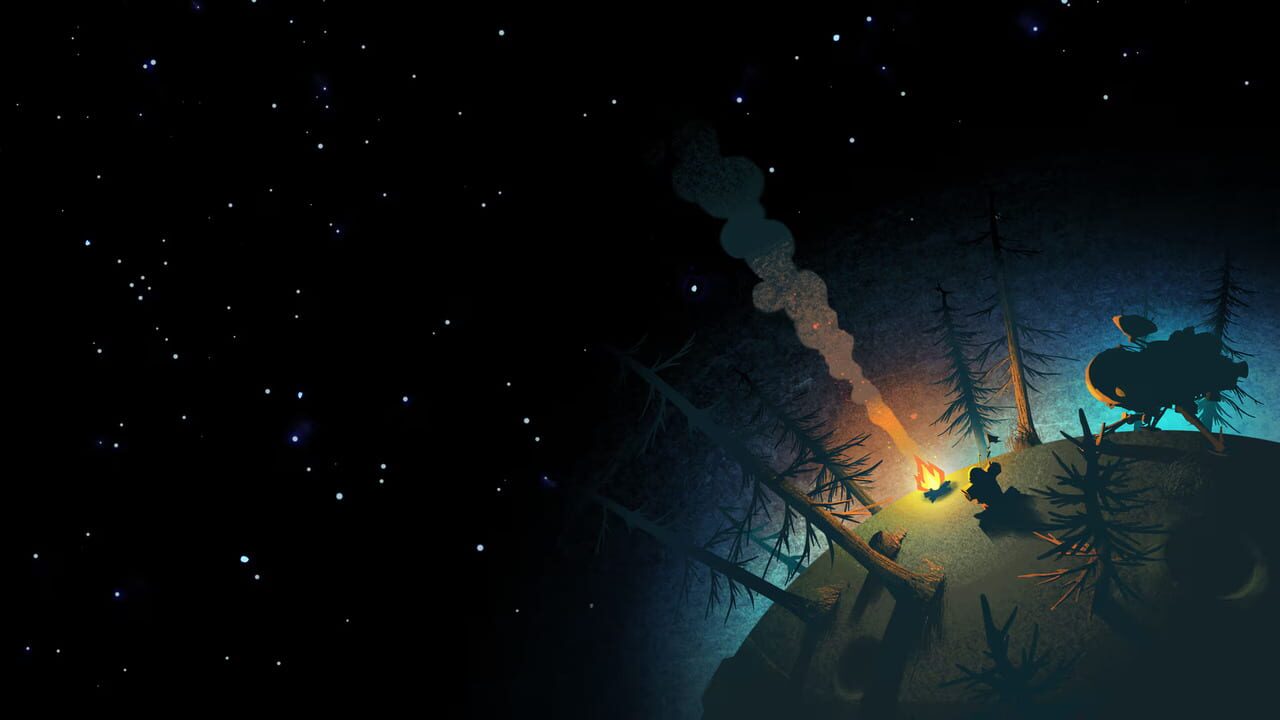
Outer Wilds is a critically-acclaimed and award-winning open world mystery about a solar system trapped in an endless time loop. The newest member of the space program in a small village on the planet Timber Hearth, the player navigates a space shuttle and travels across their solar system to get to the bottom of its mysteries by exploring the cosmos and gathering the knowledge hidden within each of the system's planets, left behind by another civilization in the distant past.
THE GAMEQ VERDICT10,000 reviews analyzed
What players are actually saying
1. Summary
Players love Outer Wilds for letting them work out a mystery on their own, with nothing to unlock except what they understand. Positive reviews praise the "aha" moments when scattered clues connect, the soundtrack, an ending that brings some players to tears, and the Echoes of the Eye DLC. Many plead with newcomers to go in blind, and some say they wish they could forget the game to play it again.
Negative reviews mostly come from players who found the structure punishing. 35% of them complain about repeating the same journeys inside the time loop, waiting for the right moment, or flying back after a death, and a similar share fight the physics-based ship and jetpack. Others found the game aimless without guidance, too text-heavy, or not as good as its reputation. Some call it "not for me" or say it never clicked, often while praising how well it is made. A few positive reviewers describe hitting the same walls and say pushing through was worth it.
2. What keeps coming up
What players praise
Going in blind for a once-only experienceHigh
16% of positive reviews tell readers to go in blind or avoid spoilers, trailers and guides, and 7% say they wish they could erase their memory to play it again: "I wish I could forget it, to play it again." Players treat the first playthrough as something that can only happen once. Some recommend asking for spoiler-free hints over looking up solutions: "If you get too stuck, ask for spoiler free hints on Reddit." A few negative reviewers push back on the "go in blind" advice, saying it hid how much time pressure and repetition the game involves.
Progress through discovery and curiosityHigh
Progress comes from what you learn, and 21% of positive reviews talk about curiosity, knowledge, or the moment the pieces click. One reviewer put it simply: "The only thing that persists is what you learn." Players describe filling notebooks, solving puzzles away from the keyboard, and a late moment where the whole picture falls into place. Several admit to stretches of confusion first: "It was frustrating. Until it wasn't." Some negative reviewers agree the concept is clever but say the clues felt too scattered to enjoy (see the guidance theme below).
Music and soundHigh
21% of positive reviews single out the music or sound design, often alongside the story. Reviewers call the soundtrack beautiful, cozy or melancholic, and some return to the game just to listen. One reviewer advises: "Wear headphones, sound is important and the experience is incomplete without it." Even some negative reviews name the music as the one thing they liked.
Story, atmosphere and an emotional endingMedium
11% of positive reviews describe crying or call the game emotional, usually because of the ending, and several call it the best ending they have seen in a game ("the ending is the best out there"). Reviewers write about awe, loneliness and existential feelings, and they mean it as praise. The ending does not land for everyone: some positive reviewers say it "didn't hit me as hard" as the hype suggested, and some negative reviewers found it confusing or underwhelming.
The Echoes of the Eye DLCMedium
18% of positive reviews mention the DLC, mostly to recommend buying it alongside the base game, and several call it as strong as the main story or stronger. Reviewers also describe it as the scarier part of the package: "Also the DLC is really scary but also really good." A few found its puzzles and tense sections hard going: "Honestly wish I hadnt bothered with the DLC as it was so frustrating it put a stain on my memory of this game."
A handcrafted solar systemMedium
Reviewers praise how each planet has its own character and how the whole system moves and changes on its own schedule, with no loading screens between space and surface. The art style splits a little: fans call it charming, while a handful of negative reviews call it cheap-looking or dated.
Where players are split
Flying the ship and the jetpackHigh
37% of negative reviews bring up the flying or the controls, most of them to complain: overshooting planets, floaty jetpack movement, an autopilot that steers into obstacles ("Autopilot will not avoid obstacles such as the sun."), and missed jumps that cost a whole run. One player called it "a very good puzzle game let down by being stapled to a 3d platformer." Some positive reviewers describe a learning curve that passes ("Flying started a little clumsy but is easy enough to pick up and crashing the ship is very forgiving."), and some count piloting among their favourite parts. Negative reviewers who quit within a few hours raise the controls more often than repetition.
Freedom with no hand-holdingHigh
Negative reviews often say the game gives too little direction: players wander, find text that points elsewhere, and cannot tell which leads matter. "It's not fun trying to find a random item or a random text that had absolutely no direction provided." Longer-playing negative reviewers often hit this late, describing a final stretch where they needed a guide. Fans see the lack of guidance as the point and credit the ship's log for keeping threads organised. Several positive reviewers also admit they looked up one or two late puzzles.
Living up to the hypeMedium
13% of negative reviews measure the game against its reputation, calling it overrated or saying the promised life-changing moment never came. Some positive reviewers say the same thing more gently: "dont go in expecting one of the greatest stories ever told in gaming, it is very good but it isnt in any way shape or form life changing". Several negative reviewers say they bought it because of the rating and add that it was not their kind of game.
Frightening momentsMedium
9% of reviews mention fear, horror or dread. Some fans count this as part of the appeal and describe the scale of space as unsettling in a memorable way. For others it was a reason to stop: "I never knew I'm afraid of deep space, but this game showed me fear that only Subnautica could." A few players were caught off guard by jump scares after hearing the game described as cozy.
A slow start that some push throughLow
Some positive reviews describe bouncing off once or twice before the game clicked ("the start is slow and kind of directionless"). Some negative reviewers tried two or three times and never got hooked, and several advise judging it within the refund window.
What frustrates players
Repetition, waiting and runbacks inside the loopHigh
35% of negative reviews object to redoing the same flights and climbs after a death or a reset, waiting for the world to reach the right state, or being cut off just before a discovery. "Flying is charming for the first hour, then it becomes a commute." Others write that "this game does not respect your time" and "I hate getting interrupted in the middle of a puzzle and getting sent back to redo a bunch of stuff that I just did". Players also note that the time pressure clashes with the slow, curious exploring the game invites. Some positive reviews call stretches tedious or repetitive too, then say the payoff was worth it. Negative reviewers who played 10 hours or more raise this more often than the controls.
Reading-heavy storytelling and flat charactersMedium
Some players found that exploring mostly leads to text, with no voice acting, and lost interest: "If I want to read I'd pick up a book not a video game." Several negative reviews say they never connected with the characters ("all the NPCs across every planet are low energy and boring"). Fans describe the same writing as warm and funny.
Quality-of-life gapsLow
Small complaints add friction to every run: sequences after a death and the credits cannot be skipped ("The loop ending screen is un-skippable."), the ship's log can only be read on board ("Making it so you can check on your progress without going back to the ship would've made it a better experience."), and quitting early in a new game can cost the whole session.
Keyboard, mouse and controller setupLow
The game recommends a controller, and keyboard players report coarse thrust control and limited rebinding: "If you release your game on a pc platform, you should make it so it works well with keyboard." A few controller users report wrong button prompts or pads not being recognised, and one player on a non-US keyboard layout saw wrong glyphs after rebinding.
Performance, crashes and lost savesLow
A small number of players report stuttering even on strong PCs ("After 10 years this game remains poorly optimized."), choppy camera movement at high refresh rates, crashes at launch, and a few corrupted or lost save files after long playthroughs.
Motion sicknessLow
A few players could not continue because first-person flight made them sick, and say the settings did not help: "Unfortunately, it gives me huge motion sickness."
3. The player conversation
Fans write about the game protectively. Positive reviews warn against spoilers, mention buying it as a gift, and often describe the game itself only vaguely for fear of ruining it. Some negative reviews are apologetic: they open by saying they wanted to love it, explain that it never clicked, and wish the reader well if it does. A smaller group pushes back against the reputation and the "go in blind" advice, arguing that buyers deserve to know it involves time pressure, repetition and demanding controls.
Players who quit early most often cite the controls, boredom, motion sickness or not knowing what to do. Those who stuck with it before turning negative talk more about repetition, waiting, obscure late puzzles and an ending that did not repay the effort. The share of positive reviews held steady week to week across the slice, and the complaints stayed the same throughout.
4. What the developers could do
- Add optional ways to shorten runbacks, such as skippable post-death sequences and credits or a setting for a longer loop, because repeating the same journeys is one of the two complaints negative reviews raise most.
- Offer a flight-assist option and finer keyboard thrust control, since many negative reviews blame the ship and jetpack, and keyboard players say they cannot modulate speed.
- Make the autopilot avoid obstacles, a specific and repeated complaint from players whose first trips ended in a crash.
- Add an opt-in, spoiler-light hint system, because reviewers who got stuck say their only options were wandering or a full guide, and some asked for one directly.
- Let players read the ship's log away from the ship, which reviewers say would save trips back mid-run.
- Warn clearly when quitting will lose progress, after players lost early sessions they assumed were saved.
- Fix controller detection, button glyphs and high-refresh stutter, the recurring technical reports.
- Set expectations on the store page about time pressure and frightening moments, since several negative reviewers bought it expecting a relaxed exploration game.