The Riftbreaker
Exor Studios · Strategy, Survival, ARPG, Action
Overview
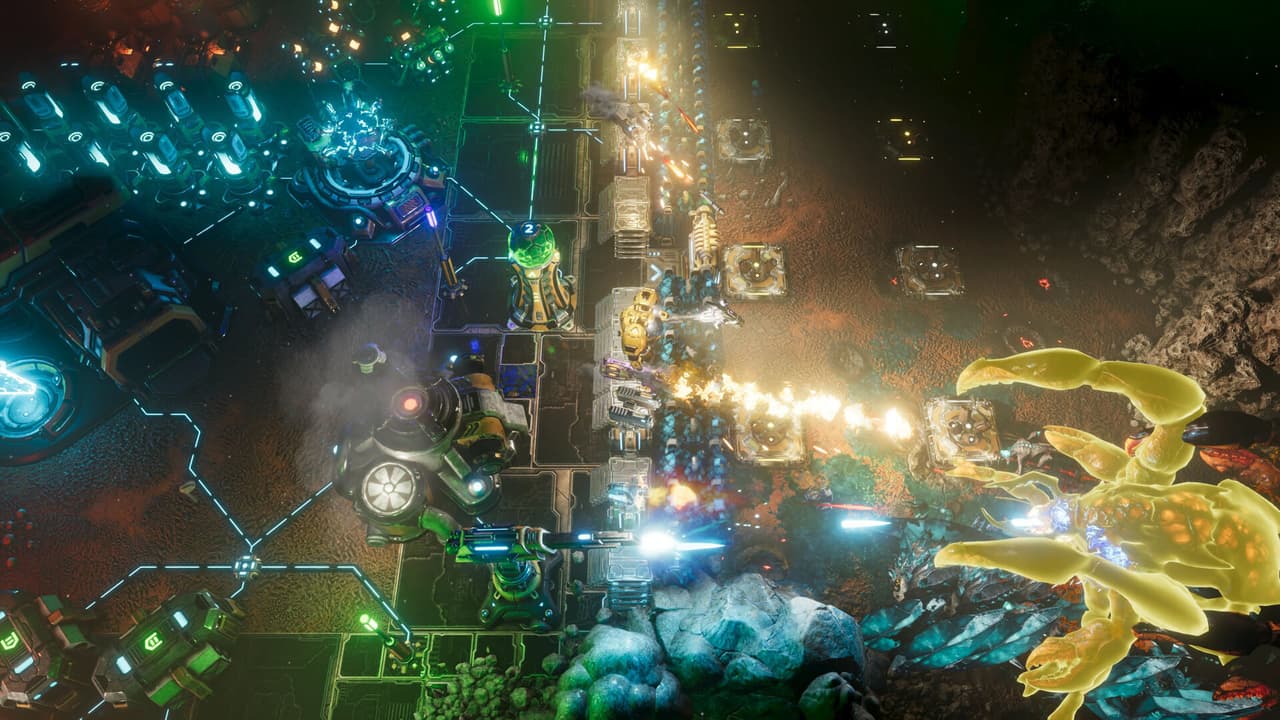
The Riftbreaker is a solo or Co-op base-building, survival game with Action-RPG elements for up to 4 players. Hack & slash countless hordes of enemies. Build up your base, craft powerful weapons and research new inventions to survive.
Read moreShow less
BASE BUILDING
Your task is to construct a two-way rift back to Earth. It is a very complex invention and requires enormous amounts of energy. Simple solar collectors and a few tons of steel will not be enough. You will need to build up a complex chain of mines, refineries, powerplants and research facilities to complete this mission.
DEFENSE
Your presence on this planet will not go unnoticed. As you build up your industry and disrupt the natural order, the world will start seeing you as a threat. Build up your defenses. Construct walls, barriers and defense towers as the attacks get stronger with every passing day. You will face thousands of hostile creatures trying to eliminate your presence.
EXPLORATION
Galatea 37 is an unknown planet in the Sycorax belt of the Milky Way galaxy. Long distance surveys detected that it is inhabitable and perfect for colonization. The planet is full of rare minerals and substances that can be found in various locations around the globe. Varied biomes can surprise you with unknown fauna and flora as well as harsh weather conditions. Construct local outposts in resource-rich locations that will transport the required resources using rift technology.
CAMPAIGN MODE
You play the role of captain Ashley S. Nowak - you are the Riftbreaker, an elite scientist/commando inside a powerful Mecha-Suit. Enter a one-way portal to Galatea 37, a distant planet at the far reaches of the Milky Way Galaxy, with the purpose of building up a base that will allow travel back to Earth and further colonization. Ashley's Mecha-suit, which she calls "Mr. Riggs", can withstand the harshest environmental conditions and has a full range of equipment for base construction, resource extraction, gathering specimens and of course - combat. It is capable of traveling through rifts that connect space across vast distances.
Take on an epic journey across all the different biomes of Galatea 37. You will establish multiple persistent bases across the globe that will fuel your economy. Research alien substances and lifeforms, as well as fight hordes of alien creatures, clearly not happy with your interference in the natural order of the planet. The campaign spans multiple hours and offers a remarkable degree of freedom in a super detailed, procedurally generated world. You can decide on the order of your priorities and what technologies you want to use. You’re the only human there, after all.
SURVIVAL MODE
Your mission is to survive a set amount of time, fighting off increasingly difficult waves of enemy creatures. Each mission in the game is randomized, offering nearly endless replayability.
HANDCRAFTED SOLO AND CO-OP EXPERIENCES
The Riftbreaker can be played solo or together in a group of up to 4 friends in Online Co-Op. Every game mode and each mission was specifically balanced to be enjoyed in single or multiplayer mode. The game includes a built-in server browser and a dedicated server mode. It can be played online or through a local LAN connection, entirely offline.
SANDBOX
If intense fight for survival is not your thing either, then try out the Sandbox mode, where we give you control over the entire game – including resources, enemy spawns, and weather conditions.
CUSTOMIZE YOUR GAMEPLAY
The Riftbreaker’s gameplay can be customized to fit your playstyle. You can change the frequency of enemy attacks as well as their strength and numbers, resource abundance, weather events, enemy damage, and tons of other settings. There are also multiple difficulty presets to suit the needs of both hardcore strategy players as well as those that want a laid-back base-building experience.
COMMUNITY DRIVEN DEVELOPMENT
The Riftbreaker’s development is continuously fueled by its welcoming community. The game has received years of support after its original release and is continuously expanded thanks to community suggestions and direct contributions. The game has a very open content structure and comes with a built-in set of modding tools, dedicated Steam Workshop integration, and a Mod Manager.
If you've read everything and arrived all the way down here, then you might be interested in helping us shape the game. Please come and talk to us on the forums, our official Discord server or through any other of our social media. We'll be sharing inside info about our development progress, and we'd love to hear your feedback. Please come and help us make Riftbreaker the game You want to play!
From the game's Steam store page.
THE GAMEQ VERDICT10,000 reviews analyzed
What players are actually saying
1. Summary
The Riftbreaker wins players over by fusing three genres that rarely share a game: you build and power a base, defend it with towers and walls, and personally wade into alien hordes in a heavily armed mech. Players praise that blend, the satisfying combat, the striking visuals and destruction, and co-op, which the reviews show arriving with the 2.0 update in late August 2025. 10% of reviews compare it with Factorio, often to call it a lighter, more action-heavy take on that game, and some players describe losing whole evenings to it. Value comes up as well: happy players who bought it on sale say it more than paid for itself.
Repetition and stability problems are the two complaints negative reviews raise most, at about the same rate. Every new biome repeats the same scan, find, mine and defend loop, and the late game piles up research timers and steep resource demands. The bugs hit hard when they happen: quests that never trigger, power grids that suddenly go dead, crashes when jumping between maps, and lost saves. The nonstop chatter between Ashley and her suit's AI, Mr. Riggs, grates on some players, and others fault the dated build menus and thin explanations. Players also disagree about how deep the game is, how hard it is, and whether the 2.0 changes and paid expansions improved it. Several critics say the first hours were fun before the game wore thin, and some fans name the same flaws themselves.
2. What keeps coming up
What players praise
Base building, tower defense and action combat in one gameHigh
Base building or tower defense comes up in 26% of reviews, more than any other topic, and 13% describe the game as a mix, blend or hybrid of genres. Fans like how the parts feed each other: exploring finds resources, resources fund research, research arms both the mech and the towers, and expansion triggers bigger attacks. One reviewer says the game "puts all those elements together into one amazing game". Players reach for comparisons with StarCraft, Command and Conquer, Supreme Commander, They Are Billions and Diablo, often to say that this mix was what they had been missing. The doubts come from players who wanted more from one particular part, covered in the split section below.
Mowing down hordes in a customizable mechHigh
Fans write about the combat with real enthusiasm, and 17% of reviews discuss it. They love dual-wielding miniguns, hammers, flamethrowers and nukes, watching swarms turn to red mist, and stacking weapon mods and abilities. Melee surprised several reviewers by working well, and damage types and enemy resistances give some reason to swap loadouts between biomes. Critics say a few weapons outclass the rest and that combat can become holding the fire button while backing away, which bothers players who came for ARPG depth.
Visuals, lighting and destructionHigh
Players praise the lighting, especially at night, along with the explosions, the destructible foliage and the distinct biomes; 16% of reviews comment on the look of the game. One fan writes, "Lighting artist deserves triple the paycheck!" A minority push back: some find the screen too busy to read during big fights, and a few report bloom and flashing weather effects that hurt their eyes (see the PC issues item below).
Co-op with friendsHigh
The co-op conversation changed with the 2.0 update. 12% of reviews mention co-op or multiplayer. Before the update, some reviews called the game great but said it needed co-op; afterwards came reviews like "Co-op was well worth the wait!" Players enjoy splitting roles, with one friend building while others fight, and the ability to teleport to a teammate. Another reviewer says, "It feels like factorio but built specifically for coop." The problems are real but less common: clients far from the host report rubber-banding and input lag ("The other clients lag unbelievably bad even at only 150 ping."), some hit crashes when joining, and reviewers report that every player needs to own a DLC to play its content together.
Strong value, especially on saleMedium
Price, sales or value come up in 8% of reviews, and the typical comment is that the game was worth what they paid, as in "What a fantastic game for $9 on sale!" Some point to a first campaign of 20 to 30 hours as the reason. Several players got it through bundles and were pleasantly surprised, and the free demo comes up as a reason people bought it. Full price plus every expansion feels steep to some players, and several positive reviews still advise waiting for a discount.
Survival mode, difficulty options and modsMedium
Survival mode comes up in 6% of reviews and mods or the Steam Workshop in 4%. Fans of challenge like Survival on Brutal and hardcore runs, and several credit the custom difficulty sliders (faster research, more resources, fewer events) for fixing pacing complaints. Mods fill gaps such as blueprints, zoom and rock removal. Critics call Survival poorly balanced on its default settings, and a few report mods breaking after updates.
A loop that eats eveningsMedium
When 5% of reviews call the game addictive or say they lost track of time, they mean it as a compliment. A fan recommends it "if you want to look at the clock and realize it's suddenly five hours later." Reviewers describe staying up late to perfect a base and replaying the campaign straight after finishing it. Some of the same players add that the pull fades once they have seen every biome.
A studio that kept updating the gameLow
A small group of long-time players credit the developers for what they describe as years of free updates, with co-op as the headline, and say the game felt more complete every time they returned. Other veterans felt those same updates changed what they liked (see the 2.0 item below).
Where players are split
Factorio-lite or just shallow?High
The Factorio comparison, made in 10% of reviews, divides people. Some fans see the simpler logistics as the point: no conveyor belts, resources teleport into a shared pool, and the time goes into fighting. One reviewer sums it up as "Factorio - but without all the tedious automation stuff." Factory fans who came for production chains feel misled, saying base building comes down to placing more of the same building and that every part of the game stays light. One critic calls it "Mile wide, one inch deep." Even some fans agree with the diagnosis and simply don't mind: "There are games with better action, games with better tower defense, and games with better base-building/automation." Several players advise newcomers to expect an action game with base building, not a factory game.
Paid expansionsMedium
Fans who bought the expansions call them good value that adds story, weapons and enemies, and some recommend playing them before finishing the campaign. DLC comes up in 6% of reviews overall and in 10% of negative ones, where critics feel the expansions arrived while bugs remained and that the base game feels incomplete without them. One specific complaint is about co-op: "you CANNOT play the DLC with your friends unless they also own it." A few also dislike that expansion enemies start appearing in main-campaign attack waves once their content is unlocked.
Performance with big bases and huge wavesMedium
Players praise the engine for handling hundreds of enemies, and one calls it "Amazingly optimized, smooth gameplay." Yet 10% of negative reviews raise performance, and they describe the same pattern: it runs well early, then frame rate or simulation speed drops as bases spread across maps and waves grow. One reviewer says the game "really struggles to be played in the moments where gameplay absolutely peaks - when alien hordes attack your base." Others report hitches during autosaves and in the final battle. After 2.0, one returning player noticed "HUGE performance gains when hordes of aliens on screen", while others still saw late-game slowdowns.
Relentless pressure or too easy?Medium
Difficulty splits players. One group, often on Normal or Easy, feels the waves, nests, bosses and weather never let up: "I get attacked so often there is no time to think at all." Some describe sudden spikes, such as a rock creature immune to their only weapons, or a horde set off by touching an unexplained object early on. Another group finds even the top settings soft once walls and turrets are stacked; one says "playing brutal feels like playing baby-mode", and others call the final wave an anticlimax. Reviewers on both sides note that the mech does much of the work, with one critic arguing "Your character is 100x as powerful as all your defenses combined." Some fans suggest the custom difficulty settings.
The 2.0 reworkMedium
Reviews point to the 2.0 update arriving in late August 2025 and describe it adding co-op, new bosses, loot drops and a post-game with megastructures, along with a reshaped economy. Fans of the update say "the latest update improves it noticeably" or praise the better performance and new content. A vocal group of veterans disagrees. They object to resource costs on research and lower extractor output ("New update nerfed resource rates and added high resource costs to research that already took ages to finish."), to looted gear outclassing crafted gear ("Now crafted weapons are always the base version and only droped equipment has bonus stats."), and to Omega bosses with special abilities that can wreck defenses. One veteran writes that a few years earlier they would have recommended the game without hesitation.
What frustrates players
The same loop on every mapMedium
Repetition is the most frequent complaint about the design: 18% of negative reviews call the game repetitive, grindy or tedious, and some positive reviews carry the same caveat. Players describe the same cycle: rift to a new biome, scan for a rare resource, hold a button to mine or find enough of it, build an outpost, then do the same in the next biome. The biomes look different, but the missions feel alike, and research upgrades mostly turn existing buildings into higher tiers. One frustrated player writes, "I felt like a goddamn toilet cleaner in an interstellar McDonald's." The optional post-game makes this worse for some; one veteran found "There is just no content, but endless grinding for higher and higher ressource requirements." Several of these players say the first few hours were fun.
Quests that never finish, dead power grids and lost savesMedium
Crashes, progress-blocking bugs and lost saves come up in 19% of negative reviews, often after dozens of hours of play. The repeated reports are:
- Campaign objectives that don't trigger or count, including the final rift activation; one player writes "If you want to play a game and never be able to win, but not lose, then play!"
- Power grids or gas and geothermal plants that suddenly flicker or stop producing, often fixed only with console commands or by rebuilding.
- Crashes when returning to the headquarters map, sometimes on every load of the affected save.
- Save files lost to corruption or "access denied" errors, including saves synced through Steam Cloud.
- A bug where a finished campaign's threat level carries into new campaigns, described as "a bug in the campaign that causes the threat level across all campaigns you start up to be at the same level".
These reports were heaviest early on: about a quarter of the negative reviews written in 2021 and 2022 describe them. The share fell later, to 11% of negative reviews written in 2026, but it never disappeared. Some reviewers say they would change their review once their bug was fixed.
Nonstop chatter between Ashley and Mr. RiggsMedium
The dialogue or voice acting comes up in 12% of negative reviews, and some positive reviews say they muted it. The complaints focus on how much of it there is: every storm, eclipse and full storage bin sets off a back-and-forth, the same lines repeat for each event, and it talks over co-op sessions. "Crazy amount of filler chat that's just annoying." Some find the writing stiff, and others note that the protagonist's talk about protecting the planet clashes with a game about strip-mining it. The chatter has defenders too: one says "The banter between the pilot and the suit is great." Others like the light tone. Players point out that a separate volume slider exists, but that muting it also loses useful audio warnings.
Clunky menus and little explanationMedium
Interface complaints appear in 7% of negative reviews, and 6% say the game explains itself poorly. Players describe menus that hide the game world, a sprawling tech tree with unclear prerequisites, no blueprints or copy-paste for defenses, buildings that must be placed at tier one and upgraded one by one, and inventory management that pulls them out of fights. One critic complains, "You have to dig through submenu hell just to craft or dissasemble items". Liquids, cultivators and power come up as systems people had to look up online. Even a fan scores it "Game = 9.0 Tutorial = non existent." Controller and keyboard players both report awkward bindings.
Disasters and manual repairsMedium
Tornadoes, meteor showers, hail and earthquakes damage buildings across the base with little way to prevent it, and the fragile power connectors are the first to fall; 6% of negative reviews complain about these events and the busywork that follows. Before repair towers cover everything, cleanup means clicking building after building: "you'll spend the next 15min clicking on every building to repair it." A few players quit after a single tornado wiped out a new base.
Waiting on research timersLow
Reviews describe research that runs in real time with a cap on labs, and 4% of negative reviews complain about waiting for it, or sometimes for slow building upgrades. "Wait for resources, wait for research to complete, wait wait wait." Fans counter that outpost missions fill the gaps and that custom settings can speed research up.
PC rough edgesLow
A scattering of reviews report specific technical irritations: the game opening on the wrong monitor with no in-game setting to change it, bloom and white weather flashes that can't be turned off ("that bloom hurts my eyes so much"), a console key next to important controls that can't be unbound, no DLSS option alongside FSR and XeSS, and stuck keys. Steam Deck players are split, with some saying it runs well and others reporting crashes, especially when joining co-op.
A camera that won't zoom outLow
A smaller group, often on large or ultrawide monitors, says the fixed camera is too close for managing a sprawling base and lets enemies shoot from off-screen. "It's impossible to zoom out (without using temporary console/cheat commands)". Mods and console commands are the workaround people mention.
3. The player conversation
The tone is warm and often effusive. Some short reviews simply call the game a hidden gem, and longer ones compare it with the RTS and tower defense games of their youth. Negative reviews are rarely angry about the core idea. They tend to credit the concept or the first hours before explaining what wore them down, and 5% of them say outright that they wanted to like the game or would have picked a neutral rating if Steam offered one. The disagreement centers on how long the mix holds up and whether bugs or busywork get in the way.
People who quit in the first hour or two mostly cite the interface, the thin tutorial, the pressure of early waves, the chatter, or crashes on startup, and several came in expecting a pure factory game. Players who finished a campaign or two tend to praise the blend and the combat, and their criticism centers on the repetitive biome missions, the research waits and progress-blocking bugs. Veterans with hundreds of hours argue about the 2.0 economy and loot changes, Omega bosses, the megastructure post-game, and long-standing power-grid and save bugs.
Reviews from the first month after the October 2021 launch were 92% positive, with early bug reports alongside heavy praise. From 2022 to mid-2025, waiting for co-op was a recurring complaint, raised in 7% of negative reviews written before co-op arrived, along with grumbling about paid expansions. The reviews place the 2.0 co-op update in late August 2025: new reviews jumped that week, and co-op turned into a selling point. The update also brought new arguments about research costs, loot and client lag, and reviews written since then are 88% positive, down from 92% before it. A burst of reviews in early March 2026 points to a Steam free weekend that brought in newcomers; the first week of that burst was 76% positive, with first-hour complaints about menus and onboarding. Reviews written in 2026 as a whole were 87% positive.
4. What the developers could do
- Fix the progress-blocking bugs and protect saves. 19% of negative reviews describe crashes, quests that never complete, dead power grids or lost saves, often dozens of hours in, and some promise to change their review once their specific bug is fixed.
- Vary the mid-game and cut the busywork. 18% of negative reviews call the loop repetitive, pointing to near-identical biome missions, outpost rebuilding and one-by-one upgrades, and players ask for blueprints, copy-paste and mass upgrade and repair.
- Give players control over the dialogue. 12% of negative reviews bring up the chatter, and players ask for fewer repeated event lines, skippable conversations and alerts that work with the banter turned off.
- Keep large bases and late waves running smoothly. 10% of negative reviews report slowdowns as bases spread across maps and waves grow, which hits during the biggest fights.
- Rework the build menus, tech tree and onboarding. Negative reviews single out the interface (7%) and missing explanations (6%), especially for liquids, cultivators, power and research prerequisites, and players who quit early cite it.
- Let co-op partners play the host's expansions and smooth out client lag. Co-op has been a major draw since 2.0, so the DLC ownership requirement and rubber-banding for distant clients stand out in reviews from players who bought the game to play together.
- Ease disaster cleanup and research waits. Weather events that damage whole bases (6% of negative reviews) and real-time research timers (4%) are recurring annoyances, and players ask for sturdier power links, a repair-all option or faster research by default.
- Add the small PC options players keep asking for. A monitor selector, a bloom and flash toggle, a rebindable console key, a wider zoom and DLSS each come up in a small number of reviews and would remove friction for those players.
1. Summary
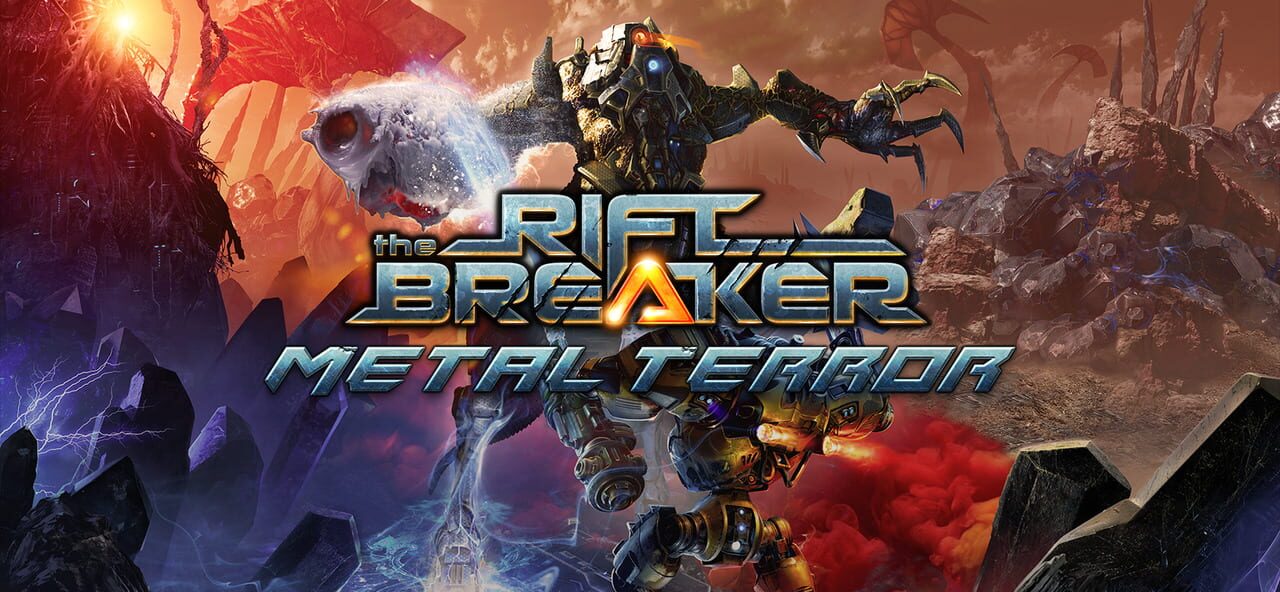
Metal Terror is a side questline for The Riftbreaker that sends players into the Metallic Valley, a new biome of liquid metal and ancient alien machines, with new enemies, weapons, Morphium towers and power plants. The expansion's own reviews are clearly positive. Players praise the look and mood of the biome and the new enemies that make them rethink their defenses, and some enjoyed spotting what reviewers describe as a tie-in to EXOR's earlier game X-Morph: Defense. A common line among recommenders is that it is "more Riftbreaker" and worth buying if you already like the base game.
Length, depth and stability are where it loses people. Several reviewers, recommenders among them, call it short for its price, with completion times they report between about four and ten hours, and a few advise waiting for a sale. Opinion on the story is divided: some enjoy the side plot, while others find it forgettable and the ending flat, with a final choice that changes little and no boss fight. The new Morphium tech is fun inside the biome and, by several accounts, rarely worth using outside it. Technical trouble accounts for 19 of the 33 negative reviews, from crashes and a DLC that never starts to quest scripts that stop handing out the next mission.
2. What keeps coming up
What players praise
The Metallic Valley biome and its atmosphereHigh
Reviewers praise the new biome often. They call it "Dope biome", "Great biome" and "A neat new environment to explore", and one writes that "the vibes were immaculate and you really get the sense of wonder from this ancient biomechanical tech." Another calls it "my favorite biome for combat by far." Players like that it plays differently: no water, mud or sunlight, so power and defenses have to be built around Morphium or fusion, and one reviewer enjoyed "having to come up with different ways to manage power and defenses." Not everyone was taken with it. One says the "new biome don't feel much different", and one 2026 reviewer felt it was "more of the base game with an uglier skin on it."
New enemies that change how you fightMedium
Enemy designs often come up in the same breath as the biome. Reviewers describe a mix of new creatures and some recolors, with ancient machine constructs and flying enemies that "can flank your base over cliffs, forcing you to rethink your strategies." Some say these enemies need different damage types and stronger weapons than the main campaign, and one calls this "the toughest DLC out of all of them." A couple of reviewers wished these enemies also appeared in other biomes during the main campaign.
The X-Morph: Defense crossoverMedium
Several reviewers enjoyed realizing that the DLC's alien entity, its metal-spreading towers and its energy barriers come, as they describe it, from EXOR's previous tower defense game. One writes that "this whole DLC is an reference to the studio's previous game, X-Morph." Others call it a "Cool crossover with their other game" and "a great nod to a CERTAIN game from the same developpers". A couple of them praise the older game as well, and a couple say the story works without having played it.
Music and soundtrackLow
A handful of reviewers praise the reworked metallic soundtrack: "The music is incredible", "the soundtrack is banger too", and "the modified soundtrack to match the metallic theme works really well."
Free update content that came with itLow
Some reviewers counted the free patch they say shipped alongside the DLC in its favor. By their account it brought quality-of-life changes to building and balance fixes, and let survival mode players use the new tech without buying the DLC. One wrote that it "came with more QOL and optimization for everyone."
Where players are split
Value for the price and lengthHigh
Price and length come up often, and opinion splits. Some recommenders call it fair: "For $10 you get new bio, several maps, quests, QoL, items and more...This is the way DLC should be." Others recommend it while saying it is short. Reported completion times range from "half an afternoon" for a player who had already finished the main game, through four, five and six hours, up to eight to ten hours on Brutal. One review that recommends it still says "I think that it is more of a $5 DLC." Several reviewers suggest buying it on sale or in a bundle, and one negative review says it is "too small for the price" with "very few missions." A recurring condition is liking the base game: if you want more of it, these reviewers say, it is worth it.
The side story and how it fits the campaignHigh
Fans call the story an "interesting story", "a great story" and "a cool side story", and like the reveal connecting it to X-Morph. Others call it "okish", "underwhelming" or "forgettable", and some complain that it sits apart from the main plot: "side missions with no impact on the existing story." Reviewers who discuss pacing suggest weaving it into a normal campaign: one recommends "starting a new campaign, as the DLC is best played interweaved into your normal campaign progression." A couple of positive reviewers dislike the story, or how loosely it connects to the main plot, and enjoyed the biome and missions anyway.
Morphium and the new techMedium
Morphium, the new liquid resource, gets both praise and shrugs. Supporters like towers that cost no AI cores, shield nearby buildings and can be built on liquid, plus cheap power and the energy walls. One reviewer argues that "if you can be bothered to set up good liquid compression systems (it really doesn't take long), the new turret and power generator are amazing additions to your HQ defences." Critics point out that Morphium only exists in this biome and that the power plant arrives after fusion has made it obsolete, leaving the tech "pretty useless otherwise". One sums it up: "Morphium is cool idea with lots of potential but sadly not very good in execution". The weapons get mixed notes too: the lightning gun and the melee weapon have fans, while one reviewer calls the laser sword "a reskinned normal sword".
DifficultyLow
How hard it feels depends on when players started it. Those who arrived with late-game gear found it easy: "most of it is mind-numbingly easy with lategame gear and the rewards are useless once you have Nuclear/Fusion anyways." Others found the enemies "challenging without being overwhelming" or warn that "you may need tier 3 or above weapon." A couple of reviewers advise starting it early in a campaign.
How it ranks against the other DLCsLow
Among reviewers who compare it with the later expansions, most put this one ahead, calling it "The best DLC for The Riftbreaker" and advising, if you get only one, to "skip the other 2 and get this one." One reviewer calls it the weakest of the three, and another found it as boring as the other DLC.
What frustrates players
Bugs that block progress or stop the DLC startingMedium
Technical problems are the main reason for negative reviews. Some players could not get the DLC to begin at all ("DLC doesn't start", "I CANNOT GET IT TO ACTIVATE"). Others hit quest scripts that stall: "each time the script breaks after a mission and never gives the next", a mission to power an alien core that would not accept energy, and a "final task wont show up sometimes making it un-compleatable". A few report crashes or heavy stuttering that began once the DLC was installed, and one couldn't play it on GeForce Now. Most of these reports date from the first months after launch, and one reviewer that July said the early bugs were "mostly fixed by now". Reports of broken quests and crashes still appear in 2025, though.
Repetitive missions and waiting on attack timersMedium
Some reviewers, mostly negative ones, describe the missions as the base game's routine with little new. One says "It's basically shoot the same turret stronghold for 5 times"; another found the DLC "mainly consisted of repeatedly waiting on 5 minute attack timers"; a third says that in single player there is "too much grinding" building large structures with heavy resource costs. Even some positive reviews note that it takes "0 risk" with gameplay and is "just more riftbreaker, without any groundbreaking changes."
An ending that falls flatLow
Several players, some of them recommenders, wanted a stronger finish. They missed a final boss ("only a dialogue with a certain entity") and felt the final decision mattered little: "it all boiled down to a choice with no real choice." Others wished the ending choice unlocked different tech or had "a little more significance."
Not knowing how to start itLow
The questline triggers through an event during a normal campaign, with no menu entry, and some buyers could not find it. One describes searching the start screen, old saves and a new campaign: "no DLC on start screen." A positive reviewer also noted "there's no button to launch the DLC quest" and disagreed with that design.
Unskippable dialogueLow
A few players found the talk between Ashley and Mr. Riggs grating and wanted to skip it: "you can't skip the dialog between MC and its robot companion." Another review simply says "Fun... but please... stop...talking..."
Base game complaints posted on the DLC pageLow
Some thumbs-down target The Riftbreaker as a whole: long-standing bugs, performance, and tower mods that seemed to have no effect. In 2025, one reviewer wrote that the boss loot drops added in the 2.0 update made crafting pointless, since a better version of any researched weapon or module drops from a boss. One co-op player reported that both host and client need the DLC and that DLC buildings were left on the map in a vanilla game.
3. The player conversation
Most reviews are warm, and many are brief. A large share are one-liners such as "Great DLC" or "Worth it", and the longer ones tend to be balanced: they list the new content, praise the biome and enemies, then add a caveat about length, price or the story. Reviewers who came to it after finishing the main game, or with late-game gear, are the ones calling it short and easy, while those who advise playing it within a campaign say it fits better that way. Thumbs-down reviews fall into two separate camps. One group hit bugs that stopped the questline or the DLC itself. The other found the content repetitive or thin for its price. Very few negative reviews criticize the biome or the enemies.
Launch week was the most enthusiastic stretch, at 95% positive (35 of 37). The next week fell to 56% (5 of 9), with complaints from a buyer who couldn't find how to start the DLC, one who couldn't run it on GeForce Now and one whose tower mods had no effect. After launch week, 77% of reviews recommend it (106 of 137). Later reviewers often compare Metal Terror with the two expansions that followed, and most of those comparisons favor it.
4. What the developers could do
- Fix the questline blockers and activation failures. Bugs that stop the DLC starting or leave a mission without its next objective are the most common reason for a thumbs-down, and reports of them continued after launch.
- Make the DLC's starting point visible. Some buyers could not tell whether they owned working content because the questline begins through an in-campaign event with no menu entry or clear prompt.
- Vary the mission objectives. Players who disliked it describe attacking the same turret strongholds repeatedly and waiting on five-minute attack timers, while one fan called an almost all-liquid mission a refreshing change.
- Give the ending more weight. Reviewers wanted a final boss and a choice whose outcome changes the result or the rewards, instead of an ending that resolves the same way either way.
- Make Morphium tech worth using outside the biome. Players like the AI-core-free shield towers in principle but say the resource is confined to one region and the power plant is obsolete by the time they unlock it.
- Scale the difficulty to late-game gear. Players who arrived with endgame weapons found it "mind-numbingly easy", so scaling enemies to the player's tech level (or clearly recommending an early start) would keep it challenging.
- Let players skip dialogue. A few reviewers found the companion talk and an unskippable cutscene grating and wanted a way past them.
- Add more missions or price the expansion to its length. Several reviewers suggest waiting for a sale because four to ten hours felt short for the price.
Open the World Expansion II page
1. Summary
Into The Dark sends players underground into a cave biome where they drill through rock, work around limited power (sunlight and wind only reach a few spots), and fight what reviewers call the game's first proper boss. Many of the positive reviews are short notes from fans who wanted more Riftbreaker and got a new biome, new enemies, new weapons and towers, and more of Ashley's backstory at a low price. Several single out the cave look, and one detailed review calls the wireless energy pylon the best utility in the game.
Digging, the expansion's main new idea, divides people. Some find it fresh and fun, but more of the reviewers who discuss it call carving rock slow and tedious, and a few say it rarely changes how fights play out. Critics also describe padded objectives (long timers, kiting events, a plot that keeps adding steps), forgettable or overlong dialogue, and rewards that do little for the main campaign. Bugs come up in more negative reviews than any other complaint: crashes in the new zone, a missing prompt at the cavern entrance, objectives that fail to trigger. Reviews that compare it with the other expansions nearly all rank it lower, usually behind Metal Terror, and several of them still recommend it.
2. What keeps coming up
What players praise
More Riftbreaker for fans of the base gameHigh
Many positive reviews are short and simple: the base game is great and this is more of it. "more content for a great game? sign me up" is typical of launch week, and later reviews say much the same ("Solid addition to a solid game", "Nice little expansion to keep the game going"). These reviewers rarely list specifics. Several fold it into the full campaign, saying the DLC is best played during a first run because it adds story missions and maps along the way. Some of this praise is plainly for the base game as much as the expansion; one reviewer put it as "This DLC is great because the base game is great, the DLC itself is 5/10."
The cave atmosphere and lookMedium
Comments on the visuals are mostly warm. "Looks quite beautiful to see light falling down to the cave floor!" says one review; others praise the crystal caverns, how underground bases look, and the new lighting and music that reviewers say came with a free update released alongside the DLC. A negative review that scores the expansion 4/10 still says it was "saved by dark-cave-with-bioluminescent-flora vibes".
Where players are split
Digging through the cavesHigh
Drilling through limestone is the expansion's headline mechanic, and it splits reviewers, with more of those who discuss it critical than keen. Fans enjoy the change of pace ("Liked digging around and setting up my own little tunnels"; "It felt refreshing to play."), and like making shortcuts and their own chokepoints. Critics describe holding the drill or melee button to carve out room to build, cramped maps that are "hard to traverse", and more time getting from point A to point B. "The digging aspect is an absolute chore," says one launch-month review that still recommends the expansion. A few critics add that the digging rarely matters tactically: burrowing enemies arrive with every wave and come through the walls anyway, so it "doesn't matter which walls you bring down". Deep Rock Galactic and Lumencraft come up as comparisons, approvingly and otherwise.
Worth the price and the lengthHigh
Price comes up in both directions. Launch-month reviews often call it cheap, a "Fair price point" and worth full price, and one detailed review says "This DLC would be worth the price just for that single tower!" about the energy pylon. Reviews written later lean more toward waiting for a discount, and some say it is too small for what it costs ("pay 9.99 for less content"). Length estimates vary widely: some players finished in two to three hours or less, while others report around six to eight hours with optional missions and full exploration. Several positive reviews add that it is short and that they wished for more.
The weakest of the three expansionsMedium
15 reviews compare Into The Dark with the other DLCs, and nearly all of them rank it lower, usually behind Metal Terror and sometimes behind Heart of the Swamp. Several of those comparisons come from players who still recommend it: "its the weakest of a good trilogy of expansions!" and "My least favorite of the DLCs, but over all I still enjoyed it." The negative versions say Metal Terror gave better rewards and more variety, and this one "just feels forced". One launch-month reviewer argued the opposite, saying the developers did an even better job this time, with boss battles and a slew of new enemies.
Story, dialogue and Ashley's backstoryMedium
Players who like the story value the lore: Ashley's past, the Anoryx enemy from her earlier campaign, and the backstory behind her arm. Critics go into more detail. They call the plot boring, say it lacks a proper start or end and does not connect to the main campaign, and complain about the ending. The dialogue draws particular fire: "unskippable, poorly written, poorly acted 5-minute-long dialogue scenes" in one review, long and boring boss conversations in another. Mild reviewers land in the middle ("It's not a BAD story, I just didn't really care").
Difficulty depends on when you start itMedium
The expansion unlocks fairly early in the campaign, and players who start it then report a steep spike: swarms, repeated deaths and limited resources. Several advise finishing a good part of the tech tree first; one says "the difficulty spike of this DLC is quite a bit". Players who arrive with late-game gear report the opposite, calling the campaign and boss "far too easy" or a "cakewalk", and one says the boss is "laughably easy" if you have already done everything in the base game. Two reviewers suggest playing it before reaching top-tier gear to get any challenge.
The boss fightMedium
Reviewers describe a two-stage Anoryx boss with a health bar, the game's first proper boss by their account. Some call it cool and well designed and want more fights like it. Others call it underwhelming, out of place in a base-building game, or poorly animated, and the ease complaints above apply here too: with maximum gear it ends very quickly. One reviewer notes a choice in the first encounter that changes how hard the rest of the questline plays.
New enemiesMedium
The new creatures, especially enemies that revive the dead or summon more foes and burrowers that dig in from unexpected angles, are interesting to some and exhausting to others. Fans like the variety and the challenge they add. Critics say summoners that keep spawning creatures "through goddamn walls" turn fights into a grind, that later maps throw many of them at once, and that many other enemies are reskins.
New weapons, towers and toolsMedium
Opinions on the unlocks run from "useful new tools" to "nothing useful or interesting at all". Reviewers who mention the energy pylon, which moves power wirelessly between outposts, like it; one longtime player also came around on the Sonic Grenade and self-rebuilding Crystal Walls. Critics say the new weapons are weaker versions of existing ones, that the final reward is less impressive than Metal Terror's, and that little carries over into the rest of the game. One negative review goes further, arguing the cave restrictions mean you "play with less stuff" during the DLC, and several reviewers note that mortars, orbital abilities and some towers are unavailable underground.
Limited power undergroundLow
Sunlight and wind only exist in specific spots, so players lean on geothermal, biomass and the new pylons. Some enjoy being pushed out of their comfort zone ("a cool twist"); others find the power system "very odd" or simply annoying.
What frustrates players
Crashes, progress blockers and other bugsHigh
18 reviews report bugs, crashes or performance problems, and bugs come up in more negative reviews than any other complaint. At launch, players reported crashes when using the drill, a missing prompt at the cavern entrance ("a button prompt is missing for unfathomable reasons"), mods blocking access to the caverns, and the DLC questline not triggering in a campaign. Reports continue in later years: crashes "nearly every 10 minutes" once the DLC starts, falling into crevices with no way out, a first-level drill objective blocked by an endless enemy wave, missions that fail to trigger, and performance dropping during long sessions in the biome. Because the questline sits inside a long campaign, a blocker can mean replaying many hours. A few reviewers say they hit no bugs at all.
Padded objectives and long timersMedium
Critics describe the missions as more chore than challenge. "Too many 5 minute timers," says one recommending review. A detailed negative review describes multiple-minute kiting events while debris falls, building "otherwise-useless plot buildings", and a plot that keeps opening new floors: "It's more work than game". Others mention portals destroyed far from the action, waiting on timers, and a final mission that "overstayed its welcome".
Less base building than the main campaignLow
A handful of players say the expansion tilts toward combat. "Too much focus on fighting, very little building," says one; another calls it "a bullet hell game on rails". Cramped maps and missing towers leave fewer chances to build the kind of defences the base game is built around, and there is little reason to return to the cave outpost after the story ends.
A changed voice for Mr. RiggsLow
Three reviewers noticed that Mr. Riggs, Ashley's AI companion, sounds different, and one says they counted several different voices across the game.
Co-opLow
A couple of early reviewers wished the game had co-op. Later, after co-op was added according to reviewers, one player enjoyed the DLC with a friend while another complained that both host and client need to own it.
3. The player conversation
The conversation started warm and cooled. In launch week 95% of reviews recommended the expansion, most of them short, enthusiastic notes from existing fans, and across the first two months after launch 81% did. Reviews written after that recommended it 65% of the time. The later reviews tend to be longer and more comparative: they measure Into The Dark against Metal Terror and Heart of the Swamp, weigh it against its price, and describe the digging and timers in detail. Bug reports cluster in the first month after launch, then return in a steady trickle over the following years.
Much of the disagreement looks like a matter of taste. Players who like adapting to restrictions enjoy the caves, the power limits and the new enemies; players who come for base building and tower defence find the same features slow and confining. Some recommending reviews are lukewarm from their first words ("A bit of a hesitant recommendation", "Quite meh"), so the share of thumbs-up reads warmer than some of the text behind it.
4. What the developers could do
- Fix the progress blockers and crashes in the caverns. Bugs come up in more negative reviews than any other problem, from the drill-event crashes and missing cavern prompt at launch to crashes, stuck-in-crevice deaths and untriggered missions reported years later.
- Shorten the timers and let players skip dialogue. Repeated five-minute timers, long kiting events and unskippable dialogue scenes are the specific padding critics name when they call the campaign a chore.
- Make digging a tactical choice. Some critics like the idea but say burrowing enemies make wall placement pointless and that clearing rock mostly means holding a button, so tunnels and chokepoints that change fights would answer the main complaint about digging.
- Give the expansion rewards that matter after it ends. Several players say the new gear is weaker than existing options and there is no reason to return to the biome, while the energy pylon, liked by the reviewers who mention it, shows what a useful unlock looks like.
- Signal when to start it, or scale it to the player's gear. The questline unlocks early but overwhelms early-game players, while late-game players find the boss and missions trivial, so a recommended-progress note or difficulty scaling would serve both groups.
- Rein in the summoner and reviver enemies. Critics describe summoners spawning creatures through walls and stacking up in later maps, which turns fights into long grinds.
- Price and bundle it to match its length. Reviewers who finished in a few hours say it is too small for its price and point buyers to sales and bundles.
Open the Heart of the Swamp page
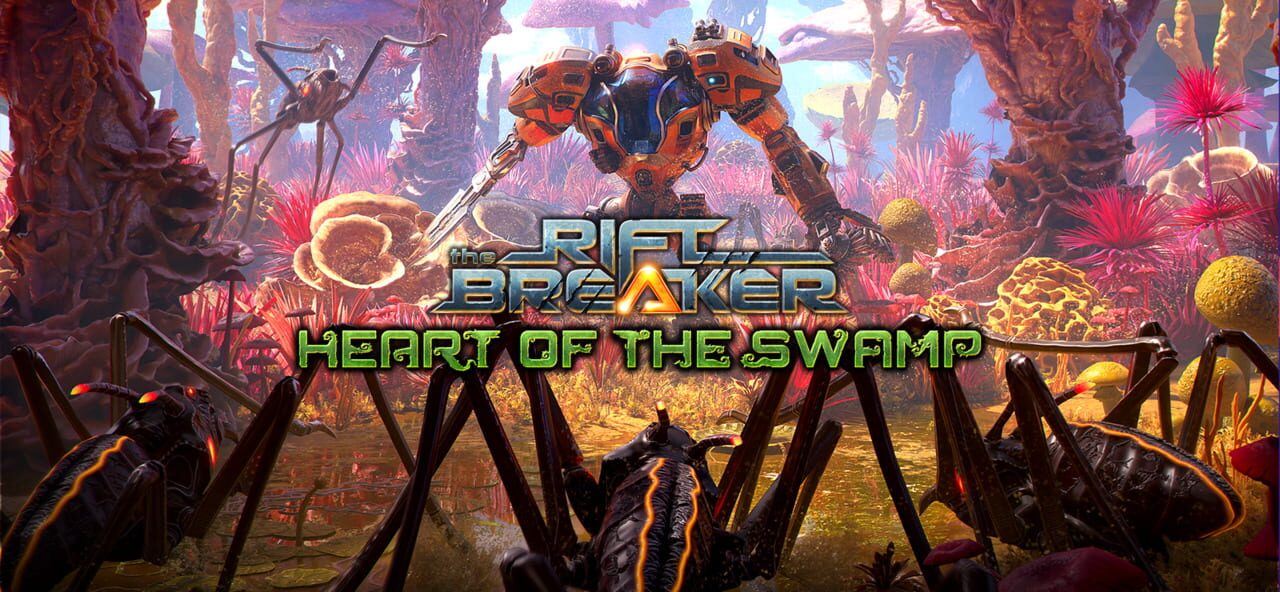
1. Summary
Heart of the Swamp drops Ashley and Mr. Riggs into a fungal swamp where most of the map is mud and water you cannot build on, and a lot of the discussion turns on that choice. Supporters call it a space puzzle that forces new strategies. Critics say it removes the base building they bought the game for.
The story, the price and the expansion's place among the three DLCs divide reviewers as well. Fans enjoy the banter between Ashley and Mr. Riggs, while detractors find the writing weak and the ending choice pointless. Some call it easily worth $10, others too short for the money, and roughly as many reviewers call it the best of the three DLCs as call it the worst. The praise that comes from both sides goes to the new towers and walls, especially the floating towers that sit on liquid. Players also like the colorful swamp and its music, and the Canceroth, a new enemy that climbs over walls.
Complaints about the missions are specific: slow movement through mud, thorn fields that have to be burned, a mining section and long pipe runs. Some players find resin, the new resource, redundant next to plasma, and several judge the new weapons weaker than older gear at endgame. In the first weeks after launch, crashes and freezes added to the negative reviews, though one reviewer later updated to say their crash had been fixed. Steam's all-language rating is Mixed, a little lower than the Mostly Positive English one this verdict reads.
2. What keeps coming up
What players praise
New towers and walls, led by the floating towersHigh
The tech unlocks draw steady praise, and the floating towers that can be built on water and mud lead it: "Floating Towers are god-tier." Players also single out the oversize towers (the HCM missile silo, the heavy artillery, the Piercer) and the regenerating vine walls, which one detailed review rates as "BY FAR the best in the game" because they also work as gates. Two reviewers add that the floating towers pay off outside the swamp: one found them useful on Metal Terror's maps, and the other says they make Metal Terror much easier because they can be built on Morphium.
The praise has limits. One player points out the swamp towers have no upkeep and make defense easier than it should be, another calls the new towers "nearly useless" against long-range enemies, and the vine walls draw both "incredibly convenient" and "insultingly bad" verdicts. Two players also want walls that can go on liquid.
A colorful swamp with good musicMedium
Players who mention the setting mostly like it: "The swamp has a great atmosphere, music fits so well," and several describe it as surprisingly bright and pretty, with the giant mushroom tree as its centerpiece. One negative review concedes the visuals are the one thing it has going for it. A small minority finds the biome too close to the existing jungle, or the map simply average.
Tough waves and the CancerothMedium
The Canceroth, a corruption-spreading monster that climbs over walls, gets the most attention among the new enemies: "these guys actually provide a legitimate threat to your base." Reviewers who wanted a challenge describe losing well-defended outposts, late areas that stay hard even with endgame gear, and a biome that is "extremely unforgiving, especially in survival." One reviewer flags heavy ranged and artillery waves that pick off deployable towers as a balance issue. A few players who came in with old saves and upgraded weapons from the other DLCs finished it easily and felt the final assault lacked threat.
Where players are split
Building on tiny islands surrounded by waterHigh
At least 14 reviews discuss the limited building space, and they divide on it. Supporters call the limited land "a fresh take on base building and a space saving puzzle to solve," and say expanding the main map as you progress and fighting for new ground makes each foothold feel earned. Critics find it the expansion's main irritation: "You can't build on water," even though the water is shallow enough to walk through. One asks why there is no water foundation when sand and acid have one, another why a technologically advanced species is "unable to build in ankle deep water," and a third says the DLC "took away everything that is fun about this game." Some positive reviews list the lack of space as their only complaint.
Price and lengthHigh
Roughly as many reviews say the expansion is worth the money as call it short, thin or overpriced. On one side: "Pretty shallow for the 10€," "Way too short," finished "in few hours," or worth buying only on sale. On the other: "Easily worth the $10," a decent number of extra campaign hours, and one estimate of 6 to 8 hours that makes it the longest of the three DLCs. The few reviewers who give a completion time put it at about 4 to 8 hours, so the disagreement is less about length than about whether those hours feel fresh.
Story and writingMedium
Fans like the banter between Ashley and Mr. Riggs, call the story "unusually well written," and enjoy its focus on restoring an ecosystem instead of fighting a conspiracy. Detractors call the dialogue weak or "awful," object that the conservation-minded Ashley now burns the swamp and sets off nukes, and see the save-or-kill-the-tree finale as hollow: "the choice at the end of whether to save or kill the tree literally does nothing." Some positive reviews make the same point about the two endings barely differing.
Best or worst of the three DLCsMedium
Reviewers often rank it against Metal Terror and Into the Dark, and they land on both ends. Some call it "Best DLC out of the trio" or "the most worthwhile of the three," usually for its unlocks or for a campaign that feels like a campaign. A similar number call it the worst, saying the other two had stronger stories and more interesting missions. Several positive reviews push back on the rating itself ("Not sure where all the hate comes from"), and one reviewer says they expected the DLC to be bad because of the negative reviews.
Poogrets and feeding the swamp creaturesLow
The Poogrets, creatures you feed to progress some objectives, polarize players. Some adore them ("Also, Poogrets are the best."), while others call feeding a creature so it can "fart and poop" for an objective childish, or simply say "Poogrets are a worthless addition."
What frustrates players
Tedious missions and slow movement through mudMedium
Negative reviews often describe the campaign as tedious or a slog. Players cite long resin pumping missions, a mining section that recalls Into the Dark, regrowing thorn fields that must be burned, and long pipe runs between scattered islands. Mud slows the mech down, and one review asks for "an upgrade to traverse the liquid portions faster considering 90% of the map is just mud pools." Another objects to the map changing size several times and to an outpost being deleted after the player had built on it, calling it padding. Fans counter that the missions are varied, with more new objective types than earlier DLCs.
Crashes, freezes and broken systems at launchMedium
12 reviews report technical problems, most of them written in the first three weeks after launch: crashes every 30 minutes, crashes when loading saves, stuttering, a nest spawning outside the map, slowdowns in large thorn fields, and broken water pipes and orbital artillery. Two of them stress they ran no mods, and one requested a refund. Others reported no issues at all. One player who crashed on every save load later updated their review to say the crash had been fixed, and later bug reports are scattered (a crash near a special plant on the second map, freezes in certain areas).
Resin and the new weapons feel redundantLow
Several players who mention resin, the new liquid resource, see it as pointless because plasma is already plentiful by the time it unlocks: "Resin is worthless when you transition into Fusion power." One reviewer calls it amazingly useful. The new player weapons get similar criticism, judged weaker than gear from the earlier DLCs at endgame, with the Tornado skill and the Root Gun as the usual exceptions.
Outpost cap and co-op ownershipLow
A couple of reviews raise system limits: players with every DLC can hit the 12-outpost cap before reaching the swamp, and in co-op both host and client need the DLC, with DLC buildings reportedly left behind in vanilla games.
3. The player conversation
The tone is more ambivalent than angry. Several positive reviews hedge ("not bad, just not amazing," "I wish I could give it a neutral rating," "it's not great, it's just alright"), and several negative ones open by praising the base game and the other expansions before saying this one missed. A few reviewers, positive and negative, say they bought it partly to support the developers. Short one-word reviews and swamp jokes make up a good share of the page and carry little signal.
How players approached it shapes what they say. A few who brought in an endgame save with both earlier DLCs finished call it short and easy, though others with maxed gear still found the late areas hard. Complaints about water often come from players used to building freely anywhere, and the praise for the same feature comes from players who enjoy working within tight space.
In the first six weeks after launch 74% of reviews recommended it, with bug reports making up much of the negative side. Reviews in the rest of 2024 were the warmest (89%). From 2025 on the share fell to around 62%, and the complaints moved from crashes to design: building on water, tedious missions, resin, and the story. Reviews defending the expansion ("I don't get the negative reviews") also appear mostly from 2025 on.
4. What the developers could do
- Let players build something on shallow water. One critic points out that a fusion reactor is possible but a concrete pylon on shallow water is not, and others ask for a water foundation or walls on liquid; a limited water foundation would answer them without removing the space puzzle its fans enjoy.
- Speed up mud traversal and trim the padding missions. Slow movement through mud pools, long resin pumping and thorn burning, and outposts deleted after map changes are what the "slog" reviews describe.
- Keep stability and performance under watch. Launch-window crashes, save-loading failures and thorn-field slowdowns account for much of the early negative side, and one player updated their review once the crash was fixed.
- Give resin and the new weapons a real endgame role. Several players who discuss resin say it only duplicates plasma, and the new guns lose to older gear, so the unlocks feel like filler outside the floating towers.
- Make the save-or-kill-the-tree choice matter. Both positive and negative reviews say the two endings barely differ, which undercuts a story that already divides players.
- Tune scaling for endgame saves and ranged waves. A few players arriving with maxed gear found it too easy, while others report ranged and artillery enemies shredding deployables and upkeep-free towers that make defense easier than it should be.
- Raise the outpost cap and ease co-op ownership. Players with every DLC can hit the 12-outpost limit before the swamp, and co-op requires both players to own the expansion.