The Witcher 3: Wild Hunt
CD Projekt RED · RPG, Open World, Adventure
Overview
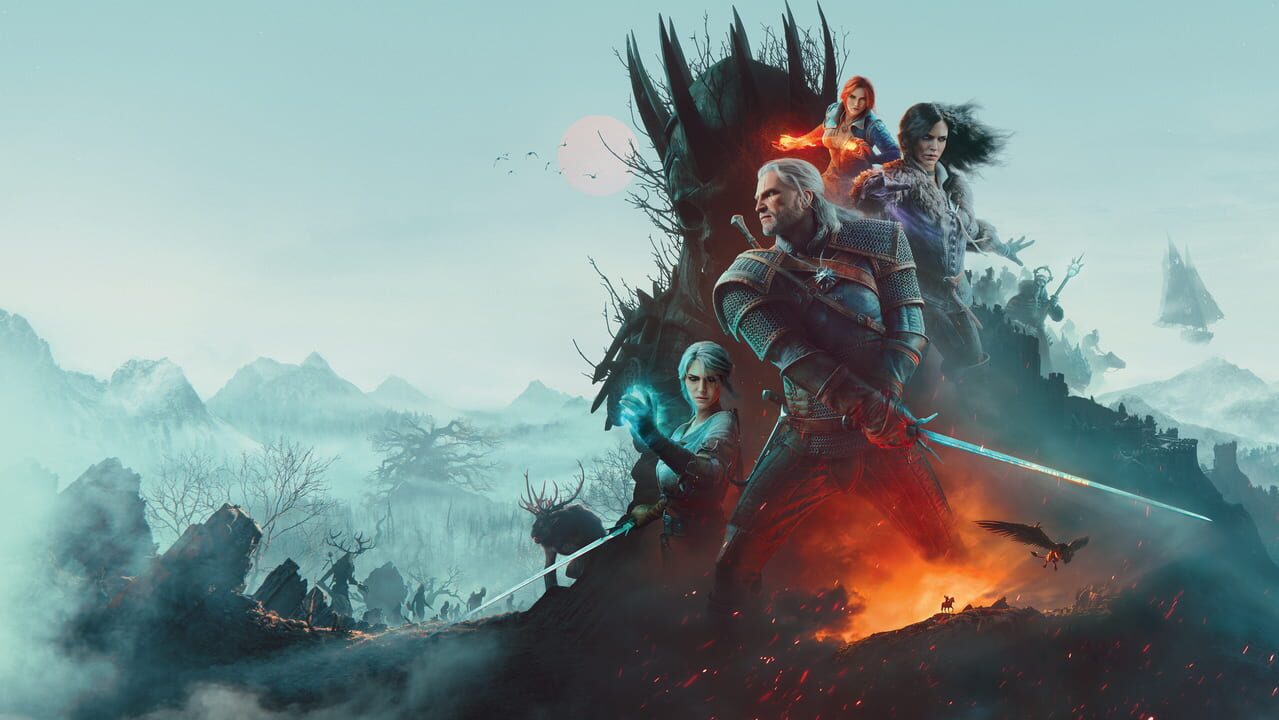
You are Geralt of Rivia, mercenary monster slayer. Before you stands a war-torn, monster-infested continent you can explore at will. Your current contract? Tracking down Ciri — the Child of Prophecy, a living weapon that can alter the shape of the world.
THE GAMEQ VERDICT9,999 reviews analyzed
What players are actually saying
1. Summary
A decade after its May 2015 launch, recent reviewers treat The Witcher 3 as a shared reference point, and "best game ever made" or a close variant turns up in hundreds of reviews. The reputation rests on the same things it always has: the writing; side quests like the Bloody Baron's, which reviewers say outclass whole main campaigns elsewhere; the characters, Geralt above all; the atmosphere of Velen, Novigrad, Skellige and Toussaint; the soundtrack; and two expansions often called the best DLC ever made. First-timers keep arriving, many finally playing a copy they bought years ago before the remaster and The Witcher 4 land, and many describe the same arc: a slow, overwhelming first few hours, sometimes a second or third attempt years apart, and then total immersion. Deep sales (reviewers cite Complete Edition prices between $2 and $15) make "just buy it" a common send-off.
The caveat repeated most often, even inside glowing recommendations, is that combat and movement feel clunky and dated: dodge-and-slash repetition, Quen as a crutch, floaty hits, a horse (Roach) that has become a running joke, and fiddly inventory and menus. Some negative reviews are about problems outside the design. The next-gen (4.0+) DX12 build crashes for some players, especially with ray tracing or HairWorks enabled, and 2026 brought protest reviews over the announced Windows 11 minimum requirement, a base-game price rise when the DLCs went free, and the REDlauncher. Players who find the game boring or overrated are a small minority.
2. What keeps coming up
What players praise
Story, side quests and charactersHigh
Most longer reviews rest at least part of their case on the writing. The main story (Geralt's search for Ciri) is praised as emotional and personal, and the father-daughter relationship comes up again and again; a few long reviews describe crying at the Isle of Mists reunion or the snowball fight at Kaer Morhen. The side quests get even more credit. The Bloody Baron questline is the quest reviewers name most often, held up as proof that a "side" quest can outwrite other games' main campaigns. Reviewers say even notice-board contracts and errands like fetching a frying pan unfold into morally gray short stories with no clean right answer, and that choices come back to matter hours later.
Geralt is called one of fiction's best protagonists, and Yennefer, Triss, Ciri, Regis, Gaunter O'Dimm and the Baron all get devoted mentions. Yennefer or Triss is a friendly argument that never ends, with partisans on both sides and a few reviewers cheerfully admitting they two-timed and got the punishment scene.
Some reviewers found the main plot weaker than the side content, calling Act 3 or the Wild Hunt battles rushed. One reviewer finds Cyberpunk 2077's main story stronger. A few complain that the ending logic is opaque. One made what felt like all the good decisions with Ciri and still saw her become empress, another "did everything right" in Blood and Wine and got its bad ending over a single choice, and some resent needing a guide to avoid that.
The world, its regions, and the soundtrackHigh
Velen, Novigrad, Skellige and Toussaint each carry a distinct identity in the reviews, and the atmosphere they build is backed by a soundtrack players call one of gaming's best.
The expansions and the priceHigh
Reviewers treat Hearts of Stone and Blood and Wine as part of the reason to buy. Blood and Wine is often called the best expansion ever made, for Toussaint's fairy-tale contrast with the war-torn north, the vineyard home, Regis, and a proper farewell to Geralt. Hearts of Stone is praised as the darker, tighter story, and several reviewers name Gaunter O'Dimm one of gaming's best villains. A few prefer Hearts of Stone, so which expansion is better stays a friendly argument.
Sale prices come up often: reviewers cite paying between $2 and $15 for the Complete Edition, and one says the game is "too cheap for what it offers." Before the 2026 announcement made the expansions free for base-game owners, reviewers commonly advised buying the DLC with the base game, and the free upgrade was greeted as generous. A few objected that the base price rose when the DLCs were folded in.
Slow starts, second attempts and replaysHigh
Much of the conversation is about the game's relationship with time. Two groups stand out: first-timers finally playing a copy they bought long ago ("Bought this game years ago, tested it, hated it, dropped it," one begins, before getting hooked), and veterans on their third, fourth or later playthrough, many replaying ahead of the remaster and The Witcher 4. Both describe a slow, overwhelming, tutorial-heavy opening. Some took two or three attempts across years to get past White Orchard or early Velen, and then somewhere around the Bloody Baron it clicked and took over months of their time. Reviewers who finished it advise others to "stick with it," and a common wish is to play it fresh again ("I wish I could experience it for the first time again").
Many reviewers say the game has aged remarkably well, expressing disbelief that an eleven-year-old game looks and writes better than current releases, and some compare it favorably to newer RPGs: Skyrim, Red Dead Redemption 2, Baldur's Gate 3, Elden Ring, Kingdom Come: Deliverance 2, Cyberpunk 2077 and, in a couple of reviews, Crimson Desert. The dissent comes from players for whom the dated handling and pacing were disqualifying in 2026. One rejects the advice to push through the first hours and asks why they would play "anything that can't hook me within the first hour."
The 2026 announcements: gratitude and some protestMedium
Reviews written from late May 2026 onward are shaped by news. CD Projekt Red announced a paid third expansion eleven years after release, then at Gamescom in late August the free remaster, the free Complete Edition upgrade and the expansion's reveal. That announcement week produced 1,254 reviews at 97.1% positive, the biggest week in the recent slice. Reviewers that week thanked the studio ("Thank you CDPR for being pro consumer") or announced replays to "finish this game before the remaster comes out." The Witcher 4 comes up often, mostly with hope and sometimes with caution: Cyberpunk 2077's launch is the usual warning, its later recovery the usual counterpoint.
The same period brought complaints, nearly all about things outside the game itself. The late-May 2026 change to minimum requirements (Windows 11 required, Windows 10 and HDD support dropped for the updated build) drew protest reviews arguing an eleven-year-old game should stay playable for everyone who bought it. A few others objected to the base-price rise or to a new EULA and telemetry. None of this visibly moved the overall ratio; the weeks after the announcement stayed between 96.5% and 98.5% positive.
The books and the wider franchiseLow
The novels and the wider franchise come up as an on-ramp or a follow-up, and some reviewers started reading the books after finishing the game.
New Game Plus and build varietyLow
Replayers credit New Game Plus and the build variety across sword, sign and alchemy playstyles.
Witcher contractsLow
Reviewers single out Witcher contracts as the part of the game where Geralt works most like a monster hunter: investigation, preparation, then the fight.
Choice carry-over from The Witcher 2Low
A few reviewers who imported a Witcher 2 save praise seeing their earlier choices carried over.
Where players are split
Gwent, the card gameMedium
Gwent, an optional card game, comes up in hundreds of reviews. A recurring joke is that the apocalypse and a missing daughter can wait for one more round of cards ("And Ciri? She can wait."), and some call Gwent the real main game with an RPG attached. Real praise runs alongside the joke: deck-building depth, faction identity, and card-collecting as the reason whole playthroughs ran long. A smaller group finds it boring or annoying and skips every match it can, and some resent the quests that require one.
The next-gen update and crashesMedium
The December 2022 next-gen update frames most technical comments. Many reviewers say the updated game looks like a modern release, runs well on mid-range and even potato hardware in DX11, and is excellent on Steam Deck (with 40fps caps described as near-flawless) and on Linux via Proton. Modding gets steady praise as the way to fix the remaining rough edges, from texture overhauls to Roach and fast-travel quality-of-life mods.
A smaller group reports serious crashes. Some reviews, including negative ones from otherwise devoted fans, describe the DX12 build crashing to desktop, hard-locking, stuttering in Novigrad, or degrading over long sessions, with ray tracing and HairWorks the most-blamed settings. Players pass fixes around in the reviews: switch to DX11, disable HairWorks, cap frames, verify files, or roll back to the "classic" 1.32 branch. Some players with crashes stayed positive and posted workarounds; others flipped negative because a decade-old game shouldn't perform this badly, and a few blamed updates nobody asked for. The REDlauncher is a separate, external irritant: several reviews object to a third-party launcher in a paid product, one because it asks them to buy The Witcher 4 before letting them reach the game, and the --launcher-skip workaround gets passed around.
What frustrates players
Combat, movement and RoachHigh
The moment-to-moment handling is the flaw reviewers raise most, and the word they use is "clunky." Dodge-spam plus fast attack wins most fights, Quen becomes a crutch, hits can feel weightless, the lock-on picks the wrong target, and enemies share similar patterns, so a large bestiary ends up fought the same way. The game also gets easy once builds come online, even on higher difficulties, which is why many veterans advise starting on Death March with enemy upscaling so that oils, potions, decoctions and the bestiary matter. Some who took that advice describe the combat "clicking" and even becoming a highlight, so reviewers disagree on whether "combat is the weak point" or a matter of difficulty settings.
Movement draws its own complaints. Geralt "moves like a small tank," jumps and ledges are unpredictable, swimming gets singled out, and Roach is the game's beloved running joke, spawning on rooftops, refusing bridges and halting at twigs. Inventory management, item bloat, unskippable vendor chatter and the save system (no saving during scripted sequences, unreliable autosave) round out the list. Most reviews that raise these still recommend the game, calling the combat dated and praising the rest. Among sub-10-hour negative reviews, though, clunky combat and controls are the most common stated reason for quitting.
Who bounces off, and whyMedium
About 4.7% of the recent reviews are negative. Combat and controls too clunky to endure is one of the biggest complaints among them. Another group, often with 30 to 150 hours, calls the game a "wide as an ocean, deep as a puddle" checklist whose quest formula (follow marker, Witcher senses, kill) and shallow loot, skill and economy systems wear thin. Others find it more a movie than a game, with too much slow dialogue and follow-quests, and the technical complaints covered above account for more. Some negative reviewers tried repeatedly before giving up ("I have tried at least 4 times to give this game a chance over the years"), sometimes while still recommending it to others. Some long-time RPG players who prefer denser systems (Baldur's Gate 3, Gothic, the earlier Witchers' harder economies) concede the writing and world but reject the "greatest RPG ever" framing.
Assorted long-standing bugsLow
A scattering of long-standing bugs persists in the reviews: softlocked scavenger quests, quest-tracker confusion, and controller glyph and input issues.
3. The player conversation
Most of the recent conversation is celebration. One-word "peak" and "masterpiece" reviews sit beside two-thousand-word retrospectives, wishes to play it fresh again, and confessions that the game ruined every other RPG for its author. The 95.3% positive ratio in this recent slice runs slightly below Steam's 97% lifetime figure. Disagreement is narrow, and some negative reviews concede the world and writing before explaining why the hands-on experience lost them.
The recent reviews follow the news cycle. A thin tail of older reviews from 2015 onward persists through re-edits ("Updating my review as my outlook on this game has changed"), while the recent block shows a steady spring-2026 stream of first-timers and replayers, a brief protest cluster over the Windows 11 requirement in late May, and then the Gamescom announcement week in late August, the biggest week in the slice and one of the most positive, as players returned to say thank you. The disagreements between fans are mild and lasting: Yennefer or Triss, Blood and Wine or Hearts of Stone, Gwent devotion or Gwent hatred, Death March or story mode. The heated arguments are about crashes, the launcher and the system-requirements policy, mostly from people who want the game to stay playable on their machines.
4. What the developers could do
- Use the remaster to modernize combat feel and targeting. Clunky combat is the caveat reviewers repeat most often and the most common reason sub-10-hour players give for quitting, with dodge-spam, a Quen crutch, weightless hits and a lock-on that picks the wrong target named again and again.
- Stabilize the DX12 next-gen build. Crashes to desktop, hard locks and Novigrad stutter (most often blamed on ray tracing and HairWorks) turned some devoted fans negative, and players are left trading workarounds like switching to DX11 or rolling back to 1.32.
- Keep the game playable on older setups. The Windows 11 minimum and dropped HDD support drew protest reviews from owners who argue an eleven-year-old game should keep running on the machines they bought it for.
- Smooth out the opening hours. Some players needed two or three attempts over years to get past White Orchard and early Velen, and reviewers who finished tell newcomers to "stick with it."
- Clean up movement, Roach, inventory, and saving. Tank-like steering, Roach spawning on rooftops or refusing bridges, item bloat and unreliable autosaves are the rest of the caveat players attach to otherwise glowing reviews.
- Make the REDlauncher skippable and ad-free. Several reviews object to the launcher, one because it asks players to buy The Witcher 4 before they reach the game, and players pass around a command-line workaround to avoid it.
- Signpost the choices that decide the ending. A few players who made what felt like the right choices still landed on an ending they didn't want because of small, unsignposted decisions, and some resent needing a guide.
- Fix the long-standing quest and controller bugs. Softlocked scavenger quests, quest-tracker confusion, and controller glyph and input issues still come up years after launch.
Open the The Witcher 3: Wild Hunt Remastered page
1. Summary
The Witcher 3 is still the game people love. Hundreds of reviews in this slice call it a masterpiece, an all-time great or the best RPG they have played. Reviewers thank the studio for making the upgrade free, and owners who lacked the expansions were pleased to find them included. Returning players and people who had bounced off the game years ago describe the Remastered version as their excuse to start again, and some name the new skill tree, looting from horseback, transmog or smoother riding as reasons.
The upgrade itself launched in rough shape. Nearly two thirds of the negative reviews (65%, 622 of 960) describe a technical problem: frame rates well below the previous Next-Gen version even on top-end Nvidia cards, rendering that broke on AMD graphics cards until an optional driver arrived, crashes, failed launches and saves that would not load. The look is a separate argument. Long-time fans in particular say the brighter, more realistic lighting strips out the original's painterly mood, while others find it stunning. Some reviewers were angry that the update replaced the version they owned; others reply that Steam's Game Versions menu still lets players roll back. Reviews grew more positive through the week as players reported fixes landing, while the argument over the new look carried on.
2. What keeps coming up
What players praise
Still one of the great RPGsHigh
The base game's reputation is untouched. Hundreds of reviews use words like masterpiece, greatest or "of all time", and the praise centres on the same things as ever: side quests with real consequences, the Bloody Baron, Hearts of Stone and Blood and Wine, Geralt himself and the soundtrack. One long review put the quest design simply: "Many of them could easily be main quests in other games." Dozens of negative reviews also call it a favourite or a masterpiece before turning on the remaster. A minority still finds the main plot slow, Gwent tiresome or the whole game "overrated", complaints that read the same as they did before the update.
A free upgrade, expansions includedHigh
Plenty of reviewers thank the studio for not charging for the upgrade, and owners who only had the base game were surprised to find Hearts of Stone and Blood and Wine added too. "I don't think I've ever had 4.99$ go this far in my life, best money spent ever," wrote one player who had picked the game up on sale. Others compared it favourably with paid remasters from other publishers. Some negative reviews answer that a free update can still be criticised, and a handful of reviewers say the store price went up while others note it went on sale at half price in launch week.
A reason to return, and a way in for newcomersMedium
The upgrade pulled people back. Returning players describe starting a third, fifth or seventh playthrough, a New Game+ or a Death March run, or finally finishing the expansions they never reached. A smaller group had owned the game for years without getting past the opening hours, and they credit the smoother controls and new look for finally hooking them: "took me 3 tries to finally click with this game, remastered patch has been the catalyst." One player who had quit after an hour wrote that the remaster "completely changed my opinion of the game."
Quality-of-life additionsLow
Some reviews name specific additions: looting while mounted, transmog through the new Reforge system, more accessibility options, a photo mode, finishing moves, better camera options and in-game mod support that, they note, reaches consoles. "Roach rides a bit smoother, ledge and ladder climbing are better as well," wrote one returning player. The criticism is about details: transmog is locked "behind a lvl 24 quest", item notifications can stack up, and some accessibility toggles reset between sessions.
Where players are split
The new lighting and lookHigh
The visual overhaul splits reviewers. Players on capable machines praise the path tracing, reworked lighting, sharper textures and denser foliage, which one newcomer said made the world "look like a modern release rather than a decade-old classic." The other camp, largely long-time fans, says the brighter, more photorealistic lighting lost the original's colour grading and dark-fantasy mood. Complaints describe washed-out colours, nights almost as bright as day, overexposed sunlight, glowing hair and pitch-black interiors under path tracing. One wrote that "It's like someone who is afraid of the dark was in charge of this remaster." Several players fixed part of it by turning bloom off or lowering gamma, and some asked for an option to restore the old lighting while keeping the gameplay changes.
Combat and movement changesMedium
Reviewers disagree about whether the reworked combat and movement make any difference. Some found Geralt more grounded and the fights more fluid ("The combat does feel noticeably better."), with new finishers and better Roach handling. Others felt nothing changed ("But the combat and horse controls feel exactly the same to me."), and a few say it got worse, with new animations delaying inputs; one player wrote "you no longer control Geralt, you merely give suggestions what he should do." Reports of attacks swinging at empty air, dodges that don't fire and heavy controller input lag overlap with the bug complaints. Some players who always disliked the combat say the remaster did not change their mind.
The reworked skill treeLow
The new ranked skill tree with prerequisites is welcome to some: "The skill tree is probably my favorite part." Long-time players with established builds are the unhappy side. Reviewers say the update refunded everyone's points and removed or rebalanced several skills, and some feel the new tree pushes them toward one heavy-attack style. "Say your goodbyes to and start mourning your build," warned one player who still recommended the game. Several asked for the old tree as an option or a free respec in the accessibility menu.
Steam Deck and LinuxLow
Handheld and Linux players report opposite experiences. Some say the remaster runs well on Steam Deck at medium settings and "plays perfectly on linux", and a few AMD owners on Linux avoided the Windows rendering bugs entirely. Others found graphics settings locked to the Deck preset, ray tracing and DLSS unavailable under Proton, games that would not launch, or a Deck experience that went from smooth to "borderline unplayable on deck". Several reviews mention that Windows handhelds like the ROG Ally and Xbox Ally were hit by the AMD problems.
What frustrates players
Performance fell, even on top-end PCsHigh
Frame rates and stutter come up in more negative reviews than any other single problem. Players on RTX 4090 and 5090 cards report numbers they consider absurd for an 11-year-old game ("40fps on a 4090 at 2k res with raytracing on and pathtracing off without dlss is crazy work"), and others compare the remaster directly with the Next-Gen version, saying the same save and settings now run at half the frame rate. They name specific causes: path tracing and ray tracing that barely differ in cost ("Getting the same performance with and without Path Tracing Lol."), Nvidia HairWorks cutting frame rates sharply until, they say, a hotfix addressed it, screen-space reflections, VRAM spikes and long load times. Several players dislike that the image only looks clean with DLSS or FSR, because turning upscaling off leaves a jagged or pixelated picture. Some positive reviews carry tuning advice (turn off HairWorks, skip path tracing, update drivers), and others report smooth play on mid-range cards once settings are adjusted.
Broken rendering on AMD graphics cardsHigh
Negative reviews from AMD owners describe the same broken rendering: black grass, black boxes in place of fire and smoke, missing trees, flickering water, Ciri missing her torso in the prologue and Geralt's skin turning dark. "Literally my favourite game of all time but the remastered is completely broken," wrote one player. Reviewers say the fix was an optional AMD driver, version 26.9.2, that the Adrenalin app did not offer automatically; as one put it, "The remastered update was tested and supposed to run on a driver version that isn't out yet". Some AMD users edited their reviews to positive after installing it, but others still report problems with it, including Windows 10 users and owners of older Radeon cards, and several complain that the RED launcher told them their drivers were out of date when they were not.
Crashes, failed launches and lost progressHigh
Crash reports range from a game that will not start to crashes every few minutes, black screens with audio, script compilation errors from leftover mods and freezes on loading screens or ladders. Saves cause their own trouble: some players lost access to saves, others found manual saves failing, settings resetting on every launch, or saves that could not go back to the older version once the remaster had touched them. "Crashes every 10 min." is a whole review. Old mods stopped working, and several players only got the game running after disabling mods in the launcher. Quest bugs also appear: an unclimbable ladder in the prologue, a griffin trophy that cannot be looted, and Gwent cards vanishing from a player's collection.
The update replaced the version people ownedMedium
Some negative reviews object that the remaster overwrote their game instead of arriving as a separate listing or an opt-in: "The remaster being mandatory and not optional is actually a stupid idea." Players with older PCs, Windows 10 machines or no SSD feel locked out of a game they had been playing the week before. Other reviewers answer with step-by-step instructions for picking the original or Next-Gen version under Properties: "CDPR didn't take anything away, you just need to manually pick the version you want in the Steam settings." Players who rolled back add caveats: the download is large, saves made in the remaster do not load in older versions ("save files are only compatible when moving from original to remaster but not the other way around"), and they expect the upcoming Songs of the Past expansion to require the new version.
Audio, controller and settings bugsLow
Dialogue plays too quietly under the music ("half the cutscenes it sounds like the NPCs are whispering they're so quiet"), controllers double their inputs in menus ("Controller Button presses are duplicated forcing all menu navigation to only function on keyboard"), vibration fires constantly, and resolution or HDR settings reset or refuse to apply. Disabling Steam Input fixed the controller problems for several players.
Launcher, requirements and older hardwareLow
A small group objects to the RED launcher, its sign-in prompts and data collection ("the launcher is such a useless awful inclusion"). Others point to the new minimum requirements, which they say list Windows 11 and stronger GPUs, and say their older machines can no longer run the default version. A few players said the remaster actually ran better than before on their older hardware.
3. The player conversation
Positive and negative reviews rarely answer each other. Most positive reviews are brief praise for the game and the gift, while the negative ones tend to list what broke. Most negative reviews name the remaster, the update or the patch directly, dozens say outright that they still love The Witcher 3, and some promise to switch their vote once fixes arrive. A few did exactly that in edits, crediting the AMD driver or a hotfix. Some defenders call the critics review bombers with weak PCs.
Veterans in the middle of playthroughs, or with modded installs and established builds, are the ones describing lost saves, refunded skill points, broken mods and the changed look. AMD owners and players with mid-range or older hardware report the rendering and performance problems, while high-end Nvidia owners split between smooth play and frame rates in the 30s and 40s on the most expensive cards. Newcomers and lapsed players who never finished the game write warmly about it, and they credit the remaster for getting them through the opening hours.
Day by day, reviews dipped on the second day after the 29 September launch and were more positive than on launch day from 2 October onward, by which point reviewers report that AMD's optional driver and the first hotfixes were out. The edited reviews that flipped to positive credit those technical fixes; the argument over the new look continued through the week.
4. What the developers could do
- Restore performance to at least Next-Gen levels. Frame rates are the problem negative reviews name most often, and players compare them with version 4.04 on the same save and settings, naming path tracing, ray tracing, HairWorks and screen-space reflections as causes.
- Fix AMD rendering in the game and correct the launcher's driver check. AMD owners describe black grass, missing geometry and flicker at launch, reviewers say the fix depended on an optional driver the Adrenalin app did not offer, and the launcher told up-to-date users their drivers were outdated.
- Stabilise launches, saves and settings. Negative reviews describe crashes and failed launches, along with failed saves, script errors from leftover mods and settings that reset every session.
- Offer a classic lighting and colour option. Long-time fans who dislike the new look say the tonemapping and bloom erased the game's mood, and several asked to keep the gameplay changes with the old look.
- Make the version choice easier and keep saves compatible. Reviewers want the remaster to be opt-in or clearly selectable, saves that move back to older versions, and a clear answer on whether Songs of the Past will need the remaster.
- Add native anti-aliasing options that don't require upscaling. Players say turning DLSS or FSR off leaves a jagged or pixelated image, and owners of older AMD cards are stuck on FSR 2.
- Give veterans a legacy skill tree or free respec. Players with long-standing builds lost their points and several skills, and asked for the old tree or a reset option in the accessibility menu.
- Fix the dialogue mix and controller input bugs. Players report quiet voices under loud music, duplicated menu inputs and constant vibration.