Cities: Skylines II
Colossal Order · Simulation, Strategy, City Builder
Overview
Raise a city from the ground up and transform it into a thriving metropolis with the most realistic city builder ever. Push your creativity and problem-solving to build on a scale you've never experienced. With deep simulation and a living economy, this is world-building without limits.
Read moreShow less
Raise a city from the ground up and transform it into the thriving metropolis only you can imagine. You've never experienced building on this scale. With deep simulation and a living economy, Cities: Skylines II delivers world-building without limits.
Lay the foundations for your city to begin. Create the roads, infrastructure, and systems that make life possible day to day. It's up to you – all of it.
How your city grows is your call too, but plan strategically. Every decision has an impact. Can you energize local industries while also using trade to boost the economy? What will make residential districts flourish without killing the buzz downtown? How will you meet the needs and desires of citizens while balancing the city's budget?
Your city never rests. Like any living, breathing world, it changes over time. Some changes will be slow and gradual, while others will be sudden and unexpected. So while seasons turn and night follows day, be ready to act when life doesn't go to plan.
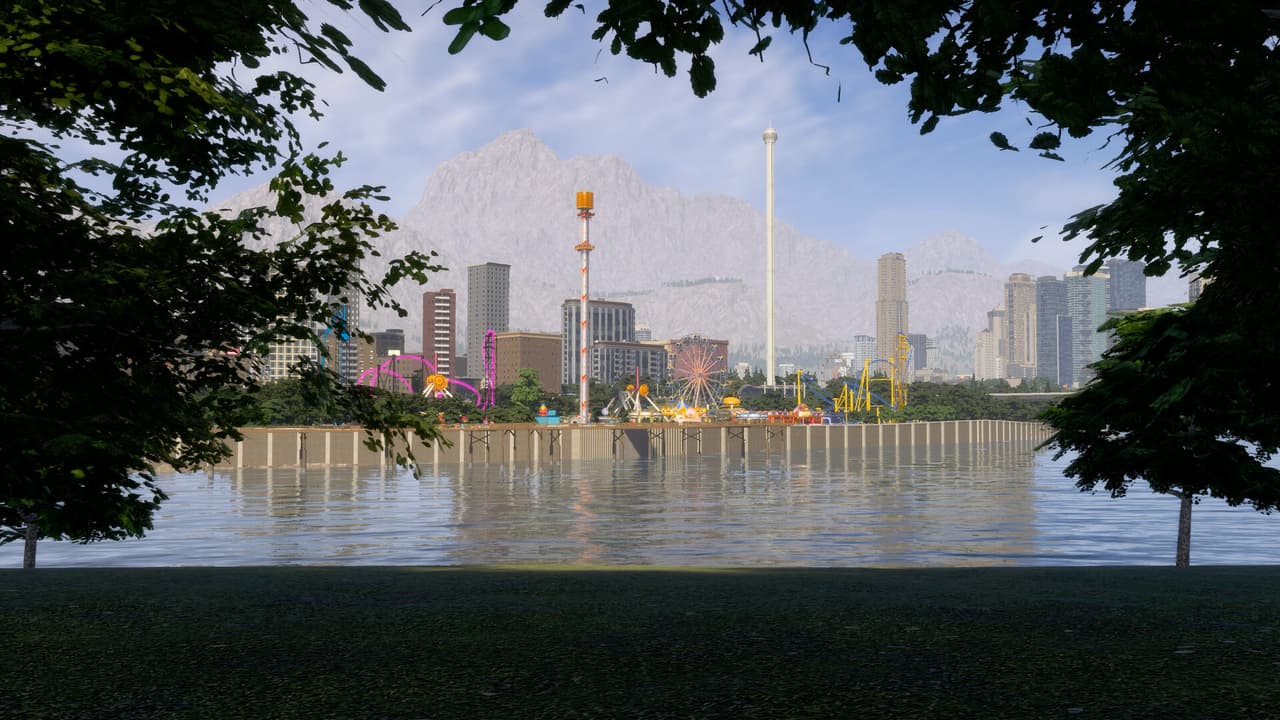
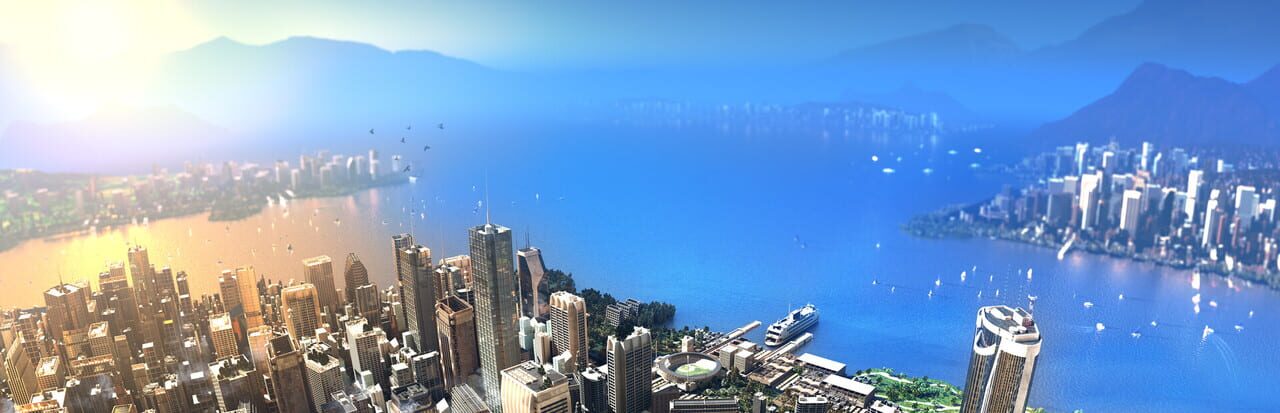
The most realistic and detailed city builder ever, Cities: Skylines II pushes your creativity and problem-solving to another level. With beautifully rendered high-resolution graphics, it also inspires you to build the city of your dreams.
AI and intricate economics mean your choices ripple through the fabric of the city. Remember that as you strategize, problem-solve, and react to change, challenges, and opportunities.
Cities: Skylines II lets you create without compromise. Now you can build sky-high and sprawl across the map like never before. Why not? Your city is you.
Your decisions shape each citizen's life path, a chain of events that defines who they are. From love and loss to wealth and wellbeing, follow their life's ups and downs.
Pick a map to set the climate of your city. These are the natural forces you'll negotiate to expand your city amid rising pollution, changeable weather, and seasonal challenges.
From the game's Steam store page.
THE GAMEQ VERDICT9,998 reviews analyzed
What players are actually saying
1. Summary
Cities: Skylines II reads as a game that recovered slowly from a bad launch and never fully shook it off. Players who liked it praised the road and intersection tools, enjoyed the slow, absorbing work of growing a city, and said the game had become far more stable and complete than it was in 2023. From February 2026 on, a steady share of them credited Iceflake, the studio reviewers say took over development, with turning it around. Recommendations climbed from 44% to 47% among reviews last edited in October and November 2025 to between 68% and 76% from February to August 2026. The negative reviews return to the same problems: performance that sinks as cities grow even on high-end PCs, crashes, failed launches and lost saves (made worse by autosave being off by default), and anger over DLC prices for content some felt belonged in the base game.
About one review in six measures the game against Cities: Skylines 1, and those reviews split: the sequel won on roads, visuals and built-in features, and the original won on stability, Steam Workshop modding, custom assets and the breadth of its expansions. Mods divided players the same way. Some called them essential; others said the Paradox Mods platform and updates that broke mods made the game hard to play at all. Underneath is a city builder with a strong core that a sizeable share of players still could not run well or trust with their saves.
2. What keeps coming up
What players praise
Much improved since launch, with Iceflake credited for the turnaroundHigh
Several hundred reviews say the game got better since launch, some of them reviews their authors switched to positive after an update. They describe a rough launch followed by a game that worked: fewer crashes, long-standing simulation bugs fixed, and, for a few players, cities of 200,000 or more that now ran acceptably. Iceflake became the name attached to that recovery. It appears in 1% or fewer of the reviews last edited from October 2025 to January 2026, and in 7% to 13% of each month's reviews from February 2026 on. "Iceflake has really turned the game around." was the plain version; one player called it "the Sim City 2013 of the 2020s.. Except it actually got fixed." Negative reviewers used the same timeline against it. Plenty of them agreed things had improved and still said the fixes were years late, or that "Performance is STILL not where it should be."
Road building and detailing toolsMedium
Players singled out roundabouts, precise angles and measurements, highway interchanges, the grid and line tools, and stacked roads, and a few said the tools made it hard to return to the first game: "Road system improvements alone make it better than CS1 by a mile", and "Once you experience road tools in CS2 its so hard to go back to CS1". Some negative reviews made the road system their one exception. The complaints here were about the edges: road snapping, overlap and "clearance too low" errors, and bridges over water, which a few players said were harder than they should be.
A relaxing, absorbing way to build a cityMedium
A steady stream of short and long positive reviews said the game was simply fun, calming, and hard to put down: players described losing track of time, planning transit networks, recreating real places, and watching residents' daily lives. A few of them said they had never played the first game and enjoyed this one on its own terms. "Fun, relaxing, do what u can imagine." sums up the tone of this group.
Features that CS1 sold as DLC or mods are built inLow
Players who compared base games pointed out that pipes and cables run inside roads, that trams, mixed zoning, medium density, seasons, upgradable service buildings and larger maps came standard, and that public transit takes cars off the road properly. CS1 veterans who preferred the sequel leaned on this point.
Free region packs and official assetsLow
The free region packs of themed buildings were well received, and some players said they changed their view of the game ("the free region packs redeem the game in my eyes"). The complaints came from players for whom the packs downloaded slowly or broke loading through Paradox Mods.
Where players are split
How it measures up to Cities: Skylines 1High
About 17% of the reviews compare the two games. Reviews saying CS1 was better, or telling buyers to go back to it, outnumbered the reverse about three to one. Some of them came from veterans citing hundreds or thousands of hours in the first game, who missed Steam Workshop, custom assets, the Industries and Parklife expansions, universities, policies, toll booths, and a sense that the cities felt alive. The other side said CS2 was the better base game, better looking, and easier to build well in. Some players held both views at once: "The worst part about this game is they improved so many of the building tools that it feels like crap to go back to CS1."
Mods: the fix and the problemHigh
Mods come up in about 18% of the reviews, in two different ways. One group said the game needed them: mods for traffic control, free placement and moving objects were described as the way to make it playable, and "Mods are saving this game, one mod at a time." The other group said mods were the reason they could not play: updates broke mods, outdated mods crashed the game on launch, heavy mod setups slowed loading, and the in-game Paradox Mods platform, with its separate account and no Steam Workshop, drew complaints ("paradox mods is genuinely unusable."). A few players who stuck to vanilla said it held up well for them, while others found vanilla too bare to enjoy.
Simulation depth: real city sim or city painterMedium
Reviewers disagreed about the simulation. Supporters liked visible supply chains, household detail, per-industry taxes and following individual residents, and some found the economy demanding early on. Critics said the economy was easy to game once established, that money and happiness stopped mattering, and that the game worked better as a sandbox for good-looking cities than as a management game: "It's a beautiful city painter (the detailing tools are pretty good) but if you're looking for an actual city simulation, look elsewhere unfortunately." Other players who treated it as a painter said that was what they enjoyed.
Graphics and visualsMedium
Praise for the visuals (realistic, beautiful, a big step past CS1's cartoon look) was more common than complaints about them. The negative side said the game looked washed out, plastic or dated for what it demands from a PC, and pointed to flickering shadows and lighting, aggressive level-of-detail pop-in, and DLSS ghosting.
Learning curve and tutorialLow
Some newcomers called the game complex and rewarding once they had watched guides; others said the tutorial and the error notifications did not explain why utilities, demand or zoning were failing, and some gave up early.
What frustrates players
Performance that drops as cities grow, even on strong PCsHigh
About 14% of the reviews raise performance, and the share held steady through 2026 while crash reports faded. Players described frame rates in the 20s to 40s on recent GPUs, heavy GPU load and stutter even in menus, and a CPU-bound slowdown of the simulation past roughly 50,000 to 100,000 residents, which some players with top-end processors also reported. Around 300 reviews name a graphics card or processor. Some positive reviewers agreed and told buyers to get the game only with a strong PC. A smaller group said the game ran fine for them and that the warnings were overstated.
DLC pricing and content held back from the base gameHigh
About 14% of the reviews bring up DLC or price. DLC came up often in reviews last edited in late 2025, around the Bridges & Ports expansion that reviewers say launched near the game's second anniversary: players objected to paying about $20 for ports, ferries and bridges over shipping lanes that they felt belonged in the base game ("Bridges and Ports should be a base-game feature"), and to a stream of creator packs and radio stations. Some Ultimate Edition buyers said they regretted the purchase, or that newer DLC was not included in it. In September 2026 a few reviewers objected to a new expansion pass, one writing "Charging $45 for a DLC where only ONE SEVENTH of it is available out the gate is insulting".
Crashes, failed launches and lost savesHigh
About 13% of the reviews describe crashes, freezes, corrupted saves or a game that would not get past the menu. These reports were heaviest in reviews last edited in late 2025 and eased through 2026 (from 16% of reviews last edited in late 2025 to 10% of those last edited from July to September 2026). Some players lost hours of work to a single crash because autosave is off by default: "Autosave being disabled by default in a game with known crash issues is unacceptable."
Updates that break mods and savesMedium
Some players described an update cycle where each patch or DLC release left mods outdated, cities unloadable, or the launcher stuck: "Every update bricks the game and all of its mods" appears in two separate reviews. These complaints were slightly more common in reviews last edited in late 2025.
Traffic AIMedium
Traffic comes up in about 8% of the reviews. The complaints describe the same behavior: last-second lane changes, illegal U-turns, cars ignoring turn restrictions and bus lanes, pedestrians jaywalking through deleted crosswalks, and traffic lights with no phase control, leaving players to rely on mods. Some players enjoyed fixing traffic as the core puzzle, and a few defended it as a road-design problem. Others put it bluntly: "Traffic AI is a major downgrade from the first game."
Simulation bugs: abandonment, homelessness and death wavesMedium
A smaller group of reviews describe simulation faults. Players reported buildings abandoned despite demand and low taxes, homeless residents who would not go away, death waves, high-rent warnings, offices emptying out, broken mail and cargo, and every service losing money. Several said fixes arrived but new bugs followed.
Missing features: asset editor, bikes and CS1 staplesMedium
Players listed what they expected from a sequel and did not get, or got late: custom assets and a full asset editor, bike lanes (which reviewers say arrived well after launch), universities, custom parks, industries, policies, disasters, an undo button and mass delete.
Launcher, account and platform frictionLow
A smaller group complained about the Paradox launcher, the account required for mods, mods that install to the system drive, launch problems on Linux, and no Mac or console version.
Zoning grid and placement quirksLow
Some players said zoning on curves wasted space, upgrading a road reset the zoning grid, and buildings or medians could not be placed or removed cleanly without mods such as Anarchy and Move It.
3. The player conversation
Many reviews here were edited long after they were first written, and some read as diaries: an angry launch review, a hopeful update in 2024, a disappointed edit at the two-year mark, and a final flip to positive in 2026. Much of the negative side is disappointment with the sequel to a much-loved game, and some negative reviewers said they still played it or wanted to like it.
Veterans of the first game, some citing 1,000 or more hours in it, drove the comparison with CS1, the demand for Steam Workshop and custom assets, and the missing-features list. Reviews describing large, long-running cities raised the late-game problems: simulation bugs, slowdown past 100,000 residents, and mods breaking after updates. Reviews written after only an hour or two often reported technical walls: crashes on launch, low frame rates on recommended hardware, and refunds. A few reviewers who had never played CS1 said they enjoyed the game without the comparison.
The tone shifted over time. Reviews last edited in October and November 2025 were mostly negative (47% and 44% positive). From February to August 2026 the share sat between 68% and 76%, and Iceflake's name spread through the positive reviews. Reviews last edited in September 2026 were 65% positive, and DLC came up in more of them than in the summer months.
4. What the developers could do
- Cut the CPU cost of large cities and the GPU load at idle. Performance complaints did not fade in 2026, and some players on top-end hardware reported simulation slowdown past 100,000 residents and heavy GPU load in menus.
- Turn autosave on by default and harden launch and load against bad mods. Players who lost saves to crashes said autosave being off by default turned each crash into hours of lost work.
- Price DLC closer to its content and ship expansion passes whole. Players objected to the Bridges & Ports price and to the September 2026 pass, which they said launched with a small part of its content.
- Make updates safe for mods and saves. Players described patches that left mods outdated and cities unloadable, and a few asked for a way to disable or remove mods without loading into the game.
- Give players traffic light timing, lane rules and crosswalk control in the base game. Traffic AI complaints describe the same behaviors, and players said they relied on mods for basic intersection control.
- Fix the remaining simulation faults: abandonment, homelessness, death waves and service economics. Players said these bugs made cities unrecoverable late in a save.
- Make Paradox Mods reliable or add Steam Workshop support. Players complained about the mod platform, its account requirement and slow downloads.
- Explain failures in the tutorial and notifications. Newcomers said the tutorial and vague error messages left utilities like electricity, demand and zoning unexplained.