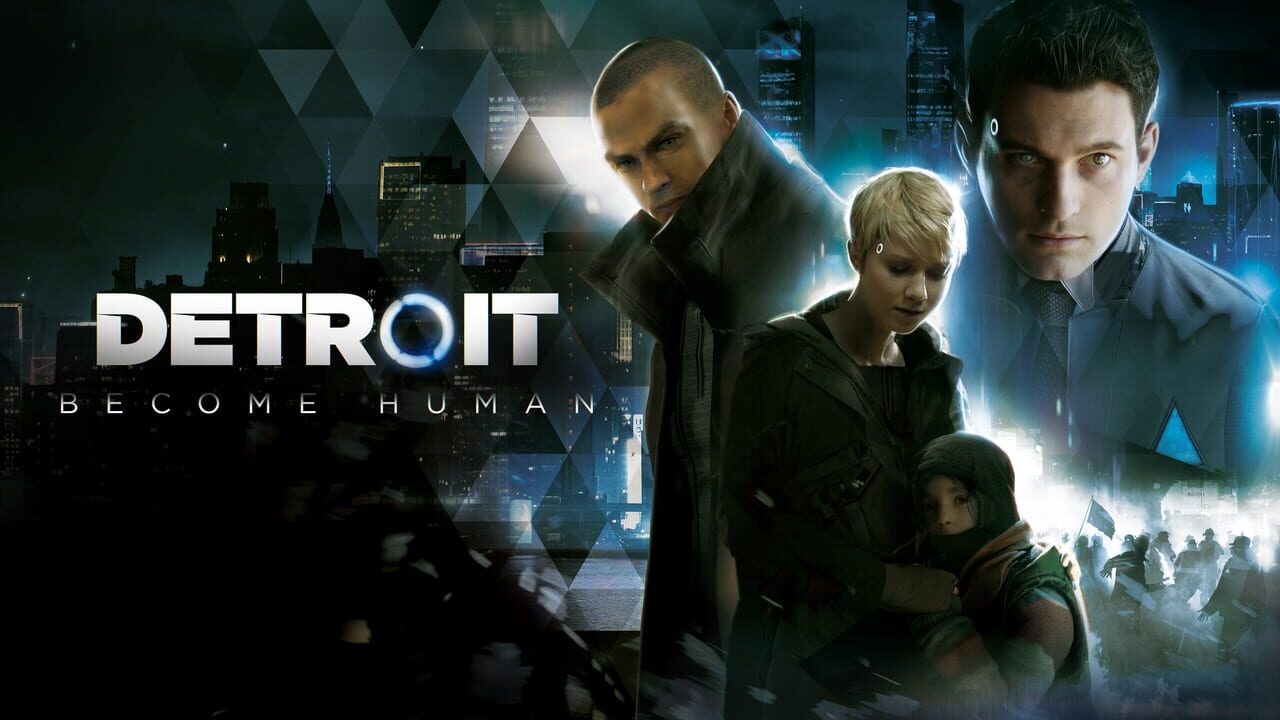
Detroit: Become Human
Quantic Dream · Adventure
Overview
Detroit: Become Human puts the destiny of both mankind and androids in your hands, taking you to a near future where machines have become more intelligent than humans. Every choice you make affects the outcome of the game, with one of the most intricately branching narratives ever created.
Read moreShow less
Detroit: Become Human, the award-winning video game production from Quantic Dream, is finally available on Steam! Featuring world-renowned actors including Jesse Williams (Grey’s Anatomy), Clancy Brown (Carnivale), Lance Henriksen (Aliens), Bryan Dechart (True Blood) and Valorie Curry (Twilight).
WHAT MAKES US HUMAN?
Detroit 2038. Technology has evolved to a point where human like androids are everywhere. They speak, move and behave like human beings, but they are only machines serving humans.
Play three distinct androids and see a world at the brink of chaos – perhaps our future - through their eyes. Your very decisions will dramatically alter how the game’s intense, branching narrative plays out.
You will face moral dilemmas and decide who lives or dies. With thousands of choices and dozens of possible endings, how will you affect the future of Detroit and humanity’s destiny?
PLAY YOUR PART IN A GRIPPING NARRATIVE
Enter a world where moral dilemmas and difficult decisions can turn android slaves into world-changing revolutionaries. Discover what it means to be human from the perspective of an outsider – and see the world through the eyes of a machine.
THEIR LIVES, YOUR CHOICES
Shape an ambitious branching narrative, where your decisions not only determine the fate of the three main characters, but that of the entire city of Detroit. How you control Kara, Connor and Markus can mean life or death – and if one of them pays the ultimate price, the story still continues…
COUNTLESS PATHS, COUNTLESS ENDINGS
Every decision you make, no matter how minute, affects the outcome of the story. No playthrough will be exactly the same: replay again and again to discover a totally different conclusion.
FULLY OPTIMIZED FOR PC
Detroit: Become Human is brought to PC with stunning graphics, 4K resolution, 60 fps framerate and full integration of both mouse/keyboard and gamepad controls for the most complete Detroit: Become Human experience to date.
From the game's Steam store page.
THE GAMEQ VERDICT9,998 reviews analyzed
What players are actually saying
1. Summary
Players love Detroit: Become Human as a story they get to steer. The story is the subject of 72% of the longer reviews, and 32% describe choices that decide who lives, how relationships turn out and which of the many endings you reach, with chapter flowcharts that show what you missed. Reviewers praise facial capture that still holds up years after release, a cast led by Connor and Hank (the two characters named most often), music written separately for each lead, and scenes that left some of them in tears. Some also find the android story more relevant now that AI is part of everyday life.
Against that, reviewers disagree about whether the quick-time-event, interactive-movie format counts as gameplay, whether Kara's and Markus's storylines match Connor's, and whether the writing handles its civil-rights allegory with any depth; writing and plot logic come up in 26% of the longer negative reviews. On PC, a minority hit crashes (often tied to Vulkan and newer GPU drivers), long shader builds and stutter, and a similar group found the keyboard and mouse controls and the cinematic camera clumsy and advise playing with a controller. Completionists ask for a way to skip scenes they have already seen.
2. What keeps coming up
What players praise
The story pulls players in from the first chapterHigh
The story is the subject of 72% of the longer reviews, and many of those reviewers rank it among the best story-driven games they have played. They single out the opening hostage scene as a hook, the way three separate storylines come together by the end, and a near-future Detroit filled with magazines, TV reports and background characters. Some reviewers who usually skip story games say this one kept them playing for a whole sitting. Some critics of the plot also admit it kept them engaged on a first run; the arguments over how well it holds up afterwards are under the split themes below.
Choices that change the outcome, with flowcharts to prove itHigh
32% of the longer reviews talk about choices mattering, branching paths, consequences or the number of endings. Players compare it favourably with "choices matter" games where everything converges, and describe characters dying permanently because of a failed QTE or a decision made chapters earlier while the story carries on without them. The end-of-chapter flowchart, with world and friends' percentages for each choice, is praised for showing how much was missed and for pulling players into a second run. One reviewer wrote: "The flowcharts are brilliant and slightly cruel." A minority counter that many branches reconverge, as one long review put it: "The illusion is extremely well staged, but still remains an illusion."
Visuals and facial capture that still impressHigh
30% of the longer reviews praise the graphics, visuals or facial animation. The motion-captured faces come up again and again, with players saying the characters look more convincing than in many newer games. Several say it still looks good on low settings and older hardware ("Even on the lowest settings, it looks very good.").
Connor and Hank carry the game for many playersHigh
Connor or Hank is named in 20% of the longer reviews, against 13% each for Kara and Markus. Players enjoy the buddy-cop investigation chapters and the detective tools, and they describe the relationship with Hank as fragile and earned. Reviewers who pick the rest of the plot apart still make an exception for this pair; one wrote that they are "accidentally trapped inside a significantly better game." A few reviews ask for a sequel.
Emotional weight and tensionHigh
16% of the longer reviews call the game emotional or describe being moved by it, and some say it made them cry. Players describe constant tension, choices made under a timer, and a sense of responsibility when characters they cared about died. "Whole game felt like trying to defuse a time bomb, every quiet and happy moment still ticking away in the background."
Replay valueMedium
15% of the longer reviews mention replaying. Many finished one run and started another right away to see other branches, or replayed specific chapters from the menu. Some pair this with the replay complaint in the frustrations panel: they want to replay, but not to sit through the same scenes again.
Acting and castMedium
12% of the longer reviews praise the acting, voice work or cast. Bryan Dechart, Valorie Curry, Jesse Williams, Clancy Brown and Lance Henriksen are all named, and several players looked up the actors after finishing.
Music written for each leadMedium
10% of the longer reviews praise the music or soundtrack, often noting that each of the three leads has their own composer and sound.
A story that feels closer to reality nowMedium
9% of the longer reviews bring up AI, ChatGPT or language models, usually to say the setting feels more plausible than at release ("Played this in 2026 when AI is far more prevalent."). For most of them this makes the story hit harder; a few find the premise harder to take seriously for the same reason.
Chloe, extras and small touchesLow
Reviewers mention with affection the android host on the main menu who reacts to your progress, the unlockable behind-the-scenes extras and the in-world magazines. "The extras are fun too; they include some videos about the making of the game."
Runs well on modest PCs and handheldsLow
A smaller group reports smooth performance on modest PCs, laptops, Linux and handhelds such as the Steam Deck and Legion Go ("It also runs without issues on my main laptop AND the Steam Deck."). Set beside the port complaints below, the PC experience varies a lot from machine to machine.
Where players are split
Three storylines of uneven strengthMedium
Kara and Markus are each named in 13% of the longer reviews, and opinion on both is divided in a way it isn't for Connor. Some players call Kara's story the emotional core of the game; others find its middle chapters slow and linear: "Kara's chapters are incredibly boring and pointless to the main story." Several reviewers dislike a late twist in her storyline, feeling it undercuts what came before. Markus's arc as leader of the android movement inspires some players, while others call it rushed or generic and object to how quickly he becomes a messianic figure. One reviewer took a middle position: "Kara's story may seem tedious on a second playthrough, but it will definitely leave a powerful impression on you the first time."
Interactive movie or real gameMedium
10% of the longer reviews talk about quick-time events, and a smaller group calls it an interactive movie or playable film. For most of them that is the appeal: undemanding controls, tense QTE action scenes and the feeling of directing a film. A minority finds the gameplay thin or repetitive, or not worth playing over watching; one reviewer wrote, "It feels like a movie you have to keep pressing play on." Several mention slow chore-like sections (cleaning, walking at a forced slow pace) before the story picks up.
Is it worth full price?Medium
10% of the longer reviews bring up sales, discounts or price, and many of those reviewers bought it at a deep discount. They split on what that means. Some say they would happily have paid more ("Honestly just buy it at full price and play it for yourself."); others say a first run of roughly 10 to 15 hours is only worth it on sale ("Buy it on sale though, not full price.").
Writing depth and the civil-rights allegoryMedium
26% of the longer negative reviews criticise the allegory, the plot logic or the depth of the writing. Critics call the parallels to slavery and the civil-rights movement heavy-handed or shallow, point to plot holes and character motivations that shift, and say the game raises big questions about consciousness without exploring them. Some reviewers who enjoyed the game make the same point and let it go ("The writing can occasionally get a little heavy-handed and melodramatic with its real-world metaphors"), and others find the themes thought-provoking and say they are why the game stayed with them.
LengthLow
Some players finished their first run in 10 to 15 hours and wished it were longer; others say the branching more than makes up for it, with completionists reporting 40 hours or more to fill the flowcharts.
What frustrates players
PC port problems: crashes, shader builds and stutterMedium
6% of the longer reviews, and 17% of the longer negative ones, describe technical trouble on PC. The reports are of crashes, often the Vulkan VK_ERROR_DEVICE_LOST error tied to newer Nvidia drivers (some players fixed it by rolling back a driver), games that will not launch at all, long shader compilation on first start that can repeat after driver updates, and stutter or frame drops when scenes cut to cinematics. Players who barely got past the menu write mostly about this. One negative review that praised the game's cinematic moments still warned: "Do not play this game on PC, as I did; the PC port is seriously flawed."
Clumsy keyboard controls and cameraMedium
5% of the longer reviews, and 15% of the longer negative ones, complain about controls, movement or the camera. Players describe movement that depends on the cinematic camera angle, invisible walls, gesture inputs for simple actions, QTEs that are hard to hit on a keyboard ("Only complaint is the quick-time button mashing on a keyboard while your fingers are on WSAD."), and camera sway that made a few feel sick. Reviewers who raise this usually advise playing with a controller, though several PlayStation-pad owners were frustrated to find Xbox prompts or no support without workarounds. Some treat the controls as a minor annoyance next to the story.
Replaying means rewatching everythingLow
Completionists and players chasing other endings raise this: there is no way to skip or fast-forward scenes already seen, chapters restart from the beginning rather than from a decision point, and there is no manual save. "If I want to replay a chapter please please for the love of god let me skip the 10-15 minute intro/cutscene/talk so I can make a different decision." Achievement hunters add that replaying whole chapters to collect a single magazine is tedious, and some skip extra runs because of it.
Missing PC display optionsLow
A small group asks for basic PC settings: a toggle for the heavy depth of field, an uncapped frame rate instead of the 60 fps limit, and working ultrawide support. Several fixed these by editing config files and say that should not be necessary.
Dialogue options that do something unexpectedLow
Some players say the short one-word prompts often lead to a line or action they did not intend, which hurts most when a timer forces a fast pick and a character dies as a result: "the one-word cryptic choices almost NEVER line up with your intentions." A few non-native speakers and players with slower reactions ask for more time or an option to remove timers.
3. The player conversation
Most reviews are a word or a line of praise. The conversation is mostly people playing the game for the first time, often after a deep discount, and some say they had watched playthroughs years earlier and finally played it themselves. Meme reviews ("28 stab wounds", "clanker") are common but say little about the game.
Who raises what depends on how far players got. Reviewers who finished the story argue about the writing: the most detailed negative reviews come from players who enjoyed Connor and Hank but found Markus's revolution or Kara's twist unconvincing, or felt the branches converged on replay. Players who quit within an hour or two write about the game not launching, crashes, shader waits, the controls and the camera. Completionists and achievement hunters are the main source of the skip and chapter-replay complaints. Weekly positive shares in the slice stayed between 93% and 99% for every week from late March 2026 on, with no sign of the reception shifting.
4. What the developers could do
- Fix the PC crashes and launch failures. Vulkan device-lost crashes with current drivers, games that never reach the menu and shaders that rebuild after driver updates are, along with the controls, what most negative reviews from players who barely got started describe.
- Let players skip or fast-forward scenes they have already seen. Players replaying for other endings or achievements ask for this, and some say it is why they stopped after one run.
- Rework keyboard and mouse controls and add native PlayStation controller support. Players describe movement tied to the camera angle and QTEs that are hard to hit on a keyboard, and PlayStation-pad owners report Xbox prompts or no support without third-party tools.
- Add finer replay points and manual saves. Players want to jump to a decision inside a chapter instead of replaying it from the start, and to keep their first flowchart.
- Expose standard PC display options. Toggles for depth of field and camera sway, an uncapped frame rate and real ultrawide support are fixes players describe making by editing files, and a few report motion sickness without them.
- Make dialogue prompts clearer and timers adjustable. Reviewers say the one-word options often produce a line they did not intend, and a separate QTE or timer setting would help players with slower reactions or alternative key layouts.