Farthest Frontier
Crate Entertainment · Simulation, Strategy, Indie
Overview
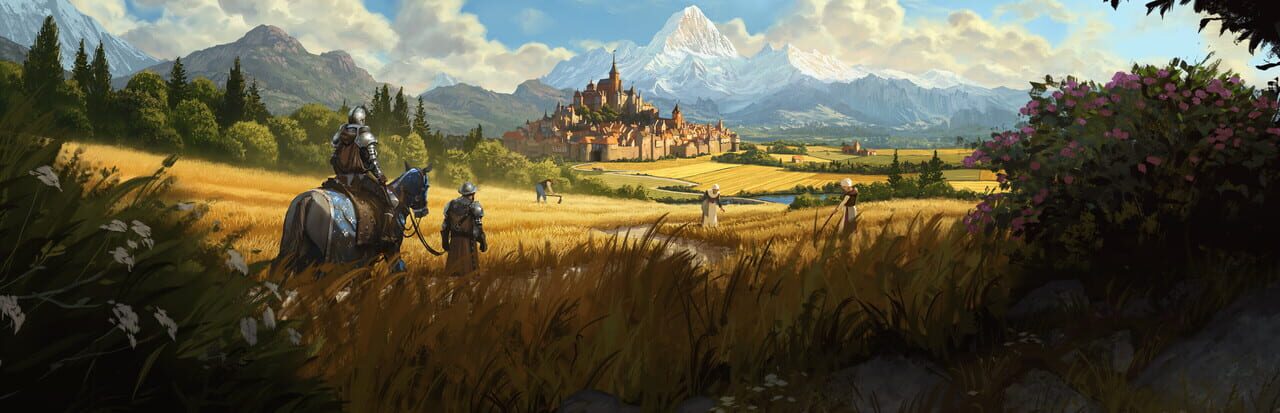
Protect and guide your people as you forge a town from untamed wilderness at the edge of the known world. Harvest raw materials, hunt, fish and farm to sustain your advancing town. Produce craft items for villagers to trade, consume, equip and fight with as you battle for your survival against the elements and outside threats.
THE GAMEQ VERDICT10,000 reviews analyzed
What players are actually saying
1. Summary
Farthest Frontier is a medieval survival city builder with seasons, crop rotation, disease, raiders and a long chain of production buildings. Banished is the game players compare it with most often, usually to say this one goes further. Reviewers often praise how it looks, call it relaxing and hard to put down, and like that difficulty, raiders and predators can be turned up, down or off. Reviews written before mid-April 2026 were 86% to 89% positive, and some long-time owners say the updates fixed and expanded it a great deal.
Combat and raids come up in more negative reviews than any other topic: units are hard to control, villagers walk into danger, and raids feel either toothless or brutal. Players say big towns slow down even on strong PCs, and that gold and random traders can stall progress for years of game time. Others are worn down by missing management tools (no mass delete, no build-menu search, thin stats and tooltips) and a tutorial that explains too little, and some find nothing left to do once everything is unlocked. Reviews written from mid-April 2026 onward, when reviewers start discussing update 1.1 and the paid Cats & Dogs DLC, were cooler (76% positive), and raid balance and the gold economy came up more often in them.
2. What keeps coming up
What players praise
A Banished successor with more depthHigh
16% of the longer reviews name Banished, more than any other game, and usually to say Farthest Frontier takes the formula further with raiders, a tech tree, decorations and deeper farming. One reviewer calls it "what if we made Banished again.... except it was good this time?" Anno, Caesar, Stronghold and Pharaoh also come up, usually as a compliment. A minority disagree: a few would rather replay Banished, or say the game adds nothing new to a crowded genre.
Beautiful to look at and to listen toHigh
Graphics, visuals or beauty come up in 20% of the longer reviews. Players praise the detailed buildings, the changing seasons, villagers hanging laundry, geese flying over in autumn, and towns that look better as they upgrade. The soundtrack has its own fans: "Opening the game for the first time and hearing that music... what a moment." A smaller group finds the look dated and the menus poor; one negative review says the graphics feel "very dated (think 2012)", and several dislike the black void at the map's edge.
Relaxing, absorbing and hard to stop playingHigh
"Relaxing", "chill", "cozy" and "addictive" appear in 14% of the longer reviews, and plenty of short positive reviews say the same in a word or two. Players describe sitting down for an hour and looking up at 3 a.m., starting new settlements for years, and playing to unwind, as in "it helps me relax after a stressful day at work." Some also enjoy that it can turn tense: a first winter without firewood, a wolf in the fields, typhoid in the town, and graveyards that tell the story of past raids.
A detailed food and farming simulationMedium
Some players did not expect the farming to be the part they liked best: "I never thought I would reach a point where the farming mechanics of a game would be a highlight but here I am." Crop rotation, soil fertility, weeds, blights, spoilage, livestock grazing and firewood for smokehouses all interlock, and players enjoy solving shortages through logistics rather than one more farm. The same depth frustrates others: some find crop disease alerts relentless, food consumption hard to read, and markets that stock only a couple of food types.
Play it your way: settings, pacifist mode and modsMedium
Players value the custom settings: pacifist mode, toggles for predators and raiders, difficulty levels up to Vanquisher, population limits and map options. One reviewer says the best part is that "you can turn all this off if you just want to relax and play." Mods and Workshop support come up as a way to fix pet peeves and tune the pace. Some note that pacifist mode blocks many achievements, and a few resent needing mods to patch the base game.
A game that kept getting betterMedium
Some players who bought in Early Access say the game improved over time, for example "Great game, nice work devs with actually fixing and improving it!" Fixes to loading, crashes and performance, the added tech tree, and the gridless building of update 1.1 ("gridless building is AMAZING, and everything feels way more organic as a result") all get credit. Others note that some issues reported in Early Access, such as raid behaviour and laborer priorities, were still there after 1.0.
Where players are split
Slow pacing and the knowledge treeMedium
Fans of the slow build enjoy it: "I always play at x1 speed and really enjoy the slow, satisfying, organic growth of my city." Others call it a slog, saying resources, population growth and knowledge points arrive so slowly that even 5x speed feels like waiting ("i swear to god you are just staring at the screen most of the time waiting for something to happen"). The knowledge tree that arrived with 1.0 feeds into this. It rarely came up in longer reviews written before mid-October 2025 and became a regular topic after. Some find it impressive and say it adds choice. Others say it locks basic buildings behind odd tiers and slows everything down ("But gaining knowledge is the worst and slowest part of the game.").
A challenge or a punishmentMedium
Some players love that mistakes have consequences and that the early game is a fight for survival. Others describe losing half their settlers to a lone wolf or a first winter on the easiest setting, and quitting. One negative review written after 1.0 says enemies were buffed with no matching help for the player: "The raiders are impossibly strong and attack at the same frequency." Other players find raids trivial once they learn how they work. Those who stay often describe a learning curve that pays off: "The learning curve is a bit high, but it's worth the time if you love integrated systems and complex economies."
The Cats & Dogs DLC and the 1.1 pestsLow
The paid pets DLC comes up in only 87 of the 10,000 reviews (counting mentions of DLC, cats and dogs, foxes or marmots). Critics say the update added foxes and marmots and then sold the answer, calling it a move to "add a problem, then put an 8 dollar gate up in front of the mechanic that solves that problem." Some say it was the first content after a long wait and wanted optimisation or late-game content instead. A smaller group bought it happily: "Not vital to own but nice to have if you want pets wandering your town."
Farthest Frontier versus Manor LordsLow
Some players weigh the game directly against Manor Lords, and opinion runs both ways. Some are emphatic that Farthest Frontier is the better buy ("If you're wondering whether to get Farthest Frontier or Manor Lords, it's Farthest Frontier and it's not close."), often because it is finished and deeper. Others prefer Manor Lords' look and organic layouts and find this game dated by comparison.
What frustrates players
Clumsy combat and frustrating raidsHigh
Combat, soldiers, armies or raids come up in 28% of the longer reviews, and in more of the longer negative reviews than any other topic counted. Players describe units that bump into each other, ignore stances and wander off, hit boxes too small to target, and towers that do little ("archers in towers appear to have a 0% hit rate"). Villagers walk into raiders instead of fleeing, the town-centre garrison misses part of the population, and there is no quick way to select all hunters. One negative review describes a bug where, if a villager dies near a bandit camp, others keep going to fetch the body and die too: "all it takes is one settler running past it and getting killed." Raids give no loot or reward, and soldiers, towers and healers cost so much gold that small towns cannot afford a defence. Several players simply turn raiders off.
Big towns slow to a crawlHigh
Performance comes up in 15% of the longer reviews. A common account is that the game runs well early but stutters as population climbs past 500 to 1,000; one detailed negative review says it "starts lagging around 500 to 1,000 citizens and becomes outright unplayable around 3,000, no matter how powerful your hardware is." Players blame pathfinding and single-threaded simulation, mention the game's own warning when raising the 500 population cap, and complain about long loading screens. A smaller group says the game runs hot, from "the sounds of my CPU suffering" to fans spinning up on a Steam Deck in sleep mode. Others report smooth play with 1,000+ villagers, so experiences differ.
Gold shortages and random tradersMedium
Gold and trading come up in 12.5% of the longer reviews. Gold pays for schools, soldiers, healers, livestock and upgrades, while taxes and markets bring in little early on. The trade post depends on which merchants show up, so players can wait years for heavy tools or bricks and cannot specialise: "every village is forced to be an all-arounder and self-sufficient because the merchants are too damn random to rely on." Goods must also be hauled into the trade post before selling, and some never find a buyer. Heavy tools are also needed to build the blacksmith that makes them, so early progress can hinge on a trader.
Missing management tools and a clunky interfaceMedium
Interface and quality-of-life complaints come up in 11% of the longer reviews. One long negative review says "the game constantly wastes the player's time," and one of its examples is the lack of a mass delete: construction sites, fences and walls each take several clicks to remove. Players also ask for a build-menu search (buildings are unlabelled icons), production and storage statistics, tooltips with real numbers, a way to see where goods are stored, and better UI scaling on large or 4K screens. The terrain flatten tool draws its own complaints ("The terrain flatting tool doesn't work properly"), since mines and quarries often sit on slopes.
Too little explanation for new playersMedium
Newer players say the game does not teach its systems: "the tutorial tells you WHAT to do, but doesn't tell you crap about HOW to do it." Desirability, market coverage, water, food spoilage and trading come up as things they had to learn from YouTube, wikis or forums. Some reviewers felt the guided start added later still left gaps, while others found the onboarding fine and the depth worth learning.
Thin late gameMedium
Players who finish a town sometimes find little to do once everything is unlocked: "You grow to around 500 villagers and you realize that there is nothing else." They ask for rival settlements, diplomacy, expeditions, campaigns or scenarios, more map variety with rivers and coastlines, and more production chains. Monument victories exist, but some say motivation drops after them, and that new maps soon play out the same way.
Crashes, bugs and broken savesMedium
Crashes come up less often than the other complaints here, but they end runs: "After about 50 game crashes i am really frustrated." Players report crashes on alt-tab, during thunderstorms, and even blue screens, plus saves that will not load ("Nothing like getting 15 hours in and then not being able to continue what you started."), which a few tie to a patch. Long-standing bugs also get named, such as a food collapse where hunters' meat never reaches storage, buildings condemned after reloading, and maps generated without key resources.
Villagers ignoring prioritiesLow
Several players say laborers and builders ignore priority orders, leave construction sites untouched for a year, drift back to farming, or all rush to one task while food goes undelivered. To them it feels like fighting the game instead of managing a town.
3. The player conversation
The tone is warm overall. Many reviews are short thumbs-up notes ("great city builder", "addicting"). The negative reviews are more often long and specific, and many come from people who clearly wanted to like the game: several open by praising the visuals, farming or atmosphere before listing the friction that made them quit. For these players the disagreement seems to be about how much clunkiness they will put up with more than about the core design.
Who raises what differs. Among people who left a negative review with under 2 hours played, an interface or controls they could not get along with and a tutorial that did not explain enough come up most, ahead of crashes and early wipes by wolves or winter. Players with long-running towns talk about late-game slowdown, the empty endgame, gold upkeep, raid scaling and bugs that only appear many years into a save. Early Access veterans are themselves divided: some say the game improved a lot, while others say the 1.0 knowledge tree and rebalance made a relaxing game slower and harsher.
The mood cooled in the months after 1.0. Reviews written from August 2022 to mid-October 2025 were 87% to 89% positive and those from then to mid-April 2026 86%, but reviews written from mid-April 2026, when reviewers start discussing update 1.1 and the pets DLC, dropped to 76%. In that later stretch, raids and combat and gold and trading come up more often than before, DLC complaints appear for the first time in any number, and the gridless building added in 1.1 is one of the few changes praised outright.
4. What the developers could do
- Overhaul combat control and raid behaviour. Combat and raids come up in more negative reviews than any other topic, with players asking for reliable stances, mass selection of hunters, a garrison that shelters everyone, villagers who flee raiders, a fix for villagers dying while fetching bodies from bandit camps, and some reward for repelling raids.
- Optimise large settlements. Players with towns past 500 to 1,000 villagers describe stutter and slowdown even on strong hardware, plus long loading screens and high CPU temperatures.
- Make gold and trading less random. Reviewers want more dependable traders or buy orders, selling straight from storage, and a path to heavy tools and bricks that does not depend on which merchant appears.
- Add bulk building tools and better information. Mass delete for sites, fences and walls, a searchable build menu, production and storage statistics, tooltips with numbers, and a more predictable flatten tool are the quality-of-life fixes players ask for.
- Teach the systems in game. New players say the tutorial shows what to do but not how, and that desirability, markets, water and trading had to be learned from outside guides.
- Fix crashes and save-loading failures. Crashes on alt-tab and in thunderstorms, blue screens, and saves that stop loading end long runs.
- Give players a base-game answer to the 1.1 pests. Critics of the Cats & Dogs DLC feel foxes and marmots were added with the only real counter sold separately.
- Extend the late game. Players who finish a town ask for rivals, diplomacy, expeditions, scenarios and maps with rivers and coastlines to give big settlements a purpose.