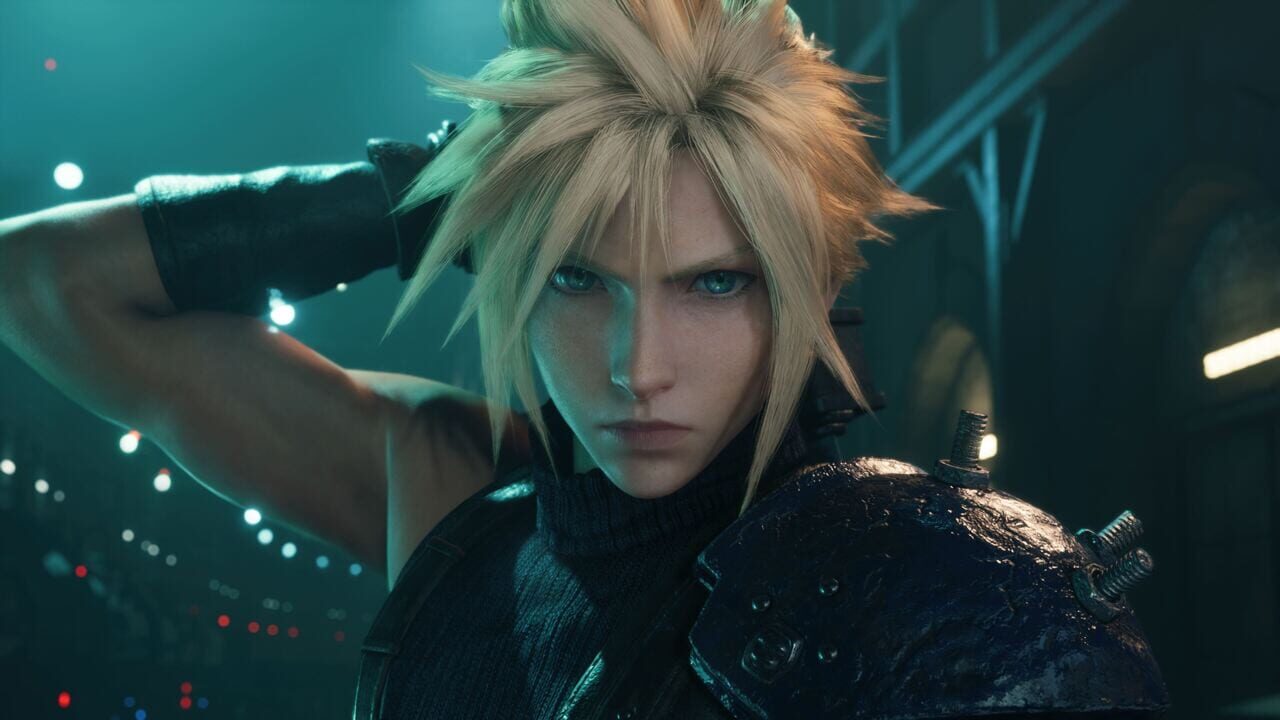
Final Fantasy VII Remake Intergrade
Square Enix Creative Business Unit I · RPG, Action, Adventure
Overview
Final Fantasy VII Remake Intergrade is an enhanced and expanded version of Final Fantasy VII Remake that features a new episode starring Yuffie and introduces an exhilarating new story arc with numerous gameplay additions for players to enjoy.
THE GAMEQ VERDICT9,996 reviews analyzed
What players are actually saying
1. Summary
The cast, the look of Midgar and the soundtrack carry most of the praise. The hybrid combat, which mixes real-time action with a pausing ATB command menu, wins over far more reviewers than it loses: about 11% of longer reviews praise it in plain words against about 3% that call it bad. The INTERmission episode starring Yuffie, bundled in this edition, gets warm notes, and several players say its tighter design is what they wanted from the main game.
22% of longer reviews complain about padding: slow forced walks, squeezing through gaps, ladders, linear corridors, and pacing that stalls the story. In negative longer reviews the share is 41%. Fetch-style side quests, a cutscene-heavy structure and a PC port with stutter and thin options come up less often. Fans of the 1997 original are split on the new story direction and the ending, and some still want turn-based fights. Several reviewers advise buying it on sale.
2. What keeps coming up
What players praise
Characters and castHigh
35% of longer reviews talk about the characters, from affection for the main party to praise for the expanded supporting cast. Players say the extra time in Midgar lets them get attached: "Some of the best written characters in video games period." Newcomers say they finally understand why the cast is so loved, and returning fans say the characters look and sound the way they imagined them as kids. The dissent here is about tone more than the characters themselves: some find the banter and anime-style reactions grating (see the writing item below), and a few dislike specific personalities.
Visuals and the look of MidgarHigh
26% of longer reviews mention the graphics or visual design. Players describe Midgar as dense and alive, praise the character models, facial animation and cinematics, and remember the opening for its sense of scale. The complaints are narrow: some environment textures are low resolution next to the detailed characters, and a few players call daytime areas drab or the image blurry on PC.
Hybrid action and ATB combatHigh
Combat comes up in 43% of longer reviews, more than any other part of the game. Fans say the mix of real-time attacks, character switching, stagger and command menus gives fights a rhythm that neither pure action nor pure turn-based play offers: "I'm honestly amazed they made the two opposite systems work without either feeling like unnecessary burden." Several say it clicks only after a few hours, once more abilities and materia are in play, and that boss fights are where it shines.
Turn-based combat comes up in 9% of longer reviews, often from original fans who wanted it back, and a minority finds the system clunky or the worst of both styles: "Not really turn based, not really action focused, truly the worst of both worlds." Some reviewers point to Classic mode and the easy setting as ways around this.
The soundtrackHigh
16% of longer reviews mention the music, and it is rarely criticized. Players single out the rearranged classic themes and how battle music shifts as fights progress: "the soundtrack is a literal masterpiece that keeps you pumped the entire time". A small group prefers the original compositions and finds some new arrangements diluted.
INTERmission, the Yuffie episodeMedium
10% of longer reviews mention the Yuffie episode or its parts (Sonon, the Fort Condor board game). Most of what they say is positive: Yuffie is fun and fast to play, the Fort Condor minigame is a highlight, and the episode trims the padding. One player puts it this way: "It lacks the padding of the main game and introduces Fort Condor as a fun minigame instead of loading the DLC down with terrible sidequests". The criticisms are that it is short, that Yuffie's personality grates on some players, and that its final act leans on characters from older spin-offs that newcomers won't know.
Hard mode and endgame challengesLow
A smaller group (3% of longer reviews) talks about Hard mode, and most of them enjoy it: no items, tougher bosses and a real test of materia builds. Their main complaint is that it unlocks only after finishing the game once: "let us play on the highest difficulty from the beginning".
Where players are split
The new story direction and the endingMedium
7% of longer reviews discuss how the story departs from the 1997 original, and 5% talk about the ending or final chapters. Reviewers who frame themselves as fans of the original raise story changes about twice as often as self-described newcomers (13% against 6% of each group). Some love the surprise of not knowing what happens next, while others call it confusing, overwrought, or not a real remake. One returning fan holds both views at once: "For me, with this change, it's like playing FF7 for the first time again." In the same review: "I wish that instead of changing the story, they had made a 1to1 remake". The final stretch draws particular criticism for long boss sequences and a tone that some compare to Kingdom Hearts.
Cinematic presentation against cutscene overloadMedium
15% of longer reviews mention cutscenes, cinematics or the game feeling like a movie, and they pull both ways. Fans call it cinema, and a newcomer who loved it says it "Feels more like partaking in a movie/anime than playing a game". Negative reviews bring up cutscenes about twice as often as positive ones, and there the complaint is that control is taken away too often: "This game is 95% cutscene and 5% game play." Several players note that some cutscenes can't be skipped and that the fast-forward option helps.
Writing tone, dialogue and voice actingMedium
12% of longer reviews comment on the dialogue, writing or anime-style tone, and negative reviews raise it more than twice as often as positive ones. Their complaints are exaggerated delivery, constant grunts, goofy jokes undercutting serious moments, and NPCs who chatter over the main cast. Others praise the English cast outright ("EN voicecast is amazing.") and single out Barret and Aerith. A few players say switching to Japanese audio made the tone feel more serious to them.
As a first Final FantasyMedium
9% of longer reviews come from players who say this is their first Final Fantasy or that they never played the original, and as a group they recommend it more often than reviewers who measure it against the 1997 game. Several call it a good entry point: "As a person who has never played the original FF7, FF7R is a great introduction to the world of FF7." Against that, some newcomers say the story assumes knowledge of the original and its spin-offs, and leaves too much unexplained: "game doesn't explain anything at all."
The three-part split and the priceMedium
9% of longer reviews talk about price, sales or discounts, and 7% bring up the trilogy split. The recurring line is that the game is worth it on a deep sale but that splitting one game into three full-price parts is hard to accept. One reviewer sums it up: "The original price of $70 feels ridiculous since this was only part 1/3, but I got it on sale for $10 and it was more than worth it for that." A smaller group is angrier, calling the split a cash grab and complaining that progress does not carry over between parts.
What frustrates players
Padding, slow walks and linear corridorsHigh
No complaint comes up more often. 22% of longer reviews object to padding, filler, poor pacing or the slow traversal sections, and among negative longer reviews the share is 41%. Players describe forced slow walking, squeezing through cracks, crawling under pipes, climbing ladders, switch puzzles to open doors, and hub chapters that pause an urgent story for errands. A negative review puts it as "They've confused making a game longer with making it better." A positive one counts the time spent climbing: "SOOOO MANY LADDERS BRO." The complaint also turns up in 15% of positive longer reviews, and some players say the slow first half gives way to a stronger second half. A few defend the slower pace as world-building.
Side quests and fetch errandsMedium
12% of longer reviews mention side quests or side content, and most of what they say is negative. Players call them fetch quests that don't fit a mercenary on an urgent mission: "FF fans are here to see the story adaptation, not to find missing cats." A minority enjoys them for the extra character scenes, and some say the later hub chapter has better quests than the early ones.
PC port: stutter, thin options and mouse controlsMedium
7% of longer reviews raise PC technical problems: traversal and shader stutter, a blurry dynamic resolution and anti-aliasing, few graphics settings, no native ultrawide, an occasional white-screen bug, and awkward mouse and keyboard controls. "It's a controller on a keyboard with no mouse inputs," writes one player. 4% of longer reviews mention mods, mostly to fix image quality and stutter. Against that, about 4% say it runs well or praise it on Steam Deck, for example "very happy with how well optimized this game is."
MinigamesLow
7% of longer reviews mention the minigames. Darts and a few others are liked, but the gym challenges, the robot arm puzzle, the motorcycle sections and the box-breaking trials draw complaints, especially where unique rewards are locked behind them: "the minigames are already too plentiful and obtuse".
Spongy bosses and combat frictionLow
A smaller set of reviews (about 4% of longer reviews) describes friction inside fights: bosses with huge health pools, stunlocks, AI partners who stand around, dodging that feels useless against tracking attacks, flying enemies out of melee reach, and phase-change cutscenes that wipe out stagger progress. "enemies are bullet sponges, you stagger but they don't," writes one player. Several specific fights, including the Hell House boss, get singled out by name.
Smaller annoyancesLow
A few recurring minor points: Chadley's combat challenges and his presence in the story irritate some players, there are no saved materia loadouts so swapping setups before bosses is tedious, the main character can't jump over small obstacles, and some boss checkpoints force long replays.
3. The player conversation
The conversation is warm overall. Short reviews are mostly simple praise, often affection for a particular character, while the negative reviews tend to be long, detailed essays about pacing. Two groups shape it. Fans of the 1997 original, who come up throughout the longer reviews (43% of them mention the original), measure every change against it: they raise the story direction and turn-based combat more often, and they recommend the game less often than newcomers do. Players who say this is their first Final Fantasy or their first time with this story are more positive on the whole, though some of them get lost in the plot.
Rebirth is mentioned in 15% of longer reviews. Players mention buying the two games as a bundle, plan to play it next, or say it improves the combat and side content, and some read this game as a long setup for the parts that follow. Price talk centres on steep discounts, and some reviewers say a sale price made the trilogy split easier to accept. Reviews written in 2026 were slightly less positive than those written in 2025 (about 82% against 86% recommend in this slice), and padding led the complaints in both years.
4. What the developers could do
- Trim or speed up forced slow traversal. Allowing sprinting, shorter animations or a skip for squeeze, crawl, ladder and slow-walk sections would answer the complaint that appears in 41% of negative longer reviews.
- Fix the PC port's stutter and add real settings. Players ask for shader stutter fixes, more graphics options (ultrawide, upscalers, anti-aliasing choices), a fix for the white-screen bug and full mouse and keyboard rebinding, and several of them turned to mods for these.
- Rework or cut the fetch side quests. Reviewers want fewer errands during urgent story moments and more of the character payoff that the better quests already deliver.
- Make boss phase changes less punishing. Letting stagger progress survive phase cutscenes, making those cutscenes skippable, and adding checkpoints between multi-part fights addresses the specific boss frustrations players describe.
- Price and bundle the parts as one story. Reviewers who say the game is only worth it on sale resent paying full price for one part of three, and some ask for progress to carry over between parts.
- Let players skip or bypass minigames with unique rewards. Players object to rewards locked behind the gym, box-breaking and similar challenges, and one player notes the game already lets you skip the motorcycle fights on replay.
- Unlock Hard mode and add materia loadouts from the start. The players who love the endgame ask to pick the hardest difficulty on a first run and to save materia setups instead of rebuilding them before each boss.