Frostpunk
11 bit studios · Simulation, Strategy, Survival, Indie
Overview
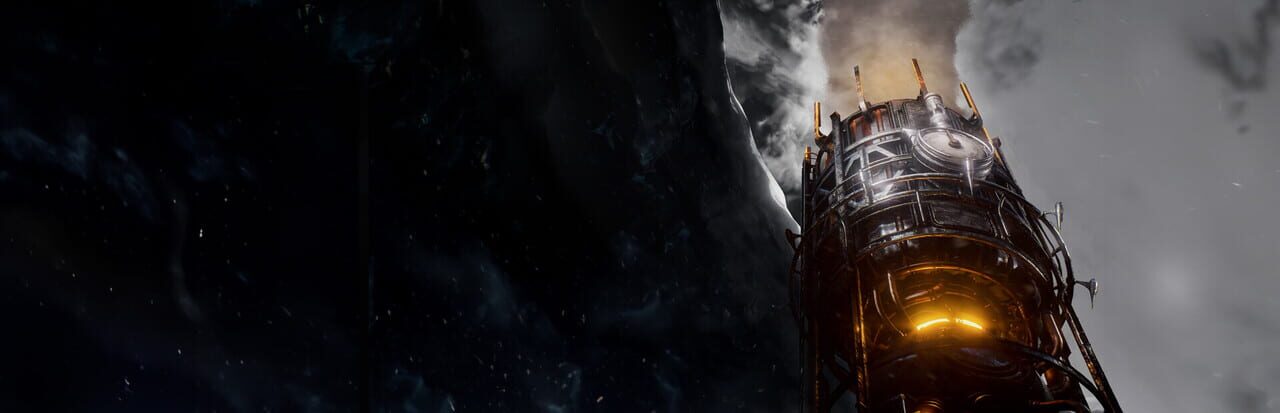
Frostpunk, the newest title from the creators of This War of Mine, is a society survival game where heat means life and every decision comes at a price. In an entirely frozen world, people develop steam-powered technology to oppose the overwhelming cold. You face the task of building the last city on Earth and securing the means necessary for your community to survive. Optimization and resource management often clash with empathy and thoughtful decision-making. While city and society management will consume most of the ruler’s time, at some point exploration of the outside world is necessary to understand its history and present state.
THE GAMEQ VERDICT9,999 reviews analyzed
What players are actually saying
1. Summary
Players treat Frostpunk as a survival game wearing a city builder's clothes, and they love it for that. They praise the cold, oppressive presentation (art, sound and a soundtrack that builds to a final storm), the Book of Laws that makes you sign off on child labour, sawdust soup or a police state to keep the generator running, and a difficulty that punishes early mistakes but pays off once the systems click. The scenarios and DLC, The Last Autumn above all, keep people coming back. Reviewers who compare it with the sequel mostly prefer this one for its closer, street-level view of the people they are failing.
Complaints come from a small share of the slice. Some players find that each scenario has one workable route, learned through restarts, so the game turns into a puzzle with little left to replay once it is solved. Others never get that far: the tutorial explains little, the text is tiny with no way to scale it, and some PC and Mac players hit crashes and stuttering audio. A cluster of reviews from mid-2024 also objected to large updates that, as they describe them, only swapped in-game ads for the sequel.
2. What keeps coming up
What players praise
Atmosphere, art and soundtrackHigh
The atmosphere, the visuals or the music come up in 26% of the longer reviews. Players describe the generator hum, the snow slowly covering demolished buildings and the way the map fades to white. One reviewer wrote that "the atmosphere alone does more storytelling than most games manage with actual dialogue", another that "the soundtrack sounds like hope dying with a string section". The final storm's music gets its own praise, with jokes like "The one and only game where weather has an extraordinary boss music". Negative reviews bring up the presentation too, often granting that the game looks and sounds superb before explaining why it did not work for them.
Moral weight and the Book of LawsHigh
The usual story here is a player who starts out meaning to be a decent leader and ends up signing extended shifts, child labour and a theocracy or police state because the temperature keeps dropping. Laws, moral choices or dilemmas come up in 18% of the longer reviews. Reviewers call the game "a series of impossible choices dressed up as one" and say "Book of Laws is where the game really shows its teeth." Some say the end-of-scenario summary, which asks whether survival was worth it, hit them hard. The jokes about children in the mines and sawdust soup that fill the short reviews come from the same place.
A smaller group pushes back. A few reviewers found the moral side thinner than advertised, either because the "right" laws are obvious once you know the mechanics, or because Order and Faith "basically amount to what flavour of mean you want to be".
Scenarios and DLCHigh
A quarter of the longer reviews (25%) discuss the scenarios or DLC. Players like that each scenario changes the rules: running a city on automatons in The Arks, evacuating Winterhome before its generator fails, or building the generator before the cold arrives in The Last Autumn. The Last Autumn is named more often than any other DLC, usually with praise ("the last autumn is very fulfilling when you beat it"), and buying the game with its DLC on sale is common advice. A minority found the extra scenarios weaker than A New Home or not worth finishing after the main story.
Story and the final stormHigh
Players say the game tells a strong story with almost no named characters, through events, scouting finds and the people of the city; 19% of the longer reviews mention the story, writing or lore. The climax of A New Home is a storm that tests every decision made before it, and reviewers recount it in detail: sweating through the last days, running out of coal as the generator shuts down, or sitting in silence after the end screen. A few found the ending abrupt or wished the closing cinematic were voiced.
Tension that keeps you playingMedium
"I had no idea a city management game could be so INTENSE," one reviewer wrote, and players clearly enjoy being one bad night away from collapse. 11% of the longer reviews describe the game as stressful, tense or full of panic, and 8% call it addictive or say they lost track of time, with stories of all-nighters and repeat runs. For some of the players who dislike the game, the same constant pressure is the problem.
Closer and more personal than the sequelMedium
Frostpunk 2 comes up in 9% of the longer reviews. Those that state a preference pick this one far more often than the sequel, usually because you place every building and watch individual people trudge through the snow. "FrostPunk2 didn't have this feeling so I'm back to 1 and checking out the expansions," wrote one. Another said "Unlike the sequel, the scale here feels personal and rewarding". Some of these players came to this game after the sequel, and a few mention waiting for a remake of this game that they say is on the way.
Where players are split
Difficulty and the learning curveHigh
37% of the longer reviews call the game hard, harsh, brutal or challenging. In the ones that describe a payoff, the arc is several failed attempts at A New Home, then the systems click and the win feels earned. "Frostpunk almost froze me out before it won me over," one reviewer wrote, adding: "Once the game clicked, though, my opinion changed completely." Others play on Survivor because the lower settings felt too safe.
Some players quit over it. They describe an opening that is "Wayyyyy too harsh and resource heavy in the beginning", failure that starts hours before it shows, and autosaves that lock in a lost run: "the only way for you to understand when you made a mistake is AFTER the auto save". Several say even the easiest setting did not help them.
Replay value once you know the routeMedium
How long the game lasts is disputed. Some say achievements, higher difficulties and the DLC scenarios give it lasting value ("I find achievement hunting to give this good replay value"). Others find the campaign short and say scripted events happen at the same moments every run, so a second playthrough loses its tension. Positive reviews raise this too, usually as their one real complaint.
Price, DLC and the season passMedium
Sales, discounts or price come up in 9% of the longer reviews, much of it as advice: buy it on sale, ideally with the DLC bundle ("Goes on sale often and worth the sale price every time."). The friction is over paid content. Some players resent seeing scenarios in the menu that need the season pass, or that custom games depend on DLC ("I'm not buying season pass for single player game to unlock other scenarios?"). Others say the DLC is fairly priced in a bundle and is the best part of the game.
Endless modeMedium
Endless mode is mentioned in 5% of the longer reviews. Some players use it as a relaxed sandbox for building neat, beautiful cities. Others say it runs out of things to do once the city is stable: "Unfortunatly the endless mode isnt anything special." A few hit building or population caps that stopped their cities growing.
Citizens who never stop complainingLow
The people of the city are a running joke ("the people will NEVER be fully happy"). Reviewers who bring it up tend to find it funny or realistic. A few found it broke the moral side of the game, saying the constant complaints made strict rule feel like the only sensible choice rather than a hard one.
What frustrates players
Crashes, stuttering audio and the Mac portMedium
Technical problems come up in 10% of the longer negative reviews. Players report audio that stutters or crackles in cutscenes and menus ("Every time I try to play this game, the audio stutters CONSTANTLY."), crashes at launch or mid-run, heavy GPU load for an older game, and lost saves. Some players say turning off spatial sound or switching audio to mono fixed it. Mac players on Apple silicon describe frequent crashes ("Mac version keeps on crashing every 5-10 min..."). Other reviewers say the game runs smoothly for them.
One correct route, found by trial and errorMedium
9% of the longer negative reviews argue that the choices are an illusion: there is one build order that works, any deviation leads to a slow collapse, and the only way to learn it is to fail or follow a guide. "Its no longer a game, but a execution of command queue," wrote one. A fan who recommends the game still listed it as a con: "more of a puzzle disguised as a city builder". To these players, scripted events that hit at fixed times, such as a sudden drop in hope or a cold snap, feel like traps. Some fans agree with the description but enjoy solving the puzzle.
A tutorial that explains too littleMedium
8% of the longer negative reviews fault the tutorial or the lack of explanation. They describe pop-up hints that tell you what to build but not why gatherers sit idle, how heat ranges work or how to assign workers ("The tutorial is... abysmal. You have to manually click on some tiny pop-up to see what you're supposed to do."). Some positive reviews give the same warning and advise newcomers to read the in-game help, lower the difficulty or watch a guide.
In-game ads for the sequelLow
Complaints about ads in this slice cluster in June and July 2024. Players objected to updates of around 800MB to 1GB that, as they describe them, only changed in-game ads for Frostpunk 2, and to a sequel pop-up on every launch ("Game is good, advertising updates are not."). Several said they turned their review negative because of it, and one said they turned it back after the updates stopped.
Tiny text with no scaling optionLow
A small group cannot read the interface: "I wish I didn't need a magnifying glass to read the text." The complaints come from high-resolution monitors, laptops and Steam Deck, and most of these players gave up within the first hour because there is no UI or font size setting.
Clunky management at scaleLow
A few reviewers say the interface struggles as the city grows: awkward camera controls, steam-hub smoke hiding buildings, missing information such as how close you are to a population cap, and weak or missing controller support on PC. "Managing the city becomes cumbersome as it grows," one fan wrote.
3. The player conversation
Much of the conversation is warm in-jokes. Short reviews repeat "The city must survive", the children in the mines and the soup, which reads as shared affection for how grim the game is willing to be. A story that recurs in the longer positive reviews goes from failure and restarts to the moment the systems click, then a final storm survived by a few tons of coal. Some come from players returning after years, or arriving after the sequel or after watching a YouTuber play it, who say it holds up.
Negative reviews written in the first two hours bring up the tutorial most, then the difficulty and the tiny text; crashes come up less often there. Other negative reviewers make the design argument that the game has one route and little reason to replay, and a separate group objected to the ad updates and the paywalled scenarios in the menu.
The positive share stayed high from week to week across the slice, usually between the high 80s and high 90s. The lowest week in the stats, written the week of 2024-06-10 (78% positive), lines up with the cluster of reviews complaining about the ad-only updates.
4. What the developers could do
- Fix the audio stutter, launch crashes and Mac port. Players who hit them say fixes like disabling spatial sound or forcing mono audio work but should not be needed.
- Teach the systems properly. First-hour quitters blame a tutorial that names buildings but never explains idle workers, heat range or why a city is failing, and even fans tell newcomers to read guides.
- Add UI and text scaling. Players on high-resolution screens and Steam Deck say the fixed tiny text makes the game unreadable, and some gave up on it within the first hour.
- Give players more room to recover from mistakes. The design complaint is that one early misstep or a hidden scripted event dooms a run hours later. Clearer warnings and more ways to climb out of a bad position would answer the criticism that each scenario has only one correct route.
- Keep sequel promotion out of launches and updates. Pop-ups on every launch and large ad-only patches turned some fans' reviews negative.
- Vary scripted events between runs and expand Endless mode. Reviewers say scenarios lose their tension once you know when each crisis lands, and that Endless mode runs dry once a city is stable or hits its caps.
- Smooth late-game management. Players ask for a better camera, less obstructive smoke, clearer population information and controller support on PC.