Green Hell
Creepy Jar · Survival, Action, Open World
Overview
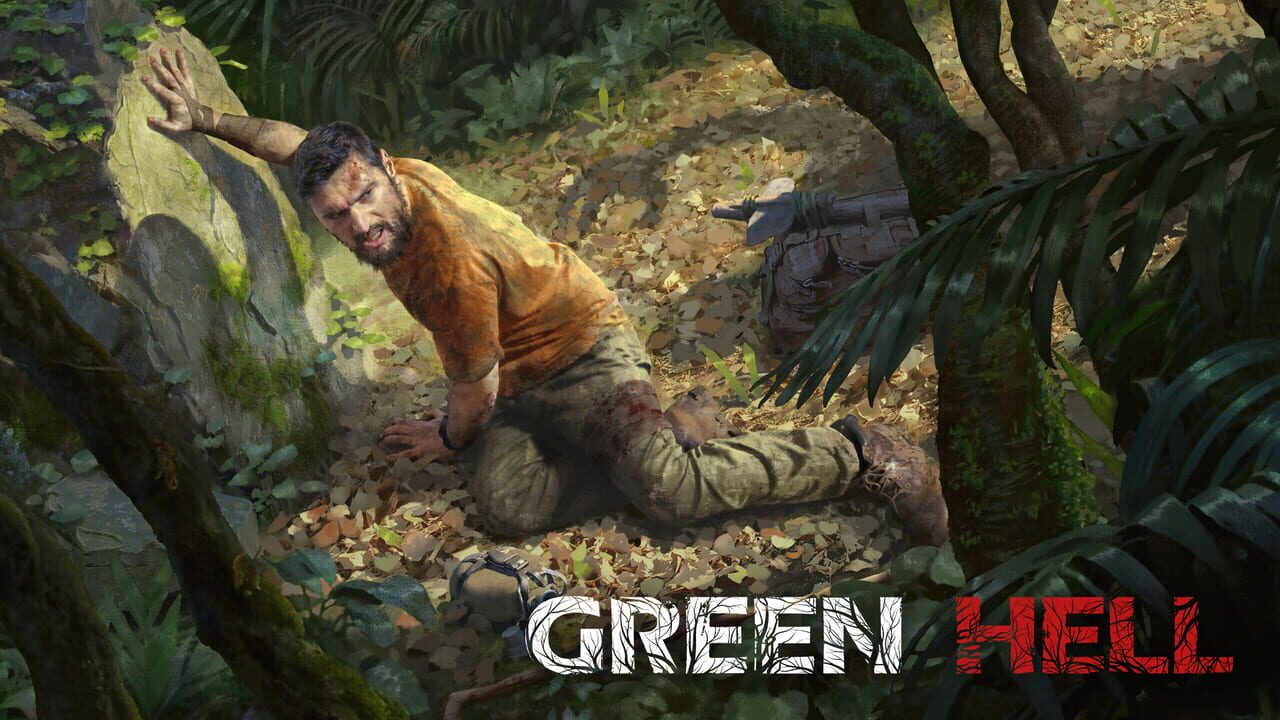
Plunge into the open-world survival simulation set in the extreme conditions of the uncharted Amazon jungle. Use real-life survival techniques to craft, hunt, fight, and gather resources, set a makeshift shelter, or raise a fortress. Survive alone or team up with your friends and challenge the jungle together.
Read moreShow less
ULTIMATE SURVIVAL
Immerse yourself in an open-world survival simulation set in the harsh, uncharted Amazon jungle. Master real-life survival techniques to craft tools, hunt for food, fight off dangers, and gather resources, remember to tend to your wounds in the unique inspection mode, and maintain mental health. Build a simple shelter or construct a fortress to withstand the elements. Play solo or team up with friends to face the challenges of the jungle together.
EXPERIENCE THE STORY…
Survive and follow the thrilling story of anthropologist Jake Higgins, a man stranded in the Amazon rainforest. Jake is searching for his missing wife, Mia, who has been conducting anthropological research in the jungle. The 25+ hour campaign explores themes of survival, guilt, and the fragility of the human mind as Jake's journey reveals dark secrets about his past and the sinister forces at play deep within the Amazon.
Explore the free Spirits of Amazonia prequel campaign, offering over 20 hours of gameplay. Uncover the events leading up to the original Green Hell story and unravel the full mystery haunting the jungle.
… OR GO FULL SURVIVAL
Focus solely on survival aspects in Endless Mode and experience all the action-packed gameplay Green Hell has to offer. Over 20 content updates added post-launch hugely expand the game’s features with multitudes of new mechanics and improvements. Play the game, survive the Amazonian jungle, and have fun your way.
CRAFT, BUILD, AND GET COZY
Create your ultimate Amazonian base using all the resources the jungle has to offer. Use wood, bamboo, stones, mud, and ropes to build either simple shelters or multi-level Amazonian mansions, or even take your survival to new heights by creating your home in the treetops.
Craft furniture, place decorations, and add some color to your base. You can also fortify it to keep it secure and light it up in the night. Make certain to keep alert for enemies looking for many ways to expel you from their territory or stand against them in a deadly Flamekeeper Challenge.
CHILL WITH ANIMALS & USE ALL THE JUNGLE WONDERS
Capybaras, tapirs, peccaries, armadillos, and anteaters are just some of the animals you can breed. And yes - of course you can pet them! The jungle is not only full of deadly predators but it’s also filled with cute pals which you can gain their trust by feeding and caring for them.
Use all the natural gifts the jungle can provide, like honey, bird feathers, and eggs - and yes of course - insects, to use them for your and the animal menagerie’s needs. Unleash your farming spirit and become one with the wilderness.
From the game's Steam store page.
THE GAMEQ VERDICT10,000 reviews analyzed
What players are actually saying
1. Summary
A lot of what reviewers write about Green Hell is how hard it is, and its fans count that difficulty as part of the appeal. The praise centres on survival systems with more detail than players expect from the genre: you inspect your own body for leeches, worms and infected cuts, balance four kinds of nutrition, and watch your sanity slip. The Amazon setting gets credit for its atmosphere, and the story mode surprised reviewers who did not expect a survival game to have a plot worth following. Co-op comes up often, and several players say the grind turns into a shared adventure with a friend.
The frustrations grow out of the same systems. The game teaches very little, so new players die repeatedly to things they were never told about and end up on the wiki. Some players find the upkeep (eating, drinking, sleeping, treating wounds) a chore, the crafting and inventory interface is called clunky, and bugs cluster in co-op, where desyncs, invisible players and saves that freeze or vanish cost groups whole evenings. Reviewers who want hardcore survival and will put up with a steep, poorly explained start tend to recommend it, while several who wanted something relaxing say it was not for them.
2. What keeps coming up
What players praise
Survival systems that feel real and deepHigh
31% of the longer reviews talk about realism, body care, nutrition or sanity. Players single out the body-inspection screen, pulling leeches and worms out of their limbs, using maggots on infected wounds, and a macronutrient system that asks for a balanced diet where other games have a single hunger bar. One fan put it plainly: "No other game in this genre that I've ever played matches its deep focus on survival mechanics." Several reviewers say they picked up real survival ideas along the way. The same systems also draw criticism (see the frustrations below). Some players find them overbearing, and a smaller group argues they are not realistic at all, pointing to how fast thirst and hunger drain. One negative reviewer wrote "You eat 6 bananas, 5 fish or 6 steaks, doesn't matter you are still starving".
A jungle with real atmosphereHigh
"The jungle feels alive, believable, and genuinely terrifying," one player wrote. Others describe the rainforest the same way, as tense and full of sounds that keep them on edge, and some call it one of the best-looking survival settings they have played. Atmosphere, visuals or sound get praise in 21% of the longer reviews. Criticism here is scattered: a few mention blurry distant detail, pop-in or repetitive textures.
A story mode that surprises peopleHigh
The story comes up in 30% of the longer reviews, and reviews calling it good outnumber those calling it bad by more than six to one. Players like the mystery around Jake's search for his wife Mia, the hallucinations that blur what is real, and a late twist that recasts what came before: "I had a misconception of the story the entire time, til I got to the end and its a huge shocker." Those who disliked it call it short or predictable, or say it ends without closure ("The ending doesn't provide closure (either way you end it)."). Others get stuck because they cannot find the next story objective, and one complained that "the story has no real guide as you are suppose to stumble upon random ritual pots".
Good value on sale, with years of added contentMedium
Price or value comes up in 16% of the longer reviews, and those calling it worth the money outnumber those calling it overpriced or not worth full price by about three to one. A good number of them bought it at a discount and felt they got more than their money's worth. Reviewers point to content they say was added over the years at no extra cost, including the Spirits of Amazonia prequel campaign: "The game received free updates not just containing bug fixes but also free content for five years". A smaller group says it is only worth buying deep on sale, mostly because of bugs or the learning curve.
Several ways to play: Spirits of Amazonia, survival and custom modesMedium
Spirits of Amazonia gets more warm comments than complaints, especially for its larger map and for being longer than the main story ("Much preferred the Spirits of Amazonia DLC though as it's a prequel with maaany more hours of gameplay than the main story."). Its critics call it a grind of fetch tasks, and even one player who recommends the game wrote "The added part of Spirits of Amazonia is way too repetitive for my taste". Players also value the open survival mode and custom difficulty, which lets them switch off predators, hostile tribes or stat drain while they learn. The extra content and modes come up in 10% of the longer reviews.
Where players are split
Brutal difficulty: rewarding or just punishingHigh
Difficulty comes up in 33% of the longer reviews. Fans describe dying constantly at first, learning from each death, and feeling real pride once they can roam the map with bandages and a cooking pot: "Each death teaches you a lesson". Players on the other side see punishment without payoff, with snake bites, infections and food poisoning stacking up faster than they can learn the cures, and every death sending them back to an old save. Several fans recommend custom difficulty as the way in: "Very difficult by default, but there is a custom difficulty where you can adjust what you're up against".
Co-op: the best way to play, and the buggiestHigh
Playing with friends or a partner comes up in 20% of the longer reviews. Several say the game is at its best this way, with players splitting duties so that the upkeep becomes manageable: "The tedious and annoying mechanics that very much hinder single player action become fun obstacles to tackle with two people". The same mode draws serious technical complaints. About 30% of the reviews that discuss co-op also mention bugs or crashes, describing desync, players or items invisible to each other, connection timeouts, quest animals that never spawn, and progress wiped when a save freezes. One negative review opens: "Tried to play with my wife. I hosted. Could not see her, she was invisible." Some groups are also annoyed that the host has to finish the solo tutorial before a co-op story can start.
Jaguars, pumas and hostile tribesHigh
Some players enjoy the constant threat. They say they never feel safe in the undergrowth and that a growl in the bushes is genuinely frightening. The complaints are about fairness: big cats that seem to appear out of nowhere, chase you down and are hard to kill with early weapons, and enemies that can show up inside your camp. "Predators and enemy tribesman can still spawn directly in your camp," one player wrote, and another called enemies spawning "IN YOUR BASE INSIDE YOUR WALLS" a massive oversight. A few also find the tribal AI goofy in combat. Predators or the tribes come up in 21% of the longer reviews.
Comparisons with The Forest and Sons of the ForestMedium
12% of the longer reviews compare Green Hell with The Forest or Sons of the Forest, and the comparison is used both for and against it. Fans frame it as the harder, more realistic cousin ("Think of this game as The Forest, but with much more focus on surviving and realism."), and some say they had more fun with it: "Coming from The Forest and Sons of the Forest, I actually had way more fun with this one". Critics call it a clunkier copy and tell readers to buy those games instead, because "Sons of the Forest/The Forest has the same vibe but is much clearer and better than Green Hell."
Getting around the mapMedium
Some players enjoy the coordinate-based navigation and the lack of a GPS marker as part of the realism. Others are lost for long stretches, unable to find their base, their friends or the next story location, and a few say the coordinates on the map did not seem accurate. The map, compass or getting lost come up in 10% of the longer reviews.
Base building that is optional and limitedMedium
9% of the longer reviews discuss building. Players like that a base is optional, since you can live on the move with temporary shelters, and some enjoy animal pens, farming and treehouses later on. The complaints are about placement: terrain clipping blocks foundations where they look like they should fit, building is slow work alone, and the story pulls you away from a base you spent hours on.
What frustrates players
Almost no guidance at the startHigh
New players say the game does not explain how to find stones, light a fire, treat wounds or what the story wants next, and that the tutorial hands out a machete and supplies they then lose in the real game. "A game which refuses to push a player in the right direction in the first five minutes is a design error," one wrote. 21% of the longer reviews talk about the tutorial, confusion, trial and error or needing the wiki, and reviewers with under 2 hours played raise it more often than anyone else. Fans admit to leaning on outside help as well: "spend the first half of your gameplay on the wiki trying to figure out how you died for the thousandth time to a mysterious wound on your back leg". Some fans defend this as part of the experience and advise against looking things up.
Constant upkeep and a clunky interfaceMedium
Thirst, hunger, sleep and sanity drop quickly enough that some players feel they spend their days refilling bars, and 12% of the longer reviews call parts of the game tedious, grindy, clunky or a chore. Reviewers describe dragging items one at a time, a notebook crafting menu that pulls them out of play, a slow first-aid screen, and fiddly placement: "Even just adding sticks to a fire is a hassle as you have to hover over the exact pixel each time." Plenty of positive reviews raise the same points and call them a cost worth paying.
Bugs and crashes, worst in co-opMedium
17% of the longer reviews mention bugs, glitches or crashes, and about a third of those also discuss co-op. Beyond the multiplayer problems above, players report items falling through the ground, getting stuck in terrain, structures that stop working, story items or animals that fail to spawn, and crashes at the cutscene after the tutorial (a couple of players fixed this with Windows compatibility mode). Several reviewers are frustrated that bugs they found on the forums had been reported years earlier. Some positive reviews describe the bugs as minor and not game-breaking.
Saving that can cost hours of progressLow
Reviewers say there is no autosave, so a death sends you back to your last manual save at a shelter. A smaller group lost hours because sleeping did not save their game or because they missed the save option on the shelter ("Like who thought of putting the save button to hover over the tent"). In co-op the problem turns into lost data: "There is a COMMON glitch where if you try to save, your character will freeze and you are unable to save." Players in that situation describe force-quitting and finding the save corrupted.
Performance, motion sickness and controlsLow
A smaller set of reviews raises technical comfort issues: frame drops and poor performance on lower-end PCs, a fisheye camera and narrow FOV that make some players nauseous ("Major motion sickness issue, no matter adjustment in the settings."), missing borderless and ultrawide support, and controller play that reviewers call clumsy in the inventory and body-inspection screens. A few Steam Deck players say the controls did not work for them. One wrote in an update to their review that the store page had dropped the game's Deck Verified label, and later that the controls had been fixed.
3. The player conversation
The tone is affectionate and often comic. A recurring kind of short positive review is a death diary about being mauled by a jaguar, eating the wrong mushroom or catching worms, written by someone who recommends the game anyway. Recurring stories in the negative reviews include new players who quit in the first session, angry about being dropped into a hostile jungle with no explanation, co-op groups who lost progress to bugs, and players who found the upkeep boring.
Players with only a couple of hours talk most about confusion and the opening. Players with dozens of hours talk far more about the story and Spirits of Amazonia, and they mention bugs a little more often. Reviews dated February 2025 include a group written during what the reviewers call a free weekend. Their verdicts are mixed, and several dwell on the opening hours: the tutorial, how many clicks it takes to make a fire, a save that did not happen when they slept, and dying to a big cat soon after the tutorial ended.
4. What the developers could do
- Teach the first hours inside the game. 21% of the longer reviews, and more of those from players with under 2 hours, describe dying to things the game never explained and leaning on the wiki to learn basics like finding stones, lighting a fire or treating wounds.
- Fix co-op stability and save handling. Co-op players report desyncs, invisible players and items, connection timeouts and saves that freeze and wipe shared progress, and several describe these as the reason a group gave up.
- Add autosave or backup saves and make saving obvious. Players lost hours because sleeping did not save, because the save option on the shelter was easy to miss, or because a single crash had nothing recent to fall back on.
- Cut the friction in crafting, inventory and first aid. Reviewers name specific chores: dragging items one by one, pixel-precise placement at fires, the notebook menu and a slow body-inspection screen, with one suggesting a radial wheel for checking limbs.
- Stop predators and tribes from spawning inside camps. Players accept a dangerous jungle but call enemies appearing inside their walls or right on top of them unfair, especially when it costs a long run.
- Signpost the story's next step. Some story players got lost, unable to find the next ritual site or story item without a walkthrough.
- Let co-op groups skip the solo tutorial. Several groups said the host had to finish the single-player tutorial before they could start a story game together, and one said a crash at its end blocked them from playing at all.
- Improve camera comfort and controller support. A smaller group could not play because of motion sickness from the fisheye camera and narrow FOV, or found controller play clumsy in the backpack and body screens.