Guildrun
Leyline · Strategy, Roguelike
Overview
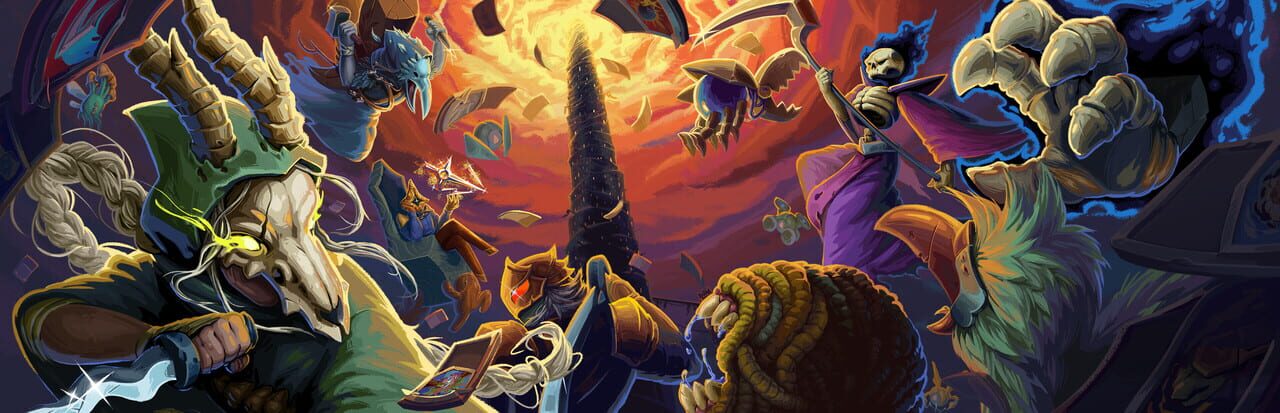
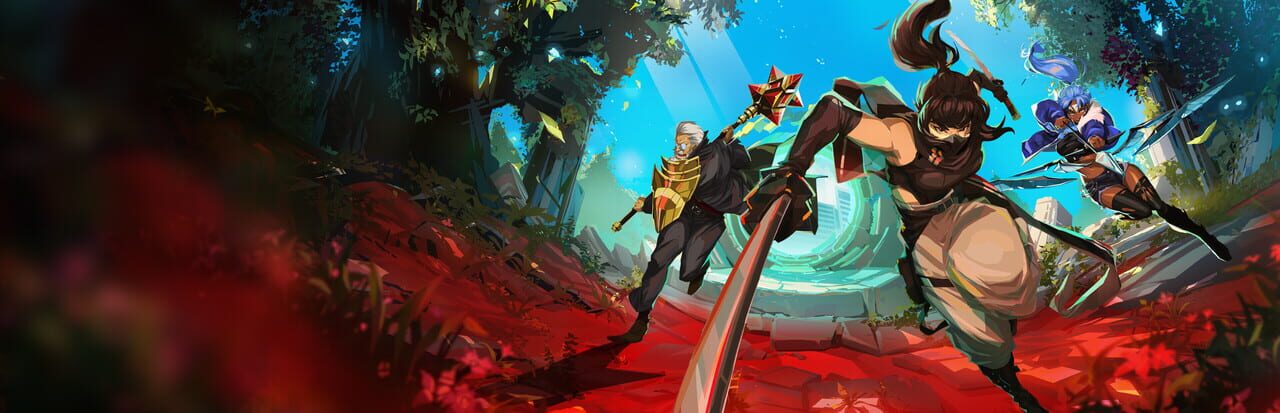
Turn a simple team into an unstoppable force and crush waves of monsters in this PvE autobattler roguelike. No two runs feel the same as you bend heroes beyond their class roles and discover countless combinations and synergies. Seal the rifts at your own pace and uncover what tore them open.
Read moreShow less
Rifts have torn open in cities across the world, and no one knows what's driving them. You are tasked with building a guild of unique heroes, level them up to crazy power spikes and combine their abilities with items and relics to break the game and unveil the unknown cause of the rift crisis.
Adapt each run as different things are offered to you. With infinite build freedom without a PvP meta that would force certain strategies, every run feels like a new puzzle. As you learn the depth of options available you’ll become an expert at pivoting mid-run, reshaping any makeshift team into an unstoppable force.
Every hero has their starting class and ability, but you choose where they end. With over 500 unique ways to level up and shape each hero, get creative and turn a backline healer into a frontline tank or a ranged dps into a melee brawler. Or, pair two lovers on the battlefield for rapid scaling bonuses.
Unlock Heroes, items and relics. Run-by-run, unlock new heroes, relics and items to discover 25 heroes, 180 specializations, 300+ relics and 100+ items in the demo alone.
Play on your clock. No timer, no queue, no PvP. Think as long as you want, save mid-run, and come back when life lets you.
Break every hero out of their class. 25 heroes across 75 spec paths, and a modifier pool that stacks across classes. Draft, level, respec, and build unfair comps.
Progress through 8 difficulties. Every successful run unlocks a harder challenge for the next. Stack fresh modifiers to climb up the difficulty ladder, then hit Endless mode to chase the top of the global leaderboards.
Weekly Patches and an active Community. Since we launched the alpha in January of this year, we have been updating and evolving the game every week. Join us along the ride and shape Guildrun with us!
From the game's Steam store page.
THE GAMEQ VERDICT1,447 reviews analyzed
What players are actually saying
1. Summary
Players describe the Guildrun demo as a "just one more run" loop that ate their evenings: a single-player, PvE take on Teamfight Tactics with Slay the Spire style run structure, no timers and no opponents to sweat against. Many say it already feels like a full game, some have logged dozens or hundreds of hours in it, and reviewers praise the clean UI, the character art and the way heroes, specializations, items and relics combine into builds. Several say it is the first autobattler they have played or enjoyed.
The frustrations are concentrated in the endgame. Players who climbed to the SS, SSS and Red Rift difficulties report that only a few heroes and scaling builds survive, that the shop's randomness decides too many runs (missing rank-ups, items that never appear), that enemy scaling jumps from trivial to a one-shot wipe, and that Endless mode removes the shop just as builds come together. A vocal minority also turned on the weekly balance patches, which they saw as nerfing whatever was fun while barely helping what was weak. Red Rift divides people: some call it the game's best challenge, and others object to restrictions one reviewer calls "anti-fun".
2. What keeps coming up
What players praise
An addictive "one more run" loopHigh
Many reviews describe lost nights (one player sat down for "just one more run" and looked up at sunrise), uninstalling to get work done and reinstalling the next day, and comparisons to drugs. Runs of roughly 10 to 20 minutes, the ability to pause and resume a run, and the speed of restarting after a loss all feed it. The addiction framing comes from every playtime group, from first-session players to people with 200+ hours, and it appears in a handful of negative reviews too ("disgustingly addicting", "your dopamine hacked brain will like it").
A demo that feels like a full gameHigh
Reviewers are surprised by how much the free demo offers: around 20 heroes with three specializations each, eight difficulty tiers, Endless mode with global and friends leaderboards, Red Rift win-streak ladders, a compendium and mastery trophies. Reactions include "better than most full games", "more content than my last three purchases" and "I feel like a scammer playing this for free". Many say they would have paid for it as-is and plan to buy on day one, and one review asks for a discount or cosmetic for demo veterans. A worry some raise is whether the paid game can add enough beyond such a generous demo.
TFT meets Slay the Spire, without the PvP stressHigh
The usual comparison is TFT (or Auto Chess, Underlords) combat and shop with Slay the Spire style acts, relics and ascension tiers. The Last Flame comes up too; reviewers often find Guildrun more polished, though a few think The Last Flame is the better game. Many reviewers like what Guildrun leaves out: no timers, no other players, no League client, no ranked anxiety. People who struggle to keep up with TFT said they finally had time to understand synergies and execute their own ideas. A smaller group sees the lack of PvP as the thing that limits it (see the split section).
Build crafting and synergies that clickHigh
Players praise how heroes bend out of their starting class, how specializations make the same hero play very differently, and how items, relics, quests and the backup (bench) mechanic stack into silly power spikes (one player found that a Nyx at 600+ attack speed becomes "a little lawnmower", another ended up with "a healer doing more damage than your actual dps"). Some veterans single out positioning (Funke's range, Aria's line beam, enemies that pull or jump to the backline). Players at the top difficulties add that this freedom narrows sharply as difficulty rises (see the frustrations section).
Art, UI and presentation polishMedium
The 2D character art, comic-style event scenes, clean UI, relic activation flares, music and overall snappiness come up again and again, often with "for a demo" attached. Reviewers called it smooth and bug-light. Criticism here is narrower: small health bars, wonky drag-and-drop for units and items, abilities that look weightless at 3x speed, and in-game 3D models that some find less striking than the 2D art.
Developers who patch and listenMedium
Weekly patches with detailed reasoning, an active Discord and visible responsiveness earned a lot of goodwill ("devs are based", "they fixed the bug", "the momentum is on this games side"). A few players who left negative reviews over earlier patches later switched back to positive after the balance direction changed. The same weekly patches also drew complaints, covered in the split section.
Excitement for co-opLow
Players who knew about the planned two-player co-op for the full game brought it up as a reason to buy, often with a friend or partner in mind. A few hope for more than two players or a co-op Red Rift ladder.
Runs on modest hardware and multiple platformsLow
Several reviewers noted it runs well on old laptops, Mac, Linux (Proton) and Steam Deck (via touchpad). Requests for proper controller support, a mobile or tablet version and more languages (Korean, Vietnamese, Arabic) also came up.
Where players are split
The weekly balance patchesMedium
Nerf or patch complaints appear in 23% of all negative reviews. Critics, many with 50 to 250 hours, say the patches gutted working comps while giving underused heroes tiny buffs, that the developers balanced a single player game like a competitive one, and that they prioritized Red Rift streakers over Endless and casual players. Some critics point to patch notes showing a win rate rising from 7% to 12%, followed by nerfs. Defenders counter that the changes were sensible, that later patches reworked many RNG mechanics, and that complaints are "skill issues". A few reviews describe a recovery, such as a player who had posted a negative review over the nerfs and switched it, writing that "with that no longer in the picture I am more than happy to recommend this!"
Red Rift, the top challenge modeMedium
Red Rift is named in 8% of reviews but in 21% of negative ones. Its fans compare it to Slay the Spire's Ascension 20 and call a first Red Rift win one of the most rewarding moments in the game. Critics, including many who still recommend the game, take issue with its rules: a 10 hero death limit that rules out risky or sacrificial builds, a mandatory Rift Seal item that debuffs a hero and eats an item slot, missions that force you to skip rewards or throw away currency, one-item-per-hero limits, and boss tokens that push players back to easy difficulties to farm a starting bonus. One asks for a difficulty step between SSS and Red Rift, and some want challenges that add difficulty without removing choices.
Depth and long-term staying powerMedium
Some reviewers call the game easy to learn but hard to master and still find new builds after 100+ hours. Others, including some experienced TFT and Slay the Spire players, felt they had seen everything within a few hours to a dozen and found it shallow or repetitive once the novelty wore off: items that are mostly stat sticks, fights that blur together, little to chase beyond a leaderboard.
PvE-only designLow
Many players count the lack of PvP as a selling point. A smaller group, often TFT veterans, argues that a PvE autobattler lacks the adaptive pressure that makes the genre last, and asks for async PvP, a ranked mode or weekly challenge modes. A few also say the game keeps PvP-style mechanics (tight economy, strict meta) without the PvP that justifies them.
Art direction and settingLow
The look is widely praised, but a minority finds the characters generic or derivative (Valorant, League, Arcane), and the Solo Leveling style rift-and-guild premise draws both enthusiasm and eye-rolls. Several noted there is no actual guild management despite the name and hoped the full game adds a hub, story or between-run layer.
What frustrates players
A few heroes carry, many are dead weight at high difficultyHigh
Balance is the complaint raised most often, in 44% of negative reviews and plenty of positive ones. Up to roughly S difficulty most heroes and builds work; at SS, SSS and Red Rift players say only scaling builds survive (on-kill stacking, shard generation, percent-based relics, a few standout heroes), while flat-stat items stop mattering. Repeatedly named underperformers include Mystics and Mages, poison builds, tanks that don't tank, auto-attack carries and stall characters punished by the storm; repeatedly named standouts include scaling carries and a handful of relics. Many describe runs that hinge on one hyper-carry while the rest of the team is filler. A minority of skilled players insists every hero can win with the right setup.
Shop RNG decides too many runsHigh
Luck, rerolls or RNG come up in 34% of negative reviews. The core complaint is hero rank-ups: upgrades come only from finding copies in a three-slot shop, so players describe dozens of rerolls without seeing their carry, ending a run with a team of B-ranks, or swapping out a hero they invested in for whatever S-rank the shop offers. Items and relics that match the build may never show up, rerolls get pricier as you go, and A and S passives are random picks from a short list. Requested fixes include weighting the shop toward owned heroes, adding a pity timer, allowing banning or locking, or letting players buy upgrades directly. Some players argue the variance is controlled and fair once you learn to adapt.
Sudden difficulty spikes and overtuned enemiesMedium
Players describe steamrolling for several fights and then being wiped in seconds by the next ordinary encounter, often worse than the act boss. The red mushroom tanks, mushroom archers, spiders and hydra are singled out by name, along with certain challenge fights and the jump after the second boss into Endless. Combined with the rule that a second loss ends the run, this leaves little room to recover or pivot. Bosses themselves are sometimes called too easy by comparison, and enemy variety is called thin.
Endless mode removes the shopMedium
Once Act 2 ends, the shop disappears and players only pick from three random rewards every few waves. Reviewers say this strands unfinished builds (no way to finish rank-ups or fill item slots), makes gold and shard-generation builds pointless, and turns Endless into a passive wait while enemy stats inflate. Several ask for a shop to return every few floors.
Thin meta-progression and long-term goalsMedium
Beyond unlocking heroes, items and difficulties, players feel there is little to work toward: mastery stars in the compendium, a leaderboard, and not much else. Requests include deeper meta-progression, run history and statistics, cosmetic rewards for masteries, rotating or weekly challenges, and an Ascension-style ladder. Some explicitly hope the full game answers this, since the demo's progression "dries up abruptly after just a few runs".
Runs end just as builds come togetherLow
Several players, while acknowledging it is a demo, say the two-act run is too short to assemble a full build before Endless or the final boss arrives, and want longer runs or the promised third act. This ties into the shop and RNG complaints, since fewer shops means more reliance on luck.
Tight economy and no room to pivotLow
Expensive rerolls, a steep cost for extra party slots, large losses when selling heroes, and a two-strike loss rule combine, in players' eyes, to punish experimentation. The backup (bench) mechanic is praised in concept but often called too costly to use.
Unclear tooltips, targeting and combat infoLow
Players flagged inconsistent ability wording (Rush and Stall both using "gain", "on kill" by whom, which buffs are permanent), no way to see attack range or enemy pathing, no control over targeting, hard-to-trace damage sources, and stats like defense with no shown percentage. Small QoL gaps also recur: abandoning a run is hidden in the main menu, no quick retry, no undo, and hidden health bars on large bosses.
Crashes and stuttersLow
A small number of players reported frequent crashes (some every few maps, a few causing PC restarts or blue screens), stutter with heavy relic triggers in Endless, a large install size, and a version bug that doubled enemy damage until a reinstall. Technical complaints are uncommon overall.
The storm timer punishes slow buildsLow
A few players say the storm that damages units in long fights makes tank and stall builds unviable unless you find the relic that negates it, and asked for it to hit enemies equally or arrive later.
3. The player conversation
The tone is enthusiastic, and many reviewers can hardly believe this is a free demo. Short positive reviews ("peak", "crack", "can't wait for release") make up a large share, and many of the long reviews are constructive feedback from people who plan to buy. Some launch-week reviews came from players who had been in the alpha, and they set a warm tone.
The criticism about balance, RNG, Red Rift design and patch direction comes from players who pushed into SSS and Red Rift. The few early quitters who disliked the demo instead called it boring, shallow, too random or crash-prone.
Sentiment moved with the patches. The first two weeks after launch ran at 93 to 94% positive; it dipped to 85% in week three and 84% in week five, the stretch in which reviewers cite the most aggressive nerf patches and the win-rate debate. It then held in a range of roughly 84 to 94% for the remaining weeks, with a few reviewers editing their reviews back to positive as later patches buffed weaker options and reworked RNG mechanics.
4. What the developers could do
Before the full launch, the reviews point to these changes:
- Lift weak heroes and archetypes instead of nerfing what works. Balance is the complaint negative reviews raise most often: only a few scaling builds survive high difficulty, and patches nerfed fun options while barely buffing Mystics, Mages, poison, tanks and auto-attackers.
- Give players tools to manage shop RNG. Players ask for shop odds weighted toward heroes they own, a pity timer on rank-ups, banning or locking options, or a direct way to buy upgrades, so runs are not decided by rerolls.
- Bring a shop back into Endless and smooth its scaling. Losing the shop after Act 2 strands builds and kills gold-based strategies, and reviewers want a shop every few floors plus a gentler enemy curve.
- Rework Red Rift so it adds challenge rather than removing choices. The 10 hero death limit, the Rift Seal item, skip-the-reward missions and boss-token farming draw criticism even from Red Rift fans, and one reviewer asks for a step between SSS and Red Rift.
- Even out difficulty spikes and broaden enemy design. Players describe going from steamrolling to a one-shot wipe in a single fight, name the mushroom formations repeatedly, and want more varied enemies and bosses that ask for different counters.
- Build long-term goals beyond the leaderboard. Reviewers want deeper meta-progression, run history and stats, rewards for masteries, rotating challenges and longer runs, worried the full game will run dry after the novelty fades.
- Tighten clarity and quality of life. Consistent tooltip wording, range and pathing indicators, clearer damage and stat breakdowns, an in-run abandon or retry button, and fixes for the reported crashes would remove a lot of small friction.
- Confirm the business model early. A few reviewers worry about microtransactions or pay-to-win, and a few say a one-time purchase at a fair price, around $20, would keep their goodwill.