Slay the Spire II
Mega Crit Games · Strategy, Indie, Roguelike
Overview
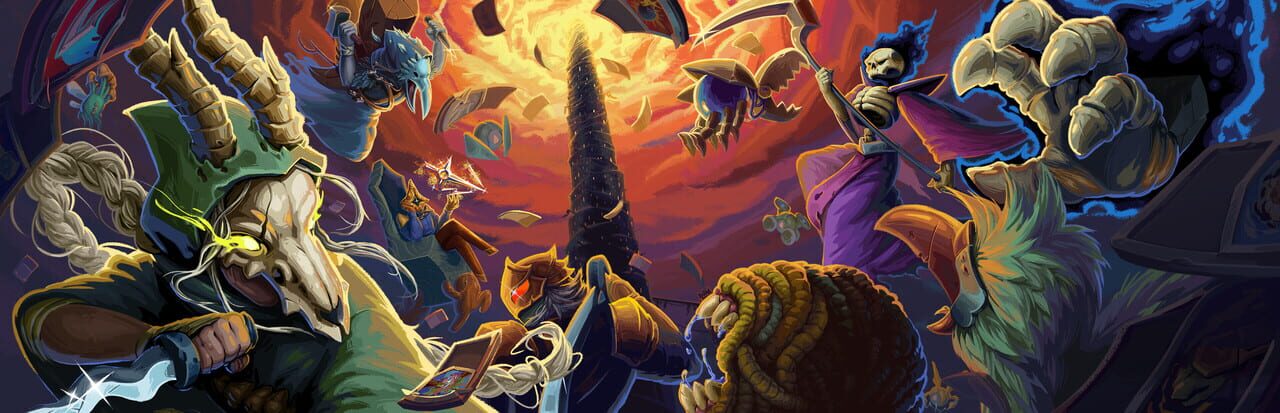
The iconic roguelike deckbuilder returns. Craft a unique deck, encounter bizarre creatures, and discover relics of immense power in Slay the Spire 2!
Read moreShow less
THE SPIRE AWAKENS
The ultimate roguelike deckbuilder returns!
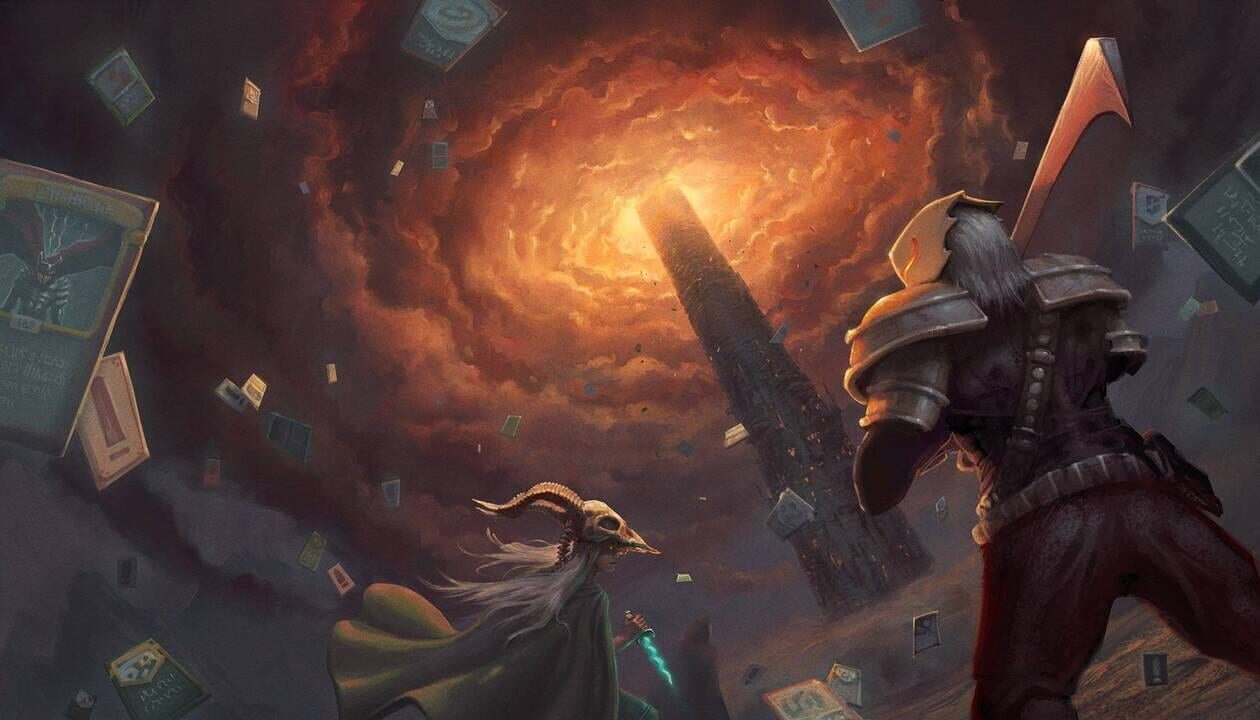
For 1,000 years, the Spire lay dormant, its secrets buried and its horrors forgotten. Now, it has reopened, hungrier and more dangerous than ever, devouring all who dare to ascend.
New perils demand sharper strategies, relentless cunning, and unwavering resolve. Outwit the Spire’s brutal trials and uncover the truths hidden at its peak.
Will you attempt the climb alone or enlist the aid of your fellow adventurers?
AN EVER-CHANGING SPIRE
Step into the newly evolved Spire, a twisted labyrinth teeming with strange and deadly foes. Adapt to an arsenal of brand new cards, relics, and potions, each offering game-changing possibilities—or dangerous consequences.
Climb the Spire with a new and returning cast of characters, each with their own cards, motives, and secrets.
No two climbs are ever the same. Unpredictable challenges and evolving strategies await those brave—or foolish—enough to ascend.
CLIMB ALONE OR WITH ALLIES
Brave the ascent on your own, or play with up to 4 players and face the Spire together in the all new co-op mode. Discover multiplayer-specific cards, powerful team synergies, and carry your friends (or get carried) to victory!
A NEW AND RETURNING CAST OF CHARACTERS
Embark on your quest to Slay the Spire as one of five different characters, some of whom will be familiar to seasoned Slayers and two of whom who are brand new. Discover each character’s unique playstyle, full potential, and secret backstory as you conquer all who stand in their way.
UNCOVER THE SPIRE’S LORE
The history of the Spire and its inhabitants, be they friend or foe, can now be discovered in entirely new ways. Unlock fragments of its mysterious timeline and encounter the most ancient of its residents through your myriad attempts.
MORE TO COME IN EARLY ACCESS
The Spire truly is ever-changing… in more ways than one. More content—including cards, events, environments, enemies, and more—will be added and balanced throughout Early Access. Join the journey early to be a part of the Spire’s next evolution.
Why release in Early Access, you ask? Slay the Spire's success comes from our community! It sounds corny, but the extra mile many of you went to report issues, translate content/announcements, create long video essays, make excellent (lol) tier lists, and draw goofy or gorgeous fan art is the reason we're doing it all again. We love our job!
From the game's Steam store page.
THE GAMEQ VERDICT10,000 reviews analyzed
What players are actually saying
1. Summary
Most English-language reviewers recommend Slay the Spire II, and fans of the first game describe a bigger sequel that lives up to the game that defined the roguelike deckbuilder. They praise the draft-and-fight loop, which is as hard to put down as ever; art and animation that are a clear step up; two new characters, the Regent and the Necrobinder, who play differently from the returning cast; and built-in co-op for up to four players, which reviewers bring up more than any other new feature. Even a handful of reviewers who say they don't like card games got hooked.
Among negative reviews, 54% cite difficulty, balance or randomness, and they name specific design choices: the Aeonglass Act 3 boss, which punishes playing many cards; normal and elite encounters (Hunter Killer, Infested Prism, Entomancer, Decimillipede) that hard-counter whole archetypes; two-player co-op scaling; and patches that, to many veterans, nerfed fun strategies while leaving oppressive enemies alone. The disagreement between reviewers is over whether balance at high Ascension is a fair challenge or, as one negative review puts it, "more reliant on RNG than skill".
This verdict reads English reviews only. Steam's overall rating, across all languages, is Mixed, because Simplified Chinese reviews outnumber English ones and are mostly negative. The ones we sampled make the same balance complaint far more angrily, saying patches cut favourite cards and builds while enemies got stronger, and they add a second one: new content arrives slowly, with a long summer gap between updates.
2. What keeps coming up
What players praise
Co-op multiplayer is the standout additionHigh
Co-op comes up more than any other new feature: 13% of game-focused reviews mention it or playing with friends, family or a partner. Players like how smoothly it works (simultaneous turns, voting on the map, drawing on the shared map, rock-paper-scissors for contested relics), the multiplayer-only cards that let characters buff, block for or feed energy to teammates, and being able to save and quit mid-run with friends. A handful of reviewers write "I don't like card games", about themselves or the friends they play with, and still enjoy this one. Co-op also draws complaints, covered under frustrations below: two-player scaling, and no matchmaking or local co-op.
A worthy, bigger sequel to Slay the SpireHigh
One reviewer sums it up as "Slay the Spire, but more and better", and reviewers who compare it with the first game list what changed: more cards and builds per character, Ancients replacing the old boss relics with more varied choices, card enchantments, alternate Act 1 zones, more interesting events, the Epoch timeline that unlocks lore alongside new cards, and quality-of-life touches like the in-run compendium, run history and map drawing. Several players with 1,000-plus hours in the original say this one is every bit as good or better. A minority, covered in the split section below, find it too similar to justify a sequel.
"One more run" addictiveness and replayabilityHigh
Hundreds of reviews, many of them short, say some version of "I can't stop playing", with jokes about lost sleep, neglected coursework and 3 a.m. runs. Longer reviews credit the depth: every card pick, path choice and potion matters, a solo run lasts roughly an hour, and the game can be played casually at low Ascension or studied seriously at the top. Some players who reached Ascension 10 on every character keep coming back for daily runs, custom runs and co-op.
New characters and a refreshed returning castMedium
Reviewers call the Necrobinder (with her summoned hand, Osty, plus Doom and Soul mechanics) and the Regent (a second resource of Stars and the forged Sovereign Blade) fun and mechanically fresh. The returning Ironclad, Silent and Defect get praise for new archetypes such as Sly discard for the Silent and status or power builds for the Defect. How well each character is balanced is disputed; see Character balance below.
Art, animation and presentationMedium
Players repeatedly mention the jump in animation, backgrounds and enemy design, and some credit the move to the Godot engine and the new character art. Dozens also love the deliberately crude MS Paint-style placeholder art in the Epoch timeline, and several asked that it be kept as an option; a few praised the studio for using placeholder doodles instead of AI-generated art. Music gets little attention. A handful call it forgettable or repetitive, and others call the boss themes excellent.
Steam Workshop mod supportLow
Once Workshop support arrived, veterans praised it for extending the game's life with community characters and quality-of-life mods, including the Downfall expansion and damage-counter mods. A few complained that enabling mods could wipe or fork save files and that there was no simple vanilla/modded toggle at launch.
Runs on modest hardwareLow
Players say it runs well on old laptops, Steam Deck, Linux and Apple Silicon Macs, and several play it mostly on a handheld. A small number reported Mac heat and lag or stutter on older machines.
Where players are split
Difficulty and balance at high AscensionHigh
54% of negative reviews cite difficulty, balance or randomness, and 7% of positive reviews add a balance caveat of their own. Critics describe enemies that hit for 25 to 40 damage from turn one while gaining strength every turn, fights that are pure damage races, runs decided in Act 1, and a steep jump at Ascension 9 and 10, where two Act 3 bosses must be fought back to back with no rest. The high-Ascension complaints come from experienced players: negative reviewers with 100+ hours bring up Ascension 8 to 10 far more often (17%) than those under 25 hours (3%). A smaller group of newer players found even Ascension 0 overtuned and asked for an easier mode or better onboarding.
Defenders point out that difficulty is opt-in through Ascension, that top players win streaks at Ascension 10, that balance was still moving in Early Access, and that complaints often come from people forcing one build instead of adapting. A few experienced players even said Ascension 10 was easier than the first game's Ascension 20 and asked for more levels.
RNG: fair challenge or slot machineHigh
22% of negative reviews complain about luck. Some claim the draw order feels rigged: all the Block cards arrive on the enemy's buff turn and all the attacks arrive when it swings for 30, or key powers sink to the bottom of the deck. Others point to seed-determined outcomes. A few noted the studio later changed how randomness worked, with mixed reports on whether it felt better afterward. Some positive reviewers accept variance as part of the genre and argue that good pathing, deck thinning and card evaluation reduce it, often crediting guides or the Untapped overlay for teaching them.
Early Access patches: careful tuning or "nerfing the fun"Medium
21% of negative reviews talk about patches, updates or nerfs, and so do 28% of negative reviews from players with 100+ hours. Their complaint is that balance changes, which they believe were driven by win-rate data and top players, removed infinites and popular cards (Compact, Bloodletting and Dominate rarity changes, Shatter, Tracking and Pillar of Creation were all named) while buffing enemies, and that the biweekly updates were number tweaks instead of new content. Some of these reviewers had flipped an earlier positive review to negative. Some positive reviews, on the other hand, praise the frequent, transparent updates, the in-game F2 feedback tool and a team they feel is listening, and several reviewers switched back to positive after later patches fixed their complaint.
Sequel or "Slay the Spire 1.5"?Medium
Reviewers who see the familiarity as a strength ask, as one does, "Why reinvent the wheel?" A minority, more common among short-playtime negatives (8% of negative reviews under 25 hours), call it essentially an expansion or DLC with the same structure, many returning cards and three of the four original characters, and question paying full price; some recommend the cheaper first game instead. Several positive reviews call it worth every penny.
Character balanceMedium
Players disagree about which characters are strong. Different reviewers call the Necrobinder, the Regent or the Defect underpowered or unfun at Ascension 10, say the Silent was targeted by nerfs and by enemies that punish card spam, and a few call Ironclad the only reliable pick. Others say every character feels viable. Some archetypes within a character (Silent shivs, Necrobinder souls, Regent stars versus forge) come up repeatedly as much weaker than the rest.
The Doormaker's removalLow
The original Act 3 boss, the Doormaker, went through reworks and was then removed and replaced by Aeonglass. Some players celebrated its removal. Others missed it as the more interesting fight ("bring back Doormaker") and see the replacement as a step backward.
What frustrates players
Aeonglass and other build-countering bossesMedium
Aeonglass, the Act 3 boss that adds unplayable, damaging Wither cards every few cards played and scales them, is named more than any other enemy. It appears in 9% of negative reviews and 14% of negative reviews from players with 100+ hours, and mentions peaked in July. The objection is that it deletes archetypes: shiv, discard, soul and 0-cost decks, which the game offers throughout a run, become near-automatic losses if Aeonglass shows up, so players felt forced to draft "Aeonglass insurance" from Act 1. The Test Subject draws a related complaint in co-op, where one player's skill cards raise its strength against everyone. A few positive reviewers also call Aeonglass the worst boss in the series.
Normal encounters and elites that play like bossesMedium
Some hallway fights hit harder than elites while giving normal rewards (Hunter Killer, Fabricator, The Obscura, cockroach packs, two Chompers), and some elites (the reworked Infested Prism, Entomancer, Decimillipede, Phrog Parasite) hard-counter whole characters or card types; Infested Prism, for example, makes Skills cost health. Players also say elite relic rewards rarely justify the risk, so the correct play is often to avoid elites entirely, which undercuts the risk-and-reward pathing that defined the first game.
Two-player co-op scalingMedium
Duos feel far harder than solo, trios or quads, because enemy health and damage scale per player while multiplayer cards are scarce and expensive. Some duo players, including a couple with dozens of attempts together, say they can barely win at higher Ascension, and one describes three- and four-player runs as almost too easy in comparison.
Missing endgame and contentMedium
Players asked for the missing Act 4 and a fight against the Architect (runs end with an unwinnable cutscene against him), alternate versions of Acts 2 and 3, a sixth character, an endless mode, Steam achievements and cosmetic skins. Some were patient because it was Early Access. Others said that once every Epoch was unlocked there was little left to chase, and that balance passes were arriving instead of content.
Crashes, save loss and disconnectsLow
A small set of reports covers launch crashes and black screens (some needing several attempts to open the game), crashes on Steam Deck, Mac and during specific fights, co-op disconnects with no way to rejoin, the window opening on the wrong monitor, and several accounts of lost progress or profiles after a crash or after installing a mod. Some reviewers later noted that crashes were fixed.
Co-op missing basics: matchmaking, local play, reconnectLow
Players without friends who owned the game asked for public lobbies or matchmaking, couples asked for local or couch co-op, and co-op groups wanted to rejoin after a disconnect, see teammates' shop and card rewards, and trade cards.
Controller and touch inputLow
A handful of players found Steam Input mappings confusing (two different "accept" buttons that made it easy to skip relic rewards), reported controllers not being recognized on a second screen, and noted that touch controls from the first game's tablet version were missing.
The Watcher's absenceLow
The first game's fourth character did not return. Some players miss her and ask for her back; others say leaving her out is better for balance, and one argues she would have broken co-op.
3. The player conversation
Many positive reviews are short, affectionate and jokey ("send help", "better than crack"). The disagreement is over whether the high-difficulty design respects players' time. Newer players who disliked the game tended to cite overall difficulty at low Ascension or that it felt like the first game again, while veterans with 100+ hours who disliked it focused on specific bosses, specific nerfs and the direction of patches.
Some positive reviews were written to push back against a "Mixed" recent rating, pointing to Chinese-language negative reviews about balance, and a few urged readers to use the in-game feedback tool instead. The edited older reviews in the slice trace the swings of Early Access: frustration over the Doormaker rework in April, relief when it was removed, then a new wave of anger once Aeonglass and the reworked Infested Prism arrived, peaking in July. Positive share among game-focused reviews went from about 90% in late June and July to about 92% in August and September, the period when Workshop support and a large multiplayer-card update arrived.
4. What the developers could do
- Rework Aeonglass so it tests decks instead of deleting archetypes. It is the enemy experienced players name most. They say it forces them to draft against one possible boss from Act 1 and makes shiv, discard, soul and 0-cost decks near-automatic losses.
- Retune hallway fights and Act 2 elites that play like bosses, and make elite rewards worth the risk. Players named Hunter Killer, Infested Prism, Entomancer and Decimillipede as run-enders that hard-counter specific characters, and elite relics felt too weak to justify fighting them.
- Fix two-player co-op scaling and shared-trigger bosses. Duo players report far higher difficulty than in solo or four-player runs, and the Test Subject's strength gain from every teammate's skills was called unwinnable in multiplayer.
- Buff weak archetypes and characters before nerfing popular ones, and explain the reasoning. A fifth of negative reviews bring up patches or nerfs, many of them to say fun strategies were removed while enemies grew stronger, and some long-time players flipped their reviews over specific nerfs.
- Deliver the missing endgame and content: Act 4 and the Architect, alternate Acts 2 and 3, a new character, endless mode and achievements. Players who had cleared everything said there was little left to chase and wanted content updates, not more number changes.
- Give players more agency against bad variance and better tools to learn from losses. Reviewers who felt the draw order was rigged asked for more ways to shape their deck (cheaper card removal, knowing future bosses, a turn or fight restart), and others asked for an in-game bestiary and post-run breakdowns so losses feel explainable.
- Harden stability, saves and co-op reconnection. Launch crashes, Steam Deck and Mac instability, mod-related save loss and disconnects without rejoin were rare, but they cost players runs and progress.
- Round out co-op and input quality of life. Players asked for matchmaking or public lobbies, local co-op, per-player cosmetics to tell identical characters apart, clearer controller mappings and a vanilla/modded launch toggle.