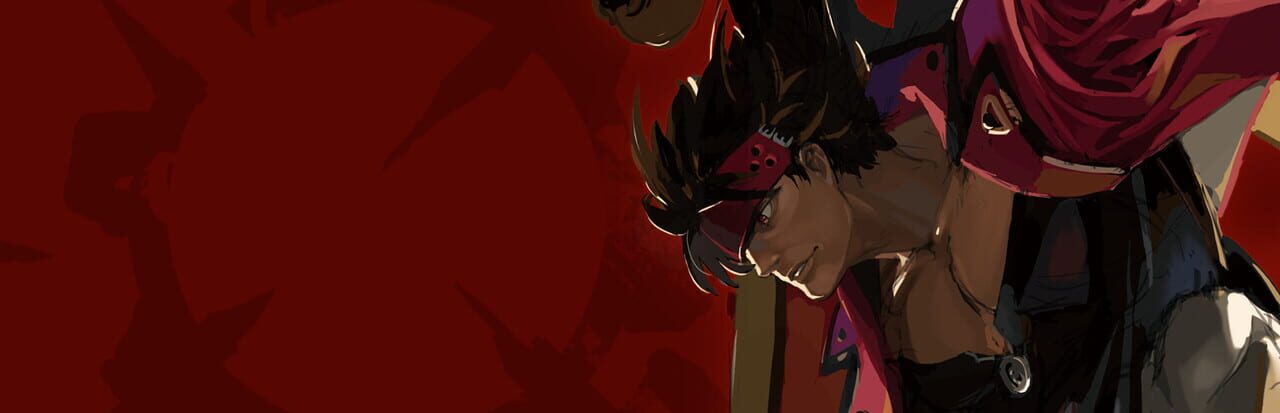
Guilty Gear: Strive
Arc System Works · Fighting, Action
Overview
Discover the Smell of the Game with Guilty Gear: Strive! Immerse yourself in new gameplay mechanics designed to be simple and welcoming for fighting game newcomers, yet deep and creative for veterans. Ride the Fire into a heavy metal inspired alternate future full of over-the-top action, style and fun!
THE GAMEQ VERDICT9,998 reviews analyzed
What players are actually saying
1. Summary
A large majority of players recommend Guilty Gear -Strive-. The reasons they give most often are the soundtrack, the hand-drawn look of its 3D animation, and a cast where every fighter plays differently. Reviewers new to the genre often call it the fighting game that finally clicked for them, with simple inputs and a high skill ceiling. A smaller group credits the developers for supporting the game for years, and a few came back for the 2.0 update.
Character balance and repeated reworks draw the most complaints in the longer reviews, mostly from long-time players whose favourite character was nerfed or rebuilt. Monetization follows close behind: reviewers point out that much of the roster is paid DLC, that DLC fighters can't be practised against in training without buying them, and that a battle pass arrived years after launch. Online lobbies, matchmaking that throws beginners against veterans, a story mode with no gameplay and clunky menus round out the list.
2. What keeps coming up
What players praise
The soundtrackHigh
22% of the longer reviews bring up the music, nearly all of them to praise it. The joke that Strive is a rock album with a free fighting game attached turns up in a few dozen reviews, and character themes get named and quoted at length. One reviewer wrote that "the music alone is worth getting the game for." The rare dissent is about taste: one player found the vocals annoying enough to play muted and wished for instrumental versions, and a few series veterans prefer older Guilty Gear soundtracks.
Visuals and animationHigh
22% praise the art style, animation or presentation. Reviewers single out the 3D models drawn to look like 2D anime, the super move cinematics and the slow-motion counter hits. One summed it up as "3d models animated like 2d with real anime style squash and stretch." A few players find the effects too busy to read during a match.
A distinct, memorable castHigh
Character reviews, 21% of the longer ones, are mostly about how different each fighter feels to play and how striking the designs are. "No two characters really feel the same, and that variety makes experimenting with the roster so much fun," one player wrote. Some reviews are written entirely about a favourite (or most hated) character. Some longtime fans miss characters' older looks or move sets.
A good first fighting gameMedium
13% describe Strive as beginner friendly, easy to pick up, or their first fighting game. Reviewers credit simple motion inputs, the gatling combo system and the tutorial and mission modes: "Fairly easy to learn at a basic level but with a high skill ceiling." Fewer reviews (6%) push back, saying the learning curve is steep, the opponents online are far more experienced, or that the game "sucks atrociously to get into." Reviews on both sides describe losing a lot in the early hours.
Fun with friendsMedium
Playing with friends, siblings or local groups comes up in 5%, and these reviews are warm even when the reviewer dislikes ranked play. "Out of the fighting games I've played, this is the one my friends and I come back to the most." Several reviewers who warn people away from ranked still say the game is worth it for a group of friends.
Developers who listen and keep updatingLow
3% praise the studio's continued support, new characters and willingness to remove disliked systems. Some compare this favourably with other fighting games, and one wrote that "it's nice to have a Japanese fighting dev really listen and apply player feedback."
Where players are split
Simpler than older Guilty GearMedium
12% compare Strive with Xrd, Accent Core +R or other earlier entries, and series veterans disagree among themselves. Critics call it watered down and homogenized: fewer moves per character, shorter combo routes, slower movement and less of the series' wild energy. "It's definitely a step down from +R and Rev 2 in terms of mechanical depth, combo variety, and player expression, but Strive is still an excellent fighting game," one veteran wrote, and others go further and tell people to play the older games instead. Defenders answer that the simplification is what brought in new players, and one put it plainly: "It is shamelessly a new and different game."
The 2.0 updateMedium
Reviews of the 2.0 overhaul (11%) split sharply. Supporters say lower damage, the removal of Wild Assault and the new ranked mode made matches longer, more interactive and less snowbally: "gone are the days of Wild Assault -> 70% damage off of any stray hit." A few said they returned after months away because of it. Opponents, often players of specific characters such as A.B.A, Testament, Happy Chaos, Anji or Sol, say the patch stripped tools and combo routes and left top tiers untouched. "2.0 has ruined this game for me," wrote one. The arguments overlap heavily with the balance complaints below.
Tutorials and training toolsMedium
9% talk about the tutorial, missions, training mode or the tools for learning combos and frame data. Some rate the training mode among the best in the genre and credit the missions for teaching them the basics. Others list gaps: no combo trials, no on-screen frame meter, a clunky combo recipe browser, and missions that describe inputs poorly. "First fighting game i have played that doesnt have a combo trial mode," one player complained, calling that bad for new players. Several also note that a DLC character can't be selected as a training dummy unless you own it.
Netcode and connection qualityMedium
The online connection comes up in 9%. The rollback netcode and crossplay earn strong praise, with one reviewer calling it "the best rollback net-code I've ever seen" and others reporting smooth matches across continents. A smaller group reports the opposite: heavy lag in some regions, opponents on weak connections or wifi, and a lack of players in parts of Europe and South America. One wrote that the game has "some of the worst networking of any modern fighting game." Going by these reports, how well it plays seems to depend on the reviewer's region and the connections of the people they get matched with.
The communityLow
2% comment on the player community, with views on both sides. Some describe a welcoming scene that helps newcomers ("lovely community tho, very nice people, but they just destroy you"), while others describe rage quitters and a toxic atmosphere online.
What frustrates players
Balance and constant reworksHigh
22% of the longer reviews discuss balance, nerfs, tier lists or a reworked "main", more than any other complaint. The common thread is that the same characters stay strong patch after patch while weaker ones are nerfed further or rebuilt: "it's pathetic how it's apparently impossible to nerf some characters out of top tier after 5 years." Players also resent having to relearn their character every few months: "Only play this game if you want to relearn your characters every few months due to balancing, reworks, or straight up mechanic removal/changes." A small number disagree and call it one of the better balanced fighting games, especially at casual levels. A handful of reviews point to a Happy Chaos infinite as an example of slow fixes, and one complains that a broken character's infinite went unpatched for a month.
Paid characters, colours and a battle passHigh
DLC, pricing or the battle pass come up in 18%. The main complaint is that much of the roster sits behind paid passes, so reviewers say a full set costs several times the base game: "The majority of the cast is DLC. Maps are DLC. Colours are DLC." Players who can't afford every character say they can't learn matchups because they can't practise against characters they don't own. Early buyers of the Ultimate Edition feel shortchanged by what they describe as a newer Starter Edition bundling more seasons ("My 80 € got me less than half the content others get today for the exact same price"). Several long-time fans say they edited their reviews to negative over the battle pass, which reviewers call the Blazing Pass, objecting to limited-time rewards and challenges that only count in ranked and Tower, not player lobbies: "Adding a battle-pass to the game 5 years after launch is a new low." Dozens of reviews give the same advice: buy the game and the season passes on sale.
Lobbies, Tower and matchmakingHigh
Online lobbies, Tower floors, ranked or matchmaking come up in 17%. The avatar-based lobby system is criticised for slow navigation and empty floors: "The lobbies are horrible, you take 15 minutes to find a match to try to train and you just get bodied." Newcomers describe being matched against far stronger players, and others complain about facing the same opponent many times in a row. The addition of a real ranked mode changed minds for a number of reviewers ("I can recommend this game now that it has functional online"), though some long-time players miss the old floor system.
A story mode you only watchMedium
6% mention the story mode or single-player content. Those reviews often describe the story as a long anime film with no fights in it: "Story mode once again like xrd is just a multi hour anime movie." Players who mostly play offline say arcade, survival and missions leave little to do. A few enjoy the story as a film and like the lore.
Clunky menus and server connectionsLow
Complaints about the menus and the online flow (5%) cover repeated "connecting" screens, a server login on every launch even when playing offline, and slow navigation between modes. "I don't need 10 separate boxes pop up when I'm loading the game saying "Communicating with server", one would do."
PC and input issuesLow
Technical problems turn up in 3%: crashes at launch with a D3D error, controllers detected as keyboards, incomplete button configuration, no ultrawide support and keyboard rebinding limits. "Every time I try to launch it, it crashes with a D3D error," wrote one player who otherwise loves the game. On the other side, several reviewers say it runs well on older laptops, Steam Deck and Linux.
3. The player conversation
The tone is affectionate, loud and full of in-jokes. Many of the short reviews are song lyrics, "TOTSUGEKI" chants, tier-list rants and love letters to particular characters, and several recommending reviews start with "I hate this game". In the long reviews, newcomers write about the music, the look and finally getting into fighting games, and their complaints are about losing a lot, matchmaking and prices. Long-time players write about balance, reworks, 2.0 and comparisons with Xrd and +R, and reviewers who raise balance or reworks have usually played far longer than other long reviewers. Monetization comes up from both groups.
Some long reviews have been edited over years, with dated updates stacked on top of each other, and they trace the game's history. Early complaints about the lobby system and the lack of ranked play give way to praise when ranked arrived, and opinions on 2.0 swing in both directions. 10% of reviews written in April 2026 mention 2.0. Battle pass complaints then cluster in May 2026, when 11% of reviews raised it; that was the least positive month of 2026 in this slice at 78%, and the week of May 11 dipped to 65%. Reviews written in October 2026 were back at 92% positive.
4. What the developers could do
- Let players practise against every character in training mode, because reviewers who don't own every DLC fighter say they can't learn those matchups, and a few call this pay-to-win.
- Make the battle pass progress from every mode and drop limited-time exclusives, since several fans switched their reviews to negative over it, objecting to FOMO rewards and challenges that skip player lobbies and offline play.
- Favour smaller, steadier balance changes over repeated character rebuilds and fix broken interactions quickly, because balance draws more complaints than anything else, chiefly that the same characters stay on top while others are reworked until some of their players quit.
- Tighten matchmaking for new and returning players, as reviewers describe beginners facing far stronger opponents, repeat matches against the same person and returning players stranded on high floors.
- Offer a fairer path to the full roster for early buyers, since Ultimate Edition owners feel penalized next to a Starter Edition they say bundles more seasons for the same price.
- Add a frame meter, combo trials and a cleaner combo recipe browser, which a handful of reviewers, new players and veterans alike, ask for by name.
- Cut the repeated server connection screens and allow offline play without logging in, because players describe the menu flow as slow and needlessly online.
- Fix PC input and display issues, including the D3D launch crash, controllers read as keyboards, incomplete button mapping and missing ultrawide support.