Halls of Torment
Chasing Carrots · ARPG, RPG, Action
Overview
Slay hordes of terrifying monsters in this horde survival roguelite. Descend into the Halls of Torment where the Lords of the underworld await you. Treasures, magical trinkets, and a growing cast of heroes will grant you the power to vanquish these horrors from beyond. How long can you survive?
Read moreShow less
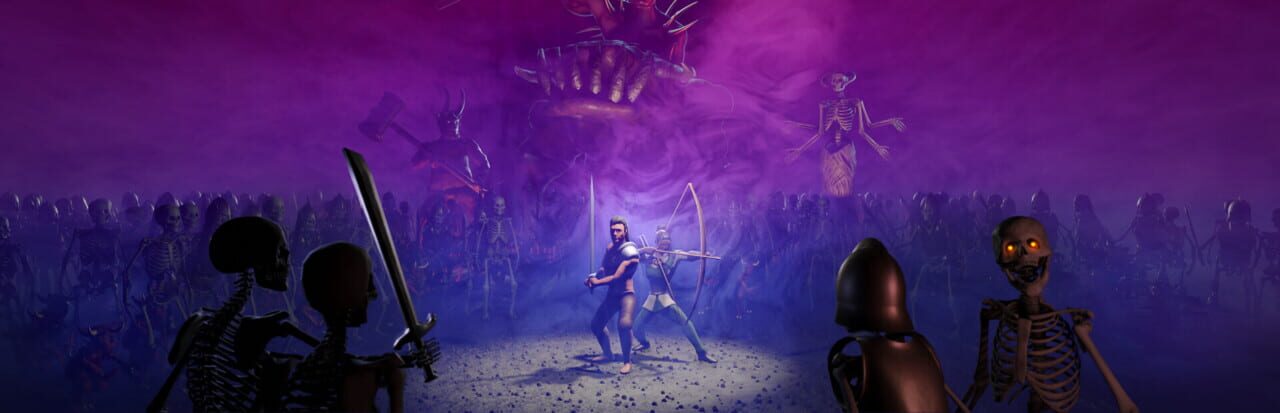
Halls of Torment is a horde survival game with a pre-rendered retro look reminiscent of RPGs from the late 90s. Choose one of many hero characters and descend into the deadly Halls of Torment. Fight unholy horrors from beyond and survive wave after wave of enemies until you face one of the tormented Lords. Strengthen your hero with character traits, abilities, and items. Create a new powerful build during each run. Explore various underground expanses and find new powerful items that enable you to venture even deeper into the abyss.
Quest-based meta progression
Large selection of diverse abilities, traits, and items, all enabling you to create interesting synergies
Diverse bosses featuring unique mechanics and attack patterns
Several distinct characters allowing for many different play styles
Unlock and explore multiple interesting and challenging underground worlds
Unique items can be sent up to the overworld and used to customize future runs
Craft magical tinctures to direct fate in your favor
Unlock the power of each class and combine them with your chosen character
Defeat the Lords of the underworld and explore infinite growth
Find rare item variants to further improve your builds
Put your strategies to the test in the late game against the unbeatable Shrine of Torment
11 playable characters & character marks
25 blessings that make you stronger for each run
500 quests to complete
1000+ traits that upgrade characters and abilities
From the game's Steam store page.
THE GAMEQ VERDICT9,999 reviews analyzed
What players are actually saying
1. Summary
Halls of Torment is a horde-survival game in the Vampire Survivors mould, dressed in the pre-rendered look of the first two Diablo games, and Steam players like it a great deal. The praise keeps returning to three things: the Diablo atmosphere, a loop of quests and unlocks that keeps feeding new characters, gear and abilities, and a price of a few dollars that buys dozens or hundreds of hours. Some fans call it the best game in the genre, and a large share of the positive reviews are short, warm one-liners calling it a great game, addictive, or Diablo crossed with Vampire Survivors.
Negative reviews are few, and their complaints overlap. Many say the game turns slow and repetitive once the first unlocks are done: upgrades are mostly small stat bumps, characters converge on similar builds, and every run lasts about 30 minutes with no way to speed it up or save mid-run. The endgame grind (sending gear up the well one item per run, chasing artifacts and hundreds of achievements) wears down even players who enjoyed the first 10 to 20 hours. Crashes late in a run, which wipe the whole run, are the main technical complaint, and reviewers say they grew after the Boglands DLC. Reviews written in 2026 were 88% positive, against 95% during Early Access and the first year after the 1.0 release.
2. What keeps coming up
What players praise
The Diablo 1 and 2 look and atmosphereHigh
A quarter of all reviews (25%) talk about the art, visuals, retro style or the Diablo comparison, and 18% name Diablo directly. Fans describe the pre-rendered sprites, dark dungeons, voiced NPCs and gothic music as a close recreation of late-90s action RPGs, and many say the look is what made them buy it. One recommending review opens with "Imagine Vampire Survivors, but with a darker old-school feel." Some players find the textures muddy or blurry, especially on big monitors, and several negative reviews argue that the style is carrying a thin game, one calling it a "boring slogfest that lures you in by looking like Diablo". The brown and grey palettes plus spell effects can also make enemy projectiles hard to see in late runs (see the frustrations below).
A Vampire Survivors formula with more control and RPG depthHigh
Vampire Survivors comes up in 20% of reviews, almost always as the reference point, and many of those reviews rate Halls of Torment as its equal or better. Players like aiming the main attack (with auto-aim and auto-attack toggles for those who want to switch off), bosses and elites with readable attack patterns, gear slots, and class-specific trait trees. A positive review headed "The Pupil Who Surpassed His Master" puts it this way: "Unlike many Vampire-Survivors-like games out there, Halls of Torment is actually good instead of just a cash-grab." In the negative reviews the comparison works against the game: 23% of them (130 of 573) bring up another game in the genre, most often Vampire Survivors, Death Must Die, Brotato or Soulstone Survivors, and say Halls of Torment is slower, less chaotic and less of a power fantasy.
Huge value for the priceHigh
12% of reviews bring up price, value or a sale, nearly always to say the game is cheap for what it gives: reviewers describe paying roughly five to seven dollars and getting dozens or hundreds of hours back. "For under $10 I have gotten hundreds of hours of entertainment, collected all 500 achievements, and keep coming back for more." Some negative reviews concede it is cheap enough to be worth a try. Several players also point out that the free Prelude demo carries its save over to the full game.
Addictive unlocks and quest-driven progressionMedium
About 9% of reviews call the game addictive or mention the "one more run" pull, and 9% talk about its quests, milestones and achievements. Fans like that nearly every run unlocks something (a character, an ability, a gear piece, a permanent stat) and that completed quests raise experience gain, so even a failed run feels useful. The roughly 500 achievements draw in completionists, and the same system feeds later complaints: players who chase every achievement describe much of it as padding, with many goals asking for a set amount of damage with a given ability and some depending on rare drops or spawns (see the grind section below).
A good fit for the Steam Deck and for switching your brain offMedium
Positive reviews from Steam Deck and handheld players often say it runs well there. Another group uses the game to relax, often with a podcast or audiobook on, thanks to the auto-aim and auto-attack toggles: "I just turn on auto-aim and auto-attack in the settings and relax..." A smaller set of Deck owners report crashes or frame drops at higher Agony difficulty (see below).
Where players are split
Thirty-minute runs and slow pacingMedium
Some fans like a predictable half-hour session that fits into a day: "It's a good time-killer if you just want to play something for no more than 30 mins at a time or something you want to marathon for hours without getting bored, it suits both." Many others, including plenty who still recommend the game, find the runs too long for how little changes inside them, especially once a run is effectively won ten minutes in. One recommending player, whose only complaint is that the game "TAKES FOREVER", wrote "30 minute rounds are like torture." Among the 573 negative reviews, 11% raise run length, and players note that the end boss and menu pauses push a run closer to 40 or 45 minutes. What they ask for is a turbo or speed option, a shorter mode, or a way to save and resume: "If there was an option to toggle length or even a save and return feature it would make this a non issue." Players who reach the late game mention an artifact that trims runs to 20 minutes, but it comes too late for those who quit early.
Build variety, classes and balanceMedium
Positive reviews praise the roster of classes, the trait trees and the gear system as giving the game more build-crafting than most of its rivals, and some players cite specific favourites (the Exterminator's flamethrower, the Shield Maiden, the Cleric). Critics go into detail: level-up choices are mostly small percentage boosts, the pool of in-run abilities is small, characters converge on the same handful of strong picks, and some classes (the summoner Warlock and the Sorceress are named) feel far weaker than others. Several long-playtime reviews say crit and attack speed builds outclass everything at high difficulty and that elemental effects rarely matter. Balance swings are a recurring Early Access memory: some veterans liked earlier versions better, while others say later updates added the depth they wanted.
The well, gear unlocks and the endgame grindMedium
Some fans love the extraction-style gear system: "My favorite system ever, EVER, is the run items that you can send up to permanently unlock." Critics dislike that only one item (or potion bottle) can be sent up the well per run, that it must then be bought back with gold, that winning a run does not let you keep the gear you are wearing, and that the final Vault hall needs 30 items sent up before it opens. One recommending player called gathering those 30 items "the absolute opposite of fun." Among negative reviews, 13% use the word grind, and those who pushed for 100% describe random artifact drops, rare quest spawns and torment shards worth a fraction of a percent each. A negative review from an achievement hunter put it as "i wanted a game and was handed a second job."
Difficulty and the Agony endgameMedium
Players disagree on whether the game is too easy or unfairly hard, often depending on how far they got. Newer players and some veterans say the base halls become trivial once permanent upgrades are bought, and a few describe standing still while the build clears the screen. Endgame players describe the reverse: Agony levels and artifacts that mostly inflate enemy health, sponge-like bosses that take many minutes to kill, enemies faster than slow characters, and unavoidable damage in crowded fights, which makes movement speed close to mandatory. Fans of the higher difficulties see this as the game's real challenge, and detractors call it tedium.
Music and soundLow
Positive reviews often single out the soundtrack and the voiced NPCs as part of the Diablo mood. A smaller group finds the music dissonant or monotonous and the hit sounds weak, saying abilities lack punch.
What frustrates players
Crashes that wipe a whole runMedium
Crashes come up in 16% of negative reviews (92 of 573), and over a third of those reviewers say they enjoy the game otherwise ("I love this game but right now there is way too much crash to be enjoyable"). They describe crashes late in a run, often near the boss or with heavy on-screen effects (Avalanche and other ice effects, high attack speed builds, the Boglands map and high Agony levels are named repeatedly), on Windows, Linux and the Steam Deck alike. Because there is no mid-run save, a crash costs the whole run. "Every run crashes with less than 10 seconds left on the clock, which means about 30 minutes of wasted time." Reviewers tie the rise to the Boglands DLC, and the counts agree: crashes appear in 29% of the negative reviews written in 2026 (32 of 109), against 10% in the year after the 1.0 release (23 of 221). A few players report that a later update fixed it for them; one who had left a negative review over crashes says that after the update they "played several runs without a single crash". Others in the same months still hit crashes, including players who never bought the DLC.
Boredom once the novelty wears offMedium
Words like boring, repetitive, tedious and slog appear in 23% of negative reviews. These reviewers usually say the first 5 to 20 hours are fun and full of unlocks, and then runs blur together: few map events, the same enemy waves, upgrades that do not change how you play, and a power curve that never feels explosive. A few say runs nearly put them to sleep. Many of these reviewers still call it a fair purchase for its price, and they sound more tired than angry.
Stats and mechanics the game does not explainLow
This shows up in negative reviews and as a caveat in positive ones: stats such as Force, Block and Parry have vague or confusing descriptions, the level-up screen does not show before and after values, and some quests are hard to understand without the wiki. "There is no indication anywhere in the game as to what "Force" does," one negative review says, adding that the wiki does not explain it either. Players also ask for a map or minimap for quests that send them hunting across a level.
Frame drops and clutter in crowded late runsLow
Separate from crashes, a set of reviews report heavy frame drops when hundreds of enemies and effects fill the screen at high Agony levels, including on powerful PCs, and some suspect the game uses a single CPU core. The same late-game crowding makes it hard to tell your projectiles from enemy ones. Turning off effects helps some players and not others.
Paid DLC and the training roomLow
A small group of negative reviews objects to paid DLC on a game they feel is light on base content, and a few single out the practice room (a firing range for testing builds) being sold separately: "A firing range / testing dummies should be available as a feature for the base game." Some also dislike achievements that require DLC. Others bought the DLC happily and recommend it, and a few say it pulled them back into the game.
Smaller technical issuesLow
A scattering of reviews report lost or corrupted save files, failures to start because the Steam API was not reached, the window opening off-screen on multi-monitor setups, controller problems (missing PlayStation and Nintendo button glyphs, inputs sticking in one direction), no ultrawide support, and small text on the Steam Deck.
3. The player conversation
A large share of the reviews are a line or two of quick praise for the fun, the addictive loop or the Diablo look. The negative reviews are fewer and far more detailed, and they often start by praising the art and the price before explaining why the reviewer stopped playing. A few say they wish Steam had a neutral option.
Players who refund or quit within the first couple of hours mostly call it a slow, generic Vampire Survivors clone and name a rival they prefer. Players with tens of hours raise the 30-minute runs, the sameness of builds and the well grind. Players with 100 hours or more, many of them achievement hunters, write about endgame balance, random artifact drops, achievement bloat and crashes at high difficulty, and some of them still recommend the game while listing those flaws.
Early Access reviews (from May 2023) were 95% positive, and their complaints included balance swings and the paid training room. Late September 2024, when reviews start talking about the 1.0 release, brought one of the biggest weeks of reviews, and the following year stayed at 95% positive. The review spikes of late November 2023 and late November 2024 were warmer still, at around 99% positive. Once reviews start mentioning the Boglands DLC in late 2025, more of them report bugs and crashes. Reviews written in 2026 were 88% positive, and crash complaints made up a much larger share of the negatives than before.
4. What the developers could do
- Fix the late-run crashes and protect runs from them. Crashes are the main technical complaint in negative reviews, reviewers say they grew after the Boglands DLC, and players tie them to heavy effects, ice abilities and high Agony levels on PC, Linux and Steam Deck.
- Add a run speed option or a mid-run save. Fans and critics alike ask for a turbo mode, a shorter mode or a way to save and resume a 30 to 45 minute run.
- Loosen the well and endgame grind. Players ask to keep more gear from a won run, to stop potion bottles sharing the single bucket, for drops that favour gear they have not collected, and for less luck-based artifact unlocks.
- Explain stats and show the numbers on level-up. Force, Block and Parry confuse new and veteran players alike, and reviewers want before and after values on each choice plus a map for exploration quests.
- Rebalance weak classes, abilities and elemental builds. Long-playtime reviews say crit and attack speed dominate, elemental effects barely matter, some classes trail far behind, and movement speed is close to mandatory at high Agony.
- Improve late-game performance and readability. Players report frame drops with hundreds of enemies and effects on screen and struggle to tell their own projectiles from enemy ones.
- Move the practice room into the base game. The reviewers who object to the firing range being sold separately see build testing as a core feature.
1. Summary
The Boglands is a cheap add-on for a game its reviewers love, and the reviews split close to even, with a slim positive majority. Its fans want more Halls of Torment and get it: a new swamp map, two new heroes (the Crone and the Alchemist), new gear, quests and music, at a price most reviewers who mention it call fair or better. Launch week was warm, with 81% of its 48 reviews positive. Of the 63 reviews written after launch week, 41% recommend it.
Crashes come up more than any other problem, in 22% of all reviews. Several of those players say the base game never crashed for them, and crash reports kept arriving months after release even as others said patches had fixed it. Other reviews name bugs in traits, quests and level-up menus, new Growth traits that long-time players call bloat, and a requirement to finish Agony mode and collect plants across the old maps before the new map opens at all. The new heroes and the map itself divide people. Some love the hostile, zoning enemies and the Crone's decay builds; others find the heroes random and slow and the brown-and-green map hard to read. Reviewers on both sides tend to praise the base game, and they disagree about whether this DLC adds to it.
2. What keeps coming up
What players praise
More of a game they already loveHigh
Several positive reviews are short notes from fans: this is extra Halls of Torment, and that is enough. "same Halls you know and love, just more of it," one wrote, and another put it as "It's more of the same, it's simple as that." A few say they bought it mainly to support the developers, and some ask for more DLC. Some negative reviews also open by praising the base game ("Love the game, hate the locking of new map behind a collecting"). Fans themselves point out the catch: it pays off mostly for players who have already worked through the base game and want an endgame challenge.
A low price for what it addsMedium
Among the 26% of reviews that talk about price or value, most say it is worth it: "It's a crime this game and its expansion being so cheap," and "Good dlc at a reasonable price." A long positive review notes that the DLC only looks expensive next to a very cheap base game. A smaller group disagrees, calling one stage and two classes thin for the money ("this is a dlc u would get for 0.99$ or 1.99$ at best") or saying the content is disappointing next to the base game.
New quests, gear and musicLow
Players who enjoy completion praise the batch of new quests and gear ("Quests 10/10" in one scorecard), and a few single out the soundtrack ("Absolutely amazing music accompanied by the tried and true gameplay"). One reviewer who finished the new quests felt the extra ways to power up had reduced the tension of the original.
Where players are split
The Crone and the AlchemistMedium
Critics of the new heroes say both rely on random or summoned main attacks that take control away: "Neither of the new characters are fun to play due to extremely random or uncontrollable main attacks," and "I am not a fan of RNG auto attack characters in roguelikes." A long negative review argues that the Crone's low speed and slowing curse, plus weak summons, make the new heroes a poor fit for the Boglands map they ship with. Others enjoy them, especially the Crone: "Crone feels overpowered," one wrote, and another explains that decay-focused builds make it "extremely strong." Opinions in between vary. One reviewer likes the Crone but not the Alchemist, one calls both classes "interesting," and another says they aren't.
The Boglands map and its tougher enemiesMedium
Fans of the map like that it plays differently: you must kill rather than just survive, enemies zone and block you, and boggy ground slows you down. "It feels like it was designed by someone who hates you as a player," wrote one reviewer who recommends it, meaning it largely as praise and calling the DLC an optional endgame challenge. Another described it as an ecosystem "trying to purge the antigen that is the player." Detractors find the same features unfair. The exploding enemies "leave behind an AOE that is really hard to avoid," slow terrain feels wrong in a game built on speed, some attacks lack the warning circles the old halls used, and a few short reviews simply call the stage "terribly imbalanced."
What frustrates players
Crashes that the base game never hadHigh
Crashes come up in 22% of reviews, more than any other complaint. The usual story is that the base game ran fine and the DLC brought crashes, often at the end of a run, after a boss, or as loot dropped. "Game crashed after my first 40-minute run in Boglands," one wrote, and another: "I had a crash during the final boss fight... never had the game crash previously." Players disagree on whether it was fixed. Some reviews from the first weeks and from March say updates cleared it up ("btw it doesnt crash anymore"), yet new crash reports kept arriving in April, May, August and September, including "Oh no, the DLC makes the game crash constantly!" Some positive reviews mention crashes too; one notes that they all hit as a run ended and progress was kept.
Bugs in traits, quests and menusMedium
Players list specific broken systems: level-up menus showing every class's traits, quests completing or unlocking at random, Crone plant types not spawning until a reload, effect opacity not applying to new abilities, wrong trait descriptions, and items such as the regen version of the twisted chaplet "not actually improving regen." One long review says the crash risk made them "afraid to experiment with equipment." Another points out that some base game bugs were never fixed either, and two reviewers say they will change their review once the bugs are patched.
Balance, and Growth traits that veterans call bloatMedium
Long-time players object that the DLC changes the base game as well as adding to it. One negative review says "You will be flooded with the new Growth traits" with weak scaling, too few potions to discard them, and no way to switch them off short of disabling the DLC or finding a rare artifact. Others complain of "poor balancing of new additions," note growth trait descriptions are wrong, or say new items are so strong they remove the tension. The players raising this write as long-time players of the game, and one of them notes newcomers probably won't notice.
The new map is locked behind a grindMedium
Buyers who expected to jump straight into the swamp were surprised to find the map locked. "Instead I had to google how to unlock it," one wrote. A detailed review explains that a first visit requires unlocking Agony mode and gathering plants across the five base levels, which it estimates takes most players over 10 hours. Others call it "pointless fetch quests in old areas" and say "Don't quite understand the decision to release paid DLC to then lock it behind in game requirements." One player with over 100 hours in the game still had not reached it a month after buying.
No new Steam achievementsLow
A small gripe, raised mostly in positive reviews: the DLC adds in-game challenges but no Steam achievements. "Only thing missing for me would be new steam achievements but thats miniscule," wrote one; a completionist with every base game achievement said it left them no reason to finish the DLC.
Brown and green on brown and greenLow
A few reviews, positive and negative, complain that the map, enemies, projectiles and the Crone's summons share the same muddy palette, so threats are hard to see once effects fill the screen. "Brown and green on brown and green," as one put it. One reviewer calls it a minor issue you can get used to, while another says you will fail runs because you can't see what is going on.
3. The player conversation
Launch week was mostly short, enthusiastic notes from fans who bought on day one ("INSTA BUY," "Great addition to the base game!"), and 81% of them recommended it. From week two on, the reviews turned more critical, written by players who had hit crashes, bugs, the unlock requirement or the Growth traits, and the share of positives after launch week fell to 41%. Reviews then trickled in through the following year at a few a month, still split, with crash reports and reports that the crashes were fixed alternating.
Long-time players raise the balance and trait-bloat complaints and the missing-achievements gripe. The unlock complaints come from players who expected to play the new map right away. Crash reports come from every kind of player. Few reviews say anything against Halls of Torment itself, and the tone is more disappointed than angry; two of the negative reviewers say they will change their review once the bugs are gone.
4. What the developers could do
- Stamp out the end-of-run and boss crashes for good. Crashes come up more than any other complaint and were still being reported months after some reviewers said patches had fixed them, often by people whose base game had never crashed.
- Fix the listed trait, quest and menu bugs. Reviewers name specific broken items, mis-unlocking quests and wrong level-up menus, and two say they will change their review once these are patched.
- Let buyers into the Boglands sooner, or explain the unlock in game. Players who paid expected to play the new map and instead had to search online for an Agony mode and plant-gathering requirement that one reviewer put at 10+ hours.
- Make Growth traits optional or easier to manage. One negative review asks for them to be off by default with a way to turn them on, and complains that too few potions were added to discard them.
- Give the Crone and Alchemist more control and better summons. Critics of both heroes point to random main attacks, weak summons and the Crone's slowness, which they say suits the Boglands map poorly.
- Improve readability on the swamp map. Players ask for more color contrast between ground, enemies and projectiles and for effect opacity settings that cover the new abilities.
- Add warnings to the new enemies' attacks. Detractors of the map single out exploding enemies' lingering damage and launches with no telegraph, unlike the old halls.
- Add Steam achievements for the DLC content. A few fans said this was the one thing missing.