The Blood of Dawnwalker
Rebel Wolves · RPG, ARPG, Action
Overview
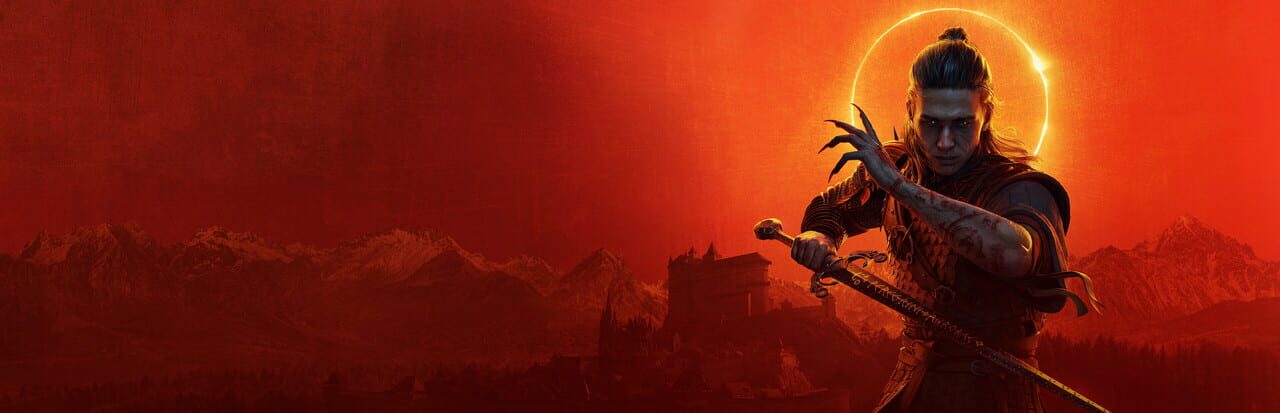
The Blood of Dawnwalker is an open-world dark fantasy action RPG set in 14th-century Europe. You play as Coen, human by day and vampire by night, fighting to save your family in a story shaped by your actions and the secrets you uncover.
Read moreShow less
14th-century Europe. Bloody conflicts sweep the lands, and the Black Death comes for the survivors. It's a moment of weakness - and that's all they needed. Vampires seize their opportunity to walk out of the shadows and claim what they've been denied for centuries: freedom, and the power that comes with it. Other creatures of the night follow their lead. Legends turn into reality, and history as we know it will never be the same.
You play as Coen, a young man turned into a Dawnwalker, forever treading the line between the world of day and the realm of night. Fight for your humanity or embrace the cursed powers to save your family. Whatever your choice, the question stands: is your soul worth the lives of those you love?
Experience and shape the plot the way you want. Embark on the quest to save your family, or swear revenge on your sire and destroy everyone standing in your way. Discover ancient secrets lurking in the valley. Rush in head first or risk taking time to prepare. Go alone or search for friends and forge unlikely alliances.
Experience two different gameplay loops, offering distinct abilities to choose from, mysteries to uncover, and varying ways to achieve your goals. Experiment with different approaches and discover how the world reacts to your actions.
Every action - and inaction - shapes the world around you. Your family’s days are numbered, and every time you take on a quest, time moves forward, compelling you closer to the end. Choose carefully whom to help and whom to leave behind. You will not have time for everyone. The world waits for no one. And neither does the villain.
Defy gravity, become a brutal force of nature, and use your supernatural skills as a vampire. Or raise your sword, and employ powerful magic to take on opponents as a human. Experiment and adapt as your form changes during the day and night; each has its strengths and weaknesses.
Venture through the hand-crafted open world and discover all it has to offer. Roam through the lush forests, the vast plains, the treacherous swamps, the steep mountaintops, and the medieval settlements. Explore forgotten ruins, find remnants of an ancient civilization, and uncover truths that should probably remain hidden.
Experience the beginning of a brand-new saga built with love for the role-playing genre. Immerse yourself in a visually stunning world powered by the next-gen Unreal Engine 5.
From the game's Steam store page.
THE GAMEQ VERDICT10,000 reviews analyzed
What players are actually saying
1. Summary
Nearly nine in ten reviews recommend Rebel Wolves' debut. Story, writing, characters or quests come up in 48% of reviews, more than any other topic, and The Witcher is named in 26%, usually as the nearest comparison. Reviewers describe dark, morally tangled quests, a likeable young lead, side stories that feed back into the main plot, and choices whose consequences turn up hours later. The night-time vampire powers (shadowstep, wall-walking, wolf form, and a hunger that can make Coen drain an ally mid-conversation) give it an identity of its own. The 30-day clock comes up in 24% of reviews. Players who say how many days they had left at the finale usually had about a week to spare, and they tend to describe the limit as looser than they feared. A smaller group calls it toothless, and others find it stressful, especially because spending skill points also costs time.
The directional combat splits players. The auto lock-on camera, which switches targets mid-fight, comes up in 20% of negative reviews, and getting snagged on pebbles and invisible arena walls, endless wolves, boars and dogs, and spongy, level-scaled enemies wear on people over a 30 to 50 hour run. PC performance (stutter, crashes, cutscenes capped at 30 fps) came up in a third of launch-week reviews, and price comes up in 27% of negative reviews, often with the complaint that it is an AA game at a AAA price.
What game reviewers say
Critics landed close to players. Metacritic averages 8.3/10 across 70 critic reviews and OpenCritic 8.5/10, with 93% of critics recommending it. The strongest agreement is on the quest writing and the lived-in world: Eurogamer puts it level with The Witcher 3 and PC Gamer calls it one of the best open worlds since that game. Eurogamer singles out the human-by-day, vampire-by-night hero as the game's boldest structural idea, and IGN likes how the two forms double the build-crafting. The weaknesses are just as shared: GameSpot finds the combat styles converge and the game technically rough (pop-in, hitching animations), IGN's PS5 playthrough hit framerate wobble and blurry textures, and the lock-on and camera are the problem nearly every outlet raises.
The split is over the 30-day clock. IGN, GameSpot and Eurogamer treat it as the masterstroke, with GameSpot arguing that deliberate scarcity is the point. PC Gamer finds the pressure largely a bluff and says the game "doesn't have the courage to allow this system to show its fangs." IGN is the high outlier, calling it the open-world vampire RPG its reviewer had waited decades for. Critics noted the technical roughness and scored around it; on Steam, performance comes up in 19% of negative reviews.
- IGN (9/10): the vampire RPG its reviewer waited decades for, with day and night builds that double the build-crafting and endings worth three playthroughs.
- GameSpot (8/10): an "incredibly ambitious, deeply interesting first game from Rebel Wolves" whose ticking clock gives choices weight, held back by combat styles that converge and technical roughness.
- Eurogamer (8/10): meets The Witcher 3's bar without raising it, with its bolder ideas in the two-sided hero and player-controlled time.
- PC Gamer (8.3/10): in some respects the best blockbuster action RPG since Elden Ring and one of the best open worlds since The Witcher 3, though its time pressure never truly threatens.
2. What keeps coming up
What players praise
Writing, side quests and charactersHigh
Story, writing, characters, quests, dialogue or voice acting come up in 48% of reviews, and 42% of positive reviews longer than a line or two praise them outright. Players single out side quests that feed back into the main plot instead of padding the map, quest lines that react to what you already found (Coen remarks when he has been somewhere before), and dilemmas where every option costs something. One reviewer summed it up: "I was choosing between different kinds of bad outcomes." The villain Brencis, the vampire Lacra, the witch Anca and Volk, a friend of Coen's father, are the names that recur. The voice acting is widely praised, Coen's actor Will de Renzy-Martin is singled out, and several players recommend the Polish, German or French dubs.
The criticism comes from a minority: story-critical wording appears in 2% of reviews and 9% of negative ones. These players find dialogue that spells out feelings with no subtext, voice lines whose tone jumps mid-scene as if recorded on different days, some modern-sounding phrasing, and Brencis's three lieutenants getting too little screen time before you kill them.
A Witcher 3 successor with its own identityHigh
The Witcher is named in 26% of reviews. Where reviewers spell out a judgment, favourable comparisons (a spiritual successor, it feels like The Witcher 3) outnumber unfavourable ones (play The Witcher 3 instead, it is nowhere near) by about ten to one. The quest structure, investigations, music, menus and grey morality feel like former CD Projekt Red developers picking up where they left off, while the directional combat (Kingdom Come: Deliverance is named in 5% of reviews) and the vampire half give it a different shape. One player's entire review reads "The Witcher, but with actually good gameplay". A smaller group turns the comparison against it, calling it a "Depthless Witcher 3" or saying the music and UI are borrowed, and some negative reviews warn that anyone expecting Witcher 3-level writing will be disappointed.
Night-time vampire powers and the day/night splitHigh
Vampires or the vrakhiri come up in 19% of reviews (34% of reviews over 300 characters). The night kit is what players rave about: shadowstep teleports between rooftops and behind enemies, walking up walls, running as a wolf, claws and blood explosions, and a hunger system that can make Coen lose control and drain someone mid-conversation, ally or not. Daytime sword and witchcraft play gives the loop a rhythm, and some describe looking forward to nightfall. Several call it the vampire game they have wanted since Vampire: The Masquerade Bloodlines, with Bloodlines 2 as the contrast. A longtime fan of the genre wrote that this is the first time in years "I've felt like I'm playing the game as a vampire."
The reservations: the human half feels weaker, witchcraft costs health to cast, corruption and feeding choices change little in the story, and there is no stealth (covered under frustrations).
Choices with consequences that land laterHigh
Choices, decisions or consequences come up in 17% of reviews. Players like that quests resolve differently depending on when you arrive (an NPC left waiting may act without you, or die), that almost anyone can be killed, and that the finale can be reached many ways: with allies, alone, by walking out of the valley, or by beating Brencis in the prologue. As one reviewer put it, "every side quest is a moral tax." The opposing view, that outcomes converge at the end, is covered under endings below.
A grim Carpathian world, setting and musicHigh
Atmosphere, world-building, the setting or the music come up in 12% of reviews. The plague-ridden 14th-century valley, its folklore creatures, the city of Svartrau and the lore books win praise even from players who dislike the combat, and several say they read every note. The score, which several hear as close to The Witcher's, is named in 5% of reviews, and only 0.1% of reviews (14) dismiss it as forgettable, generic or dull. Some players add that the visuals look no better than The Witcher 3 for far heavier hardware demands.
Goodwill for a debut and appetite for a sequelHigh
11% of reviews ask for a sequel, DLC or a franchise, and 5% call it a game of the year or a contender. Some forgive the jank because this is Rebel Wolves' first game, comparing it to the first Kingdom Come: Deliverance or the first Witcher as a rough foundation for a stronger follow-up.
A lean world that skips the bloatLow
A small group (under 2% of reviews) praises the game for respecting their time: a mid-sized valley, side content that ties back to the main goal, and no map full of fetch quests. One called it "a really lean, really focused game in an era of AAA bloat." Other players describe the same open world as repetitive (see frustrations).
Where players are split
Directional combatHigh
Combat comes up in 39% of reviews and in 56% of negative ones. Praise wording (17% of reviews) outnumbers complaint wording (8%) about two to one. Fans love the For Honor and Kingdom Come style directional blocks, the perfect parry and riposte flow, and the way abilities from three skill trees layer on top; 3% of reviews say outright that it took a few hours to click or grew on them. "Don't judge the combat based on the first few hours. Give it time," one wrote, and another lamented that "The combat in this game is so good and its going to be the least talked about thing, that breaks my heart."
Its detractors describe one attack button and no heavy attack, being unable to move while holding block, groups of enemies that politely take turns, and animal attacks whose direction is hard to read without the on-screen indicators. The difficulty curve draws comments both ways (see below). The camera, terrain and enemy-variety problems that make many fights frustrating are covered separately under frustrations.
The 30-day clockHigh
24% of reviews bring up the clock, at almost the same rate in positive reviews (24%) as in negative ones (22%). Quests, camp clearing, levelling up and some chests cost segments of a day or night, while walking, roadside fights and most looting are free.
Most players who finish say there was more time than they feared. Among the 306 reviews that state how many days were left when they reached the finale, the median was seven and 96% had at least three. "The time limit in this game is mostly cosmetic," wrote one player who cleared the whole map. Fans say it cures the checklist habit and makes choices count: "Instead of 1 run of 120 hours, you get to experience 4 runs of 30 hours each." Others found it a relief from completionism: "I've always had a hard time letting go of side content in similar games, but this time I was relieved of it."
Two groups push back from opposite sides. One finds it too lenient to matter once the prologue's genuine squeeze is over: it "Feels more like a proof of concept than a fully realized mechanic." The other finds it stressful, mostly completionists and players who hoarded skill points out of fear, or who could not tell in advance how long a quest would take ("the game does not forecast time consumption well"). Mods that stretch the limit to 90 days or remove it come up in 2% of reviews. Several players did not realise the game continues past day 30 with a different ending, and others are disappointed that finishing the main quest ends the game with no free roaming afterwards.
Coen as a protagonistMedium
Coen is named in 8% of reviews, and where players characterise him, praise outnumbers complaint roughly three to one. Fans find him sincere, likeable and believable as a farm boy pushed into horror, with strong voice work behind him. Detractors find him naive, whiny or a pushover who never hardens after everything he goes through: one wrote "this guy complains about EVERYTHING," another called him "a meek, soft-spoken, doormat" in the main questline.
Endings, epilogue and the post-credits sceneMedium
Endings, the epilogue or the post-credits scene come up in 8% of reviews, and where players judge them, complaints slightly outnumber praise (about 1% of reviews against 0.7%). Complaints: different routes lead to similar outcomes ("7 endings...which are all the same," one negative review says), allies from separate questlines cannot join forces for the final assault, the epilogue barely changes with your choices, the family reunion feels cold, and there is no ending where Coen takes Brencis's place. One player who loved the game until the end wrote that they "very abruptly didn't anymore." On the other side, players praise the many paths to the finale, secret endings, and an epilogue that shows what became of the people you met. The post-credits scene, which points the series toward a much later era, divides players: some cannot wait, others say it abandons the medieval setting they came for.
Difficulty and the power curveLow
Small groups raise each end of the curve: under 2% of reviews say the early hours are brutal, and a similar share say the late game becomes trivial, with overtuned abilities, legendary gear and bosses that fall in under a minute. Several recommend the hardest Duelist setting because it lowers enemy health while making enemies more aggressive, and others enjoy the climb from fragile farm boy to near-unkillable monster.
RomancesLow
Romances come up in 2% of reviews. Anca's convent questline is a highlight for some, but others call the romances one-night stands with little follow-up, with partners reverting to generic NPCs or vendors afterwards.
What frustrates players
PC performance, crashes and bugsHigh
Performance comes up in 15% of reviews, complaint wording about it in 11%, and in 19% of negative reviews. Crashes are named in 4% of reviews, and bugs, softlocks, endless loading screens or broken saves in 9%. The specifics repeat: Unreal Engine 5 stutter, frame drops in the city of Svartrau and after closing the map or menus, cutscenes capped at 30 fps (1% of reviews), frame generation flicker, an oversharpened image with no slider, autosaves that stop working, and quest kills that fail to register. One player with an above-spec PC wrote that "the game does NOT look good enough to be straining systems this terribly."
This was worst at launch. Reviews written in launch week mention performance 33% of the time, against 10% to 14% in later weeks, and players credit hotfixes 1.0.2 and 1.0.3 with fixing early controller and movement problems. Mods are a common workaround (named in 4% of reviews), which some resent: one player said "a modder fixed what the devs refused to." Others (3% of reviews) report smooth play, including on Linux and on Steam Deck at low settings.
Repeated enemies, wolf packs and spongy, level-scaled foesHigh
8% of reviews (18% of those over 300 characters, 15% of negative reviews) complain about the bestiary or the arithmetic of fights: a handful of enemy types and movesets reused for 40 hours, reskinned bosses, wolves, boars and dogs that interrupt every trip, and level scaling that makes common enemies take longer to kill as you grow stronger. "Wolf took 5 hits at start and on level 30 same wolf takes 20 hits," one reviewer wrote. Another: "If a quest in this game can possibly result in you beating up packs of dogs, it will." Keeping legendary gear current through costly smithing adds to the grind. These complaints come mainly from players deep into the game (see the player conversation).
The combat camera and auto lock-onHigh
The camera and targeting come up in 8% of reviews, but in 17% of reviews over 300 characters and in 20% of negative reviews. It also appears in 15% of positive reviews over 300 characters. The soft lock-on jumps to the farthest enemy, switches away from a target you just stunned with pocket sand or parried, cannot be turned off, and keeps the camera facing an attacker while you try to run. The off-centre camera clips into walls in tight rooms, so attacks arrive from off-screen. Players call it "a double agent working for the antagonists" and "a bigger enemy than any NPC you'll fight," and one fan summed it up: "Fix auto-camera lock during combat and it will be 10/10."
Price and valueMedium
Price comes up in 8% of reviews and 27% of negative ones. The common complaint is AA production at a $70 AAA price, with several players naming $40 to $50 as fair and regional prices (AUD 109 to 110, CAD 100, PLN 300) drawing extra complaints. "The game is actually worth $50, but has a $20 tax for being a decent vampire game," one player wrote. A few also object that the long, heavily scripted opening runs past Steam's two-hour refund window before the open world's problems show. Against this, some reviewers say it was worth every penny or that they were glad to pay full price to support the studio.
Repetitive, Ubisoft-style open worldMedium
7% of reviews, and 14% of negative ones, describe the open world as a checklist: clearing camps, smashing blood barrels and freeing prisoners to raise each lieutenant's anger before you can fight them, the same caves and dungeons, and quests padded with wave after wave of the same enemies. "Within 4 hours you'll see everything this game has to offer mechanically," one wrote. Infamy draws similar criticism for having little visible effect: guards still patrol for a lieutenant you already killed. Other players argue the clock is the antidote, since it lets you skip the filler, and one called it "the world's first Anti-Ubisoft Open World game design."
Clunky movement, terrain snags and no way out of a fightMedium
5% of reviews, and 14% of negative ones, describe getting stuck on knee-high rocks, stools and tree roots, invisible walls that close off an area once combat starts, being unable to jump or climb mid-fight, and no reliable way to disengage from a boar or wolf pack that catches you on the road. One player concluded that "the terrain in this game is the main boss"; another left the epitaph "Here lies Coen, killed by an obtrusive pebble." Outside combat, climbing is slow, shadowstep and wall-walking sometimes misfire, and there are no horses, which wolf form only partly makes up for.
Missing options, post-game and accessibilityMedium
4% of reviews ask for at least one missing option or mode: HDR, proper ultrawide support in dialogue scenes, uncapped cutscenes, New Game+ or free roaming after the ending (2% on their own), transmog, a respec, control remapping, a walk toggle, an FOV or sharpening slider. A smaller group (0.3% of reviews, 29) mentions the sudden flashing visions and jump-scare cuts, for example when reading witchcraft books, and several describe them as strobe-like and ask for a way to turn them down.
Paying time to level up and for small actionsMedium
3.5% of reviews object specifically to skill points costing time, and some of them otherwise like the clock. Because most perks cost a segment per rank, players report banking 30 or more points, skipping whole trees, or leaving witchcraft and vampirism alone and leaning on swordplay, which works day and night. "Every skill point used is a quest lost in this game," wrote one; another "felt punished for enjoying myself leveling up." Inconsistent costs (a chest or a doll placed in a shrine taking as long as clearing a camp) add to the sense that the system is arbitrary. One reviewer put the contradiction neatly: the game seems "determined to make the safest way to play it the least interesting one."
No stealth in a vampire gameLow
2% of reviews raise stealth, nearly always to ask why it is missing. There is a crouch button but no real stealth system, feeding on one guard alerts the whole camp, and a quest that tells you to come back at night while the guards sleep finds the camp awake. As one player asked, "what is a vampire game without any stealth?"
Controller, menus and inventory frictionLow
About 1% of reviews describe the controller handing input to the mouse and keyboard mid-menu (running in fullscreen fixes it for some), the cursor resetting while crafting, the Q key toggling the same slots between consumables and abilities on PC, no inventory sort or search, and separate day and night loadouts that leave Coen half-dressed if a piece is set for the wrong time.
Gear-stripping quest sequencesLow
A small group (under 1%) singles out Home Sweet Home, the Lunar Game and Bakir's maze, which take your gear away and pit you against scaled enemies, as the low points of otherwise strong questlines.
3. The player conversation
The tone is warm and often protective. Short reviews are common (22% are under 40 characters, many of them "GOTY" or "good game"), and the most-upvoted review of all (1,499 helpful votes) is a four-sentence plea to ignore the haters and reward a studio for trying something new. The long reviews are where the debate happens: essays about whether the clock is a masterstroke or a gimmick, and detailed takedowns of PC performance, the writing, the camera and invisible walls, and the mid-game grind, which drew the most helpful votes among critical reviews. A fifth of negative reviews (20%) still praise the story or writing.
Playtime mostly shows who raises what. Players with under two hours (153 reviews) write about whether it runs: 39% of their reviews mention performance and 17% mention price. Players past 40 hours write about what the game is: 31% of their reviews discuss the clock, and complaints about repeated enemies, wolf packs and spongy foes appear in 12% of them, against 2% or less among players under 10 hours. Endings, New Game+ and repetitive open-world activities are likewise raised mainly by players past 25 hours.
The conversation shifted after launch week. Reviews written in the week of 31 August were 82% positive (876 reviews), and they mention performance 33% of the time, the camera 17% and controller trouble 3%. In the following weeks reviews ran between 88% and 91% positive, performance mentions fell to between 10% and 14%, and camera mentions to between 6% and 8%. The clock drew the most comment in launch week (32% of reviews) and then held steady at 22% to 25% every week.
4. What the developers could do
- Give players control of the lock-on. Let them turn auto-targeting off or untarget, stop switching targets after a stun or parry, and favour the nearest attacker, because the camera turns up in 20% of negative reviews and is a fix even devoted fans ask for.
- Keep fixing PC performance and stability. Performance complaints appear in 19% of negative reviews, and city and menu stutter, crashes and broken autosaves are still reported in the weeks after the early hotfixes.
- Remove invisible combat walls and let Coen step over small props and leave fights. Getting stuck on pebbles and boxed into arenas features in 14% of negative reviews and makes the hardest difficulty feel unfair.
- Widen the bestiary and soften level scaling, especially for wildlife. Repeated movesets, wolf and boar ambushes and enemies that take longer to kill as you level appear in 15% of negative reviews, mostly from players past 25 hours.
- Revisit the price, especially regional pricing, and use discounts. 27% of negative reviews bring up the price, often describing an AA game at a $70 AAA price and naming $40 to $50 as fair.
- Take skill purchases off the clock, or make lower ranks free, and show quest time costs in full up front. Players who like the 30-day structure also object to paying time to level up, and others say they cannot judge what a quest will cost before committing.
- Add the missing options players keep listing. New Game+ or free roaming after the ending, uncapped cutscenes, HDR and ultrawide dialogue scenes, remapping, a sharpening slider and a toggle for the flashing visions together come up in 4% of reviews.
- Give night-time play real stealth. It is a small group (2% of reviews), but players keep asking why a vampire who walks on walls cannot stalk and feed quietly, which is the fantasy the game itself sets up.