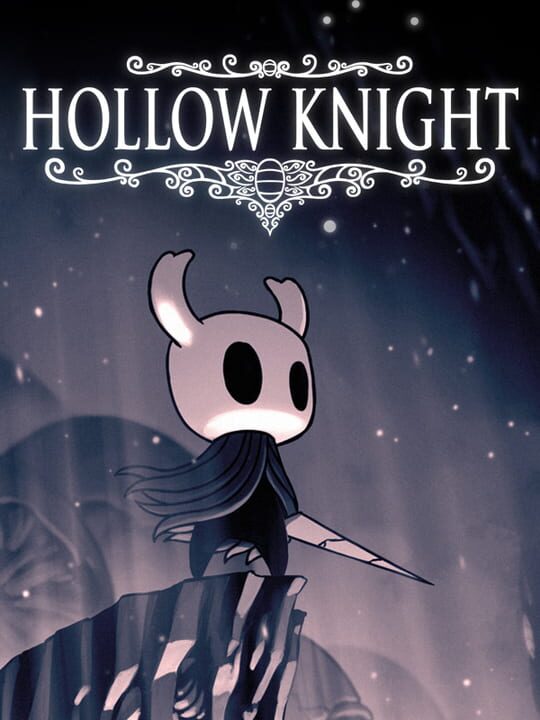
Hollow Knight: Silksong
Team Cherry · Indie, Metroidvania, Souls-like
Overview
Discover a vast, haunted kingdom in Hollow Knight: Silksong! Explore, fight and survive as you ascend to the peak of a land ruled by silk and song.
Read moreShow less
Become the Princess Knight
As the lethal hunter Hornet, adventure through a kingdom ruled by silk and song! Captured and taken to this unfamiliar world, prepare to battle mighty foes and solve ancient mysteries as you ascend on a deadly pilgrimage to the kingdom’s peak.
Hollow Knight: Silksong is the epic sequel to Hollow Knight, the award winning action-adventure. Journey to all-new lands, discover new powers, battle vast hordes of bugs and beasts and uncover secrets tied to your nature and your past.
Game Features
Discover the fallen insect kingdom of Pharloom! Explore mossy grottos, gilded cities and misted moors as you ascend to the shining citadel at the top of the world.
Engage in lethal acrobatic action! Wield a huge suite of deadly moves as you dance between foes in swift, beautiful combat.
Craft powerful tools! Master an ever-expanding arsenal of weapons, traps, and mechanisms to vanquish your enemies and explore new heights.
Solve shocking quests! Hunt down rare beasts and solve ancient mysteries to grant the wishes of the downtrodden and restore the kingdom’s hope.
Face over 200 ferocious foes! Beasts and hunters, monsters and knights. Defeat them all with bravery and skill!
Vanquish over 40 legendary bosses! Battle fabled heroes and fallen kings in epic combat to decide the kingdom's fate.
Challenge Steel Soul mode! Once you conquer the kingdom, test your skills in a new mode that presents a more formidable challenge.
Experience a stunning orchestral score! Hollow Knight’s award-winning composer, Christopher Larkin, brings melancholy melodies, symphonic strings and heart-thumping, soul strumming boss themes to the adventure.
From the game's Steam store page.
THE GAMEQ VERDICT10,000 reviews analyzed
What players are actually saying
1. Summary
Silksong is overwhelmingly loved. Players call it a masterpiece and a worthy sequel, often a better one, and keep coming back to the same things: Hornet's fast, acrobatic movement and combat, a large roster of memorable bosses, the hand-drawn art, Christopher Larkin's soundtrack, and how much game a roughly $20 price buys, with free DLC (Sea of Sorrow) on the way. Many reviewers had waited seven years and say it was worth it.
Difficulty is the most discussed topic (19% of all reviews and 42% of negative ones mention it), and many complaints go further than "too hard" and name specifics: enemies and even staggered bosses dealing two masks of damage, long runbacks to bosses with few benches, enemy gauntlets and bosses that summon adds, a stingy rosary and shard economy that makes you pay for benches and grind for tools, and areas like Bilewater. Many positive reviewers list the same grievances and recommend the game anyway, often with the advice to "play Hollow Knight first".
2. What keeps coming up
What players praise
Hornet's movement and combat feel superbHigh
Players describe Hornet as fast, fluid and "like a dance", with sprinting, the clawline (harpoon), the cloak glide, and a combat rhythm that rewards aggression; next to her, some say, the Knight feels clunky. Late-game movement in particular gets called some of the best in the genre. A minority find the early moveset stiff or floaty until upgrades arrive, and some report inconsistent ledge grabs and clawline or cloak inputs that sometimes fail to trigger.
Art, animation and atmosphereHigh
Hundreds of reviews praise the hand-drawn backgrounds, the frame-by-frame animation and the variety of biomes (Moss Grotto, Far Fields, Greymoor, Bellhart, Choral Chambers, Cogwork Core), and some negative reviews open by conceding the game is gorgeous. A few players found that Pharloom's urban and religious spaces blend together more than Hallownest's did, or that the mood is bleak rather than melancholic.
Boss fightsHigh
Bosses are both a highlight and a flashpoint. Players name Lace, the Cogwork Dancers, Karmelita, Phantom, Widow, First Sinner, Trobbio, Grandmother Silk and the Act 3 finales among the best boss fights they have played, each with its own music. Criticism of the bosses is mostly about adds, runbacks and damage, covered below, and a few fights are singled out as poor: Groal the Great, Savage Beastfly, Sister Splinter, Last Judge for some, and the Lost Lace finale for its visual clutter.
SoundtrackHigh
Christopher Larkin's score is a recurring reason to recommend the game. Players name the Choral Chambers, High Halls and Bilewater music and the Lace and Karmelita themes, and some listen to it outside the game. A smaller group finds the area ambience less memorable than the original's while agreeing the boss themes are stronger.
Huge value for the priceHigh
Players can't get over 50 to 100+ hours of handcrafted content for about $20, some say they would have paid two or three times as much, and the promised free Sea of Sorrow expansion adds to it. Performance gets praise too, with reports of it running well on weak laptops, integrated graphics, Steam Deck, Mac and Linux.
A worthy sequel with a real protagonistMedium
Many call it the rare sequel that lived up to years of hype, and some rank it above Hollow Knight. Reviewers point to Hornet speaking, clearer storytelling, lovable NPCs (Sherma, Shakra, Garmond and Zaza, the fleas, Seth, the Bell Beast) and an emotional Act 3 and true ending. "Play Hollow Knight first" is common advice, both for the story and because Silksong assumes that experience.
Crests and tools add build varietyMedium
Players like swapping crests to change Hornet's moveset and building tool loadouts, and several reviewers prefer it to charms. The caveats (shard costs, imbalance) are covered below.
Depth, secrets and contentMedium
One reviewer says the map "never stops expanding", and others list side areas, secrets, quests and endings well past the credits. Some of this is the same content other players complain is too hidden.
Where players are split
Overall difficultyHigh
One camp says it is hard but fair: patience and exploration (upgrades, tools, a different crest, coming back later) solve nearly everything, and beating a wall is the payoff. The other camp calls the difficulty padding: health sponges, damage spikes, and punishment that makes wins feel like relief instead of accomplishment. Many land in between, describing a steep early game (Act 1 especially) that eases once Hornet has her toolkit. Players with limited time, parents, and at least one reviewer with a motor disability describe hitting a hard wall, and the missing difficulty or assist option comes up in both positive and negative reviews.
Better or worse than Hollow KnightHigh
Comparisons with the first game run through the whole conversation. Fans say Silksong improves combat, movement, bosses, characters and art. Detractors, some of them veterans with 112% or Pantheon completions, say it lost the original's sense of wonder, openness, charm system and sequence-breaking freedom, and call it more linear or a "sidegrade". Plenty of negative reviewers say they loved the first game, and several positive reviewers still rank the original higher.
The diagonal pogoMedium
The Hunter crest's angled down-attack divides players. Some hate it for platforming and pogo-heavy sections; others say it becomes second nature and powerful, and that the Wanderer or Reaper crests fix it for those who dislike it. Controller players note stick deadzones make it harder.
Act 3 and the late gameMedium
Some call Act 3 and the true ending the peak of the game. Others find the unlock obscure (wishes, fleas, fetch tasks, hard to find without a guide), the areas grindy and gauntlet-heavy (void enemies, Coral Tower), and the world emptier once NPCs and quest boards dry up. Some players describe burning out by the end.
Patches and difficulty tuningMedium
Post-launch patches that reduced environmental damage, nerfed early bosses such as Moorwing and Sister Splinter, and added or cheapened benches are mentioned approvingly, and a few reviewers changed a negative review to positive after them. A few purists felt the nerfs went too far, while critics say the core issues (two-mask damage, runbacks) were left alone.
Mods as a fixLow
Some players recommend mods (no double damage, respawn at boss, extra rosary drops) to anyone struggling, and a few say mods are what made the game bearable for them; others see that need as proof the base tuning is off.
Linearity of the openingLow
Some felt the first act funnels you more tightly than Hollow Knight did; others appreciated the clearer direction and say the map opens up in Act 2.
What frustrates players
Two-mask damage everywhereHigh
Ordinary enemies, contact damage, stunned or falling bosses and (at launch) hazards take two masks, so early Hornet with five masks dies in two or three hits and a full heal restores less than two hits' worth. Positive and negative reviews both raise it. Players say it discourages learning fights, makes silk skills too risky to use, and punishes accidental dash contact, and short invincibility frames between hits make it worse.
Long runbacks and too few benchesHigh
Players cite one- to five-minute runs back to bosses through platforming and enemies, naming Groal the Great in Bilewater, Last Judge, Lace, the Coral Tower, Mount Fay and the Citadel climb. Paid, broken or trapped benches in hostile areas add to it. Several reviews that say the game "does not respect your time" point to runbacks, and some players who quit name them as the reason.
Enemy gauntlets and bosses with addsHigh
Wave arenas (High Halls, Coral Tower, Cogwork Core, the Far Fields lava arena, the Bilehaven gauntlet before Groal) and bosses that spawn minions are called padding, and they hurt most when they must be repeated after every death. One reviewer complains of going "through a gauntlet for absolutely no reward other than opening a door most of the time". Savage Beastfly comes up often as an example of a boss fight crowded with adds.
Rosary and shard economyHigh
Benches, maps and upgrades cost rosaries, yet most enemies and bosses drop little or none, so players describe grinding and losing hoards on death. Tools consume shell shards, which pushes people to hoard tools they should be using and sometimes forces them to stop a boss attempt to farm shards. A few players say money came naturally, and rosary strings help, but the complaint is common.
Bilewater and other hostile areasHigh
Bilewater is named far more than any other area, with Putrified Ducts, Sinner's Road, Hunter's March, Mount Fay and the Mist also recurring. Players complain of few benches, hazards, fake or trapped benches and no rosary drops. Some defend it as fitting the lore, and a couple reply that "Bilewater isn't that bad".
Unrewarding bosses and explorationMedium
Beating a hard boss often yields nothing but the way forward, and breakable walls often hide shards, small rosary bundles or spikes. Players miss Hollow Knight's geo showers and charm finds, and several say mask upgrades are too scarce in Act 1.
Evasive flying and tanky enemiesMedium
Flying enemies that hover just out of reach and fire tracking projectiles, plus regular enemies with large health pools, make ordinary traversal slow and draining. Some wish for an upward diagonal attack.
Hidden progression and questsMedium
Some upgrades and Act 3 requirements are hard to find without a guide or wiki, and some of the wish board quests are called tedious fetch tasks. The flea minigames, the juggling one in particular, draw complaints of their own.
Controls and input issuesLow
Controller players mention stick deadzones, tools and silk skills sharing a button without a remap option, auto-equip swapping tools when changing crests, and occasional device detection issues.
Crest and tool balanceLow
Some crests (Witch for some, weaker ones generally) feel like traps, the Architect crest is seen as the default answer for hard content, and few yellow tools compete with the compass and magnetite items.
Visual clutter and flashing effectsLow
A few players report screen-covering particle effects (Trobbio, Widow, Lost Lace) that made fights hard to read, even on low settings; one says they triggered migraines.
No boss rematch modeLow
Finishers want a Godhome-style way to refight bosses; without one, replayability is limited to new saves or Steel Soul.
Launch-era bugsLow
Early reviews mention enemies stuck in walls, bosses leaving arenas, and hitbox or vsync mismatches on the final boss. Many "bugs" mentions are puns about the insect cast, not technical problems.
3. The player conversation
The tone is celebratory and heavily meme-driven ("Shaw!", "skong", "git gud", "absolute cinema"), with long, thoughtful reviews on both sides. The same grievances (two-mask damage, runbacks, gauntlets, rosaries, Bilewater) show up in glowing reviews that still recommend the game and in negative ones from players who loved Hollow Knight and quit. Defenders often answer with "git gud" and "play Hollow Knight first", and a few reviewers say the online talk about difficulty made the game sound harder than they found it.
Positive share ran lower at launch. Launch-week reviews were 85.5% positive and the rest of September 2025 hovered in the mid-80s, while reviews written from late April 2026 onward sit mostly in the low-to-mid 90s. The patches may account for some of that lift; a few reviewers edited to positive after them. Among players who left early, complaints concentrate on Act 1 damage and runbacks; among 50-hour-plus finishers, they shift toward Act 3 obscurity, gauntlets, the economy and the lack of a boss rematch mode.
4. What the developers could do
- Reduce two-mask damage outside true threats. Positive and negative reviews both raise it, especially contact damage from ordinary enemies and from stunned or falling bosses.
- Add benches near the worst runbacks. Groal, Last Judge, Coral Tower, Mount Fay and the Citadel climb are the runbacks players name, some players quit over runbacks, and the patches that added benches were mentioned approvingly.
- Let players skip or checkpoint repeated gauntlets. The complaint is about redoing multi-wave fights (High Halls, Bilehaven before Groal, Coral Tower) before every boss attempt.
- Loosen the rosary and shard economy. More rosary drops from enemies and bosses, cheaper benches, and lower tool shard costs would address both the grinding complaints and the habit of hoarding tools the combat is built around.
- Offer an optional assist or difficulty setting. Players with limited time or a motor disability describe hitting a wall that only third-party mods get them past, and some positive reviewers also want a setting.
- Make boss and exploration rewards feel meaningful. Reviewers contrast beating a boss for nothing but the way forward, and walls that hide only shards, with Hollow Knight's rewards, and ask for earlier mask upgrades.
- Add a boss rematch mode. Finishers who love the bosses want a Godhome-style way to refight them, which would also answer the replayability complaint.
- Expand control options. Separate tool and silk skill bindings, stick deadzone settings, and a toggle for crest auto-equip are the specific requests from controller players.