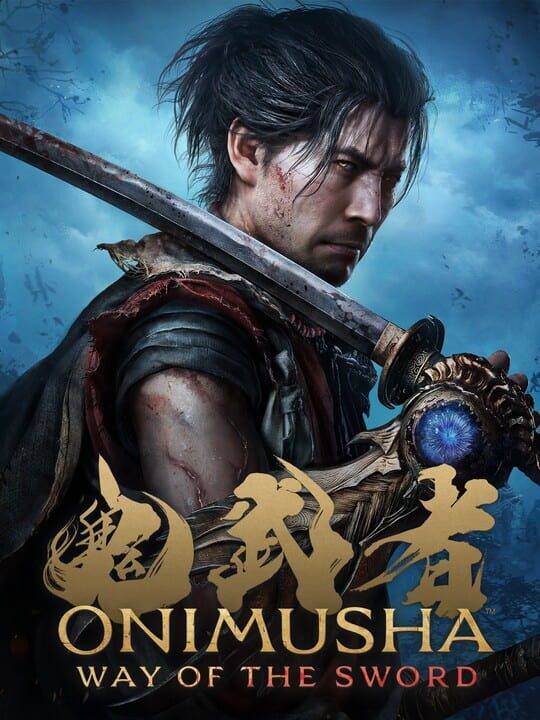
Onimusha: Way of the Sword
Capcom · ARPG, Action, Souls-like
Overview
An Oni Gauntlet-wielding samurai makes a stand in Kyoto against the encroaching Genma menace. Through gritty, blood-soaked brawls, he searches for his reason to fight. What fate awaits at the end of his path?
Read moreShow less
An all-new entry in the Onimusha series!
Fight through bloodstained battlefields of intense swordplay action. Explore the historic Japanese capital of Edo-period Kyoto, twisted by malevolent clouds of Malice.
With every stage cloaked in mystery, danger and intrigue. Battle against monstrosities from the underworld known as Genma in a tale of dark fantasy.
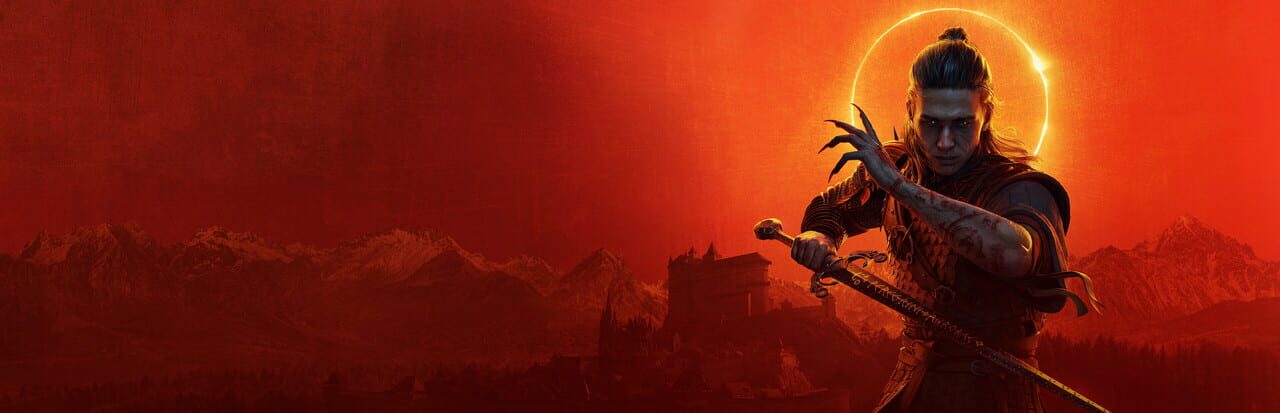
Follow the tale of a samurai who wields the Oni Gauntlet, a mystical artifact that grants its bearer the power to slay Genma.
The Protagonist, Miyamoto Musashi
An ardent samurai who arrives in Kyoto looking to prove that he is unmatched in the way of the sword. However, the path before him takes a strange and unexpected turn.
The protagonist of this game is a fierce young samurai, constantly moving from one bloody and gritty fight to the next. To cement this image of a striking samurai, Capcom has turned to none other than the late, iconic Japanese samurai movie legend Toshiro Mifune to star as the face model for this rendition of Miyamoto Musashi.
Action
Equipped with an Oni Gauntlet, Musashi is granted power beyond human limits. Besides giving him the strength needed to cut down the Genma, it also holds numerous other abilities, such as being able to absorb Genma souls and convert them into a power source to further enhance its wearer. But who is behind the voice that rings out from the gauntlet?
Genma
Usually found dwelling in the lowest depths of hell, the Malice enveloping Kyoto has brought these fiends into the world of the living. Their ceaseless atrocities have plunged the capital into a state of dread and panic.
Formidable Foes
In his battle against the Genma threat, Musashi will face powerful opponents whose martial prowess rivals his own. Will he triumph, or die trying? Bloody duels to the death await in the capital.
Setting
The game is set in Kyoto, home to countless shrines and temples, such as Kiyomizu-dera Temple. Twisted by Malice, the face of the capital starts to take on an eerie and foreboding appearance.
*This content is also available as part of one or more bundles. Please check your previous purchases to avoid duplication.
From the game's Steam store page.
THE GAMEQ VERDICT7,006 reviews analyzed
What players are actually saying
1. Summary
Players overwhelmingly recommend Onimusha: Way of the Sword, and the sword combat is the main reason. Combat, parries, deflects, dodges, blade clashes or the returning Issen counter come up in 38% of all reviews. Players praise how many ways there are to answer an attack, compare it most often with Sekiro, and single out the boss fights, which come up in 24% of reviews. Musashi's swaggering, comic performance, the facial animation and cutscene choreography, and an RE Engine PC version that hundreds of reviews call smooth and well optimized round out the praise. Longtime fans who waited 20 years for the series to return are a loud, happy part of the conversation.
The complaints are about what the combat gets to work with. Ordinary Genma enemies are passive and attack one at a time, so the system is rarely pushed outside boss fights, and the hardest difficulty is locked until you finish the game once. Players found the semi-open Kyoto hub, its errand-style side quests, and the repeated minibosses and boss refights padded. The opening hours are heavy on cutscenes and tutorials, and the gauntlet companion's constant hints wore on some players. A launch-week wave of crashes, which players linked to uncapped frame rates and Nvidia drivers, shows up in 26 of the 137 negative reviews written that week.
2. What keeps coming up
What players praise
Combat with real depth: parry, deflect, dodge and IssenHigh
Players describe a defensive toolkit with many answers to each attack: timed blocks that parry, a deflect that breaks enemy stamina, reflex dodges that open counter combos, blade clashes that turn into button contests, grab reversals, and the high-risk Issen counter that can kill outright and chain into further kills. Reviewers call it "easy to learn, hard to master", and they point out that the animation adapts to the direction of every attack and that dismemberment and sword physics give each hit weight. Sekiro is the comparison players reach for, named in 505 reviews, about five times as often as Ghost of Tsushima, Nioh or Metal Gear Rising. Some insist it feels distinct: more of an action game than a Soulslike, or in one reviewer's words a "Reverse Hack&Slash", where offense is simple and defense carries the depth. The bigger complaint is how rarely ordinary enemies test the system (see passive enemies below). The label "parry slop" is used both ways, as a cheer ("MORE PARRY SLOP PLEASE") and as a dismissal; a couple of players called the colour-coded attack cues "Simon says" combat, and a few report input lag or unresponsive healing.
Boss fightsHigh
Players name the rival Sasaki Ganryu, the duo fight late in the game and the final boss as highlights, and praise the bosses for feeling fair, learnable and cinematic, with mid-fight dialogue and transformations. Several say the game only "clicks" at the first major boss. The rematch dojo, where any defeated boss can be refought for rewards, comes up as a smart addition. Some bosses and minibosses are reused too often (covered under frustrations), and some players found late bosses tanky or the final boss's multiple phases and grab timing punishing.
Musashi, the cast and the performancesHigh
Musashi is modelled on Toshiro Mifune, and players enjoy his arrogant, goofy, expressive personality. Eleven reviews compare him to Jack Sparrow ("He feels like a Jack Sparrow of the Samurais"), and reviewers say the humour works against a grim, gory world. Ganryu and the main villain get strong praise too. A few found the jokes out of place ("we really didn't need the marvel movie esque banter during and after combat") or some supporting characters forgettable, and many players switched to the Japanese voice track (see the English dub under split topics).
Animation, facial capture and cinematic presentationHigh
Players single out the facial animation and motion capture, and some call it the best they have seen. The cutscene fight choreography reminded reviewers of samurai cinema and Kurosawa films. Small details, like Musashi fixing his cape or using his foot to pull a blade free, come up in several reviews. The main criticism of the presentation is how many cutscenes there are; a handful also noticed a drop from pre-rendered to in-engine scenes or found the palette washed out.
PC performance and optimizationHigh
Hundreds of reviews say the PC version runs well: high frame rates on mid-range hardware, few stutters, fast loads, a detailed settings menu with a benchmark tool, and smooth play on Steam Deck, handhelds and Linux. Some contrast it favourably with other recent releases. This praise sits beside a real launch crash problem on some machines (see frustrations), and a few positive reviews were written partly to answer the crash complaints ("Ignore the negative reviews about performance and crashing").
A story that beat expectationsMedium
Dozens of players say they went in expecting a boilerplate plot and came out invested, crediting the cast (one called it a "found family"), the villain and the direction more than the premise. Others call the plot generic, a matter of cleansing one corrupted area after another, while still enjoying the characters.
An accessible action gameMedium
Some players value that the game respects their time: instant boss retries, no punishing runbacks, a Story mode, optional action prompts, and a difficulty curve that ramps up gradually. Players who are "very very bad at souls like games" or "reaching unc status" say they finished bosses they would never attempt elsewhere. The same ease is what the "too easy" camp below complains about.
Sound design and musicLow
Clashing steel, parry sounds and the surround mix earn specific praise, and a few players call the audio the best part of how the combat feels.
The demo sold the gameLow
Players who tried the demo, some of them replaying it several times, bought on the strength of it and say the full game delivered.
Where players are split
Difficulty: too easy early, fair or hard laterHigh
The phrase "too easy" appears in 200 reviews, often about the opening hours and even on Action (the harder of the two starting difficulties), where ordinary enemies die quickly. Others push back: the difficulty ramps up sharply after the first region, later bosses are genuinely demanding, and the toolkit is what makes it feel easy. A smaller set found the spikes too steep, with one early quitter calling the curve "asymptotic". About a quarter of the "too easy" reviews (51 of 200) also bring up more aggressive regular enemies or the harder Carnage mode, which players want available from the start.
Is it really Onimusha?Medium
Longtime fans are split on the reboot's direction. The critical side misses the old structure: multiple weapons to switch between, Oni weapons as full movesets instead of meter-limited abilities, Resident Evil-style puzzles and resource scarcity, and bonus modes like the Dark Realm. 17 reviews say it doesn't feel like Onimusha, two of them calling it "Onimusha in name only". "Onimusha is back" appears in 46 reviews, and that side says the game keeps the series' identity (gauntlet, soul absorption, Issen, Genma, samurai horror) and modernises it the way Resident Evil 4 did for its series. For one fan, picking up the Oni Blade again "feels like coming home".
The English dub and localizationMedium
The English voice track, with mostly British and Australian accents, jarred with feudal Japan for some players. One complained of lines like "chip chip cheerio guvnor, would you like a spot of tea", and some report lip-sync and subtitles that drift from the spoken line, plus modern slang. A small group enjoys it as campy fun, and one player almost refunded over it before switching to Japanese. Switching to the Japanese track is the common advice.
Price and valueMedium
The $70 price (and higher regional prices) divides players. Many say it is one of the rare AAA games worth full price. Others, including some who recommend the game, suggest waiting for a sale, and a few negative reviews put its value at $20 to $40 ("Would buy the game if it was $20 or below"). Deluxe cosmetic DLC visible from day one, and a separate upgrade kit priced higher than the bundle, drew a smaller set of complaints.
Length and pacingLow
Some players enjoy a 20 to 40 hour campaign with plenty to do. Others say the structure stretches a tight action game, with the middle dragging between cutscenes, side quests and backtracking.
What frustrates players
Passive regular enemiesHigh
Positive and negative reviewers alike complain that ordinary Genma circle, block and wait their turn, attacking one at a time every several seconds, so group fights rarely demand the parry and Issen skills the game teaches. One player wrote that the combat system "feels like it was built for aggressive encounters" that it rarely delivers outside bosses. Twenty reviews mention mods that make enemies more aggressive, such as an "Aggressive AI" mod, and say they make the fights far more engaging. The complaint shows up in every playtime group and held steady week to week.
The Kyoto hub and filler side contentHigh
Players describe the semi-open Kyoto hub as grey, respawning streets with the same Genma and rescuable civilians on every pass, unvoiced errand quests that are mostly walking from A to B, collectibles of little value, and a return to the same town after an opening that promised a journey. "Kyoto (along with the majority of side quests) is uninspiring," one wrote. Some contrast it with the main story quests, which one reviewer called "excellent" and compact, and wish Capcom had kept a mission structure. Others like the hub as a breather or appreciate its Metroidvania-style unlocks, and some note most of it is skippable.
Recycled bosses, minibosses and enemy typesMedium
Players complain that a handful of rift bosses and minibosses reappear too often, and that basic enemy variety is thin, with late areas reskinning early foes. The complaint grows with playtime: repetition and padding come up in under 2% of reviews from players with less than 10 hours, against 8% at 10 to 25 hours and 11% beyond that.
Crashes and launch-week stabilityMedium
Players reported crashes on startup, after the opening warning screens, during specific cutscenes, when taking screenshots, or when opening the shrine with an overlay running. Crashes come up in 52 of the 438 negative reviews, and they hit short sessions hardest: about one in seven reviews from players under two hours mentions a crash, against about one in forty from everyone else. The fixes players shared: cap the frame rate, update or roll back the Nvidia driver, disable overlays or frame generation, or restart Steam. The most-upvoted review that mentions crashes is a tip: "Do not uncap frame rate in settings before starting a game." Crash mentions fell from about 5% of launch-week reviews to under 2% by the third week, and some later reviews report the problem fixed after driver updates.
Hand-holding, tutorials and the chatty gauntletMedium
The opening hour is described as mostly cutscenes and tutorials, and tutorial pop-ups reappear hours later if you miss a parry. The gauntlet companion repeats hints, solves light puzzles before you can, and even calls out boss mechanics mid-fight; one player asked "why do i get verbal hints for puzzles i've already solved the instant they appear?" Players want a toggle, and several note the existing hint setting defaults to on even on the harder difficulty.
Hardest difficulty locked behind a full clearMedium
Separate from general difficulty, 99 reviews bring up Carnage being locked until the campaign is beaten, some calling it an outdated Capcom convention. Some who reached it say it raises damage and health instead of enemy aggression, and a few complain that New Game+ resets gear upgrades they had ground out.
Upgrades that feel like small stat bumps and a material grindMedium
Upgrades advertised as major often add a few percent; one player summed the system up as "fifty 2% upgrades rather than five 20% upgrades". Upgrade materials are scattered across random chests and shared between systems, and some upgrades demand large amounts of a currency that drops in small increments. One player reached the final battle four levels short on the gauntlet because the materials came from minibosses that never respawned.
Camera, lock-on and input quirksLow
The camera struggles in tight spaces and corners, lock-on sometimes picks the wrong target, the heal button occasionally fails to register, and grab counters feel inconsistent. A few reviewers believe Issen and dodge timing is tied to frame rate, making very high frame rates harder.
Missing PC optionsLow
Players asked for a field-of-view slider (its absence was a dealbreaker for some ultrawide and large-monitor players), 32:9 support, and controller button rebinding beyond the two presets. Others fixed weak HDR with community mods or ran into windowed-mode oddities.
3. The player conversation
The tone is celebratory and often nostalgic. Many reviews are short bursts of excitement ("Capcom cooked", "absolute cinema", "worth the wait"), and some frame the game as the latest in a run of strong Capcom releases. A quarter of the negative reviews (110 of 438) still praise the combat or bosses before listing what surrounds them; one reads "Combat is good but gets ruined by side content".
Playtime shapes what people complain about. Crashes come up most in the shortest sessions, repetition complaints (the Kyoto hub, errands, recycled bosses) start past 10 hours, and players beyond 50 hours raise endgame issues most: the locked hard mode, New Game+ resets and the upgrade grind come up in about one in five of their reviews, twice the rate at 25 to 50 hours.
Between 93% and 96% of each week's reviews recommend the game. Crash complaints clustered around launch. Passive-enemy complaints held steady, while repetition and padding complaints grew from about 4% of launch-week reviews to about 10% by the third week, probably because later reviewers had played further.
4. What the developers could do
- Make regular enemies more aggressive, or add an aggression option. Passive mobs that attack one at a time draw complaints at every playtime, and players say community AI mods already show the combat shines when groups press the player.
- Unlock the hardest difficulty from the start. Carnage being locked behind a full clear comes up in 99 reviews, and about a quarter of the reviews calling the game too easy bring it up or ask for tougher enemies.
- Add a toggle for companion hints and repeat tutorials. The gauntlet's puzzle solutions, mid-boss callouts and recurring tutorial pop-ups frustrate players from the first hour, and players ask for an off switch.
- Fix the remaining crash triggers around uncapped frame rates, overlays and specific cutscenes. Crashes come up in 52 of the 438 negative reviews, and players had to discover frame caps and driver changes themselves.
- Trim repetition in the Kyoto hub and reduce recycled boss encounters. Players past 10 hours cite the respawning hub, unvoiced errand quests and repeated rift bosses as the padding that drags down an otherwise tight game.
- Let New Game+ keep upgrades and make upgrade steps more meaningful. Players past 50 hours raise endgame issues most often, objecting to gear resets and to upgrades that add only a few percent after a heavy material grind.
- Add a FOV slider, ultrawide support and button rebinding. Few players raise these, but for some ultrawide and large-monitor players the missing FOV slider was a dealbreaker.
- Revisit the English subtitles and lip-sync. The British-accented dub and subtitles that drift from the spoken line push players to Japanese audio, and one almost refunded over it.