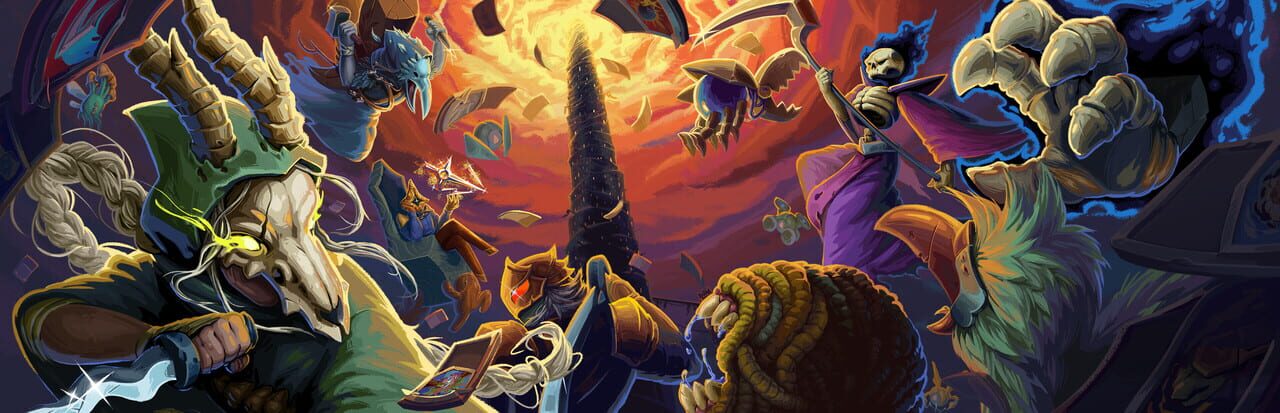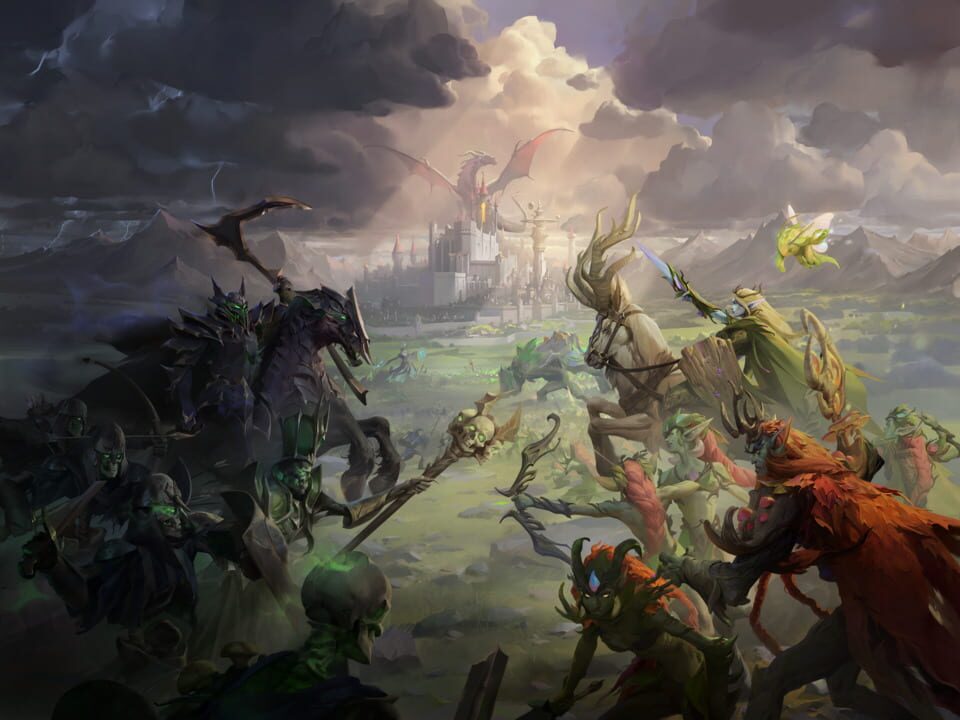
Idle Champions of the Forgotten Realms
Codename Entertainment · Strategy, RPG, Indie
Overview
Idle Champions of the Forgotten Realms is a Dungeons & Dragons strategy management game uniting Champions from throughout the D&D multiverse into a grand adventure.
Read moreShow less
Recruit legendary Champions for the ultimate endless adventure!
Idle Champions of the Forgotten Realms is a strategy management game that unites iconic Champions from D&D TRPG campaigns, video games, novels, actual plays, comic books, and shows into a grand adventure.
Optimize formations using over 140 Champions, each with unique abilities, to defeat countless monsters across hundreds of adventures. Mastery requires pushing formations further with every adventure – only the most powerful formations will complete the greatest challenges Idle Champions has to offer.
COLLECT ICONIC CHAMPIONS
Unlock unique Champions from across the Dungeons & Dragons multiverse, each with their own formation abilities and ultimate powers. Fan favorites include Drizzt Do'Urden and the Companions of the Hall, Minsc & Boo, Astarion and Karlach from Baldur's Gate 3, …and many, many more!
EASY TO LEARN, HARD TO MASTER
Manage multiple adventuring parties to test your Champions' mettle and earn even greater rewards. Your Champions automatically fight enemies until defeated, even if you close the game. Your Familiars automate basic gameplay like leveling Champions and picking up gold so YOU can focus on optimizing your formation strategy. Build powerful synergies and unleash the full power of your Champions to complete the most difficult adventures!
TRAVEL THE D&D MULTIVERSE
Adventure throughout the Sword Coast and beyond. Visit legendary cities like Baldur's Gate, Waterdeep, and Sigil, the City of Doors. Explore the mists of Barovia, brave the endless Blood War of Avernus, and sail the Astral Sea.
REGULAR CONTENT UPDATES
There are multiple content updates every month. Since launching in 2017, Idle Champions has introduced 140+ Champions, over 200+ adventures, 8 campaigns based on official TRPG releases, and introduced dozens of new features and systems to the game. The next big update is never far away!
From the game's Steam store page.
THE GAMEQ VERDICT9,561 reviews analyzed
What players are actually saying
1. Summary
Idle Champions has nine years of reviews, and most of them are positive. The cast is the reason players give most often: about a fifth of all reviews (1,764) mention D&D, the Forgotten Realms or one of its characters, from Minsc and Boo and Drizzt to the Baldur's Gate 3 cast, Critical Role's Spurt and the Acquisitions Inc. and Dice Camera Action crews. Players also like the formation puzzle, which has much more depth than a typical clicker, and having something to leave running on a second monitor while they work, study or look after children. Those who stick around praise the steady stream of events, new champions and free chest codes, and a community and dev team that they describe as unusually present.
Most of the complaints are about money and maintenance. Monetization comes up in 631 of the 2,248 negative reviews (28%), about twice as many as the next complaint, the grind (311), and each business change brought a wave of negative reviews: season passes in 2022, a patron-reward nerf in 2023, the Platinum premium currency in 2024. Other complaints are bugs, crashes and memory leaks, a UI covered in shop pop-ups, and the discovery that this "idle" game needs constant babysitting to progress. Players disagree about whether it is fair to free players: some say every champion can be earned with patience, others that familiars and gear are effectively paywalled. Approval peaked around 2019 (86% positive) and has sat at about two-thirds positive since 2022. A quarter of the negative reviews written since 2022 (262 of 1,031) come from players past 1,000 hours, and many of those object to how the game is sold.
2. What keeps coming up
What players praise
D&D lore and a huge cast of familiar championsHigh
This is the most common reason people give for playing. Players light up at seeing Minsc and Boo, Drizzt and the Companions of the Hall, Jarlaxle, Deekin, the 1980s cartoon cast (Hank, Presto, Dungeon Master), and later the Baldur's Gate 3 companions (Astarion, Karlach, Shadowheart, Lae'zel). Actual-play fans get an extra pull from Spurt, the Acquisitions Inc. C-Team, the Waffle Crew, High Rollers and the Oxventure Guild; one player "Got involved to get Spurt from Critical Role". Some say the adventures taught them Forgotten Realms lore or gave them ideas for their own campaigns, and some returned to the game just to unlock a newly added favorite. The dissent comes from tabletop purists: there is no character creation, you cannot pick your party freely, and quadrillion-damage numbers make it "DnD in name only" to them. A smaller group liked the classic characters but disliked the newer streamer and original characters.
The ideal background gameHigh
Players like that it fits around real life: running on a second monitor during work or class, between matches of another game, while cooking, or played one-handed by new parents. Busy adults say it lets them feel they are making progress without committing time, and several mention the small pleasure of returning after weeks away to a pile of gold. Some newer players find that the game is not yet idle enough for this (see the split below).
Formation strategy with real depthHigh
For an idle game, players are surprised by how much thinking it asks for. Champion placement, adjacency buffs, specializations, gear, patrons and variant restrictions turn each adventure into a puzzle; one long-time player compares it to playing four "sudoku puzzles at the same time". Endgame systems such as the Modron core "pipe" automation and gem-farm tuning keep long-term players theorycrafting for thousands of hours. The counterpoint is that the best setups often come down to stacking every buff on one damage dealer while everyone else supports, which some find makes the roster feel shallow. Early reviews also noted that clicking becomes worthless after the first stages.
A constant flow of events, champions and adventuresMedium
Long-term players credit the pace of updates: a new champion every few weeks, monthly events, time gates that let late joiners unlock past event champions, and new campaigns based on published D&D adventures. The 2024 "Events 2.0" rework and the free monthly champion picks got specific praise as ways to catch up without paying. The same pace is also a burden, because events and weekly tasks pile up (see frustrations).
Community, free chest codes and engaged developersMedium
Reviews mention the Discord, subreddit, wiki, Twitch drops and newsletter codes that hand out free chests, and several say the community is friendlier and more helpful than usual. Several also say support resolved their tickets quickly: restored gear after data loss, account transfers from Switch, and even a full account wipe on request. Critics answer that you need Discord, streams and spreadsheets to understand the game, and some felt the stream pop-ups inside the game were advertising.
Charming writing, art and a soundtrack with a followingLow
Some players enjoy the jokey adventure dialogue, the champion art and animations, and especially the in-game jukebox of D&D-themed songs ("The highlight of the game is the in-game juke box"), with requests for new soundtrack volumes. Others call the visuals dated or "flash-game" quality, the music repetitive, and the dialogue something they skip.
Where players are split
Is it fair to free players, or pay-to-win?High
Positive and negative reviews argue this one directly against each other. One camp, mostly patient long-term players, insists every champion and nearly all power can be earned through events, time gates, daily rewards and codes, and that paying only speeds things up in a game with no PvP. Some of them recommend spending a little on familiars (the auto-clickers) and nothing else. The other camp points to roughly $10 per champion, packs up to $50, hundreds of dollars of DLC listed on Steam, loot-box chests with duplicate epics, golden epic gear sold only for money, and walls in mid-game variants that feel built to sell potions. Even some positive reviews advise "don't spend your money on anything in-game".
An "idle" game that demands your attentionMedium
Some reviews call the name misleading, and 69 say outright that it is not really idle or needs babysitting. Early on you have to level champions by hand, swap formations for boss mechanics, and push through stages, and offline progress was long described as a fraction of online gains, which led people to leave the game running 24/7 at a real cost in electricity and hardware ("your electricity bills will skyrocket"). Players who enjoy tinkering see this as the appeal ("Not really an idle game AT ALL, but fun none-the-less"). Players who wanted a set-and-forget game call it babysitting. Reviews note that familiars, Modron cores and later offline-progress changes make it much more idle over time, but getting there takes a long grind or purchases.
Resets, walls and the endless grindMedium
Each adventure resets gold and levels. Some veterans find that fresh and good for strategy, while some newcomers find it demoralizing ("every mission u start from zero"). Progress starts fast, then slows sharply at difficulty walls where enemy health jumps several orders of magnitude, and the numbers go so high (e-notation damage) that some players stopped caring. Long-term players accept a years-long marathon as the point of the game. Others quit once they realized there is no end, especially completionists (see achievements below).
Addictive in a good way, or a Skinner box?Medium
"Addictive" appears in 300 reviews, mostly as praise ("Very addictive. You always feel like you're working towards something."). A smaller group, many of them past a thousand hours, describes compulsion without joy: logging in out of habit, FOMO, and "it's just sunk cost fallacy at this point". Several warn people with addictive or gambling tendencies to stay away.
What frustrates players
Monetization that kept getting more aggressiveHigh
Money comes up in more negative reviews than any other complaint: 631 of the 2,248 (28%). Its share of all reviews was 7 to 9% each year from 2017 to 2021 and 11 to 15% each year from 2022 onward, and specific changes set off waves of negative reviews. In September 2022, season passes put a Modron core and other power behind a paid track (the worst week of that month was 45% positive), and the passes were later retired. In October 2023, a large cut to patron-variant currency rewards hit newer and mid-game players, and that week's reviews were only 19% positive. In October 2024, the Platinum premium currency replaced direct purchases, with bundle sizes that never match item prices, which long-time spenders called deliberately obscuring. Other complaints include rotating "wild offers", DLC retirement sales that create FOMO, and shop banners that pop up on every login and party switch.
Bugs, crashes, memory leaks and heavy resource useMedium
About 10% of negative reviews (226) raise technical problems. There are long-standing complaints about memory leaks and high CPU and RAM use for a 2D game, crashes (especially on Mac and when calculating offline progress), background parties or automation silently stopping, bosses that stop taking damage, and potions that fail. In the first year, some people got stuck on the "Loading game definitions" screen. Veterans say patches regularly introduce new bugs while old ones stay unfixed, and that some late-game strategies rely on exploits or third-party scripts. A few reported lost progress from failed saves.
Nerfs to champions people invested inMedium
Rebalances of popular speed and damage champions (Briv and Hew Maan in 2022, and others) and the 2023 patron changes led to angry reviews from players who had spent money or hundreds of hours building around them. One veteran warns, "If you pay for anything to help your account today, it could be nerfed into irrelevance tomorrow", and some saw the nerfs as a way to sell replacement power. These complaints come almost entirely from players past the 50-hour mark (74 of the 81 reviews that mention nerfs).
A treadmill of weeklies, events and FOMOMedium
Long-term players describe the game turning into a job ("This game became a chore"): patron weeklies, near-monthly events, season quests, Trials of Mount Tiamat runs (where matchmaking with inactive partners wastes scrolls), code hunting, and daily logins. Several veterans with 5,000 to 20,000 hours left negative reviews because it stopped feeling idle or fun.
Cluttered UI, pop-ups and poor scalingMedium
New and returning players complain about a crowded interface, shop pop-ups on launch (sometimes ignoring the setting that disables them), offers covering clickable objects, UI that is unreadable on 1440p, 4K and TV setups, no borderless window mode, windows that cut off the level-up bar, no pause button, and music that is hard to mute. Reviewers with under two hours raise it more often than others do.
Hard to learn without outside helpLow
Some say the systems (variants, favor versus blessings, patrons, familiars, Modron cores) are barely explained in the game, so progress depends on wikis, Discord and streams. Returning players found the interface unrecognizable. The Bastion hub added in 2026 was praised by at least one new player as making onboarding much clearer.
Endless achievements for completionistsLow
Achievement hunters, including some who reached 100% more than once, ask the developers to stop adding achievements, because each new batch lowers their completion rate and makes the game impossible to "finish."
No cross-platform progress and no hard resetLow
Players moving between Epic, Steam, mobile and consoles resent that accounts do not sync and that transfers are limited or one-time. Several returning players also wanted a hard reset to relearn the game, which the game does not offer (though support sometimes wiped accounts on request).
Online-only servers and outagesLow
Because progress is stored on the server, outages or connection errors mean lost potion time, stalled runs, or not being able to play at all, which players found hard to accept in a single-player idle game.
3. The player conversation
Approval has slipped over the years. Early access reviews were enthusiastic (83% positive while in early access), and approval peaked around 2019 at 86%. From 2022 onward it settled at roughly two-thirds positive (68% in 2022, 67% in 2023, 70% in 2024, 66% in 2025). The low points line up with business decisions: the season-pass launch in September 2022, the patron-reward cut in October 2023 (one week at 19% positive, the next at 13%), and the Platinum currency in October 2024. Some long-time players say in their negative reviews that they still enjoy the core game but can no longer recommend how it is monetized, while positive reviewers push back that nothing is required for a single-player game.
Playtime changes what people talk about. Players who left within two hours complain about the genre and the first impression: "it plays itself," it's "just a clicker," pop-ups and tiny UI, and purists who wanted real D&D. Players in the 10 to 50 hour range are discovering formations, events and free codes, although many first run into the offline-progress and difficulty walls here. Players past 50 hours write most of the reviews that raise monetization (606 of 976) and nearly all of those about nerfs, and they are the ones raising bugs, chores and achievement creep.
4. What the developers could do
- Make premium purchases transparent and fairly priced. The move to Platinum, bundle sizes that never match item prices, and per-champion prices compared to full games are the reasons long-time spenders give for flipping to negative.
- Protect free and newer players' catch-up paths instead of cutting them. The October 2023 patron-currency cut and the removal of free ways to gear retired champions produced the two worst weeks in the game's review history, with players saying newcomers could no longer catch up.
- Fix stability before adding content. Memory leaks, heavy CPU use, crashes, stalled background parties and boss-damage bugs recur across years of reviews, and veterans explicitly ask for bug fixes over new monetized features.
- Make idling actually idle. Bring offline progress closer to online gains and make basic automation (familiars, auto-leveling) reachable without purchases, because having to leave the game running around the clock and babysit it is a recurring gameplay objection.
- Cut the shop noise and fix UI scaling. Players want fewer pop-ups on login and party swaps, a working setting to disable them, proper UI scaling for 1440p, 4K and TV screens, a borderless window mode and a pause, complaints that come up more often among players who quit early.
- Communicate nerfs with compensation, or avoid them for paid content. Rebalancing champions people bought or built around was read as bait-and-switch, and some told others not to spend money for that reason.
- Lighten the chore load and keep improving onboarding. Fewer mandatory weeklies, better in-game explanations (building on the Bastion hub), a hard-reset option for returning players, and solo options or activity filters for Trials of Mount Tiamat would address complaints that the game "became a chore" and cannot be understood without a wiki.
- Offer cross-platform account sync. Players spread across Epic, Steam, mobile and consoles cite the lack of shared progress as a reason not to invest on Steam.