Kingdom Come: Deliverance II
Warhorse Studios · RPG, Simulation, Action
Overview
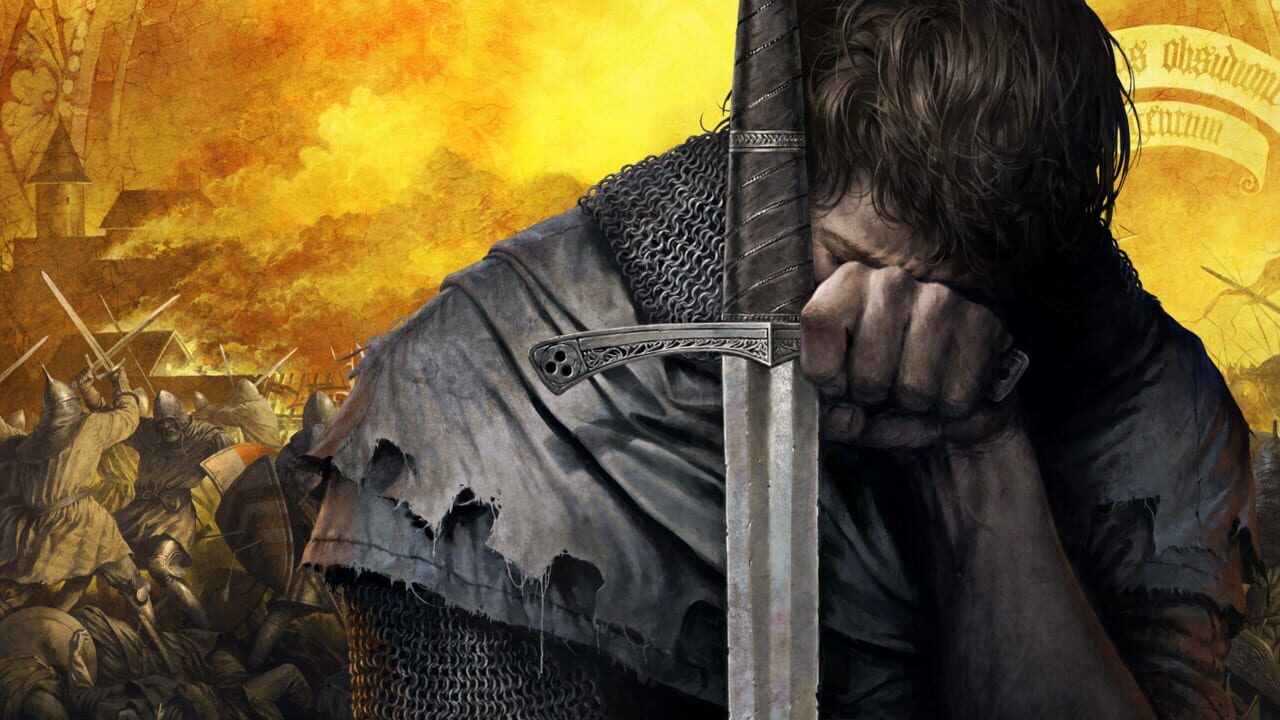
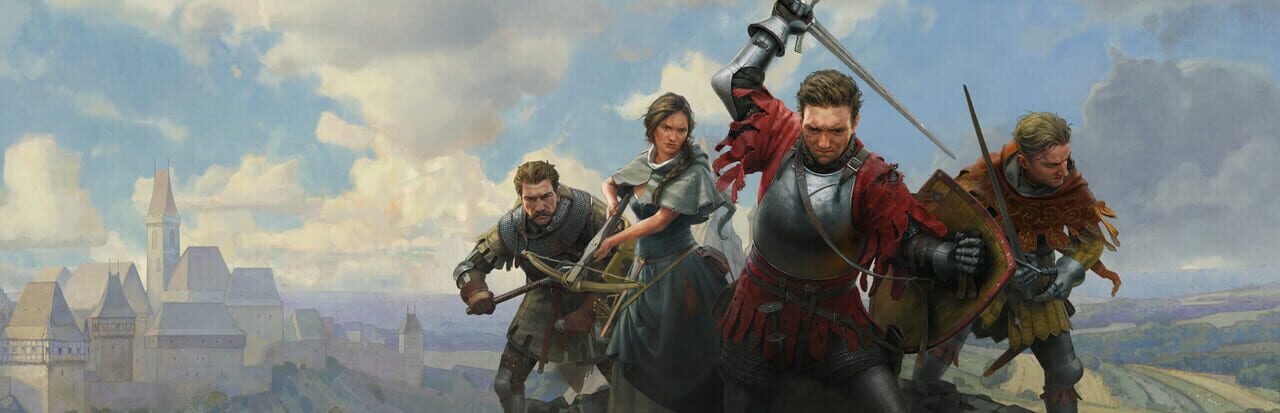
A thrilling story-driven action RPG, with a rich open world, set in 15th century Medieval Europe. Experience the ultimate medieval adventure - through the eyes of young Henry - as you embark on a journey of epic proportions.
THE GAMEQ VERDICT9,580 reviews analyzed
What players are actually saying
1. Summary
Reviewers praise the story and characters, a medieval Bohemia where NPCs keep routines and notice crimes, and side quests written with the care other games give their main plots. Many call it a masterpiece or one of the best games they have played. Fans of the first game say the sequel smooths out its combat and optimisation, and players on older PCs and Steam Deck say it runs well. The slow climb from penniless peasant to dangerous knight is what hooks some players, and a few write that they felt sad or empty when the story ended.
Combat comes up in 42% of the negative reviews. Those players describe clunky target-locking against groups, bandits who parry like swordmasters, and a master strike that ends up dominating fights, while fans of the same system say it becomes rewarding once the timing clicks. Other players give up on the pace: long dialogue, cutscene-heavy main quests and chores such as hauling sacks. The Saviour Schnapps save system comes up as a source of lost progress in about as many positive reviews as negative ones. The rest of the complaints are quest bugs that some say have lasted since launch, an opening of cutscenes and tutorials that some quitters say used up the two-hour refund window they count on, and controller problems after updates.
2. What keeps coming up
What players praise
Story, characters and writingHigh
Story, writing, plot or characters come up in 23% of the game-focused reviews, more than any other topic in the tally. Reviewers single out Henry and Hans Capon's friendship, the Devil's Pack, Zizka and Godwin, and one player says a late story moment made them stop and rethink every choice they had made. The tone moves between grim war drama and broad comedy, and some reviewers mention laughing at drunken quests, Henry's excuses and the bathhouse scenes. "Probably the best story based game i have ever played." one review reads, and others put the game beside The Witcher 3. Some players find the main plot long and too reliant on cutscenes, covered under the split topics below.
A world that feels alive and historically groundedHigh
Players describe NPCs with daily routines, guards who remember a stolen hat, reputation that changes with Henry's clothing, dirt and blood, and shopkeepers who notice an open door. "The world feels alive in a scary way." one player writes, and a few call Kuttenberg one of the most impressive medieval cities they have seen in a game. Players with an interest in history praise the real castles, figures and events, the codex entries and the absence of magic; a few say the game sent them to Czechia or Prague. Some longer reviews point out where the simulation stops: NPCs forgetting you after their quest ends, reused faces and voices, and buildings that cannot be entered.
A sequel that improves on the first gameHigh
12% of the game-focused reviews compare the game with Kingdom Come: Deliverance. Where they pick a side it is usually the sequel, credited with smoother combat, bushes that no longer stop Henry dead, better optimisation, more content and stronger writing. One player sums it up as "KCD 2 had the resources to fully realize that ambition." A smaller group prefers the first game's tighter story, harder combat or more personal tone, and some newcomers advise playing the first game first because the story continues directly.
Side quests and sheer volume of contentMedium
Players describe side quests as small stories with several solutions, consequences and jokes, and some say they spent 50 hours or more before reaching the main plot's wedding or finding out there is a second map. "The side quests are among the best in the industry, right up there with The Witcher." one reviewer writes, and another found them "of a higher standard than the main quests in many other games". Some reviewers say they passed 100 hours and still had quests left. A smaller group finds the side content padded with fetch chains, especially in the Kuttenberg region.
Performance, optimisation and visualsMedium
Reviewers praise the forests and scenery and stress that the game looks this good while running well on older GPUs, Steam Deck and Linux. One player writes that "this is the most optimized game I've ever played", and others compare its performance favourably with Unreal Engine 5 games. A minority reports crashes, a VRAM or memory leak in long sessions, and frame drops in Kuttenberg.
Crafting, alchemy and blacksmithingMedium
Players enjoy brewing potions and forging swords by hand; one spent around 20 hours at the anvil. Legacy of the Forge, the expansion reviewers mention most, gets praise for giving Henry a forge and a home to rebuild. Alchemy also works as a difficulty dial through poisons and strength potions. The complaint is repetition: one negative review admires the depth of the first few brews, then adds that "by the time I was on my tenth I began to yearn for a system that lets you just push a button to craft."
Earned progression from peasant to knightMedium
Some reviews describe starting broke, smelly and losing fist fights to farmers, then slowly becoming strong enough to clear bandit camps. Because skills grow through use, players feel that they improved along with Henry. Players on second runs recommend Hardcore mode, with negative perks and no map markers; one says "I cannot even imagine playing this game in anything but hardcore mode."
Music, sound and voice actingLow
The soundtrack, the forest ambience and the main cast's performances get regular praise, especially the work reviewers credit to Tom McKay (Henry) and Luke Dale (Hans). Some players note that minor NPCs share a small pool of voices, and a few say certain lines outside cutscenes sound synthetic.
Where players are split
Combat: rewarding mastery or clunky frustrationHigh
Combat comes up in 42% of the negative game-focused reviews and in 13% of the positive ones. Supporters say it is hard at first and satisfying once timing, stamina and combos click, and that it keeps fights tense even in plate armour. Group fights are where it breaks down for some: even a positive review that calls one-on-one combat incredible says "Fighting three or four people often turns into camera wrestling, target-lock frustration, and awkward movement." Other specifics include target switching against groups, enemies that seem to slide in mid-swing, a riposte loop that never ends, slow weapon drawing, and early bandits who fight like trained knights; one player complains that "every shoddy little bandit knows every combo and special-attack in the game only taught by swordmasters". The master strike draws its own criticism for making swords the only sensible weapon, with one reviewer concluding "if the only fun way to engage with a system is to avoid 95% of it, you made a bad system." Some players say they used mods to make combat easier or to change targeting.
Slow pace, long dialogue and realism choresHigh
Words like tedious, boring, chore, grind or slog appear in 21% of the negative reviews, and cutscenes or dialogue in 15%. These players describe hauling sacks, digging graves, following slow NPCs, scripted sequences that strip your gear, and conversations that repeat the same point; one wrote "there are so many cutscenes it feels like im not playing a game just watching a series." Another says it has "an immersive world but it is a slog to play." Fans see the slowness as the point, a game that asks for patience and repays it, and a few say that about Red Dead Redemption 2 as well. A long positive review puts the middle view plainly: "Kingdom Come occasionally confuses realism with inconvenience."
Difficulty curve: a brutal start and an easy finishMedium
Players describe punishing opening hours, with low stamina, no money and every bandit a threat, and some promise newcomers that it gets better: "The first 12-15 hours of the game are really tough but the rewards are great once you get your skills up." The disagreement is about what comes after. Some say Henry becomes too strong too fast, with stats near the cap before the second map, top gear available through theft, merchants who run out of money and little left to spend on: "by the end game, you are a god incarnate and rarely if ever fail at anything." Others enjoy the power as a reward for the early struggle, and some recommend Hardcore mode to keep the tension.
The second half, Kuttenberg and the story's directionMedium
The Kuttenberg half divides players. Some call it the game's peak, with a huge city and an ending they describe as brilliant. Others say the larger map feels emptier and the quests turn into errands; one player says "once you reach the main city in the second map, it gets really old and slow really fast." and another that "less would have been more." Critics also mention forced stealth sections, being captured and stripped of gear several times, playing as Godwin, and main-quest choices that do not change outcomes.
The DLC expansionsLow
Reviewers mention Legacy of the Forge more than the other expansions, mostly warmly. Mysteria Ecclesiae, a monastery story built on stealth and investigation, splits players: some call it the best of the three, others find it short or dislike its choices. Brushes with Death gets the most mixed reactions, with one player writing that "The fetch quests from one side of the map to another quickly become tedious". One reviewer objects to achievements being tied to DLC.
What frustrates players
Quest bugs, softlocks and lost progressMedium
Bugs come up in 12% of the negative reviews. The serious ones block quests: NPCs who will not talk or spawn, a final cutscene that crashes, stuck main-story steps, and DLC quests that softlock, often fixed only by reloading saves from hours earlier. A few players report that clicking New Game deleted their existing saves without warning, or that old saves vanished. Cosmetic bugs such as rabbits running backwards have become a running joke. A few players complain that some bugs were still unfixed more than a year after launch.
The Saviour Schnapps save systemMedium
Saving through a consumable potion, sleeping in an owned bed or quitting comes up in 9% of the negative reviews, and about as many positive reviews raise it as a warning. The usual story is an ambush, or a cutscene that drops you into a fight, wiping out an hour or more of exploration: "Its only downside is the extremely tedious save-system, that can cause you to lose hours of precious progress." Another reviewer asks the developers to "add an auto-save, don't make us trek back to a bed, alchemy table or break immersion by exiting the game to protect our progress." Some install a mod that lets them save anywhere. A minority defends the system for raising the stakes and making alchemy useful.
A long cinematic opening that eats the refund windowLow
Players who quit early say the prologue is mostly cutscenes and tutorials, so by the time they could judge the open world they were past the two-hour mark they say Steam allows for refunds; 6% of the negative reviews mention refunds. One wrote "If the tutorial alone didn't take the full 2 hour return window and then some, I would have returned this game."
Controls, controller support and input bugsLow
Keyboard players complain about default bindings, dialogue choices and directional combat with a mouse. A few controller players report that updates broke controller support, one of them on Steam Deck and Linux, and that the game sometimes switches input modes on its own. One wrote that "An update in December completely broke controller support".
Horse handlingLow
Pebbles himself is loved, but riding draws complaints: horses throw the rider at the sight of enemies or when bumping a doorway, sprinting needs repeated input, and one long-time player says horses behaved better in the first game.
Crashes and performance outliersLow
A minority hits frequent crashes, freezing in long sessions or stutter in Kuttenberg, sometimes on high-end hardware and despite lowering settings.
Locked churches and unenterable buildingsLow
A few returning players miss being able to enter churches, which the first game allowed: "you can no longer enter the churches. They're all boarded up." Many Kuttenberg buildings are closed as well.
Head bob and motion sicknessLow
A handful of players could not keep playing because head bob and camera sway cannot be turned off without mods.
3. The player conversation
The tone is warm and often playful. Many reviews are one-line raves ("peak", "masterpiece") or running jokes from the game itself; jokes about Henry feeling hungry alone turn up in 4% of the reviews. Longer reviews tend to weigh things up, praising the story and world while listing combat and saving as the price of admission.
Who raises what follows a pattern. Negative reviews from players who stopped within the first few hours talk about the cinematic opening, the long tutorial, controls that never clicked and losing early fights, and several regret missing the refund window. Players with long playthroughs say little about the opening; their criticisms are about the second map, the story's direction, bugs that blocked late quests, and Henry becoming too powerful.
Most of these reviews were written between April and October 2026, more than a year after launch. Over that time the same praise for the story and world and the same complaints about combat, saving and bugs keep recurring, with weekly positive shares mostly between 87% and 93% from April 2026 on.
4. What the developers could do
- Add timed or event-based autosaves, or an optional save-anywhere setting. Reviewers describe losing an hour or more to an ambush or a cutscene that starts a fight, and some already use mods to save freely.
- Fix target switching and multi-enemy fights. Players who struggle with group combat describe lock-on that will not switch targets and enemies who attack from behind while Henry is locked onto someone else.
- Rebalance master strike and early bandit skill. Players say the master strike makes swords the only sensible weapon and that common bandits use combos and counters the game presents as advanced training.
- Clear long-standing quest blockers and update regressions. Reviewers cite softlocks, missing NPCs, a crashing final cutscene, the New Game save wipe and controller support broken by an update, some unfixed more than a year after launch.
- Let players pace the opening and the dialogue. Requests include pausing cutscenes, a quicker route through the prologue and fewer repeated lines, since some early quitters say the cinematic opening outlasted their refund window.
- Tune the late game's economy and progression. Players report maxed stats before the second map, theft that breaks the economy and merchants without money, which drains tension from the Kuttenberg half.
- Surface hidden rules in the interface. Players ask for warnings on timed and missable quests, clearer reputation feedback and better in-game explanations, so they do not need YouTube guides to progress.
- Add comfort and handling options. A head bob toggle, gentler horse throw-offs and more flexible keyboard bindings would answer smaller complaints from a minority of players.