Manor Lords
Slavic Magic · Strategy, Simulation, City Builder
RELEASE MILESTONES
Dates from Steam and IGDB release data
Overview
Manor Lords is a medieval strategy game featuring in-depth city building, large-scale tactical battles, and complex economic and social simulations. Rule your lands as a medieval lord – the seasons pass, the weather changes, and cities rise and fall.
Read moreShow less
Manor Lords is a strategy game that allows you to experience the life of a medieval lord. Grow your starting village into a bustling city, manage resources and production chains, and expand your lands through conquest.
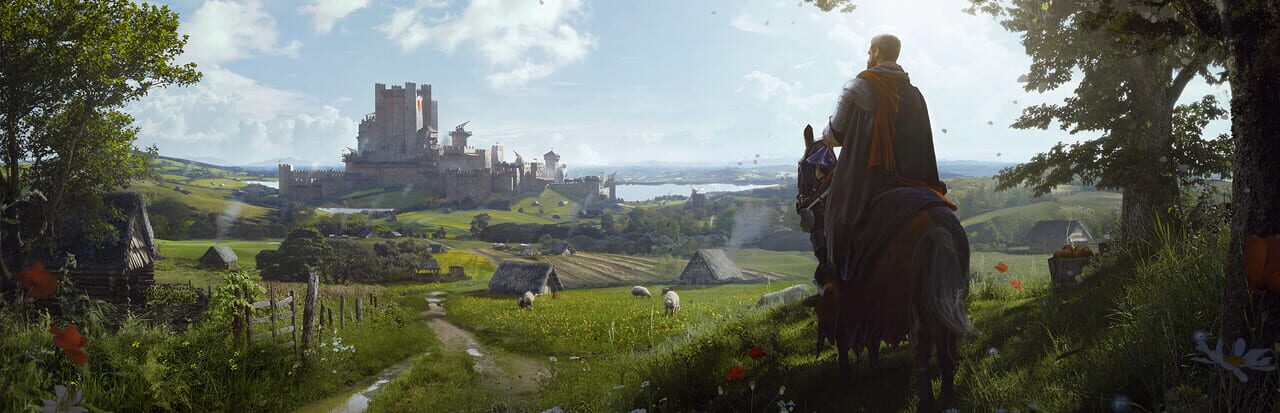
Inspired by the art and architecture of late 14th century Franconia, Manor Lords prioritizes historical accuracy wherever possible, using it to inform gameplay mechanics and visuals alike. Common medieval tropes are avoided in favor of historical accuracy in order to make the world feel more authentic, colorful, and believable.
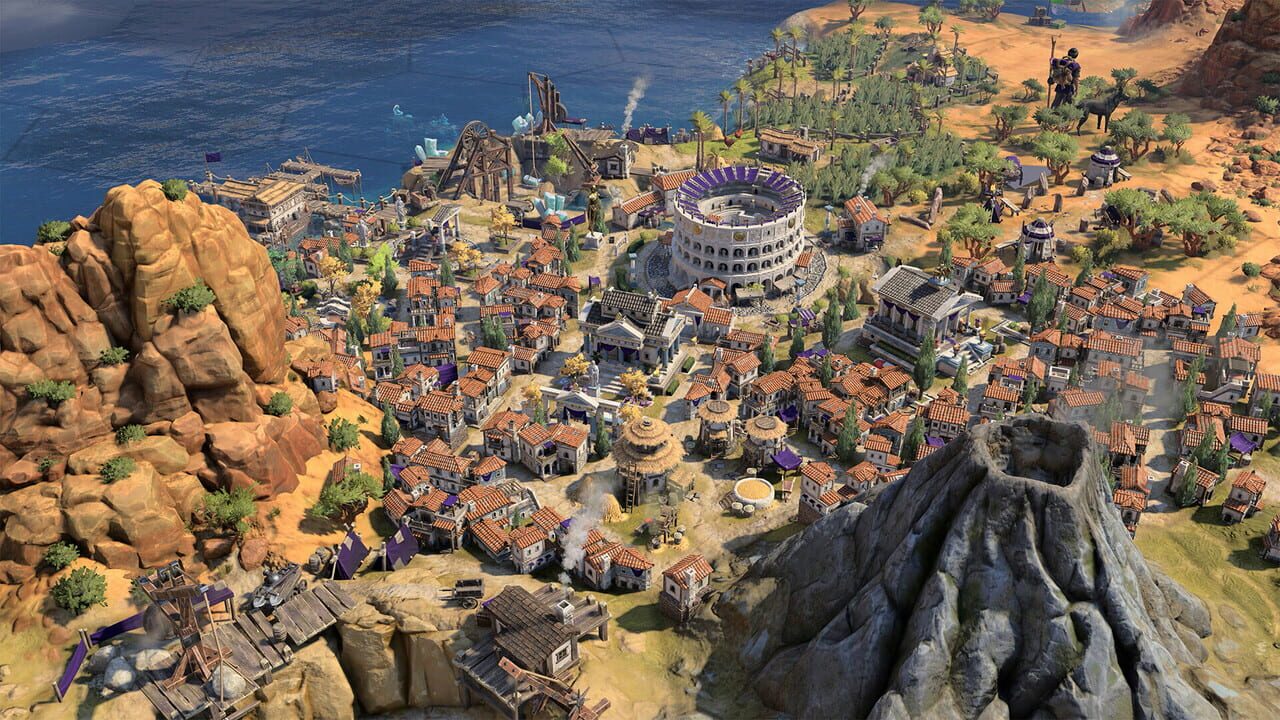
Manor Lords provides a gridless city-building experience with full freedom of placement and rotation. Building mechanics are inspired by the growth of real medieval towns and villages, where major trade routes and the landscape influenced how settlements formed and developed.
Spreading outward from a central marketplace, build your residential, commercial, and industrial districts following the natural lay of the land. Establish farms based on soil fertility, position hunting grounds according to animal populations, and ensure access to adequate resource deposits and forests to provide the raw materials needed for growth.
Assign areas for housing and watch your residents build their homes in accordance with the historical burgage plot system. Each area will be subdivided based on your roads and the allotted space, and homes will scale accordingly.
Build extensions behind larger homes to generate resources that would not otherwise be available. Homeowners don't just pay taxes – they grow vegetables, raise chickens and goats, and otherwise supply themselves and other townsfolk with essential needs beyond what your managed farms, pastures, and industries can provide.
Guide your settlements through the unique demands and opportunities of each season, enjoying the bounty brought by spring rains and preparing for the harsh snows of winter.
From boots to barley and hides to honey, Manor Lords features a great variety of goods fitting of the era. Materials need to be transported and processed into finished products through production chains, and you must balance the basic needs of your people against the desire to produce luxury items to ensure happiness, manufacture trade goods for export, or forge arms and armor to aid in your conquests.
Resources are littered across the map, encouraging you to expand and establish multiple specialized settlements. Extract valuable ores from your mining colonies, while villages devoted to agriculture, herding, or hunting supply the grains and meats needed to feed your growing populations. Will you spend your hard-earned influence to first acquire a rich source of iron for your smiths, or will you prioritize regions with fertile soil to serve as your breadbasket?
Unchecked expansion will have a direct effect on the environment. Herds of deer will migrate away from encroaching civilization, lack of crop rotation will worsen soil fertility, and cutting down too many trees will result in deforestation.
Establish trade routes and sell surplus goods to traveling merchants to enrich your population. Manufacturing and exporting a variety of goods will provide wealth with which to upgrade your peoples’ homes, import goods you can’t produce yourself, and through taxes on said wealth, fill your own coffers.
Yours is but a small parcel of land in a vast territory, and the competing ambitions between you and rival lords will inevitably lead to conflict. Lead your people into battle, not as expendable units to be easily replenished, but as your beloved loyal subjects where every death is a cost worth considering.
Neighboring lords will build their own towns and grow their holdings to compete with yours, at times forcing you into action. Build castles and protect your domain from harm as you seek out opportunities to strike at these rival lords with warriors of your own.
Train a retinue of skilled warriors to fight battles alongside the levies you raise from the town militia. At times these soldiers will be needed to suppress banditry, and at other times you will lead your men into battle to conquer or defend territory. When needed, mercenaries are a costly option to bolster your ranks. Will you raise the militia at the first sign of trouble, bringing your economy to a stand-still as your peasants pick up arms and rush to form ranks, or will you spend your personal wealth to hire bands of sellswords instead?
Command real-time tactical battles, taking into consideration fatigue, weather conditions, and equipment. Position your troops wisely – a smaller force can defeat a larger enemy, if commanded well.
Feel the cost of battle, even in victory, as each fallen soldier represents a lost person from your city.
This game is a passion project started by a solo developer, grown through player support into a full team of passionate individuals ranging from programmers and 2D artists to Game and Map Designers. You can reach out to us and share your opinions, ideas, and criticisms – we listen to your feedback.
From the game's Steam store page.
THE GAMEQ VERDICT9,999 reviews analyzed
What players are actually saying
1. Summary
Players fall for how Manor Lords looks and feels. Visuals, music and atmosphere draw more praise than anything else (29.8% of the longer reviews), and players single out the gridless building: roads that curve with the land, burgage plots that bend to fit, backyard extensions that turn houses into small farms and workshops. The village simulation, with families walking to work, oxen hauling logs and seasons that decide whether people eat, makes some reviewers feel like a lord responsible for real people. Many call it relaxing and hard to stop playing, and the settings let players pick anything from a peaceful builder to a fight for survival.
Bugs come up in 21.5% of the longer reviews, from minor quirks to stalled supply chains and towns that stop building, and 19.5% describe the game as unfinished: "coming soon" features, a development tree with few real choices, and a late game where there is nothing left to do. Opinion on combat is divided, and so is opinion on paying full price for a game still in early access; advice to wait for a sale turns up in positive reviews as well as negative ones. Most reviews recommend the game, and many of those still warn about bugs and missing content.
2. What keeps coming up
What players praise
Beautiful visuals, music and atmosphereHigh
29.8% of the longer reviews mention the graphics, scenery, art, music or atmosphere, usually in warm terms: seasons changing the colour of the trees, the flute-heavy soundtrack, and a camera that zooms from the regional map down to a single villager. Some reviewers say they stop playing just to watch their town or take screenshots. A minority reply that the looks are the best part of an otherwise thin game, and some negative reviews open with praise for the visuals before listing what is missing.
A detailed, grounded simulation of village lifeMedium
Realism, historical authenticity or attention to detail come up in 13.0% of the longer reviews. Players like that every family is a unit of labour that has to walk to its job, that heavy goods move by ox, that soldiers are villagers who leave their work to fight, and that winter, soil fertility and fruit trees taking years to mature all matter. Several mention the walk-around mode, where you control your lord in third person and stroll through your own town, as a small delight. Some reviewers note that the realism cuts both ways when food chains are slow or logistics stall.
Relaxing and hard to put downMedium
"I started playing at 10pm. I blink and it's 5am." That review is one of the 12.0% of longer reviews calling the game relaxing, chill, cozy or addictive. A few describe it as something to wind down with after work or with a podcast on, and others joke about losing whole evenings to it.
Organic, gridless town buildingMedium
7.0% of the longer reviews praise the gridless layout, burgage plots or backyard extensions. Players like that towns end up looking like real medieval villages and that every settlement comes out different. One wrote, "Once you taste the gridless building placement, going back to any other model feels terrible." Another put it more simply: "If you're tired of 90 degree angles in medieval city builders, this is for you." The few complaints here are practical: plots that can't be resized without demolishing them and roads that are awkward to edit.
Settings let you choose a cozy or a hostile gameMedium
Difficulty settings, peaceful or relaxed modes and the sandbox come up in 7.0% of the longer reviews. Players like being able to switch off raids, delay bandits or play without an AI rival while they learn, then turn the pressure up later. As one put it, "Just by changing up the settings you can make it a chill city building game, or a fight for survival." Several newcomers say this is how they got past the early learning curve. Others say the settings jump from trivial to brutal with little in between.
Where players are split
Combat and the war layerHigh
22.2% of the longer reviews discuss combat, militia, archers, the retinue or mercenaries, and opinion divides close to evenly: phrases praising combat (3.4%) and phrases criticizing it (2.9%) show up at about the same rate. Fans like Total War style formations at a small scale and the weight of sending their own villagers to fight; "The combat is easy to understand and while the AI is basic, its easy to win a battle if you learn how they work." Critics call it janky and shallow, with archers who miss or stand cheering, units that wander, and wars decided by who can afford more mercenaries. One negative review said the "combat feels bolted on from another game." Even a reviewer who recommends the game warned anyone hoping for large wars that it is "more of an (excellent) small-scale skirmish game where you can fight bandits or a single enemy lord for control of small regions," and that "diplomacy is extremely simplified (there is only peace or war)." Requests for cavalry, sieges and bigger battles recur.
How it measures up to other city buildersMedium
12.1% of the longer reviews compare it with another game. Total War and Banished come up most, followed by Stronghold, Anno, Age of Empires and Cities: Skylines. Fans call it the successor they wanted ("Manor lords is what I always wanted from Banished.") or describe it as a city builder crossed with Total War or Kingdom Come. Critics hold it up against more complete games and find it lacking, pointing to Banished's depth or recommending Farthest Frontier instead: "Go play something like Farthest frontier for a more fun, more in depth and longer experience."
Is it worth buying during early access?Medium
Price or value comes up in 9.4% of the longer reviews, and 13.4% use the word "potential," usually as both a compliment and a caveat. Supporters say the hours they got out of it already justify the price and that they knowingly bought into a project; one wrote, "I was aware that I would buy a "promise"." Another summed it up as "Slow development, but a sturdier foundation than most early access titles." Sceptics think the content doesn't justify the full price and advise waiting: "Do not buy this game for its current asking price." Advice to buy it on sale appears in positive and negative reviews alike.
The big reworks: Origins, development points and new systemsMedium
7.7% of the longer reviews discuss the development tree, perks, Origins or the affinity system. Reviewers describe a large October 2025 beta that added AI-run towns, new art and UI, stone castles and a development system in place of the old perk tree, and later updates through 2026 that reviewers say added new food chains, cattle and winter animal feed. Some players welcome the direction: "The most recent update did away with the awful perk system that locked away building types," and "This new beta is amazing almost like a new game." Others felt it took things away, complaining that "There is only one development trait unlock, which is pretty much useless" and "Unfortunately you can only upgrade your town one time as the development tree is barren." Added upkeep systems, such as tool wear and the animal feed change ("the update now requires animals to eat food during winter and pasture sizes were reduce a lot."), please players who want depth and irritate those who already found the game fiddly.
What frustrates players
Bugs that stall townsHigh
21.5% of the longer reviews mention bugs or glitches. The ones that recur involve the town's moving parts: families stuck "waiting," oxen that never arrive or won't haul, construction that stops at 90%, harvests or clothing that vanish, market stalls left unstaffed, castle walls that make buildings inside them unclickable, and a castle builder that freezes the game. Some positive reviews accept bugs as part of early access, but the bugs that end a run drive people away. One player who still recommends the game explained that "Most bugs clear up from a game reload, others persist through saves and require you to expend resources (and game time) in order to workaround the bug."
An unfinished game with a thin late gameHigh
19.5% of the longer reviews describe the game as unfinished, shallow or short on content, and it is a frequent theme in the negative ones. Players run into "coming soon" features, a development tree that stops after a few points, towns that cap out, and no real goal once the economy runs itself. "You will, shockingly early in your playthrough, hit a wall where there's nothing left to research, and nothing left to build." Another described the moment the loop ran dry: "Then you finally unlock your second perk of getting pelts from traps, 14 families, no more stone - and you wonder what you did the last 3 hrs." Some also complain about replay value, since runs tend to follow the same build order, and even some fans who love the foundation say there is little to do after a full playthrough or two.
Villager logistics and pathfindingMedium
Oxen, carts, hauling, pathfinding or idle workers come up in 14.0% of the longer reviews. Players describe ox carts as a bottleneck, villagers walking odd routes or getting stuck on bridges, and builders who spread materials across several projects so that nothing gets finished. "It takes 5 families a month to build one small house because they're waiting on the ox." Some see this as part of the realism and plan around it. Others say it turns the game into troubleshooting.
Farming and food balanceMedium
Low field yields, a short harvest window, fertility that doesn't recover, and oxen that plough so slowly "it's just quicker to throw 8x families on it instead": these are the farming complaints in the 12.9% of longer reviews that discuss farming, fields, harvests or fertility (9.3% talk about food or starvation). Some players end up relying on backyard vegetable plots, orchards and trade, and a smaller group restarts until they get a start with fertile land, fish or iron. Others enjoy the struggle of getting through the first winters.
Too little explanation in gameMedium
11.2% of the longer reviews mention the tutorial, learning curve, guides, YouTube or unclear mechanics. Players say the help pages are thin, tooltips are missing, and costs like taxes and maintenance aren't broken down, so some learn from videos. One positive review put it bluntly: "Devs do a terrible job on the tutorial and the "tips or help" are useless." A negative one wrote, "The game gives so little feedback, stats, or explanations you're never quite sure if you don't understand a mechanic or it's one of the very many serious bugs and balance issues." Some reviewers enjoy figuring it out by trial and error, and several say it clicks after a few failed towns.
Raids and rival lords feel unbalancedMedium
Complaints about bandits, raiders, the rival baron and land claims (10.4% of the longer reviews discuss them) go both ways. Some say raids and enemy armies scale too fast or keep coming, with one describing beating two large waves before "here comes a third wave of 160 enemy troops." Others complain about bandits stealing goods without visibly reaching the town, raiders who never leave, and an AI that claims land it never uses. After AI-run towns arrived, players who conquered regions reported that the AI barely fought back and that its towns can't be raided or interacted with in a meaningful way. A run can also end for good when raiders burn the logging camp, because "you can never get and need to rebuild the logging camp? Logs."
Micromanagement and a clunky interfaceMedium
As towns grow, players say they spend their time clicking through buildings to find idle families, moving farm workers by hand between seasons, and guessing which goods a house needs to upgrade. 10.3% of the longer reviews mention micromanagement, the UI, missing statistics or overviews. "Population management becomes a chore and there's no menu that lists out all the families in a town." Requests for a family overview, seasonal job assignment and production statistics recur.
Long waits between updatesMedium
8.7% of the longer reviews complain about slow development, long gaps between updates, or the game being abandoned or stuck in early access. These complaints run high in reviews from September and October 2025, before the big beta arrived, and come back during later gaps. Players also object to updates that fix things in the beta branch while the main branch waits, and to broken betas that went weeks without a hotfix. One negative review began "I can live with bugs in an early access game." and then objected that fixes made months earlier still hadn't reached players.
Regions that can't share, and costly tradeMedium
7.3% of the longer reviews discuss imports, exports, tariffs, the royal tax or trade routes, and 2.9% specifically object to how regions work. Each claimed region is its own town with its own development points and stock, so players restart a supply chain from scratch and barter with themselves through pack stations. "If I'm the ruler of both regions, I'd expect to be able to send and exchange goods between them, but I can't." On trade, players point to a flat import fee that makes cheap goods expensive ("with a flat 10 silver tariff, they cost 11 or 12 to import") and exports that sell slowly or for little.
Crashes, lost saves and late-game slowdownMedium
6.8% of the longer reviews mention crashes, freezes or lost saves, and 5.5% mention performance. Players report crashes when entering the castle builder, building bridges or loading a large town, saves that crash on load or disappear, and frame rates that drop as the population grows. "Once it starts, every time I load that same save file, it crashes almost immediately". Some players say it runs smoothly for them, and this comes up far less than general bugs, but a save that crashes on load ends a run outright.
Wishlist: cavalry, sieges, multiplayer and diplomacyMedium
5.7% of the longer reviews ask for features the game doesn't have yet: cavalry, multiplayer or co-op (1.7%), sieges, real diplomacy, naval play and Steam Workshop support.
Clothing shortages and other one-off chain bugsLow
1.5% of the longer reviews mention clothing, almost always a bug where tailors produce nothing or clothes disappear from houses, which blocks house upgrades. "Clothes disappear faster than your paycheck than when bills arrive." Similar single-chain complaints come up for ale, mines that yield almost nothing, and butchers who slaughter a whole flock.
3. The player conversation
Reviewers are fond of the game and impatient with it at once. Most reviews recommend it, and some positive ones read as encouragement to keep developing it, with the caveat that it is unfinished. Negative reviews more often object to how much is still missing after a long early access period than to what is there. Some reviewers edit their reviews as updates land (3.1% of the longer reviews describe a change or an edit). The changes go both ways, and several negative reviews promise to switch to positive once a specific fix arrives, such as bug fixes, a tamer Baron or more content.
Who raises what differs by experience. Players who quit early describe confusion, a hard first winter, crashes on start-up or a refund. Players who sank many hours in write the long lists: the late game, the development tree, regions that can't share goods, enemy balance and the reworks. City-builder fans talk about layout, food and logistics. Players who came for war talk about combat scale, cavalry and sieges.
Over the reviews in this slice, the share complaining about slow development was 9.5% in September and October 2025, eased to 6.8% in November and December 2025 after the big beta, and rose again to 9.8% in spring 2026. Bug mentions stayed between about 19% and 23% of the longer reviews in every period, while the specific bugs players named shifted with each update.
4. What the developers could do
- Fix the logistics bugs that stall towns. Bugs are the most mentioned frustration (21.5%), and players most often describe idle "waiting" families, oxen that never arrive, unfinished construction and goods that vanish from supply chains.
- Give the mid and late game something to build toward. 19.5% call the game unfinished, pointing to a development tree with few unlocks, capped towns and nothing to do once the economy runs itself.
- Explain the economy inside the game. 11.2% struggle with the tutorial and missing explanations, asking for production statistics, cost breakdowns and clear reasons why a building is idle.
- Add a family overview and seasonal job assignment. 10.3% mention micromanagement or the UI, and players specifically ask for one screen listing all families and a way to move farm workers to other jobs outside the growing season.
- Prioritize crash and save fixes. Crashes and lost saves (6.8%) end runs outright, with players naming the castle builder, bridges, large towns and saves that crash on load.
- Rebalance raids and rival lords, and let players interact with AI towns. 10.4% discuss raids and the rival lord, describing waves that scale too fast, invisible theft and AI towns that can't be fought over meaningfully.
- Ship hotfixes between big updates. 8.7% complain about long gaps, and players single out broken betas left without fixes for weeks.
- Let regions share goods and development. Players who expand describe restarting every region from scratch and bartering with themselves, and they ask for one-way transfers and shared progression.