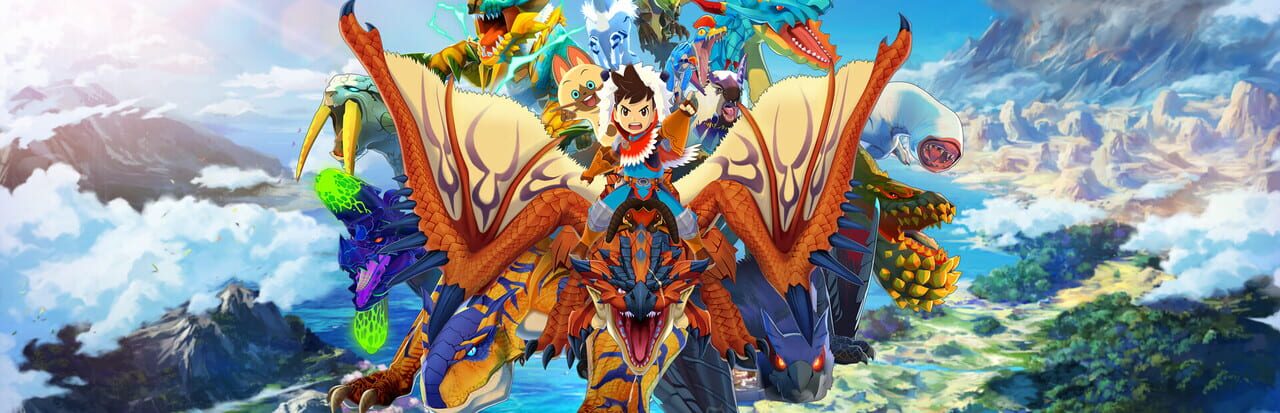
Monster Hunter Stories
Capcom · RPG, Adventure
Overview
Monster Hunter Stories is an RPG that takes the world of Monster Hunter and expands upon it in new and exciting ways! No longer are you hunting monsters, but raising them! In this deep story featuring heroes known as Monster Riders, you will live alongside monsters and form lifelong bonds with them.
Read moreShow less
*This content is also available as part of one or more bundles. Please check your previous purchases to avoid duplication.
The first installment of the Monster Hunter Stories series returns, fully voiced in Japanese and English, with additional features such as a new museum mode where you can listen to music and view concept art, allowing you to dive even deeper into the world of Monster Hunter Stories.
As the hero of the story, you were born in a village of Riders who raise monsters for a living. You’ll overcome trials and tribulations as you grow as a Rider, and leave your village to embark on an adventure. Your destination: the world of Hunters, who make their living by hunting monsters. Although their lifestyles are vastly different, you must learn to live and work together with Hunters, and in turn, bring the world of Hunters and Riders ever closer.
Things take a dark turn as a calamity known as the Black Blight appears, threatening the entire world and upending peaceful lives that were taken for granted... Both Riders and Hunters alike will be put to the test in order to challenge this threat.
The keys to saving the world are the Kinship Stone and its hidden power, along with the truth of the “Legend of Redan,” which describes the long-kept secret of the Riders’ origins! Along your epic journey, you will discover the true meaning of Kinship, which grows as your bonds deepen! A story of friendship and triumph await you—ride on into the world of Monster Hunter Stories!
Game Features:
- A turn-based RPG set in the world of Monster Hunter!
Monster Hunter Stories features a strategic battle system which is easy to get the hang of, even for those who struggle with action games. Use Power, Speed, and Technical attacks to guess and overcome your opponent's attack patterns to inflict heavy damage and win head-to-head battles! Build up your Kinship Gauge to use skills or try your Monsties' unique Kinship Skills!
- Turn popular monsters from the series into your Monsties!
Explore the field using Monstie abilities, hatch eggs that you find along the way, and turn various monsters into Monsties! This game features many popular monsters from the Monster Hunter series, including Zinogre, Nargacuga, and Lagiacrus.
The Rite of Channeling is a ritual that awakens dormant abilities in your Monsties, allowing you to raise original Monsties and take on powerful enemies!
Online Features
Create a powerful party with the Monsties you have raised and enjoy battles with other players!
New Features:
- Fully voiced in Japanese and English!
The narrative is even more immersive with full Japanese and English voices!
Bonus Museum content
Enjoy more than 200 pieces of concept art, including some which have never been seen before, and numerous music tracks. Some tracks are being featured in surround sound for the first time!
All updates are included
Includes all the monsters added in updates to the original game, such as Kushala Daora, Teostra, and Rajang, as well as expanded endgame content and additional character editing parts, making this the complete package!
From the game's Steam store page.
THE GAMEQ VERDICT985 reviews analyzed
What players are actually saying
1. Summary
Players like Monster Hunter Stories for its premise: you raid monster dens, steal eggs, hatch the creatures you normally hunt in Monster Hunter, ride them around a bright, cartoonish world and fight beside them in turn-based battles. Reviewers praise collecting and customizing these "monsties", the art style, the music and the Monster Hunter details carried over from the main series. 16% of reviews compare it with Pokémon, and the ones that pick a side mostly say Stories is the better monster collector. Another 16% mention the original 3DS release, many of them returning players who are glad the game finally reached PC and Steam Deck with full voice acting and the update content that had stayed in Japan.
Most of the frustration is with the rock-paper-scissors combat. Monsters are supposed to follow attack patterns you can learn, but a recurring complaint is that they break those patterns at random, and that your own monstie picks the wrong attack when you can't afford it. The postgame and team building take a lot of grinding and luck (locked gene slots, egg odds, new monsties starting at level 1). The story is aimed at children: some players find it charming and even moving, others find it juvenile, and the talking cat Navirou annoys most of the reviewers who mention him. 14% of reviews bring up the sequel, Monster Hunter Stories 2, usually to say that it fixes much of this. Some still recommend playing this one first, and a few prefer it for its story and its element-swapping customization.
2. What keeps coming up
What players praise
Hatching, collecting and riding Monster Hunter's monstersHigh
The core loop is what keeps people playing: find a den, grab an egg, hatch it, and add another iconic monster to your team. "Hatching eggs, building out my team of Monsties, and riding them into battle never got old," one reviewer wrote. Players enjoy fighting beside monsters that usually defeat them in the main games, from Rathalos and Nargacuga to elder dragons like Kushala Daora and Teostra, and many name a favorite monstie in their review. Each monstie's field ability (jumping, swimming, flying, digging) opens new routes, and its Kinship Skill finishing move gets its own cinematic. Reviewers also describe the thrill of finding a rare den or a rare-colored egg. Chasing one specific egg or gene is another matter, covered under the grind item below.
A Monster Hunter take on PokémonHigh
16% of reviews compare the game with Pokémon. Many use it as shorthand for the genre, and those that pick a side mostly favor Stories: 19 reviews say outright that it beats Pokémon, in lines like "Better than Pokemon" and "Pokemon if it was good". Longer reviews explain why: you fight beside your monster, craft armor and weapons from monster parts in Monster Hunter style, and face bosses that demand preparation. One reviewer called it "Pokemon for PC except its good and not a cash grab". Series newcomers say it was a friendly way into Monster Hunter, and longtime hunters say it gave them a lower-pressure way to spend time with the monsters. A handful dismiss it as "a bad Pokémon game" or a clone that is too simple for adults.
Colorful art, charm and music that hold upHigh
Reviewers keep calling the game cute, cozy, charming and colorful. Several say the chibi art style hides the game's handheld origins well: "Every color pops," one player wrote of a world they described as packed with detail. The monster designs survive the shrink into cartoon proportions, and the armor sets look good in the style. Where the soundtrack comes up it is mostly praised, the village and battle themes in particular. Critics of the visuals point to flat, empty-looking field areas and low-resolution textures, and a few miss background music while exploring the open areas.
A faithful remaster that brings a stranded 3DS game to PC and Steam DeckHigh
Many reviews come from people who played the 3DS or mobile versions and are happy to have the game back. "This is how you remaster a 3DS game and rescue it from being stranded," one wrote at launch. Players praise the higher resolution, smooth frame rate, English and Japanese voice acting, character customization that borrows NPC features, and the 1.3 update content that reviewers say was previously Japan-only (Rajang, Teostra and Kushala Daora as monsties). Several say it runs well on low-end PCs, and Steam Deck players are pleased with how it plays there. A few note that collaboration content from the 3DS original (Epona and other licensed monsties and outfits) is missing.
Element swapping, the customization fans want backLow
A small but devoted group singles out a feature the sequel removed: through gene channeling you can change a monstie's base element, which also recolors it and changes its Kinship Skill. "In this game, unlike its sequel, you can change the main element of your monsties," one reviewer explained, describing a Diablos that bursts out of the ground in a tornado of fire instead of sand. For these players it is the reason to prefer Stories 1, and a few hope later games bring it back.
Where players are split
The rock-paper-scissors combatHigh
Battles rest on a triangle of Power, Speed and Technical attacks: guess the type the monster will use, counter it and win the head-to-head. Fans say it is easy to learn and deeper than it looks once you add weapon skills, items, the Kinship gauge, riding attacks and monster swaps, and that boss fights in particular become satisfying reading games. One reviewer called it "rock paper scissors at it's most basic, and intense memorization and resource management at it's most advanced." Others find it repetitive after the first hours, too simple for adults, or too easy in normal fights, where elemental attacks or an overleveled Ratha can carry you. The 3x battle speed option gets thanks from both sides.
A kid-friendly story with a divisive castHigh
Reviewers who describe the story mostly agree it is aimed at children: a power-of-friendship plot about a young Rider, a rival turned bitter by his mother's death, and comic villains. They split on whether that works. Fans describe it as charming, sometimes darker than expected, and a few say the finale moved them to tears: "it plays out like a comfy Saturday Morning Cartoon, with some of surprisingly dark moments sprinkled in." Some Stories 2 players say this story is better than the sequel's. Critics call it bland, predictable and juvenile ("The story is really bad and so is the dialogue"), and several dislike how heavy-handed the dialogue is. Besides Navirou (see frustrations), reviewers call the rival Cheval and the villains annoying or illogical, while the silent protagonist's single line near the end is a highlight for some. A few players were also annoyed that Ratha, the story's Rathalos, takes over your team in the late story.
Play this first, or skip to Stories 2?High
14% of reviews bring up Monster Hunter Stories 2, which several reviewers note reached PC first, and the comparison shapes many of their verdicts. The common view is that the sequel improves almost every system: readable enemy patterns, movable genes, more quality-of-life features. "Every single thing I am about to complain about is handled in MHS2," wrote one player who 100% completed this game anyway. Several negative reviews say to skip straight to Stories 2. Others recommend playing this one first, both for the story and characters that carry into the sequel and because going backwards after Stories 2 makes the missing conveniences sting more. A smaller group prefers Stories 1 outright for its story, its element swapping and its tougher, less predictable fights; one reviewer wrote that "the story of MHST1 is far superior to that of MHST2". Some 2026 reviewers bring Stories 3 into it, playing the series in order to prepare for it or trying this game after its demo.
A huge postgame that turns punishingMedium
Players are surprised by how much there is after the credits: high rank monsters and gear, a tower, a labyrinth, a rider arena and secret superbosses such as Fatalis. Reviewers report anywhere from 20 to 80 hours for the story and 60 to 245 hours for full completion. Some call it the best part of the game, saying the systems only really open up there, and one wrote that "the post-game is one of the best i have ever played". Others hit a wall: a sudden difficulty spike that expects min-maxed teams the story never taught them to build, bosses that can wipe your rider in two hits, and achievement chases measured in tens of hours. "The first 30 hours are genuinely fun, but the rest is hellish grinding," one player wrote. Some reviewers advise finishing the story and stopping there unless you love grinding.
How much the remaster adds for the priceMedium
Most reviewers who discuss the remaster are happy with it, and some say it is how a remaster should be done: new voice acting, sharper visuals, all the old update content and no paid DLC. A launch-week minority felt it was too close to a straight port of the mobile version for its price. "This is a 30 dollar game with absolutely nothing different besides some better graphics," one wrote, and others wanted Stories 2's quality-of-life features brought over. Elsewhere, price mostly comes up as advice to buy it on sale or in a bundle with Stories 2.
English voice acting and localizationLow
The new English dub is a plus for some reviewers, who single out the rhyming village chief and the surfer-style hunter Reverto. Others find the English voices grating, and a few blame the localization for making characters more annoying than in Japanese. "I changed the voice acting to Japanese and instantly all the irritation was erased," one player wrote, and several suggest the Japanese track or the original Monster Hunter language option.
What frustrates players
Enemy patterns that break their own rules, and a monstie you can't steerHigh
The game tells you to learn each monster's habits, but reviewers say monsters regularly throw in attack types they supposedly don't favor. Words like random, RNG, luck or unpredictable appear in 7% of all reviews and in about a quarter of the negative ones (19 of 80). "The game constantly tries to remind you that you should "learn the monster's patterns", but doesn't actually obey those patterns," one wrote. Your own monstie picks its basic attacks itself unless you spend Kinship to command it, and players report it choosing the losing type at the worst moment: "Really frustrating to have your monstie pick the wrong attack at the wrong time." Add enemies that act twice per turn, and some players feel their decisions barely matter. Several contrast this with Stories 2, where monsters change stance before switching patterns. A few defend the unpredictability as a challenge that rewards preparation.
Grind and luck in building a teamMedium
Building a strong monstie means stacking several layers of chance: a rare den has to spawn, the right egg has to be in the nest, and the gene you want has to land in the right slot. "You can't move genes between slots," one player summed up. New monsties hatch at level 1, with no easy way to level them, so players say they stick with the team they already have. Postgame completionists describe farming the labyrinth for hours for a single rarity 8 accessory, scarce money for crafting, and egg patterns so similar that they used online cheat sheets. Even players who enjoy the game warn that 100% completion is a slog.
NavirouMedium
The talking Felyne who speaks for the silent hero comes up by name in 35 reviews, and most of them complain about him. "I wish I could permanently tape Navirou's mouth shut," wrote one player who still recommends the game. Complaints cover his constant chatter, his puns and how he answers for your character. Two players say he is less annoying with Japanese voices. A few defend him as funny and charming.
Unskippable dialogue, long tutorials and other dated designMedium
Several players who quit early point to the opening hours. They complain about voiced dialogue that can't be skipped or sped up ("Can't skip dialogue or cut scenes, very heavy on the Junior in jrpg"), tutorials and hints that keep interrupting, and core features like fast travel and gene channeling unlocking hours in. Longer reviews add smaller irritations: slow walking in towns, gathering pop-ups that cover the screen, a map that is hard to read, no inventory sorting, monsties you can't rename, and roadblocks that force you back to town to swap in a monstie that can jump or swim. One player said "your party composition is extremely heavily influence by what utility they have rather than your enjoyment of the monster". Several reviewers put this down to the game's 3DS origins and say it gets better once the game opens up.
PC controls, crashes and Steam Deck launch problemsMedium
Most reviewers say the port runs well, but a minority of the negative reviews are about it. The mouse camera moves at a locked speed and feels unnatural (one reviewer says disabling camera acceleration helps). Third-party controllers can show numbers instead of button prompts: "Controller don't show glyphs just numbers and mouse camera movement is a locked speed like a controller." Smaller groups report crashes, freezes and stutter, the game losing input after alt-tabbing, forced 720p or windowed mode on launch, no ultrawide support, a sound effects slider that does nothing, high battery drain on Steam Deck, and the game opening to a black screen on Steam Deck ("Game no longer launches on steam deck for some reason"). One review also objects to the game's DRM.
A fragile rider who ends up on potion dutyLow
Some players dislike how far the rider falls behind their monstie. Even in good armor, the rider can be two-shotted in the late story and postgame, so many turns go to healing. One reviewer wrote that "your monstie almost universally outperforms you, and you're playing support the entire game." Others mention that winning a head-to-head still costs chip damage, and that stat-boosting nutriments run out before you know where to spend them.
3. The player conversation
The conversation is friendly and often affectionate. Many reviews are short endorsements ("peak", "better than Pokemon", "my childhood"), and 17% of reviews are empty or a few words long. Most of the critical detail sits in long positive reviews: plenty of players list the same complaints about random combat, grind and Navirou and still recommend the game, sometimes adding "buy it on sale". The 80 negative reviews follow two patterns. Some players quit early, put off by unskippable dialogue, tutorials, mouse controls or the childlike tone. Others put dozens of hours in and gave up on the combat randomness or the postgame grind.
Launch-month reviews in June 2024 lean on nostalgia, and 21% of them mention the 3DS. The 2026 reviews include more players working through the series, some who had already played Stories 2 and a few who came to it after the Stories 3 demo. Randomness comes up more often in them: words like random, RNG or luck appear in 11% of reviews written in 2026, against 3% in June 2024, and the share recommending the game slipped from 93% of reviews written through 2025 to 90% of those written in 2026.
4. What the developers could do
- Make enemy attack patterns readable. Randomness comes up in about a quarter of the negative reviews, and players point to Stories 2's stance changes as a working model for signaling when a monster switches type.
- Give players more say over their monstie's basic attacks. Several reviewers describe losing fights because their own monstie picked the losing attack type, which makes careful play feel pointless.
- Cut the luck out of team building. Players ask to move genes between slots, get better odds on the eggs they hunt for, and catch new hatchlings up from level 1 faster, all of which reviewers say block them from using new monsties or finishing the postgame.
- Fix the PC controls and launch problems. The fixed-speed mouse camera, number-only prompts on third-party pads, lost input after alt-tab, forced 720p on launch and the Steam Deck black screen come up in several negative reviews.
- Let players skip or speed up dialogue and trim the tutorials. Several early quitters name unskippable voiced scenes and constant tutorial prompts as the reason they stopped.
- Bring over Stories 2's convenience features. Renaming monsties, swapping your party in the field, inventory sorting and smaller pickup pop-ups come up in reviews from players who know the sequel and feel their absence.
- Let players turn down Navirou's commentary. Most of the reviews that name him complain about him, and the two players who mention switching to Japanese voices say it helped.