Phasmophobia
Kinetic Games · Horror
Overview
Phasmophobia is a 4 player online co-op psychological horror. Paranormal activity is on the rise and it’s up to you and your team to use all the ghost-hunting equipment at your disposal in order to gather as much evidence as you can.
Read moreShow less
Phasmophobia is a 4-player, online co-op, psychological horror game. You and your team of paranormal investigators will enter haunted locations filled with paranormal activity and try to gather as much evidence as you can. Use your ghost-hunting equipment to gather paranormal evidence... Before you become part of the haunting yourself.
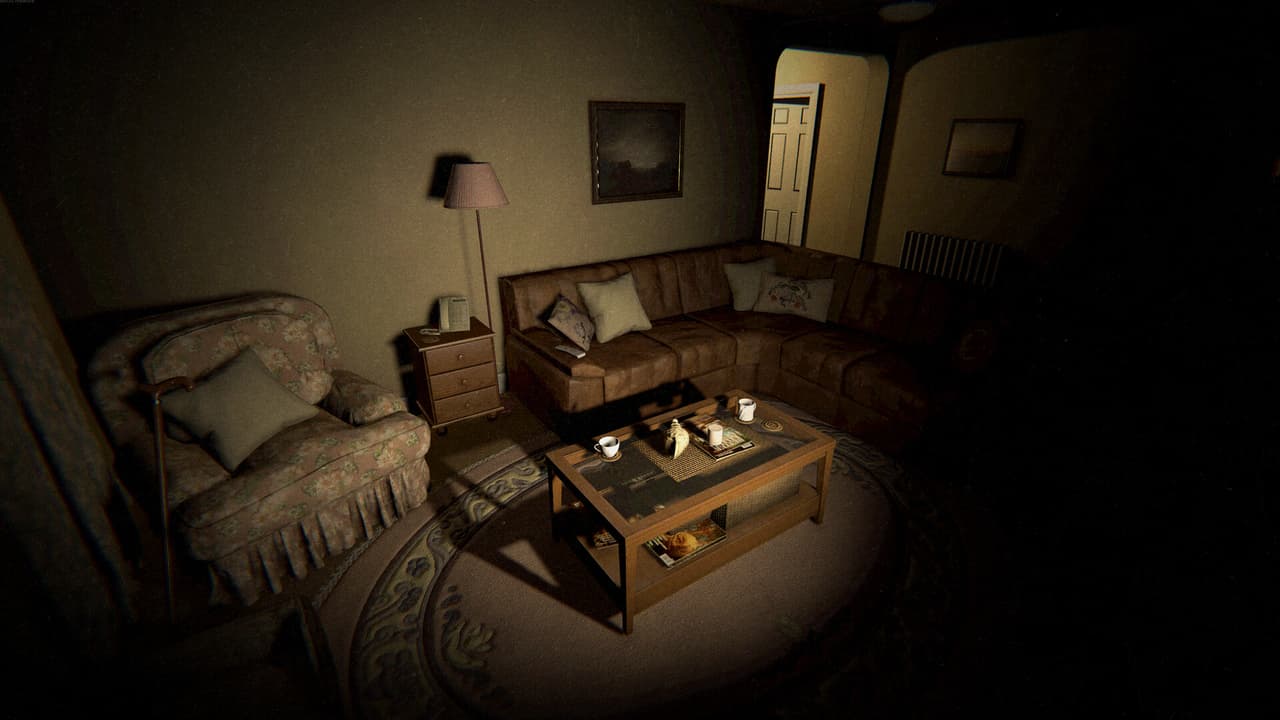
Immersive Experience: Realistic graphics and sounds as well as a minimal user interface ensure a totally immersive experience that will keep you on your toes.
Unique Ghosts: Identify over 20 different ghost types, each with unique traits, personalities, and abilities to make each investigation feel different from the last.
Equipment: Use well-known ghost-hunting equipment such as EMF Readers, Spirit Boxes, Thermometers, and Night Vision Cameras to find clues and gather as much paranormal evidence as you can. Find Cursed Possessions that grant information or abilities in exchange for your sanity.
Full Voice Recognition: The Ghosts are listening! Use your actual voice to interact with the Ghosts through Ouija Boards and EVP Sessions using a Spirit Box.
Locations: Choose from over 10 different haunted locations, each with unique twists, hiding spots, and layouts.
Game Modes: With 5 default difficulties and hand crafted weekly challenges, there are plenty of ways to test your skills.
Teamwork: Dive in head first, get your hands dirty searching for evidence while fighting for your life. If you're not feeling up to the task, play it safe and support your team from the truck by monitoring the investigation with CCTV and motion sensors.
Custom Difficulty: Create your own games to tailor the difficulty to your or your group's needs, with proportional rewards and come up with crazy game modes of your own!
Co-operate: Play alongside your friends with up to 4 players in this co-op horror where teamwork is key to your success.
Play together: Phasmophobia supports all players together, play with your friends with any combination of input types.
From the game's Steam store page.
THE GAMEQ VERDICT9,999 reviews analyzed
What players are actually saying
1. Summary
Phasmophobia is the co-op ghost-hunting game that started a genre: up to four investigators walk into a haunted house, use EMF readers, spirit boxes, thermometers and cameras to work out which of two dozen ghost types lives there, and try not to get their necks snapped when it hunts. Positive reviews come back to two things above all, friends and fear. Of the 967 positive reviews with 200 or more characters, 491 mention playing with friends or co-op and 422 mention the scares. The sound design and dark houses still produce real screams, and the deduction layer has a lot of depth: veterans describe the slow shift from "three pieces of evidence" to identifying ghosts by footsteps, speed and behavior as what kept them for hundreds or thousands of hours.
Most of the frustration is about recent development. The Player Character Update of 5 May 2026, which several reviewers believe was rushed out for an Alan Wake crossover event, added hands, item animations and new character models that made every action slower, broke evidence tools, voice recognition, VR and multiplayer sync, and delivered thinner customization than players had waited years for. 1,312 of the 2,564 negative reviews (51%) name that update, its animations or the new characters, and 718 (28%) call the game buggy, broken or glitchy. Veterans also hold a longer-running grievance: six years in Early Access, a delayed horror overhaul, and map reworks prioritized over new content. Players now argue over whether the July and August 2026 fixes restored the game.
2. What keeps coming up
What players praise
Co-op horror nights with friendsHigh
Reviews describe friends screaming over proximity chat, voices cutting out mid-sentence when a hunt starts, someone locking the front door behind a teammate, and the "van princess" who never leaves the truck. Some play it with a partner or siblings, others treat it as a game-night pick ("Perfect for a spooky game night with friends"), and one reviewer writes "I met my husband on this game." Crossplay with console players is appreciated. Solo play divides people: some find it more frightening alone ("its a little less fun without friends but more scary"), others find it dull, and some reviewers only recommend buying it if you have a group, especially for the large maps.
Genuine dread from sound and darknessHigh
Players praise how scary it is without leaning on cheap jump scares: footsteps you can't place, doors slamming, a whisper on the spirit box, the flashlight flickering as a hunt begins. They also like that ghosts respond to what they say; one new player notes "The ghosts actually react to your voice." The fear does not last for everyone; one reviewer found that "the horror aspect wears off extremely quickly."
A deduction game with a very high skill ceilingMedium
For some players the game gets better once the fright fades (one calls it engaging "long after the initial scares wear off"). It becomes a puzzle where you learn each ghost's hidden tells and work up through custom difficulties, zero-evidence runs and Apocalypse challenges. Customizable difficulty and the variety of ghost types, maps and cursed objects are credited with the replay value. Critics of the same system say too many of those tells are undocumented in the in-game journal, so reaching that depth means studying wikis and streamers.
Good value for the priceLow
A steady minority of positive reviews call it a bargain for the hours it delivers, especially on sale. Some negative reviews say it is not worth full price while evidence bugs persist, and point to the millions the game has earned while staying in Early Access.
Where players are split
Did the fixes bring the game back?High
One camp edited its review back to positive after the hotfixes, the Willow Street rework and first quality-of-life patch in late July, and the second quality-of-life patch in late August: animations were shortened or removed, item hotkeys arrived, the journal got bigger, and "we are so back" turns up in a few edits. The other camp says the fixes only restored what the update broke, that items still vanish or clip through floors, the offhand flashlight still blocks the screen, and several reported that the August patch introduced new bugs such as blank video cameras. Other returning players land in between: playable again, but slower and less charming than before May 2026.
Map reworks: gorgeous new houses or lost classicsMedium
The reworked Tanglewood, Grafton and especially Willow Street are admired for their detail. Long-time players mourn the original layouts, say the new clutter hides bones and cursed objects, dislike how dark and prop-heavy the maps have become, and complain that popular small maps were reworked while the big maps players avoid (Brownstone High School, Prison) were left alone. A request that comes from both sides is to keep the old versions available as legacy maps.
The scares fade and the loop repeatsMedium
Some players love that the game becomes a detective puzzle; others find it a checklist that repeats the same steps for hours, waiting in a room for evidence that may not come. Some complain that "nothing happens for an hour", while veterans ask for a real horror overhaul (new ghost events, hallucinations, varied deaths) to restore the fear.
Progression, gear tiers and prestigeMedium
Fans of the tiered equipment and prestige system say unlocking tier II and III gear is satisfying and gives a reason to keep playing. Detractors call tier I equipment unreliable to the point of being misleading for newcomers, the climb to useful gear slow, loadout slots locked behind prestige, losing all gear on death harsh, and the earlier progress reset a betrayal of their old levels.
New ghosts and seasonal eventsLow
New ghost types add variety for some, while others say recent additions overlap with existing ghosts or behave inconsistently, making identification feel like guesswork. The Alan Wake event itself drew praise for its puzzles and atmosphere from some players and irritation from others (loud audio, map shadows that confuse evidence, an unskippable intro), and timed Twitch drops and one-off event rewards are criticized as fear-of-missing-out padding.
What frustrates players
The Player Character Update made everything slowerHigh
Every action now plays an animation before it takes effect. Swapping items, opening the journal, lighting a smudge stick or turning on a headlamp during a hunt is delayed, and players describe dying because the animation hadn't finished. Items sit smaller and farther from the camera, the journal became hard to read, the flashlight moved into a permanent left-hand slot that blocks part of the screen, and characters can no longer look straight up (which also broke lobby jokes like stacking blocks). This is the complaint veterans raise most: 1,135 of the 1,847 negative reviews from players with 50+ hours bring up the update, while only 3% of reviewers with 2 to 10 hours mention it at all. 148 reviews bring up reverting or rolling back the update, and others ask at least for an option to disable the animations.
Bugs that break evidence and multiplayerHigh
The recurring reports: items dropped by one player invisible or fallen through the floor for others, duplicated or vanishing equipment, the spirit box and voice recognition failing to hear players, cameras and sound recorders not registering media, ghosts behaving outside their journal rules (a blind ghost tracking silent players, hunts ignoring crucifixes), and settings, volume and cursor opacity resetting after launches. Players point out that in a deduction game unreliable evidence leaves them unable to tell whether they misread the ghost or the game failed.
Six years in Early Access and slow, shaky updatesMedium
Long-time negative reviewers frame the update as the culmination of a pattern: a roadmap that keeps slipping, a long-promised horror overhaul pushed back and later dropped from the roadmap, and 1.0 delayed to 2027. They want fewer reworks and events and more new maps, mechanics and polish, and they ask why a game this successful still ships major patches without visible testing. This theme is concentrated among veterans; newcomers rarely mention it.
Performance got worseMedium
Players on strong hardware report stutter, frame drops (often tied to the video camera, the journal, or reworked maps), crashes, and the install ballooning to around 40 GB. Some low-end laptop owners say it still runs fine, and several negative reviews tie the slowdown to the May 2026 update.
Customization arrived thin and expensiveMedium
After years of waiting, players got a handful of preset characters, few clothing options, no hairstyle choice and cosmetics that cost around 10,000 in-game dollars for a jacket, alongside models many find worse than the goofy originals they had grown attached to. A few players like the new look; others ask for more options, lower prices, and the old models back.
VR was broken by the full-body rigLow
VR players, a small but intense group, say the update made the game nearly unplayable in a headset: a full body that fights your real position, broken height calibration, the tool belt moved and then only partly restored, doors that need two grabs, and nausea-inducing jitter. They ask for a toggle to turn off the body and bring back the old floating hands and belt.
Disconnects and client timeoutsLow
Groups report being dropped mid-contract with "client timeout" errors, with no way to rejoin an in-progress hunt and lost rewards as a result; a few players in specific regions say they cannot connect at all.
Public lobbies: kicks, trolls and cheatersLow
Players without a group describe being kicked instantly for low levels or no microphone, trolls who abuse cursed objects, boosting lobbies selling levels, and cheaters. Requests include vote-kick, better reporting and a text chat for players who can't or won't use voice.
Too dark to seeLow
A recurring accessibility complaint: maps have grown darker, brightness sliders do little, and eye adaptation turns the screen black or red for some players, forcing flashlights on at the cost of hunt safety.
Steep learning curve and a thin tutorialLow
Newcomers, especially those under 2 hours, say the tutorial explains little, some steps bug out, and the journal omits the behaviors needed to identify ghosts, so they rely on YouTube guides or experienced friends.
No mod support and a four-player capLow
A group of veterans wants workshop or private-lobby mod support and larger lobbies, arguing the community could add maps and fix issues faster than updates arrive.
Stamina is too shortLow
A minor but repeated gripe: characters run out of breath after a few steps, which feels unfair against fast ghosts and makes large maps a slog.
3. The player conversation
Newcomers and veterans write very different reviews. Reviews from players under 25 hours are mostly a line or two (a median of 30 characters), and the longer ones are gleeful stories about screaming friends, demons in the first minute and ghosts that answer back. Negative reviews from players with 50+ hours run longer (a median of 226 characters) and read as grief from fans of a game they loved; some say they will change their review if the update is fixed or reverted.
The week the Player Character Update launched, only 56% of new reviews were positive, and one reviewer noted the Steam rating sliding from Overwhelmingly Positive to Mixed in four days. The positive share climbed through June and July 2026 as hotfixes landed, and the late-July Willow Street rework with its first quality-of-life patch brought a run of "they fixed it" edits; by September 2026 weekly positivity sat around 89 to 93%. Many returning reviewers say the game is playable again while still missing the old snappy feel. Rival games come up mostly in negative reviews, often as where to go instead: The Other Side in 60 reviews (57 of them negative), Roblox versions in 25 and Demonologist in 21. The tone ranges from grief ("look how they massacred my boy") to cautious optimism that the studio is listening.
4. What the developers could do
- Test major updates on an opt-in beta branch before release. Reviewers say bugs they found within minutes of the May 2026 update should never have reached the live game, and a few veterans ask for a beta branch to catch them.
- Make item interactions instant, with animations purely cosmetic or optional. Veterans report dying because smudges, headlamps, item swaps and the journal wait on an animation; they ask that inputs take effect immediately, with a setting to hide hands, move the flashlight back off-screen and restore larger items and journal text.
- Make evidence tools and multiplayer sync reliable. Invisible or floor-clipped items, a deaf spirit box, unregistered photos and recordings, and ghosts breaking their own rules leave players unable to tell mistakes from bugs.
- Fix VR with a toggle for the full-body rig. VR players ask to turn off the body and return to floating hands and a belt that follows the head, plus correct height calibration.
- Restore performance and connection stability. Stutter, frame drops on reworked maps, crashes, settings that reset on launch and client timeouts with no rejoin option all break up group sessions.
- Keep legacy versions of reworked maps and prioritize the maps nobody plays. Players love the new detail but want the original Tanglewood, Grafton and Willow Street available, want Prison and Brownstone High School reworked, and want more small maps rather than replacements.
- Deepen customization and cut cosmetic prices. After a long wait, a few presets and 10,000-dollar jackets read as a letdown; players ask for more options, cheaper items and the classic character models as choices.
- Soften the early game. Newcomers ask for more reliable tier I gear, a fuller tutorial and journal ghost notes, and protection from losing all equipment on one death, while solo players ask for public-lobby tools like vote-kick and text chat.