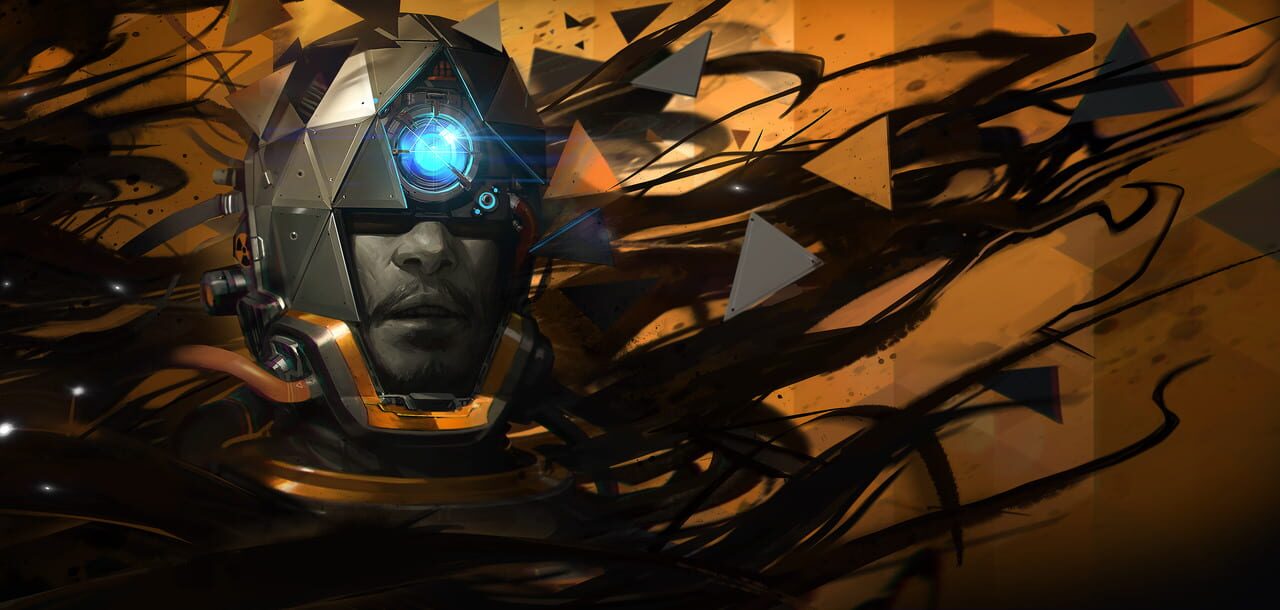
Prey
Arkane Studios · Horror, Shooter, Immersive Sim
Overview
In Prey, you awaken aboard Talos I, a space station orbiting the moon in the year 2032. You are the key subject of an experiment meant to alter humanity forever – but things have gone terribly wrong. The space station has been overrun by hostile aliens and you are now being hunted.
Read moreShow less
Story
In Prey, you awaken aboard Talos I, a space station orbiting the moon in the year 2032. You are the key subject of an experiment meant to alter humanity forever – but things have gone terribly wrong. The space station has been overrun by hostile aliens and you are now being hunted. As you dig into the dark secrets of Talos I and your own past, you must survive using the tools found on the station -- your wits, weapons, and mind-bending abilities. The fate of the Talos I and everyone aboard is in your hands.
Sci-fi Thriller
Nothing is as it seems aboard Talos I. As Morgan Yu, set out to unravel the clues you've left behind for yourself, and discover the truth about your past. What role will you play in TranStar’s plans, and the mysterious threat ravaging the station?
Singular Setting
Orbiting the Moon, the Talos I space station symbolizes the height of private space enterprise. Explore a lavish craft designed to reflect corporate luxury of the 1960s, and navigate interconnected, non-linear pathways built to hide countless secrets.
Unimaginable Threat
The shadowy extraterrestrial presence infesting Talos I is a living ecology bent on annihilating its prey. It’s up to you, one of the last remaining survivors aboard the station, to end the deadly attack of these haunting predators.
Play Your Way
Gain alien abilities to develop a distinct combination of powers and upgrade your unique skills. Craft increasingly useful items with the blueprints, gadgets and tools on board the station to overcome dangerous obstacles in your way. Survive unprecedented threats with your wits and ability to improvise.
From the game's Steam store page.
THE GAMEQ VERDICT10,000 reviews analyzed
What players are actually saying
1. Summary
Prey is Arkane's 2017 immersive sim. You play Morgan Yu, who wakes up on Talos I, a research station orbiting the Moon, after shape-shifting aliens called Typhon have escaped containment. Players describe the station as a real workplace, with named crew whose offices, emails and bodies can all be found. They love that a locked door has several answers: hack it, find the code in someone's email, crawl through a vent, build a staircase with the GLOO cannon, break the window and press the button with a foam dart, or turn into a coffee mug and roll through a gap. The mimics, aliens that disguise themselves as everyday objects, make people distrust every chair in a room, and reviewers single out the opening hour again and again. Many call the game underrated or a successor to System Shock, and plenty picked it up for a few dollars in a sale.
Players who reach the late game describe backtracking across the station through loading screens while enemies respawn in areas they had cleared, and combat that loses its interest once they know the small roster of black, blob-like enemies. Bugs that block quests or wreck saves come up in positive and negative reviews alike, and some reviewers stress that they were never patched. A smaller and angrier group, mostly players who stopped early, hit a controller the game would not recognise without Steam Input, motion blur with no toggle or a crosshair set below centre. Others, further in, complain about dialogue mixed painfully loud. The ending and the difficulty curve divide players. Some negative reviews open by praising the station and its atmosphere before explaining why they stopped playing, and a recurring arc in critical reviews is an exceptional first half or more, then a slog.
2. What keeps coming up
What players praise
A mystery with a celebrated openingHigh
The first hour draws particular praise; one player called it "the best opening of any story game that I've played", then added that the main story never gets better than that. The question of who Morgan Yu really is, an alternate history in which Kennedy survived and the space race never stopped, and side stories pieced together from emails and audio logs keep people exploring. Favourite threads include a crew Dungeons & Dragons group whose clues lead to hidden loot and a chef who is not who he claims to be. A recurring piece of advice is to go in blind and avoid spoilers. A small minority call the plot or characters weak or forgettable, and some find the surviving crew stiff, standing in place after their few lines. The ending itself splits players and is covered below.
Talos I feels like a real placeHigh
The station is one connected space: departments link through maintenance shafts, lifts and airlocks, and you can leave through one airlock and fly around the hull to enter another. Players are struck that every crew member has a name, a job and a trail of emails, and that security stations can locate any of them, alive or dead. "Talos I feels like an actual place", wrote one reviewer, and another said "Every corpse in this game has a name and that adds so much to the worldbuilding." Some learn the layout well enough to turn objective markers off. The criticisms are minor: a few find later areas visually samey, the human character models unappealing, or the station emptier than they hoped.
Mimics and constant paranoiaHigh
Mimics hide as mugs, chairs, books and lamps, so the early hours become a nervous routine of hitting every suspicious object with the wrench. "I've never been this afraid of chairs and coffee mugs in my entire life", wrote one player, and the lab where scientists labelled objects with sticky notes saying they are not mimics has become a running joke in the reviews. Phantoms, the hulking Nightmare that hunts you and the sound design add to the unease. A minority say the fear fades: the psychoscope reveals mimics, a single wrench hit stuns them, and a few players never found the game scary at all.
Every problem has several solutionsHigh
Reviewers list the ways past an obstacle: the GLOO cannon makes footholds and bridges, recycler charges dissolve blockages, the Leverage skill lets you lift and throw heavy crates, the toy crossbow presses buttons through windows, and the Mimic Matter power lets you roll through a crack as a cup. One reviewer described the single thing the game refused, building a ramp to open a shuttle door, and concluded: "It let me do pretty much everything else, I tried." Several say the game rewards creative thinking and exploration. The reservations: by the late game a well-upgraded character tends to solve everything the same way, and a few rooms need one specific power.
GLOO cannon, recycler and fabricatorHigh
Reviewers are fond of the GLOO cannon, which freezes enemies, seals gas leaks, puts out fires and builds climbable steps up walls. Almost any item can be fed into a recycler, which breaks it into four materials that a fabricator turns into ammo, medkits and even the neuromods that buy new skills. One player's summary of the loop: "cluttered, messy rooms become supply cashes when you pile them in the corner and chuck in a recycler charge." In negative reviews the same loop shows up as grind: hauling junk to recyclers with a small inventory and running out of materials. A few also find the crafting too simple to stay interesting.
Choices and replay valueHigh
Players who replay say human-only, Typhon-only and no-neuromod runs feel very different. New Game Plus carries neuromods over, the survival options (weapon degradation, traumas, oxygen) add challenge, and several achievements require a specific style of play. Reviewers also like that crew members react to what you did, including side tasks finished before anyone asked. Some find one run is enough, and others say the endings converge too much to reward another (see the ending below).
Mick Gordon's soundtrackMedium
Mick Gordon, the composer of Doom (2016), wrote a moody synth score that reviewers say suits the station, and "Everything is Going to Be OK" is named as a favourite track. A few found the combat music grating or out of place and turned it off.
Mooncrash, the roguelite DLCLow
Mooncrash is sold separately, but base-game reviews bring it up, mostly ones from players with long playtimes. Most of those who judge it like it: a roguelite on a moon base where you guide five characters to escape across repeated runs while a corruption timer counts down, which some call one of the best DLCs they have played. "The Mooncrash DLC is amazingly, addictingly fun", wrote one player. A minority dislike the timer, the lack of saves within a run and the repetition; another player was blunt: "The Mooncrash DLC is garbage though. Skip that." The Typhon Hunter multiplayer mode is dismissed by the few who mention it.
Steam Deck and LinuxLow
Players on Steam Deck mostly report a smooth game, with an official layout that uses the back buttons and gyro aiming; some mention frame rates around 40 to 45 per second. Linux players report it running through Proton without tweaks. A few Deck players had to rework the controls or saw a blurry resolution.
Where players are split
The ending and its post-credits twistHigh
Opinions on the ending come out close to even: a keyword tally finds 140 reviews praising it and 135 criticising it. Without spoiling it, the final reveal recasts everything you did, and the full payoff arrives in a scene after the credits. Fans call it earned and well foreshadowed; one wrote that "it makes you feel seen for how you played", and another said the game "showed me a lame ass ending only to give me the biggest post credit plot twist scene i've ever seen in my life." Critics say the reveal makes their choices feel weightless, that the final decision changes little ("the only story change is 4-5 lines of dialogue change in the end cutscene"), and that it arrives abruptly. A few reviewers warn that the optional early escape ending spoils the twist, and others urge players to wait through the credits.
Brutal early, easy lateHigh
Reviews describe the difficulty as a curve more than a level. Early on Morgan has a wrench, a pistol with a handful of bullets and little health, phantoms hit hard, and some players drop to Easy or Story mode: "I played the game on the easiest possible difficulty, and I struggled so much." Once the shotgun is upgraded, combat powers are unlocked and neuromods can be fabricated, others report becoming close to unstoppable: "It's a little too easy. I played on the hardest difficulty and I only struggled at the beginning." Experienced players advise Hard or Nightmare with the survival options on from the start, and some say unlimited quicksaves remove the tension anyway. Several reviewers bounced off those slow, underpowered early hours once and came back years later to find a favourite.
Zero gravity and space walksMedium
Zero gravity pulls reviewers both ways. Supporters call the trips outside the station some of the best space sequences in games: "I have never played a game that simulates zero gravity exploration so well". Critics find them slow, disorienting and hard to fight in, and dislike how much the late objectives lean on them: "Zero-gravity sections in this game, even with all the speed upgrades, are just incredibly boring and un-fun." A few report motion sickness outside the station.
Story told through emails and audio logsLow
Most of the lore lives in emails, notes and recorded messages. Players who enjoy it say they read every email and listened to every log, and that the crew's office gossip, hobbies and grudges make the station believable. Others find the reading heavy or the audio calls from other characters a chore.
Alien powers and the turret penaltyLow
Typhon abilities such as mimicry, kinetic blasts and mind control come with a cost: install enough of them and the station's turrets treat you as an enemy, and the story frames them as a risk to Morgan's humanity. Some players like the trade-off and the very different human-only run it creates. Others feel punished for using the most interesting powers and say the game nudges them toward a plainer build.
What frustrates players
Backtracking, respawns and loading screensHigh
Pacing complaints about the back half appear in 16% of negative reviews, and they come mostly from players who reached it. The station is a hub, so later objectives send you back and forth through areas you already know: "One late mission literally sends you from A to C, back to A, just to reach B." Cleared areas refill with enemies at story beats, the final stretch adds waves of military operators, and small zones such as the Bridge and the Shuttle Bay each sit behind their own loading screen. "The scariest part about this game is the load times", joked one player. Beyond space walks between airlocks there is no fast travel. Several reviewers describe the arc in fractions, like "For 3/4 of the game it's 9/10 immersive sim." Reviewers recommend an SSD and doing side quests along the way, and some admit they sprinted past enemies to reach the end.
Old bugs that can block progressHigh
Bugs come up in 14% of negative reviews, and 16% of all bug complaints describe a quest that could not be finished, a softlock or lost progress. Reviewers name specific failures: the Find Kirk Remmer side quest, Talia Brooks' body falling through the floor with a keycard, Save Alex and Repo Man softlocks, items vanishing from the inventory ("a glitch that has been in this game for 8 years without being fixed"), corrupted saves, and crashes when loading. One player's run ended in the Reboot mission, where a key had to come off a burning corpse: "Shoot it with the GLOO gun and put out the flames. Doing so however clips the corpse through the floor, making it completely inaccessible." Some of these reviewers stress that their bug is years old and was never fixed. Reviewers who hit bugs advise keeping plenty of manual saves within the 20-slot limit. Other players finish with only minor glitches.
Black blobs and thin combatMedium
Combat and enemy design come up in 12% of negative reviews, one of the most common complaints among negative reviewers. The roster is mostly mimics, phantoms in elemental variants and corrupted robots, and some players describe the aliens as black blobs or goo. Even an otherwise positive review says "The enemy variety is severely lacking". Early enemies soak up bullets that are hard to make, and later they become pushovers. Reviewers list specific friction: a sluggish wrench, reloads that cannot be cancelled, weapon swaps that ignore a quick second press, few guns, and stealth that feels inconsistent. One negative reviewer wrote: "Combat feels like I'm trying to swat angry flies with a bottle of Elmer's glue and random things I found in my kitchen." Some players enjoy fights as puzzles to set up with turrets, GLOO and powers.
A rough PC port: controllers and hidden settingsMedium
PC port problems come up in 10% of negative reviews, and most of those come from players with only a few hours played. Reviewers point out that the store page lists full controller support, yet the game would not recognise their controller without Steam Input, or its own Steam controller option did the opposite of what it said: "Prey will not recognize a controller without steam input". There is no menu toggle for motion blur, the crosshair sits below centre, and some cannot stand the chromatic aberration or the red shadow on text. The most upvoted negative review is one line: "Can not disable motion blur I am physically unable to play this". Reviewers pass on fixes they say worked for them: deleting the i_useSteamController line or adding r_MotionBlur = 0 in game.cfg, removing g_reticleYPercentage to centre the crosshair, and switching off "Always use controller prompts" when mouse and keyboard input misbehaves. Others gave up: "I cannot recommend a game where you need to spend an hour fixing the settings in a text file in order to play." A few raise motion sickness, and one warns photosensitive players about strobing lights with no option to reduce them.
Markers that point the wrong wayMedium
Finding the way is a complaint in 6% of negative reviews. Objective markers often point to the nearest exit or to a locked door: "your quest marker, when trying to lead you to the quest location, indicates your current nearest exit". Waypoints can vanish during space walks, there is no map outside the station, and some side quests sent players to a guide. "I've never played a game that sends you to the wrong locations semi-consistently", wrote one. Players who like the layout counter that turning markers off works, because the station is logical enough to learn.
Audio mixingMedium
Complaints about the sound mix come from positive and negative reviews alike, and a few say it has gone unfixed since launch. Reviewers report that face-to-face dialogue ignores the voice slider and plays loud and centred in your head, that crew members talk over each other, and that directional sound is poor. "This is the only game I've ever played where I had Speech volume set to half of Effects volume." Some hear certain lines at full blast and others not at all. One workaround in the reviews is to set every slider to 100 and lower the game in the Windows volume mixer.
The hacking minigameLow
Hacking is a timed maze in which you steer a ball to a series of targets, and it repeats on locks, safes and turrets. The reviewers who mention it find it tedious after the first few, and some find it close to impossible on a keyboard. One player called it "Maze Pong from Hell", and a few recommend mods that remove it or make it bearable.
3. The player conversation
The tone is warm and often evangelical. The reviews are full of "underrated", "hidden gem" and pleas to go in blind, and 20% of all reviews name System Shock, Bioshock, Deus Ex, Dishonored, Half-Life or Dead Space; a recurring nickname for Prey is System Shock 3. One player put it this way: "Prey's only flaw is that it isn't called 'Neuroshock'." Many mention buying it for a few dollars in a sale, and several of those add that it would have been worth full price. Short reviews lean on jokes about mimics, coffee mugs and the "Not a mimic" notes, and some low-playtime reviews come from people who finished the game on console or the Epic Store first. Disagreement is concentrated in a few places: the ending, the difficulty curve and zero gravity.
Who raises what follows how far people got. Setup problems (controllers, motion blur, the crosshair) come mostly from players who stopped early, while pacing complaints, bug reports and opinions on the ending come from people who reached the late game. Several negative reviewers wish Steam had a mixed option and describe really wanting to like the game.
The positive share by year written slides gently: 93.2% from August to December 2022, 92.8% in 2023, 91.7% in 2024, 90.7% in 2025 and 89.4% in 2026 (January to early October). References to Prey as underrated hold at roughly 5% to 6% of reviews each year.
4. What the developers could do
- Patch the quest-blocking bugs players have catalogued for years. Reviews name specific failures (Find Kirk Remmer, Talia Brooks' body and its keycard, the burning corpse in Reboot, Save Alex, Repo Man, vanishing inventory items, corrupted saves), and bugs feature in 14% of negative reviews.
- Trim the late-game busywork. Fewer respawns in cleared areas, shorter cross-station fetch chains and fewer loading screens between small zones would answer the most common complaint in negative reviews (16% of them), raised mostly by players who reached the back half.
- Make controllers and basic display options work out of the box. Native controller detection without Steam Input, plus menu toggles for motion blur, crosshair position, chromatic aberration and the red text shadow, would address the problems behind 10% of negative reviews, written mostly by players who stopped in the first few hours.
- Broaden the enemy roster and remove combat friction. Players ask for more distinct Typhon types and weapons, and for reloads that can be cancelled and weapon swaps that register, in the combat complaints that make up 12% of negative reviews.
- Fix the dialogue mix. A voice slider that covers face-to-face dialogue, crew lines that wait their turn and better directional sound would end workarounds such as maxing every slider and turning the game down in the Windows mixer.
- Point objective markers at the real destination. Markers that lead to the nearest exit or a locked door, waypoints that vanish during space walks and the missing exterior map send players to guides.
- Warn players before the early escape ending. Reviewers say taking it spoils the twist the main ending depends on, and others keep reminding players to wait for the scene after the credits.
- Offer a keyboard-friendly or skippable hacking minigame. Players call the timed maze tedious and close to impossible on a keyboard, and a few recommend mods that remove it.