Resonance: A Plague Tale Legacy
Asobo Studio · Puzzle, Action, Adventure
Overview
Embark on an original story, prequel to the award-winning games: A Plague Tale. As Sophia, journey to the Minotaur’s Island, outsmart deadly foes, unravel ancient secrets, and confront a mythical creature at the heart of a devastating curse.
Read moreShow less
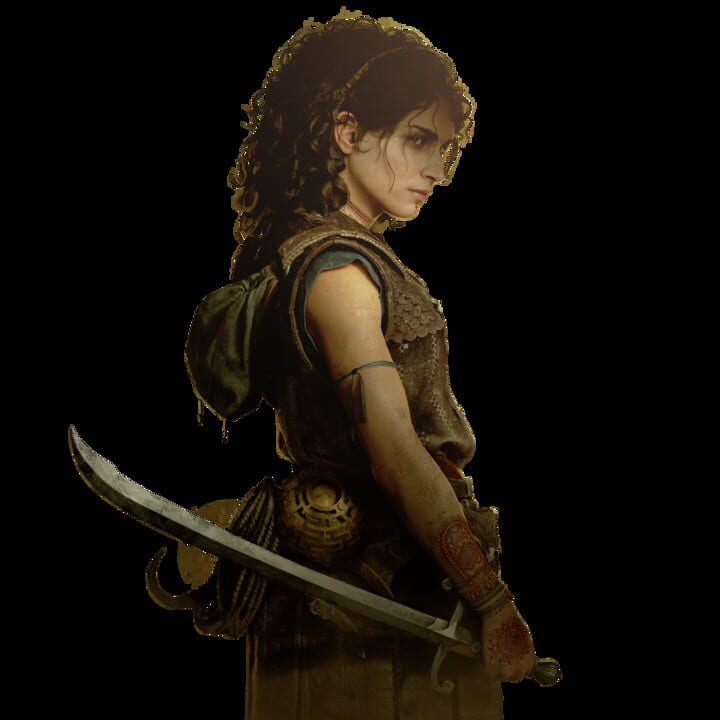
Set 15 years before A Plague Tale: Requiem, play as Sophia, a fierce young plunderer, on the run but determined to uncover the secrets of her past. Dive into an original story blending combat, myth and fate with a brand new take in the universe of A Plague Tale.
Sophia’s journey leads to the Minotaur' Island, where she faces deadly trials, navigates treacherous trails, solves puzzles, all while fighting and staying one step ahead of the army chasing her. But the true challenge awaits, as the terrifying creature hidden behind the myth will soon resonate with her…
Sophia is a skilled, agile, and strong-willed fighter who engages in dynamic and violent melee combat. Followed by many enemies, each drawn to the Island to reclaim a mysterious treasure, you must navigate a treacherous maze. Rely on your agility, tricks and sharp reflexes to outsmart enemies, perfect your parries, and unleash powerful strikes to survive deadly encounters.
Shift between the Middle Age of Sophia and ancient Minoan times, where echoes of the past shape the battles of the present. Unfold a new story in the universe of A Plague Tale, through the entwined destinies of two heroes linked by fate and the Macula’s mysterious legacy.
Guided by the knowledge safeguarded in your notebook, follow in your crew’s footsteps to explore a richly detailed world, unravel its secrets, and face deadly trials. Use a stolen Minoan sphere to solve ingenious puzzles by manipulating light - a force woven by Daedalus into the island’s very heart.
It is said that only a few came back from the island. Lurking in the shadows lives a restless presence. It follows you around, seemingly knowing your every move, as it hunts through the island’s depths.
Every step is a risk. Every pause, a potential end. You can’t stop, only hide, outsmart, and push forward. Can you survive each trial and every step or will you join those who never came back?
From the game's Steam store page.
THE GAMEQ VERDICT1,957 reviews analyzed
What players are actually saying
1. Summary
Resonance is Asobo's prequel about Sophia, the smuggler captain from Requiem, and it trades the series' rats and sling-based stealth for sword combat, light-beam puzzles and Uncharted-style ruin exploration on a Minoan island. The visuals (mentioned in 58% of the substantive reviews) and Olivier Derivière's score are praised throughout, and several players credit the in-house engine's performance. Some negative reviews concede the looks too ("The graphics are amazing but good god the writing."). Reviewers who describe the new melee combat mostly like it, and some say it beat what they expected from the trailers; a smaller group finds it shallow and hard to read in group fights.
Story is where reviewers disagree. Many found it gripping and the ending moving, while some fans of Innocence and Requiem rank its writing below the earlier games: side characters die before you know them, the twists are easy to see coming, soldiers keep turning up past doors only Sophia can open, and Sophia narrates everything. A smaller set of reviews faults the pacing, pointing to a slow, puzzle-heavy stretch before the story picks up and late chapters padded with repeated creature chases. Price for a 10 to 15 hour game and a scatter of late-game crashes round out the downsides.
2. What keeps coming up
What players praise
Visuals, art direction and the Minoan islandHigh
Visuals are the most frequent praise in the reviews, and negative reviews mention them too. Players describe sunlit cliffs giving way to vast underground chambers, frescoes shown ruined in the present and whole again in flashbacks, and time spent in photo mode. Facial animation and motion capture get singled out as well, with several players calling the close-ups the best they have seen outside the biggest-budget studios. Players who know the setting, especially Greek reviewers, praise the research into Minoan architecture and the Greek-language songs.
The visual complaints are technical. There is no ray tracing, so water relies on screen-space reflections that visibly break; the built-in HDR is weak enough that some players recommend the RenoDX mod; some textures and hair look dated up close; and a handful of players found walking and combat animations stiff. The second half's long stretches of dark tunnels also struck a few as monotonous next to the bright first half.
Music and sound designHigh
Derivière's score, built around Greek and Cypriot vocals and the Amalgamation Choir, gets warm praise. Some players lingered on the main menu theme ("The Land"), added tracks to playlists, and called it a soundtrack-of-the-year contender. Several reviewers credit the creature's sound design, including its breathing and a childlike scream, with making the horror sections work. A few found the chanting overbearing or muted it in the emotional scenes, and some noticed music cutting out or an uneven mix between dialogue and score.
Performance and optimizationHigh
Several players contrast Resonance with Unreal Engine 5 releases: it runs at high frame rates on max settings for many, on mid-range cards like the RTX 3060 and 3070, and on Steam Deck at lower presets. Reviewers who bring it up call the game "well optimized", and some note it launched without the day-one mess they expected. Traversal hitches, crashes and frame generation problems exist (see below), but for most Windows players who bring up performance, the game ran well.
Voice acting and performancesMedium
Anna Demetriou's Sophia gets the most attention, with several players expecting award nominations, and the performance behind Ariadne is also singled out. Players credit the cast with carrying emotional scenes the writing doesn't always set up. The few complaints are about details: British and American accents in a Mediterranean cast, lip sync that stops during heavy breathing, and a child Sophia whose voice sounds too adult in some language dubs.
The Greek myth reimaginedMedium
The reworking of the Theseus and Minotaur story through the Prima Macula lore draws in mythology fans, who enjoyed spotting details like Ariadne's thread running through levels and cutscenes. Detractors say the Minotaur itself ends up barely relevant, the reinterpretation takes too many liberties to feel like the myth, and the origin of the Macula stays unexplained despite the setup.
Where players are split
The story and charactersHigh
Story is the most discussed topic in the reviews (77% of substantive reviews mention it). Supporters call it gripping, emotional and well paced, like how the dual timeline with the Theseus visions comes together, and single out the ending and post-credits scene, with its tie back to Requiem, as a payoff that made them cry.
Critics, many of them fans of the earlier games, raise the same few points:
- Side characters don't get enough screen time. Leni, Faro, Irene and the plunderer crew die or switch sides before players have reason to care. One otherwise positive reviewer writes that "Asobo really has a chronic problem of writing disappointing side characters". Faro's quick flips between enemy and ally draw particular criticism.
- The twists are predictable. The traitor is easy to spot, and anyone who played Requiem can guess the final reveal.
- It sits awkwardly with Requiem. Players ask why the Sophia of Requiem never mentions any of this, and some see the final act as a replay of Requiem's structure.
- It doesn't reach Amicia and Hugo. Some positive reviews still rank it third of the three games for emotional impact.
The Theseus flashbacks divide opinion too: some call them the best part, others say they interrupt the momentum and play worse than Sophia's sections.
The switch to melee combatHigh
More reviewers praise the new combat than criticize it, and some were surprised to like it. Fans describe a fast, aggressive glass-cannon system: three hits of health (two on the harder settings), health back with every kill, kicks off ledges, a grappling hook, throwables and brutal finishers. Several recommend Hard or Nightmare for the best experience, and some who dislike parrying were glad dodging is a valid alternative.
Critics call it shallow and repetitive after the first few hours: light attack, parry, kick, repeat against a small set of enemy types. Their specific complaints:
- No lock-on and a tight camera. Group fights are hard to read, and enemies slide or "magnetize" into attacks.
- A thin skill tree. Two or three skills, especially the one that lets you parry red attacks, trivialize fights, while the charms and extra swords barely change how it plays.
- Awkward Theseus sections. You lose Sophia's upgrades there, which catches people out.
- A few badly balanced encounters. A three-phase late boss and a cramped mixed-enemy arena are the ones named.
A departure from the series: no rats, little stealth, more Tomb RaiderHigh
Comparisons to Tomb Raider and Uncharted are common, and whether they are praise depends on who is writing. Some players who found the earlier games' stealth tedious call this the most fun Plague Tale to play, and newcomers find it an easy way in. Longtime fans who loved the vulnerability of playing a child hiding from soldiers feel the series lost its identity: there is no stealth against human enemies at all, no sling or alchemy, and no rats. One reviewer felt misled the other way, saying the marketing sold an action game and hid how much of it is stealth and puzzles.
Light puzzlesHigh
The light, mirror and prism puzzles built around Sophia's sphere get praise for being well built and rarely needing a guide, with an adjustable hint system and journal behind them. The criticism is about how many there are and how alike they feel. Several reviewers say the middle chapters stack puzzle after puzzle with little story, almost all of them variations on redirecting beams, and some find them too easy to be satisfying. A few players who were locked out of a mechanism by keyboard controls or a bug had to restart the section.
The creature, stealth and chase sequencesMedium
The unkillable creature that tracks Sophia by the light she leaves behind scared plenty of players. Some call it the scariest thing in the series, "more terrifying than the rats", and praise its design and sound. Others who finished the game came to resent it: the chase and hide sequences repeat many times in the back half, and deaths often come from paths that aren't clear or the creature's unpredictable sense of where you are. Unskippable death animations and repeated boss lines on retries add to the frustration.
Length and priceMedium
Reviewers put the length at 10 to 15 hours. Some welcome a focused, linear game that "respects your time" in a market full of bloated open worlds, and several say $50 is fair. Others say it's too short for the price, recommend waiting for a sale, and note there's no New Game Plus or reason to replay. A couple of players praised the regional pricing.
What frustrates players
Pacing at both ends: a slow start and dragging final chaptersMedium
Some players, fans among them, say it starts slowly and only gets going once the creature appears around chapters 5 and 6. At the other end, the last chapter or two draw complaints for padding: repeated chases, long forced slow walks while characters talk, control taken away for emotional beats, and Sophia saying she can't take any more while the player agrees. A few also found the opening too rushed to set up the characters it later kills off.
Soldiers always one step aheadMedium
One plot hole comes up in several reviews: Sophia needs a unique key and ancient trials to open each sealed door, yet soldiers and her old crew keep turning up on the other side with no real explanation ("how did they get there"). Players say it undercuts the whole premise of the journey. Related complaints: map geography that doesn't add up (deep underground one moment, outside the next) and character decisions that seem to exist only to set up the next fight.
Constant chatter and narrationMedium
Some reviewers, several of them negative, say Sophia and her companions rarely stop talking: pointing out what you can already see, restating a cutscene you just watched, dropping puzzle hints even with hints turned off, and repeating panicked lines like "I can't" in the late chapters. Some wish the hint slider also turned down this dialogue.
Technical problems: late-game crashes, frame generation and stuck companionsMedium
Crashes come up in only a small share of reviews, but the problems that do appear cluster:
- Crashes and freezes from chapter 9 onward. These hit Linux/Proton, Steam Deck and Steam Machine players hardest. Some Linux players say cutscene transitions crash every time, and some couldn't finish the game.
- Broken frame generation. The in-game setting offers only "Auto" and "Dynamic", and players say Auto pushes very high multipliers with heavy input lag.
- Hard blockers on Windows. Crashes at the menu (fixed for some by resetting a custom Windows date format), and a 200% display scaling bug.
- Everyday bugs. Traversal and area-load stutter, companions who stop following (sometimes blocking progress or silencing dialogue), audio dropouts, and red or pink shading in dark areas.
Missable collectibles and lost progressLow
Completionists run into points of no return that give no warning: two possible paths, one of which triggers a cutscene and locks the other off. Resonance points (the skill currency) are lost if you die before a checkpoint and don't carry over through chapter select, and the full skill tree is missable. A few also mention invisible walls around areas that look explorable.
PC controlsLow
Players on keyboard and mouse report a "focus" special attack bound to Alt+F that can't be rebound, mouse side buttons that can't be assigned, crouch and dodge on the same key, awkward mirror controls, and a game that pushes you toward a controller. On the controller side, one player couldn't turn off the DualSense trigger effect, and another notes R3 as the interact button is hard on sore thumbs, although controller rebinding exists.
Display and accessibility optionsLow
Missing or incomplete options: no 32:9 super-ultrawide (21:9 mostly works), no borderless window mode, no FOV slider, and, raised by photosensitive players, no way to disable the strobe lighting in the labyrinth despite an otherwise long accessibility menu. Colorblind players note that puzzle hints still refer to the original colors.
3. The player conversation
The tone is warm and often protective. Some reviews urge others to support Asobo, call the series underrated, or push back on low critic scores and culture-war accusations. The main split is between series veterans measuring Resonance against Requiem and players who judge it on its own terms, and the long, mixed reviews tend to come from the veterans. The few reviewers who say this is their first Plague Tale are nearly all positive.
What reviewers raise depends on how far they got. Reviews written in the first two hours deal in first impressions: this isn't the Plague Tale they expected, stiff animations, a lore-heavy opening, keyboard controls or missing ultrawide support. Critics who finished the game write about repetitive puzzles and chases, weak side characters, a dragging finale and shallow combat. Several of the reviewers past 25 hours write as completionists, and they bring up missable collectibles, resonance points and the lack of New Game Plus.
Sentiment stayed steady after launch: 91% positive in launch week, 93% to 94% in weeks two through four, and 88% in week five on a much smaller sample (69 reviews).
4. What the developers could do
- Give the supporting cast room to breathe in the next entry. Thin development for Leni, Faro, Irene and the crew is a recurring story complaint and one reason some fans rank Resonance below Requiem; players ask for quieter moments before characters die.
- Trim or vary the late-game creature chases and the final chapter. Some players who finished the game name repeated chase-and-hide sequences, forced slow walks and loss of control in the last chapters as what soured an otherwise strong second half.
- Fix the late-chapter crashes and the frame generation setting. Crashes and freezes from chapter 9 onward hit Linux, Steam Deck and Steam Machine players hardest, and players ask for a fixed frame-generation multiplier instead of the current Auto and Dynamic modes.
- Add a lock-on or target-switch option and loosen the combat camera. Some players who like the combat still say group fights are hard to read without lock-on, and enemy attacks slide into Sophia from outside the tight camera view.
- Break up the puzzle-heavy middle chapters. Several reviewers say the run of back-to-back light-beam puzzles in the middle chapters stalls the story right when it should be picking up.
- Let the hint slider also turn down companion and self-narration dialogue. Players who turned hints off still got nudged, and some reviewers find the constant commentary grating.
- Stop resonance points from being lost and mark points of no return. Completionists report losing collected skill points on death or through chapter select and getting locked out of side paths without warning.
- Expand PC and display options. Players ask for full rebinding (including the Alt+F focus attack and mouse side buttons), separate crouch and dodge keys, a strobe-light toggle for photosensitive players, 32:9 ultrawide, borderless windowed mode and an FOV slider.