Vampire Crawlers: The Turbo Wildcard from Vampire Survivors
Poncle · Strategy, Action, Indie
Overview
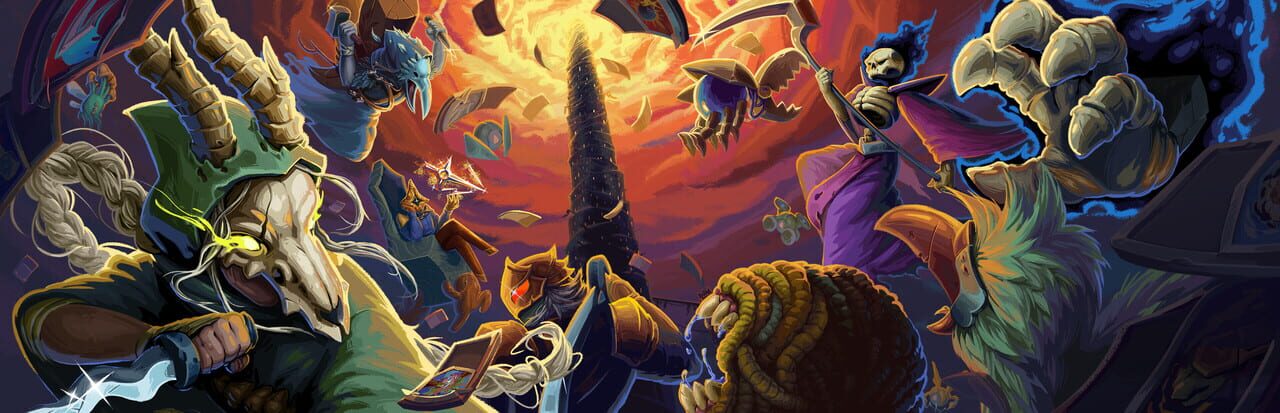
From the creators of Vampire Survivors comes a turbo-charged, turn-based roguelite deckbuilder! Deal world-ending combos, blitz through infested dungeons, and master the Turboturn to obliterate hordes of familiar foes with a chaotic hand of cards.
Read moreShow less
From the BAFTA winning creators of Vampire Survivors comes a brand new adventure. Explore maps, level up powers, and obliterate monsters in this turn-based, card-driven BLOBBER with roguelite elements.
A Brand New Experience!
Vampire Crawlers turns the snowballing thrill of the original hit into a tactical deckbuilder where you build busted decks, explore familiar dungeons from a new perspective, and unleash world-ending combos.
Create Devastating Combos!
Play cards in ascending mana order to land devastating combos, where each step multiplies the next card's effect. Use Wilds to extend the stack to 10, 20, or even 30 cards. You choose the pace: take your time to be perfectly tactical, or play turns as fast as humanly possible for absolute snowballing carnage. Accumulate experience to level up and gain new cards.
An Entire Dungeon to Explore!
Headbutt chests for power-ups and gems to augment your cards. Chase legendary weapon evolutions and summon iconic survivors to trigger cascades of effects that break the game. Dive into dungeons packed with functioning walls, unique treasures, and bizarre interactions. Find the shovel to dig to the next floor and prepare to Master the Turboturn™!
From the game's Steam store page.
THE GAMEQ VERDICT8,689 reviews analyzed
What players are actually saying
1. Summary
Vampire Crawlers turns Vampire Survivors into a first-person, turn-based deckbuilder, and reviewers say the conversion works. The combo system gets the warmest words: playing cards in rising mana cost multiplies each next card, and runs snowball into chains that clear the screen. Survivors' pull is back too. Reviewers call the game addictive, compare it to a drug or describe losing whole evenings to "one more run", and the many who measure it against Vampire Survivors mostly say it keeps the original's feel in a new genre. They also like the price (around $10, by their accounts), the remixed soundtrack, the retro dungeon look, how well it runs on a Steam Deck, and how gently it brings people who normally avoid card games into the genre.
Most complaints concern the late game and how much there is to do. Once wild cards, card draw and mana generation come online, players say runs turn into the same infinite loop, enemies stop mattering, and the last hours become a long sequence of clicks. This comes up in 27% of negative reviews, and recommenders raise it too, usually as a caveat after many hours of fun. Other gripes are narrower: hands of 20 to 50 cards with no automatic sort, a town menu that hid the quit button, missing tooltips and enemy health bars, and a few lost saves. Reviewers report finishing the game in roughly 15 to 35 hours, and many of them wish it had more to do afterwards.
2. What keeps coming up
What players praise
The "one more run" hookHigh
Calling the game addictive, comparing it to a drug or confessing to lost hours is everywhere in these reviews, and launch week is full of players who started after dinner and stopped at sunrise. One player summed up the design as a "really powerful compulsion loop", and another joked: "Its a good thing my job can't tell if I'm working, because I'm not." Players credit the pull to unlocks after almost every run, achievements arriving in batches, and gold that pays out even on a failed run.
For a few, the same pull is a warning. One negative review calls the game a "dopamine trap" and others compare it to a slot machine, while several positive ones recommend it and still describe it as junk food.
Vampire Survivors, rebuilt as a card gameHigh
The same characters, weapons, stages, enemies and weapon evolutions return as cards, and reviewers say knowing the evolution recipes from Survivors still helps. Many say the translation works better than they expected. "It does not play like Vampire Survivors, but it does feel like it," wrote one player; another called it "less of a Vampire Survivors extra mode, and more like a second in-universe experience." Several who disliked the original's hands-off bullet-heaven play prefer this one, because turn-based play gives them control and lets them pause at any moment.
Where it ranks against the original is less settled. Some rate it above Survivors outright. A recommending player called it "a distant second place" because Survivors set such a high bar, and a small group of negative reviews feel it reuses too many assets.
Combos you can push until the game breaksHigh
"Playing cards in ascending mana order turns each round into a small puzzle," one review explains, and players describe the moment that clicks, usually a few runs in, as the point the game takes off. Wild cards that restart the sequence, gems that change what a card does, and party crawlers whose colour triggers stack together let decks draw themselves and play dozens of cards in a turn. One player said the combo system "can create a deep (and deeply satisfying) flow state."
Plenty of fans treat breaking the game as the goal. One praised how the game "actively encourages you to do so", and reviews trade builds that one-shot the final boss or farm millions of gold. That freedom is also behind the main complaint further down.
Generous value for the priceMedium
Reviewers often bring up the price, which they put at about $10, €10 or £9, and some mention a bundle discount for owners of Vampire Survivors or Slay the Spire 2. Those who talk about value usually cite 15 to 35 hours to reach 100% of the achievements and consider that more than fair; one called it "the best bang for your buck game I've played in a while." Several compare it favourably with full-price AAA releases and like that it launched as a finished 1.0 at a low price rather than in early access.
A small group disagrees: by their account it costs about double what Vampire Survivors did with far less content, and they think it should be closer to $5.
Soundtrack and retro presentationMedium
Players like the remixes of the Survivors tracks, which shift between exploration and battle versions, and the new tracks for the bridges and shops. About a dozen reviewers single out the title theme, which they credit to guest composer Yoko Shimomura. "The music isn't fair. It's already stuck in my head," one wrote. Older players say the pixel sprites in 3D grid dungeons remind them of Eye of the Beholder, Might and Magic, Wizardry and Legend of Grimrock, and the sound and screen effects that build during big combos are part of what makes a run feel satisfying.
A few dislike the low-resolution look or found the music quiet or repetitive, and several play on mute with a podcast instead.
Easy for card-game newcomersMedium
A steady stream of reviews open by saying the writer normally avoids card games or deckbuilders. Players who bounced off Slay the Spire or never played a deckbuilder say the simple rules and forgiving difficulty won them over. "The game somehow turned me into a deckbuilder fan without me noticing," one wrote, and a completionist called it "a very new player friendly card game roguelite experience." A run can be suspended at any point and resumed later, which players say suits short sessions, commutes and second-screen play.
Plays well on Steam Deck and old hardwareLow
Steam Deck owners report smooth play and long battery life; one called the game "flawless on steam deck," and another said the Power Saving mode "nearly doubled the battery time." Others say it runs on old laptops, Macs and Linux, and that controller support is good. A few exceptions appear under the frustrations below.
Where players are split
Short campaign, little to do after itMedium
Reviewers report reaching the credits in roughly 12 to 20 hours and 100% of the achievements in 20 to 35. Some count that as a strength: "I'm glad this game is shorter than Survivors," one wrote, and another praised a game that "doesn't overstay its welcome." Others, many of them happy with the game, feel it ends too soon: "Biggest flaw in Vampire Crawlers, it ends." They ask for more stages, more crawlers, secrets on the scale of Survivors and a real post-game, and several say they will come back for DLC. Players note that a later update added an Endless Mode, which some long-time players praise.
How deep it is next to Slay the SpireMedium
Hundreds of reviews bring up Slay the Spire. Fans call this game faster and more fun, with lines like "This game is everything Slay the Spire failed to be." Others put it plainly: "if you're looking for a Slay the Spire level of depth, this game isn't it." Some critics say it sits awkwardly between genres; one negative review said it neither satisfies as a strategy deckbuilder "nor does it provide a fully zone-out experience like the original vampire survivors."
Boss counters and the anti-infinite rulesLow
Later bosses act after every few cards you play (shown as a ring of eyes), cards crack and shatter if replayed too often in one turn, and a shattered card summons a reaper. Stalling too long floods the screen and summons another. Some players think these rules keep the game alive: one said they're "what make the game interesting to begin with," and another said the countdown mechanic "actually makes the bosses feel more like a challenge." Others find them self-defeating in a game built around long combos. One player who likes the basic loop gave a negative review over them: "all bosses have anti card play countdowns - if you play cards, they do damage to you." Another asked, "Why am I punished for playing the best cards I can?" Several also find that freeze and armour cards make the counters easy to ignore late on.
Bridges, difficulty walls and gold grindingLow
The short bridge stages between areas give no gold on a loss and test a deck harder than the stages around them. Some like them as a change of pace; one review called them "a great addition that encourage different strategies." Others describe hours stuck on the first bridge and an uneven curve, summed up by one player as "too easy > easy > still easy > nightmare." A few found the final area a sudden spike after hours of steamrolling, and the cost of late blacksmith and jeweller upgrades pushes some players into grinding old stages.
Character voice linesLow
The crawlers have voice lines, and reactions differ. Some players love them: "The voice acting adds a TON of character and charm to existing characters." Others find the trigger lines grating once several crawlers are active, with one calling them "incredibly obnoxious once you have more than one crawler" because the same line repeats with every card.
What frustrates players
Too easy to break, and the late game repeatsMedium
Among negative reviews this is the complaint that comes up most: 27% of them call the game too easy, trivial, repetitive or a chore, usually once infinite loops are available, and it also appears as a caveat in positive reviews. The usual recipe is wild cards, card draw and mana generation, sometimes with one character such as Pugnala or the Coin Count gem that turns gold into damage. After that, players say, weapon choice and enemy type stop mattering. "I've never failed a run, amassed more money than I need for upgrades," wrote one negative reviewer, and a recommending player said the game "basically becomes solitaire at that point." A long-time Survivors fan put the loss more gently: "I wish the midgame was the entire game, because the midgame of Vampire Crawlers is awesome."
Late runs also get long. Reviews mention dungeons of five or six floors taking one to two hours, combats that take minutes to play out once you have already won, and animations that keep running after the fight is decided; one player complained of "1 hour and 10 minute runs?!? For only 5 levels?!?" Several reviewers say the Hurry speed option helps but unlocks late.
Few real decisions, samey cards and enemiesLow
A smaller, mostly negative group thinks the problem starts earlier: the best play is almost always to lay cards in rising cost order, so turns feel solved. "If you can count to 3, this is the game for you," one critic wrote, and another said it "feels more like you're watching a screen-saver than playing a game." By their account enemies differ mainly in health and damage, most attack cards just deal damage, and only a few bosses have real mechanics. Players also dislike that level-up rewards cannot be skipped, so good decks fill with cards they never wanted; "why should levling up feel like a challenge I want to avoid?" asked one.
Managing huge handsLow
Combo decks routinely hold 20 to 50 cards, packed together and overlapping the health display, and players report misclicks and slow searches for the next card in the sequence. One reviewer warned that half the game becomes "linear search on unsorted list"; another called late runs "a surgery simulator." Players say a sort button arrived after launch and welcomed it, but some still complain that it has to be pressed every turn: "Sort hand not being a toggle that can just bloody stay on is infuriating." Players also want to see their whole deck and the evolution guide on the level-up screen.
Missing tooltips and enemy healthLow
Keywords such as amount, area, splash damage, growth and crit, along with buff icons and some relic effects, have little or no explanation, and players say they had to look things up. "How can a game from such a large IP release without information being accessible on pretty much anything?" asked one early reviewer. Enemy and boss health is not shown either, which makes it hard to judge whether to attack or armour up; "Should add boss HP bar," wrote another after a 40-minute boss fight on the first floor.
The town menu and the hidden quit buttonLow
At launch, quitting meant rotating through the town's buildings to the settings menu, and Escape opened the world map instead. "Please add a button to quickly exit the game," one player pleaded, and another counted "12 clicks to exit game." Players later report that a quicker exit was added ("Very easy to close the game now"), and the complaint almost disappears from reviews written from late June on. The rotating town menu itself still draws comments as slow to navigate.
Lost saves, crashes and heatLow
A small number of players lost progress to corrupted save files after crashes, power cuts or blue screens, and a few Steam Deck users say cloud sync overwrote their PC progress; one warned, "DO NOT PLAY ON STEAM DECK." Others point out that the game keeps a folder of save backups that can restore progress. A handful report high GPU use or a hot laptop for a pixel-art game, stutter during big effects, or the occasional battle that never ends.
3. The player conversation
Reviews are enthusiastic and often comic: hundreds call the game crack, many more joke about lost sleep, and dozens repeat the running gag that there are still no vampires. Negative reviews make up about one in twenty, and many of them are specific about what wore thin. Some negative reviewers say they enjoyed the first ten to twenty hours, and a few wished Steam had a neutral option.
What people complain about shifts with how long they played. Negative reviews from players who stopped within two hours often call the game boring, too simple or a weak deckbuilder, frequently next to Slay the Spire. Those from players past ten hours more often describe a specific breakdown: infinite loops that make every fight the same, a gold grind, the bridges, or boss counters that punish combos. In positive reviews the same breakdown shows up as a caveat, with players who finished the game praising it and then noting that it became easy and ran out of content.
Sentiment barely moved over time. Launch week, with 4,232 reviews, was 96% positive. From early May through August the weekly positive share mostly sat between 91% and 96% on much smaller samples, and it was back at 96% by late September. Practical complaints eased as updates landed: reviewers mention the added quick exit, the hand-sort button and the Endless Mode, and complaints about quitting the game nearly vanished from later reviews. Calls for a harder mode, more stages and DLC run through the whole period.
4. What the developers could do
- Add a real challenge layer and rein in the strongest loops. The complaint negative reviews raise most is that wild cards, draw engines, Coin Count and a few crawlers make the late game trivial, and fans mention it too; players ask for harder modes, challenge runs and seeded runs.
- Make hand sorting automatic and the hand readable at 20 to 50 cards. Players describe misclicks and slow searches in late runs, and they ask for a sort setting that stays on, smaller or stacked cards, and a full-deck and evolution view on the level-up screen.
- Expand content after the credits. Players who finished everything in 20 to 35 hours are waiting for more stages, crawlers, secrets and post-game goals, and some point to Vampire Survivors' long update history as the expectation.
- Shorten long late-game runs. Reviews describe one to two hour dungeons and minutes of animation after a fight is won; earlier access to Hurry, faster animations or shorter dungeon options would address this.
- Explain stats, keywords and enemy health in game. Players had to look up what amount, area and growth do, could not inspect buff icons, and asked for enemy and boss health bars.
- Let players skip level-up card picks or thin the deck more often. Several reviewers say forced picks bloat good decks and make levelling up feel like a penalty.
- Protect saves. Corrupted saves after crashes and Steam Deck cloud overwrites cost some players many hours of progress; automatic backups that restore cleanly and a conflict prompt on cloud sync would prevent the worst cases.
- Let players jump straight to any town building and quit from Escape. The quick exit helped, but players still find rotating through the town slow.