Black Myth: Wukong
Game Science · ARPG, RPG, Action
Overview
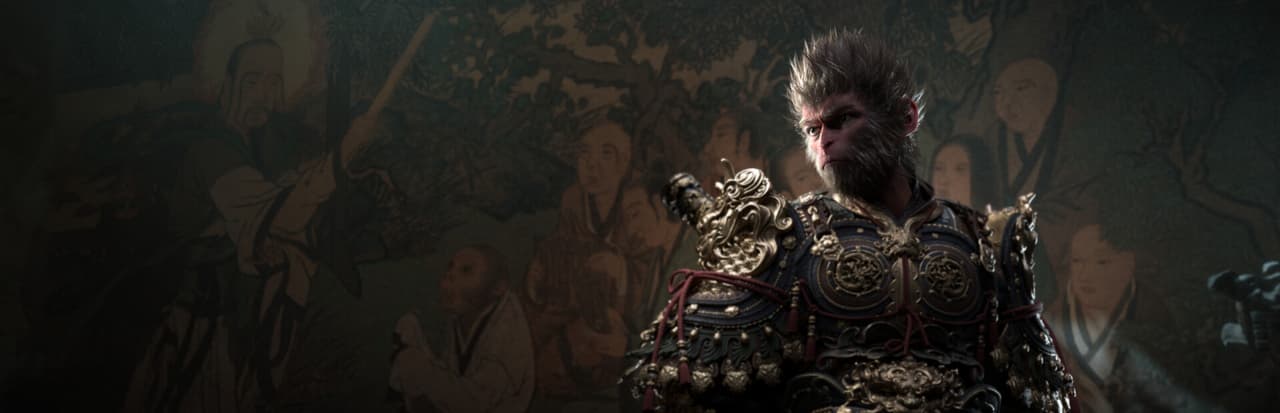
Black Myth: Wukong is an action RPG rooted in Chinese mythology. You shall set out as the Destined One to venture into the challenges and marvels ahead, to uncover the obscured truth beneath the veil of a glorious legend from the past.
Read moreShow less
Black Myth: Wukong is an action RPG rooted in Chinese mythology. The story is based on Journey to the West, one of the Four Great Classical Novels of Chinese literature. You shall set out as the Destined One to venture into the challenges and marvels ahead, to uncover the obscured truth beneath the veil of a glorious legend from the past.
Explore a Land of Vast Wonders
"A world unseen, where wonders gleam,
And with each stride, a new scene streams."
Enter a fascinating realm filled with the wonders and discoveries of ancient Chinese mythology!
As the Destined One, you shall traverse an array of breathtaking and distinctive landscapes from the classic tale, composing an epic of adventure that is seen anew.
Confront Mighty Foes, Old and New
"Heroic Monkey, might and fame,
Adversaries rise, to test his name."
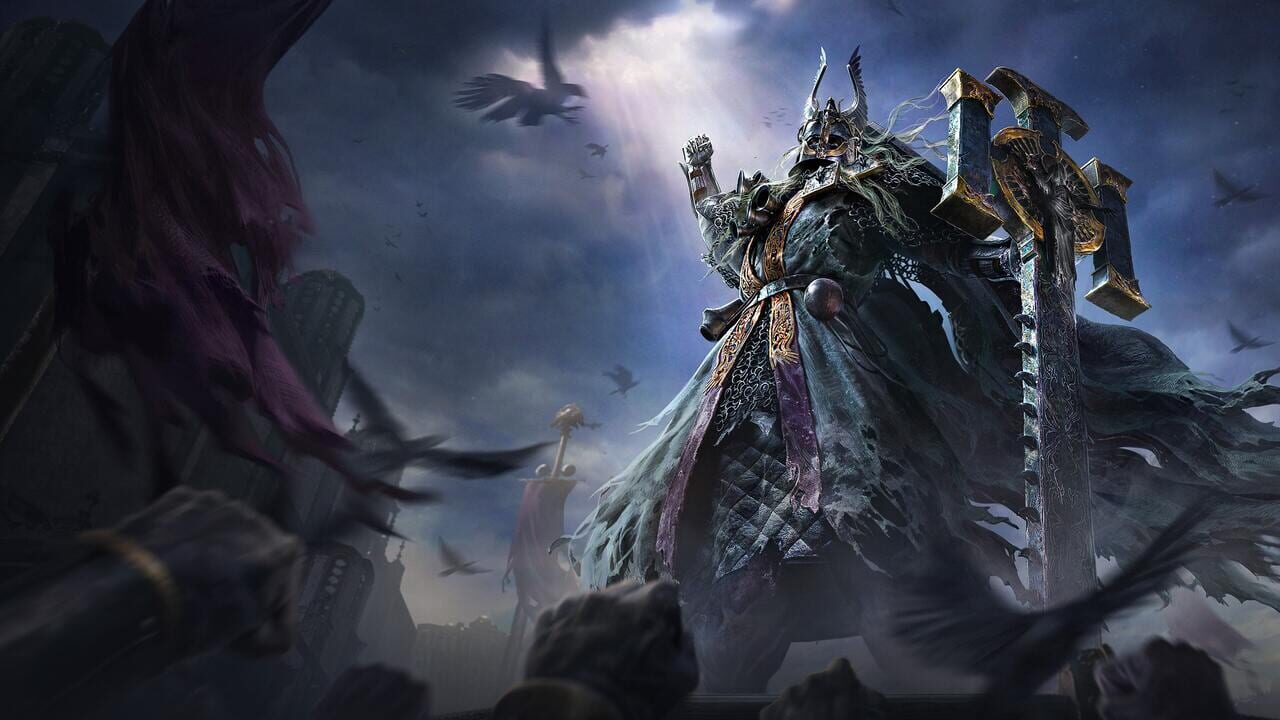
One of the major highlights of Journey to the West is its diverse cast of adversaries, each with their unique strengths.
As the Destined One, you will encounter powerful foes and worthy rivals throughout your journey. Fearlessly engage them in epic battles where surrender is not an option.
Temper Your Mastery of Varied Spells
"Spells unbound, talents in play,
Unleashed abilities seize the day."
Spells, transformations, and magic vessels of all manifestations, in which some counteract while others amplify, have long been iconic combat elements of Chinese mythology.
As the Destined One, aside from mastering various staff techniques, you can also freely combine different spells, abilities, weapons, and equipment to find a winning strategy that best suits your combat style.
Discover Heartfelt Tales Behind Every Facade
"Within all souls, both wild and tame,
There thrives a tale of life's fierce flame."
Beneath the ferocity and craftiness of your foes lies an engaging tapestry of their origins, personalities, and motivations waiting to be revealed.
As the Destined One, you will uncover the stories behind a variety of characters, delving beyond your battles with them to taste the love, hate, greed, and fury they once held and still carry within.
From the game's Steam store page.
THE GAMEQ VERDICT9,997 reviews analyzed
What players are actually saying
1. Summary
Most reviewers recommend Black Myth: Wukong, and they tend to give the same reasons. The boss roster comes up more than anything else: reviewers count anywhere from 80 to over 100 fights, say they feel different from one another, and single out the secret final fights as some of the best they have played. Next come the visuals and art direction, the Journey to the West setting, the animated shorts that close each chapter, and combat built on perfect dodges, stances, spells and transformations, with free respecs at any shrine. Some players call it an easier way into soulslike games, since death costs nothing and a stuck player can level up or swap builds.
PC performance is the most common specific complaint: UE5 stutter, frame drops, crashes, a soft image, and frame generation that adds input lag. Invisible walls that block paths that look walkable come next. Players are split on difficulty (too hard with no difficulty setting, or too easy for souls veterans), on whether the combat stays deep or turns repetitive, and on the story, which reads as rich to those who know the novel and confusing to those who don't. Pacing complaints gather around two stretches, the Pagoda Realm in chapter 3 and an open chapter 6 that some call rushed. Much of this criticism appears in reviews that still recommend the game.
2. What keeps coming up
What players praise
Boss fights in huge number and varietyHigh
Reviewers write about bosses more than any other subject, in praise and in criticism. Fans like the sheer count and how rarely fights repeat; one wrote, "With over 100 unique boss fights and very little downtime between them, the game maintains a strong, addictive pace that rarely lets up." The Erlang fight and the secret ending battle that follows get the strongest reactions, along with Yin Tiger, the Four Heavenly Kings and Tiger Vanguard. Several reviewers say losing feels fair: "when I lose a boss fight, it feels like I made a mistake, not like the game cheated me." The doubters talk about quality. Some players found many bosses forgettable or easy, and a smaller group thinks the game became a boss rush that hides thin levels. Others name specific bosses they consider badly designed (see the frustrations panel).
Visuals, art direction and atmosphereHigh
The look of the game comes up almost as often as the bosses. Reviewers describe the forests, snowfields, deserts and temples as painterly, mention the meditation spots that exist only to take in the view, and call it one of the best uses of Unreal Engine 5 they have seen. Hardware caveats often come with the praise: several reviews say the game only looks its best on a high-end PC, and a few note harsh lighting changes between indoors and outdoors, low-resolution rock textures or an oversharpened image at default settings.
Chinese mythology and the Journey to the West settingHigh
Players enjoy seeing Sun Wukong's world brought to life, and some say the game sent them off to read the novel or watch explainers. Reviewers who grew up with the story or the TV show describe it as a childhood dream come true. The illustrated journal entries for each defeated foe also get praise, with several reviewers saying that is where the real lore lives. Whether the story itself lands is a separate and divided question (see the split panel).
Fluid combat, spells, transformations and free respecsHigh
Fans describe the combat as smooth, weighty and rhythmic: light attacks build focus for heavy strikes, perfect dodges feel great, and spells like Immobilize, Pluck of Many and the transformations let players shape each fight. Free respecs come up regularly; one reviewer explains that "at any time you can go to a shrine, reset all your skill points, and reinvest for no cost." Others appreciate short runbacks to bosses. The same system is what the combat-depth debate below is about.
Chapter-end animations, music and the Chinese voice castMedium
The animated shorts that close each chapter, in 2D, ink and stop-motion styles, are a favourite detail; one reviewer said "Some of these are so great that they could stand as their own short films." The soundtrack gets steady praise, especially the chapter 2 singer and the chapter-end themes. Several players recommend the Chinese voice track. The English dub divides people: some find it fine or charmingly campy, while one long review called the English voice acting "some of the worst I've ever heard".
A welcoming soulslike for newcomersMedium
A recurring group of reviewers says this was their first soulslike, or the first one they finished. They credit the lack of currency loss on death, the ability to level up between attempts, the respecs and the many tools for tough fights. An older player put it this way: "It can be challenging but not impossible to beat if, like me, you're almost 60 yrs old." Some veterans agree it is gentler than FromSoftware's games, which feeds the difficulty split.
A complete package with replay valueLow
A few reviewers point out that everything is in the base game with no microtransactions. Finishers praise the true ending, New Game+ and the boss-rush mode that reviewers say arrived in a later update, all of which give them reasons to return. Some positive reviews close by asking for DLC or the studio's next game.
Where players are split
Difficulty: too hard, too easy, or unevenHigh
One camp, often players new to the genre or those who quit early, finds the game punishing and asks for a difficulty setting: "The game is pretty hard and you cant change the difficulty." Another, largely players who compare it with FromSoftware's games, finds it too easy because the spells and transformations trivialise many bosses: "Most of the boss fights are pretty easy because you have a somewhat overpowered kit." A third view is that difficulty spikes unevenly, with a few named walls (Wandering Wight, Yellow Wind Sage, Tiger Vanguard, Yellow Loong, Erlang) far harder than the fights around them.
How deep the combat really isMedium
Fans call the system deep once stances, spells and timing click. Critics, including some who recommend the game, say it boils down to one light-attack combo plus dodges, that stances matter little, and that the lack of a parry or block leaves dodging as the only defence. A negative review from a player nearly through chapter 3 put it this way: "Even though you level up, combat never change and I have never felt the need for the different stances". The same complaint often comes with the word repetitive, from reviewers who recommend the game as well as those who don't.
The story: rich for some, opaque for othersMedium
Players who know Journey to the West praise the story as a clever sequel full of references, and some single out the true ending. Those new to the source often say they did not understand what was happening, that the silent protagonist kept them at a distance, or that the lore sits too much in journal text. A few recommending reviewers say they watched videos to follow it, and one advises: "if you are completely unfamiliar with Journey to The West like I was, you'll probably wanna watch some explanation videos after completing each chapter lol."
The later chapters and pacingMedium
Chapters 1 and 2 draw fewer complaints. Opinion turns at chapter 3, where the long snow chapter and especially the Pagoda Realm prison stretch draw complaints; one reviewer said "Chapter 3 was way too long and the pacing was a bit off". Chapter 4's maze-like web area and difficulty spike split players. Chapter 6 is an open area crossed by cloud, and reviewers who criticise it call it sparse, confusing, rushed or unfinished. One wrote, "Chapter 6 is clearly unfinished mess." Others like riding the cloud through it or defend it for its finale, and some players who reach the end say the final boss makes up for the area before it.
Exploration and level designMedium
Hidden areas, secret bosses and side paths win over some players, who say exploration pays off in spells, transformations and the true ending. Others find the levels linear corridors with side paths that lead to minor rewards, or large areas without landmarks where they got lost. The two views sometimes meet in one review: "Amount of secret bosses and hidden regions was incredible, almost reached the number of invisible walls in the game."
What frustrates players
PC performance, stutter and crashesHigh
PC performance comes up in 16% of negative reviews, and some positive reviews mention it as a caveat. Reviewers describe UE5 traversal stutter and shader compilation, frame drops in effects-heavy fights and in chapter 6, long load times, crashes during cutscenes, black screens, and a soft or oversharpened image that needs tweaking. Frame generation is both a fix and a problem, since several players say it adds input lag in a game built on dodge timing. Some reviewers on strong hardware call the game well optimised, and others report it runs fine after tuning settings or installing mods, so experiences vary widely by setup. One short negative review: "The game is basically unplayable as it stutters and freezes constantly."
Invisible walls everywhereMedium
Among complaints about the world itself, invisible walls come up most, from reviewers who recommend the game and from those who don't. Players describe slopes and paths that look walkable but are blocked, inconsistent rules about which ledges can be crossed, and a Monkey King who cannot climb or jump over small obstacles. One negative review says, "THE INVISIBLE WALLS. They are probably the most obnoxious thing about this game for me." Another said they make exploration feel discouraging, and a few mention boss arenas walled off the same way. One player writing after the map that reviewers say was added later notes that it makes the edges of an area easier to see.
Boss gimmicks, hitboxes and the cameraMedium
Reviewers who praise the bosses overall still name specific design problems: damage dealt during mid-fight cutscenes, scripted grabs, enemies that turn invisible, bosses that resist Immobilize, and fights that need a hidden item to counter a gimmick (the Hundred-Eyed Daoist Master is one example reviewers give). Hitboxes on large bosses and the camera with big or flying enemies draw repeated complaints. A negative review opens with the worry: "There are difficult games and there are poorly designed games."
Inputs that do not registerMedium
A smaller group of players reports that heals, spells or dodges sometimes fail to come out, which they put down to animation commitment or input buffering. One negative review lists "Spells go on cooldown and use up mana but don't actually get used (Very Common)". A reviewer who only narrowly recommends the game wrote, "Inputs sometimes just don't do anything - you press a button and the game shrugs." Several players tie input lag to frame generation. The complaint comes from players a couple of hours in as well as from those far into the game.
Missable content, NG+ gating and achievement grindLow
Completionists complain that quests and bosses can be missed with no quest log or warning, that some gear and the full Wukong stance sit behind New Game+, and that some achievement items need RNG drops or seeds that, by reviewers' accounts, respawn only after 30 real-time minutes. One negative review warns that "you WILL have a game changing weapon in game that makes combat more layered, but only after new game+ which is 40 hours away."
Navigation and the missing map at launchLow
Early players say the lack of a map and objective markers left them running in circles, especially in chapters 4 and 6. Reviewers report that a later patch added a map, and those who played with it say it fixes most of this, though a few still ask for markers or a compass.
Price and buying on saleLow
A minority feels the full price is steep for what they got and advises waiting for a discount, and a few reviewers say the game rarely goes on sale. Many of the positive reviews that bring up price call the game worth it.
Denuvo, install size and missing optionsLow
A few reviews object to Denuvo, to an install that reviewers put at roughly 130 GB, and to stutter when the game sits on a hard drive. Others ask for native HDR, an FOV slider, better ultrawide and 16:10 support, working motion blur and depth of field toggles, and pausing or skipping cutscenes.
3. The player conversation
The tone is mostly warm and often excited, with a long tail of meme reviews celebrating playing as a monkey with a stick. Long reviews tend to praise the game and then list caveats, and negative reviews are often specific: performance on their hardware, a boss they consider unfair, or combat that did not click.
Who raises what follows how far people got. Negative reviewers who stop in the first few hours tend to mention performance, input problems, Denuvo, or an early difficulty wall, and some simply discover they don't like soulslike games. Players who finish talk about the chapter 3 and chapter 6 pacing, Erlang and the secret ending, missable content, NG+ gating and the achievement grind. Story confusion comes from players who did not know Journey to the West before starting, regardless of how far they played.
The reviews shift with the game's updates. Launch-period reviewers raise performance and the missing map, while later reviewers often name the added map, the boss-rush mode and NG+ as improvements. Performance complaints continue into the second year, and a few players say later patches made things worse on their setup. The positive share stayed in a similar range throughout, with launch week at 87% and most later weeks between the high 80s and mid 90s.
4. What the developers could do
- Fix PC stutter, crashes and frame-generation latency. Reviewers on mid-range and high-end hardware describe stutter, crashes and input lag from frame generation, more often than any other specific problem.
- Make world boundaries consistent and readable. Invisible walls frustrate players who like the game and players who don't, and they ask for paths that look blocked when they are blocked.
- Make heal, spell and dodge inputs reliable. Players report heals and spells that fail to register or go on cooldown without firing, which turns hard fights into what they see as luck.
- Add difficulty and assist options. Players who bounce off the game ask directly for a way to lower the difficulty, and some veterans would welcome harder modifiers in the main campaign.
- Clean up boss hitboxes, cutscene damage and the camera on large bosses. Even happy reviewers name specific fights where hitboxes, mid-fight cutscenes or the camera felt unfair.
- Tighten chapter 6 and the Pagoda Realm stretch. Pacing complaints centre on these stretches, with chapter 6 described as rushed and the Pagoda Realm as a slog.
- Add a quest log and missable warnings, and ease NG+ and RNG gating. Completionists say quests and bosses are easy to miss and that important gear and achievements sit behind extra playthroughs and 30-minute respawn timers.
- Give newcomers an in-game way into the story. Players new to Journey to the West often say they needed outside videos to understand each chapter, so a recap or primer would help them follow it.