Ghostrunner
Slipgate Ironworks · Action
Overview
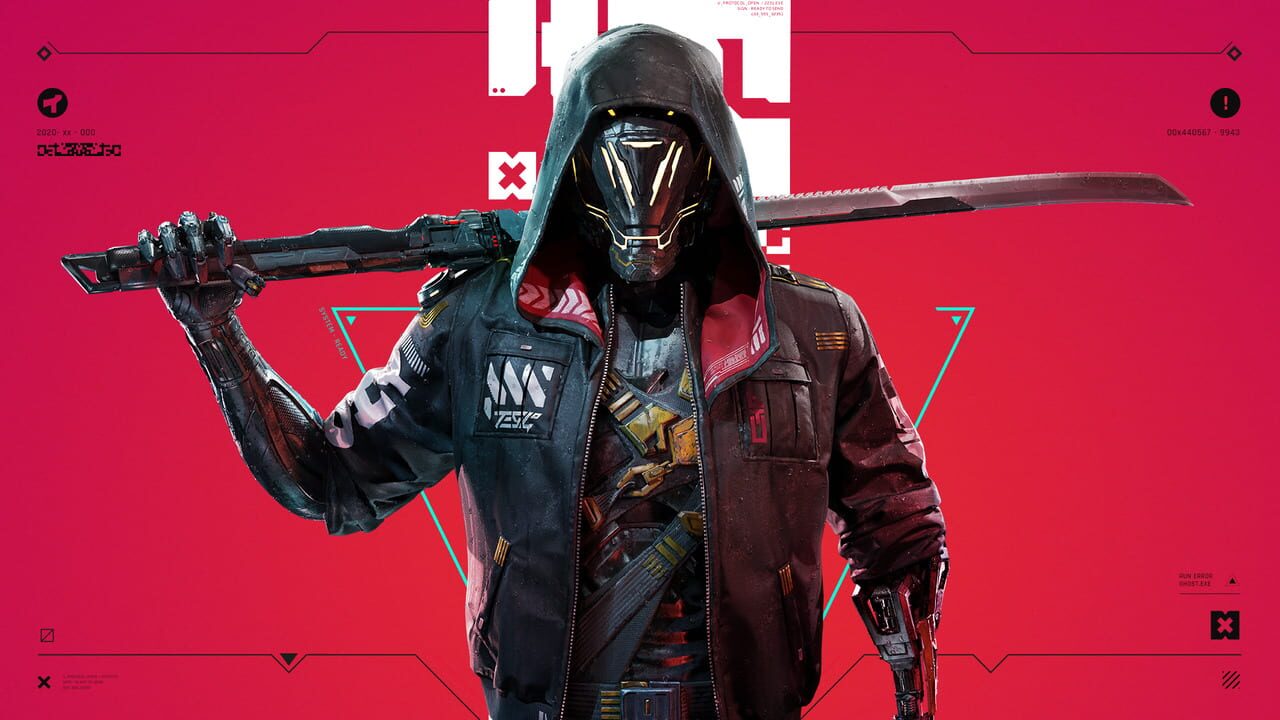
Ghostrunner offers a unique single-player experience: fast-paced, violent combat, and an original setting that blends science fiction with post-apocalyptic themes. It tells the story of a world that has already ended and its inhabitants who fight to survive.
Read moreShow less
Ghostrunner is a hardcore FPP slasher packed with lightning-fast action, set in a grim, cyberpunk megastructure. Climb Dharma Tower, humanity’s last shelter, after a world-ending cataclysm. Make your way up from the bottom to the top, confront the tyrannical Keymaster, and take your revenge.
The streets of this tower city are full of violence. Mara the Keymaster rules with an iron fist and little regard for human life.
As resources diminish, the strong prey on the weak and chaos threatens to consume what little order remains. The decisive last stand is coming. A final attempt to set things right before mankind goes over the edge of extinction.
As the most advanced blade fighter ever created, you’re always outnumbered but never outclassed. Slice your enemies with a monomolecular katana, dodge bullets with your superhuman reflexes, and employ a variety of specialized techniques to
Prevail.
One-hit one-kill mechanics make combat fast and intense. Use your superior mobility (and frequent checkpoints!) to engage in a never-ending dance with death fearlessly.
From the game's Steam store page.
THE GAMEQ VERDICT9,999 reviews analyzed
What players are actually saying
1. Summary
Players describe Ghostrunner as a short, hard, first-person sword game that is a joy to move through. Positive reviews come back most often to the parkour (wall-running, sliding, grappling, slowing time in mid-air) and the one-hit-kill combat, and feeling like a cyber ninja is a recurring description. Daniel Deluxe's synthwave soundtrack and the neon cyberpunk look come up next. Reviewers who mention the instant respawns and frequent checkpoints say they make the punishing difficulty bearable, and 87.5% of the reviews recommend the game.
The movement players praise also draws the most detailed criticism: automatic wall-running and mantling that grab the wrong surface, missed rails and a player hitbox that feels too big. Critics single out the Cybervoid puzzle sections, the bosses and the final platforming level as weak spots, and a smaller group is frustrated that the game doesn't save partway through a level. The story divides players, and its critics call it generic and predictable. Some say the campaign is short enough that they would only buy it on sale. Reviewers split on whether the difficulty is fair and on how much the rough edges should count against the movement and combat.
2. What keeps coming up
What players praise
Fluid parkour and movementHigh
18% of the reviews talk about the movement. Players compare it to Mirror's Edge and Titanfall 2, and a few say it beats both. They describe chaining wall-runs, slides, grapples and air dashes into a flow state where the level seems to open up in front of them. Players with long playtimes talk about a high skill ceiling: slide-dash jumps, bunny hops and other speedrun tricks that the game never teaches but leaves in. Some of the same reviews add that the movement sometimes misfires, which is covered under the frustrations below.
One-hit sword combat that makes you feel like a cyber ninjaHigh
13% of the reviews mention the combat or the sword. Everyone dies in one hit, the player included, and fans say that rule is what makes the fights tense and the clears satisfying. They describe deflecting bullets, sidestepping shots in slow motion and slicing through a room without stopping, and a recurring line is that it makes them feel like a badass ninja, with Genji from Overwatch as frequent shorthand. Reviewers often compare it to Hotline Miami and Katana Zero in first person, with each arena working like a small puzzle that you solve through repeated attempts.
Neon cyberpunk visuals and atmosphereHigh
The neon-soaked Dharma Tower, the detail in the environments and the gore when enemies split apart all get praise in the 12% of reviews that bring up the look of the game. Several call it the cyberpunk game they wanted, and a few call the city the highlight. A smaller group says the levels blur together after a while, that enemies can blend into busy backgrounds, and that ray tracing costs a lot of performance for a small visual gain.
Daniel Deluxe's synthwave soundtrackHigh
8% of the reviews bring up the music, mostly to praise it. Players say it drives the pace of the fights, and some say they listen to it outside the game. One reviewer wrote: "The OST is top tier, easily 10/10". A small number found the tracks repetitive over a long session.
Instant respawns and frequent checkpointsMedium
One key press, no loading screen, and the music keeps playing: fans single out how quickly the game puts you back after a death. "we need to normalize instant respawning in games." is how one player put it, and another wrote "Every game should have the respawn mechanic of Ghostrunner". Players also like that dialogue picks up where it left off instead of replaying after each death. Some platforming stretches place checkpoints far apart, though, so a late mistake costs a long run back.
Replay value through speedrunning and extra modesMedium
Hardcore mode, which remixes level layouts and enemy placement, gets strong praise from players who finish the campaign. In all, 6% of the reviews talk about replaying, which also covers the Kill Run time trials, Wave mode and the per-level times and death counts compared against friends. Players with dozens of hours tend to talk about this side of the game, and what they ask for is more of it: global leaderboards instead of friends only, more Wave mode maps, and an achievement for beating Hardcore.
Project_Hel DLCLow
3% of the reviews mention the DLC, usually favourably. Players enjoy Hel's stronger jump and more aggressive, combat-focused kit, and one went as far as "Welcome to one of the few games where the DLC is better than the base." The complaints are about its length for the price and about needing it for 100% of the achievements.
Tetris-style upgrade gridLow
2% of the reviews mention the upgrade system, where each perk is a block you fit onto a grid. Some call it a fresh idea, others find rearranging the pieces tedious, and several say the active abilities recharge so slowly that they barely used them.
Where players are split
Difficulty and one-hit deathsHigh
22% of the reviews talk about difficulty, more than any other topic, and they pull in two directions. Fans call it hard but fair, say every death was their own mistake, and count their deaths with pride; "Hard but fair, very fluid gameplay and absolute banger soundtrack" is how one put it. Among the negative reviews, 24% describe frustration or rage. Some of those players quit early, saying the game demands reflexes and precision they don't have or don't enjoy, and a few older players and parents mention slower reactions. Reviewers mention an assist mode (an extra hit, a slower game); one critic says it is easy to overlook in the settings, and another says it did not work for them.
Story, writing and voice actingHigh
15% of the reviews mention the story, and slightly more of them praise it than criticize it. The critics say the twist is visible from early on, that "the story is the most generic thing out there", and that the dialogue plays over the action, so it is hard to follow while you are dodging bullets. Some like that approach precisely because it avoids cutscenes, and a smaller group enjoys the world-building, the audio logs and the ending. Opinions on the voice acting vary too: some praise it, others call the protagonist flat and dislike how much the supporting characters talk.
Combat that plays like a puzzleMedium
Players who love the game often describe each room as a puzzle to solve. Players who dislike it say the same thing as a complaint: they wanted a power fantasy and got trial and error, with one intended route per arena and enemies whose movement can feel random. "It's a puzzle game cavorting around as a movement shooter." sums up that view. A few compare it to a rhythm game in which timing is everything.
Short campaign and priceMedium
6% of the reviews call the game short and 5% bring up price or sales. Players put the campaign at roughly 5 to 10 hours on a first run. One called it "too damn short to be worth full price", and some recommend waiting for a discount. Others say it does not overstay its welcome and that Hardcore and the extra modes stretch it well beyond the campaign.
Performance and optimizationLow
3% of the reviews mention performance, and they disagree. Some say it runs smoothly even on modest PCs, and one Steam Deck owner said it "runs shockingly well on deck". Others report stutter or crashes with DirectX 12 and ray tracing, lag in the Cybervoid, V-Sync that does nothing, and odd mouse behaviour with 1000 Hz polling.
Controller versus mouse and keyboardLow
A few players say a controller made the game easier, but more say it is clearly built for mouse and keyboard, with awkward default controller bindings and twitchy camera control.
Comparisons with Ghostrunner 2Low
From late 2023 on, a small group of reviewers compare it with Ghostrunner 2. More of them say the first game is better, often because they found the sequel easier or its larger levels slower, while a few who played the sequel first found this one rougher.
What frustrates players
Janky wall-running, mantling and hitboxesHigh
14% of the negative reviews call the movement janky, clunky or inconsistent, and some positive reviews list it as their one gripe. The reports are specific: automatic wall-running that sticks players to walls they did not aim for, automatic mantling that vaults them over a wall and into a pit, rails and ziplines missed by a hair, getting caught on small bits of geometry, and clipping through walls. "Sometimes your character just WILL NOT attach to a wall for wall running" is a typical report. A related group says the player hitbox feels too big, so bullets that looked like misses still kill, and that the dash is too short and slow motion only works in the air.
Cybervoid puzzle sectionsHigh
Reviewers who mention the Cybervoid, the virtual-world puzzle and platforming stretches that take away the dash and wall-run, mostly complain about it. They say these sections kill the game's momentum, that the puzzles are too simple to be interesting, and that they cannot be skipped when replaying a level. "Incredibly fun game until they stick you into the cybervoid where it becomes an incredibly boring game." and "Delete the Cybervoid please" capture the mood. A minority welcome them as a breather between fights.
Boss fightsMedium
7% of the reviews mention the bosses. A recurring grievance is losing your kit: one reviewer wrote that "inexplicably, you lose all of your abilities during boss fights", and critics say this turns the fights into pattern memorization and waiting. The first boss, a laser-covered tower climb, is a difficulty spike that split players. The Hel duel draws complaints about parry timing that is hard to read from her animations, and some call the final boss too easy and anticlimactic. "Boss fights are boring as hell, everything else is extremely fun." sums up the critics' view.
Bugs, crashes and soft-locksMedium
4% of all reviews and 11% of the negative ones report bugs. One reviewer describes a soft-lock in which "you respawn completely stuck in place and unable to perform any actions" after attacking an enemy at the same moment you die, which can force a restart of the whole level. Others report crashes when loading levels or with DirectX 12, lost save progress, a Cybervoid ability that stopped recharging, and controls that reset mid-game.
The final levelMedium
A smaller group singles out the last level, a long Cybervoid platforming gauntlet with moving walls, jump pads and projectiles and no combat. Those reviewers say it ends a combat game on its weakest note. "The last hour of the game is the most garbage experience ever made" is the harshest version.
Late-game enemy designMedium
Several enemy types introduced in the second half draw complaints. Exploding crawlers can only be run from or killed with an ability ("explody crawl dudes completely ruin the game"), parry-only sword enemies force you to stand and wait ("Melee enemies added later on slow down the combat since you have to wait for them to attack before you can deal with them"), and shield chains, wave-firing mechs and snipers add more stops. Players also complain that basic gunners turn instantly and track perfectly, with one calling every enemy "the worlds greatest marksmen".
No saving mid-levelMedium
A small group of reviewers raise this. They say checkpoints only last for the current session, so quitting before the end of a level means starting it over, and they put first runs of later levels at 30 to 60 minutes. Some of them mention jobs, children or limited free time. "Lack of a save system means this is not a good game if you have a life, kids, pets, responsibilities." wrote one, and another said "The game doesn't save unless you complete a level, so if you make progress, then burn out because it's too difficult." Crashes make it worse, since a crash also wipes the level's progress. A couple of reviewers note that a few checkpoints (one mentions elevators) do carry over between sessions.
Motion sickness and eye strainLow
A small group report motion sickness, headaches or eye strain, especially in the flashing Cybervoid sections, and a few warn photosensitive players. One said "this is the only game I have played that has given me motion sickness".
Control and menu quirksLow
A handful of smaller complaints recur: dash and slow motion share one key ("Whoever decided to map Dash and Slow-mo to the same button needs to be fired"), cutscenes at the start of levels cannot be skipped, which hurts replays and achievement runs, choosing "New Game" after finishing wipes progress instead of starting Hardcore, and there is no loading indicator between levels, so the game looks frozen.
3. The player conversation
The conversation is enthusiastic and often playful. A large share of reviews are one-liners ("Genji simulator", "Sword go brrr", death counts worn as badges), and longer positive reviews often list the same caveats as the critics: the Cybervoid, the bosses, the story and the occasional movement misfire. Negative reviews are fewer but longer, and some come from players who wanted to love the game and gave up on its rough edges. "The good levels are really good, and the bad levels are really bad" captures how divided some individual reviewers feel.
What players raise depends on how far they got. Players who stopped within the first hour or two mostly talk about difficulty, one-hit deaths and controls that felt clunky, or simply say the game is not for them. Players who finished the campaign bring up the Cybervoid, the bosses, the final level, the late enemies and the save system. Players with dozens of hours talk about movement tech, Hardcore mode, Kill Run times and leaderboards.
Reviews became somewhat less positive over the years: 89% of those written in 2022 were positive, compared with about 82% of those written in 2025 and 2026. Reviews written from November 2023 on, the period in which reviewers compare it with Ghostrunner 2, were 84% positive, against 89% before, and their negative reviews mention the movement jank about as often as earlier ones while bringing up difficulty less often.
4. What the developers could do
- Keep checkpoint progress across sessions. Reviewers with limited time are blunt about losing a level's progress when they quit, and crashes and soft-locks make it worse.
- Tighten wall-run, mantle and rail detection, and add a wall-magnetism setting. Negative reviewers blame unintended wall-runs, vaults into pits and missed rails for deaths that felt unfair.
- Make the Cybervoid shorter or skippable on replays, and let players keep their movement there. Reviewers who mention these sections say they kill the pace, and they resent replaying them in levels they want to speedrun.
- Fix the kill-and-die soft-lock and the level-load and DirectX 12 crashes. These bugs force full level restarts.
- Rework the bosses and the final level around the core combat. Players want their abilities in boss fights, readable parry timing in the Hel duel, and a finale built on combat instead of a long no-combat platforming gauntlet.
- Retune the late-game enemies. Exploding crawlers, parry-only sword enemies and instantly turning gunners are the enemy types players single out for slowing the game down or killing them in ways that feel cheap.
- Make the assist options and control choices easier to find. Some negative reviews ask for a difficulty option, which suggests the assist mode is easy to miss, and others ask to split dash and slow motion onto separate keys, skip level-start cutscenes and stop "New Game" from wiping their progress.