Hero Siege
Panic Art Studios · ARPG, RPG, Action, Indie
Overview
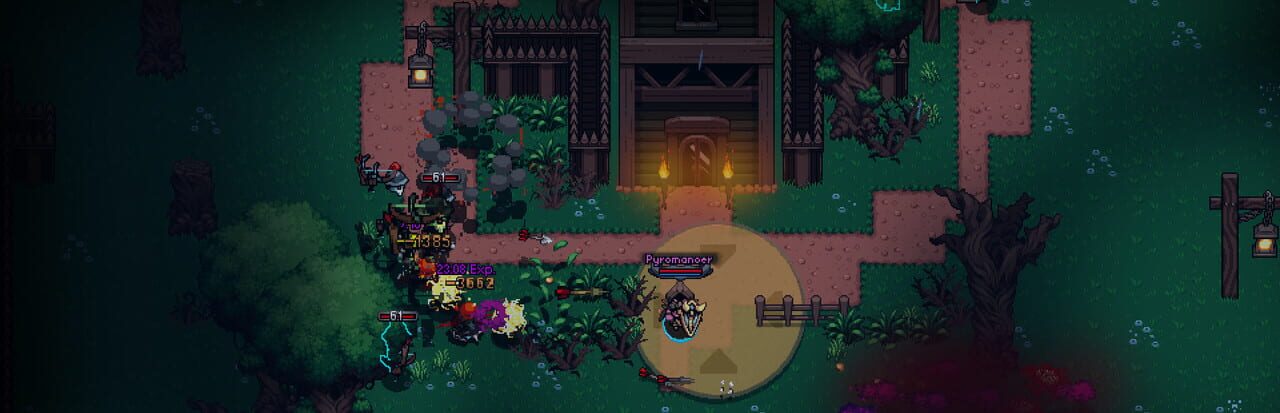
Hero Siege is a fast paced Pixel Art ARPG featuring an expansive roster of unique classes, deep build experimentation, and a player driven economy.
Read moreShow less
Step into Tarethiel, a world under siege by the Forces of Hell.
Face Demon Lords, ancient monstrosities and fallen angels as you hack and slash your path through endless hordes of the undead. Hero Siege is a fast paced Pixel Art ARPG featuring an expansive roster of unique classes, deep build experimentation, and a player driven economy.
Craft your hero through two main skill trees and individual sub-skill trees that reshape how every active ability works. Combined with a massive item pool and powerful crafting options, the game offers limitless build possibilities; from blood hungry melee bruisers and bow wielding archers to gun slinging demon slayers, sentry engineers, summoners, spell casting mages and everything in between.
Hero Siege evolves in seasonal cycles every four months, delivering fresh content, new systems, items, events, and quality of life improvements. As a small, experienced team, we work closely with our community to improve the game based directly on valuable player feedback.
Key Features
23 Playable Character classes Every class offers its own unique play style and skill set. Sub-skills and item based modifiers allow you to push your build in unique and creative directions.
1000+ Unique Items Loot ranges from randomized magic items all the way to handcrafted Satanic, Set, Heroic, Angelic and Unholy items. Runewords can be created using white bases with sockets. Items can be buffed, crafted and modified in various ways through the crafting system.
Tarethiel Market Travel to Village of Mos'Arathim to List your items for sale or buy gear from other players in real time. Trading is a core part of character progression and build crafting.
Adventure Journal A fully integrated in game encyclopedia containing mechanics, unique items, runewords, prospecting recipes, crafting recipes and augments.
Endless Replayablity Designed for seasonal play. Each season adds new content such as: items, bosses, gimmicks and surprises from our development team.
Wormholes Push your character as high as possible and earn seasonal cosmetic rewards such as skins, wings, portraits and more.
BIG NO-NO for Pay to Win We never sell game play advantages. Fair competition is a core value for us.
From the game's Steam store page.
THE GAMEQ VERDICT9,998 reviews analyzed
What players are actually saying
1. Summary
Hero Siege is a pixel-art ARPG that has been rebuilt several times since 2014, most dramatically by the 2.0 relaunch in October 2023, which turned it from a wave-based roguelite into a seasonal Diablo 2 style loot game with Path of Exile style passive trees. Its fans like it for that version: runewords, charms, mercenaries and satanic and angelic gear chased across seasons, a long roster of quirky classes, free respecs, screen-clearing builds and the "numbers go up" feeling, for a base price that often drops to a dollar or two on sale. Some play it in the gaps between Path of Exile and Diablo leagues, and some returning players say it has improved a lot; one calls it "one of the biggest glow up stories I've ever seen from a video game."
The complaints that pull the score down have recurred for a decade. Monetization comes up most often: paid classes, inventory and stash tabs sold for real money in a paid game, a subscription, loot boxes, and purchase buttons scattered through the menus, and it is the topic reviewers in their first two hours raise most. Long-time players add reliability: every season launch brings login queues, disconnects and rollbacks, and item-eating bugs, character wipes and automated bans hit them hardest. The genre change still divides owners, and many who bought the old roguelite feel the game they paid for was replaced. New ARPG fans and seasonal regulars tend to recommend it, legacy owners tend not to, and some positive reviews come with advice to buy on sale and ignore the shop.
2. What keeps coming up
What players praise
A pixel Diablo 2 with Path of Exile ideasHigh
Diablo and Path of Exile are the games reviewers compare it to most, and a few merge the two: "if poe and d2 had a baby, its this." Players who enjoy it point to classic D2 systems (runewords, charms, rune and gem sockets, mercenaries, set and satanic items, Uber bosses) combined with modern extras: an in-game loot filter, a built-in item codex with drop locations, an auction house, WASD movement, a jump, and, from Season 9, a large incarnation tree and an ether atlas tree for endgame tuning. ARPG veterans with thousands of hours in Path of Exile, Diablo and Last Epoch say it earns a spot in their seasonal rotation, and some call it "better than Diablo 4" or "better than PoE2". Others find it borrows so directly (item names, zone names, even fonts) that it reads as a knockoff rather than a tribute.
Enormous value for the priceHigh
Reviewers who mention what they paid report between $0.70 and $8, for dozens or hundreds of hours of play. The base game includes a solid set of free classes and, after later changes, the former paid acts, so many say there is no need to buy anything to see the whole campaign and endgame. The usual advice is to buy the base game on sale, play the free classes, and pick up extra classes only during the frequent deep discounts, when the complete bundle becomes cheap. Critics see the low entry price as a hook for the store (see the monetization theme below).
An addictive blast-and-loot loopHigh
Clearing packs, watching damage numbers balloon and waiting for the rare drop sound is praised as satisfying and relaxing, a "turn your brain off" grinder for short sessions or for playing over a podcast. A few describe "one more run" turning into whole evenings, and seasonal regulars say each new season pulls them back. Detractors call the same loop shallow and repetitive, especially once the campaign is done.
Lots of distinct classes and easy experimentationMedium
Players enjoy the roster (Redneck with a chainsaw, Plague Doctor, Pirate, Jotunn, Samurai, Necromancer and many more), per-skill modifier trees, and near-free respecs that make trying builds painless. Several reviewers say every class can reach endgame with the right build and that free classes are often among the strongest. A smaller group finds the classes play alike once built; one review says "most gameplay of classes is just teleport + 1 button spam."
A game that keeps getting betterMedium
Long-time players describe years of steady updates, and some reviews are edits that flipped from negative to positive after Season 2, Season 3, Season 5, Season 9 or Season 10. Cited improvements include moving while attacking restored after 2.0, previously paid classes and acts made free, better server capacity and migration options after the Season 9 launch, SSF (Odyssey) drop boosts, and quality-of-life additions like the loot pet. Players who have watched the game change credit a small team for persistence, even when they criticize specific decisions.
Charming pixel art and humorMedium
The art style, bright spell effects and meme-filled item descriptions and relics (a fake blue screen relic, Stickman Steve, pop-culture references) come up often as part of the charm. A minority find the visuals busy, cheap-looking or hard to read at high resolutions.
Solo-friendly play and cross-platform optionsLow
Players value a boosted-drop solo self-found mode, offline local play, private Blood Pact leagues with friends, and being able to continue on mobile or console. The caveats are that offline and online characters are separate and that purchases do not carry over between PC and mobile.
Where players are split
The switch from roguelite to ARPGHigh
Owners of the original, many of them 2014 to 2017 buyers, say the fast wave-based roguelite with relic synergies and local co-op they paid for no longer exists, and that each major rework (the mana system, the Diablo-style overhaul, and above all 2.0 in October 2023) replaced it instead of improving it. Some say "it should have been a new game" or a separate sequel. At the 2.0 relaunch specifically, players objected to having to stand still to attack, a slower pace, melee-swinging staves and wands, a shrunken grid inventory, and wiped characters. Players who arrived later (or disliked the original) say the ARPG version is far more complete and that the old-version reviews should be ignored. The old build is available on a Steam beta branch, though one reviewer says it does not even launch because of anti-cheat.
Too easy early, a wall laterHigh
Some newcomers find the early game trivially easy (one-shotting everything on the first difficulty, being unkillable with regeneration) and get bored. Then the difficulty jumps: players call the step from Nightmare to Hell (and later Hell to Inferno) brutal, saying they had to grind for hours for little progress, needed satanic gear they could not find, or had to buy their way forward on the market. Veterans describe the endgame as a long grind for hero levels with extremely rare heroic and angelic drops, magic find stacking, and experience lost on death after level 100. Some love the long chase, and one reviewer who had complained about the Nightmare to Hell transition says a patch in the Season 10 period fixed most of it; others call the grind disrespectful of their time.
Trading and the auction houseMedium
Players like having an in-game auction house and a real player economy, and many say trading is the fastest way to gear. The complaints are about how it works: clunky filters that only allow one stat, a price check that reads per auction rather than per unit, listing fees charged up front, a small listing cap with more slots sold for money, items and currency lost in failed trades, and economies wrecked by dupes, gold exploits and real-money traders within days of a season start. Solo players complain that drop rates seem tuned for trading and groups.
Playing with friendsMedium
Co-op draws many players in (several call it "fun with friends", and they mention private leagues and power-leveling each other). It also frustrates: friends failing to see each other's games in the server list, quests and loot that desync in parties, disconnects, needing a separate account and email verification before playing online, and heavy effects that make group endgame unreadable. The removal of local split-screen co-op with 2.0 drew angry reviews, including from players who had bought the game to play on the couch with a partner or child. Later reviews disagree on whether it has come back in usable form, and a few describe controller setup for local co-op as awkward.
What frustrates players
Monetization in a paid gameHigh
Monetization is the most frequently raised complaint: 17% of reviews mention it, 25% of negative reviews do, and it is the topic reviewers in their first two hours raise most. Cosmetics bother players less than the structure: roughly half the class roster sold individually at close to the base game's price, inventory and stash tabs bought with real money (including in offline play), extra character and loadout slots, a monthly subscription (a cabin and conveniences, with stat-range display briefly locked behind it at 2.0), loot boxes that need paid keys, and a "complete" bundle that is not complete. Several call the store "in your face": purchase buttons sit on nearly every screen, and a misclick on a locked inventory tab opens the Steam checkout. Owners who bought the old expansions also complain that DLC they paid for was folded into the base game or converted to skins. Defenders say nothing is pay-to-win, that the model resembles Path of Exile's, that classes are gradually being made free, and that everything is cheap on sale.
Season launches: queues, disconnects and rollbacksHigh
Server trouble is raised most by long-time players, and season starts are where it piles up. Players describe each one the same way: multi-hour login queues, getting kicked back into the queue after a disconnect or for being idle, ping timeouts, rollbacks that erase minutes or hours of loot, and lag when trading, opening the stash or equipping gear. The Season 9 launch in April 2026 drew the most of it, with queues of 1,000 to 2,000 players that players say fell mainly on older accounts stuck on crowded regional login servers while new accounts got in freely; 43% of the negative reviews written in its first weeks mention servers. Several players who complained at launch updated to positive once server migration and extra capacity arrived days later, while others answer "every season same thing."
Bugs that eat items and progressHigh
The bugs players hold against the game are the ones that cost progress: items vanishing from the stash, shared tabs or trades; unclickable ground drops that disappear on relog; the unique stash dumping items; quests that break progression; crashes when opening the inventory or merchant; the merchant window that cannot be closed without Alt+F4; and steam cloud sync deleting characters. Reports that support declined to restore lost items even with video evidence make this worse. Players past 100 hours raise bugs far more often than newcomers do.
Wiped characters and seasonal stash lossesMedium
Returning players describe finding characters, items and even offline saves gone after reworks, most notably the 2.0 wipe. A few seasonal players also say items in shared and premium tabs were deleted when a season ended instead of moving to non-seasonal play, with no clear warning in the game. "Dont invest any time into this game, they just delete your chars," one wrote.
Mid-season nerfs and shaky balanceMedium
Veteran seasonal players are angry about large nerfs landing weeks into a season, most often citing the Season 9 unarmed node change and physical damage cuts of 50% or more that "bricked" builds people had invested in, sometimes after a promise of no mid-season nerfs. Wider balance complaints include one or two meta classes dominating each season, swings between casters and melee, new paid classes launching overtuned, and inconsistent drop-rate changes.
Automated bans and a hard appeals processMedium
A steady stream of reviews describes accounts banned by the automated anti-cheat or for suspected real-money trading after ordinary actions: buying a cheap auction listing that turned out to be duped, gifting gold to a friend, receiving mail from a stranger, reconnecting a controller, or leveling quickly with help. Some were reinstated after a Discord ticket (sometimes without the item in question), others say bans stayed permanent, and the EULA line that automated cheat bans are never lifted is quoted as a reason not to buy. A few positive reviews note that real-money traders do get banned and that most appeals they saw were resolved.
Unexplained systems and a clunky interfaceMedium
Newcomers struggle with how little the game explains: how to bind skills (especially on controller), what stats do, how crafting and quests work, where to turn quests in, and which of the several trees matters when. Community wikis and guides are called outdated, and patch notes live mainly on Discord. The interface draws its own complaints: tiny text with no UI scaling, poor support for 1440p, 4K and ultrawide displays, no pause even offline, fiddly inventory and item comparison, and a loot filter that is hard to configure. Players who push through say the in-game codex helps once you find it.
On-death effects, one-shots and instant-death pitsMedium
Players describe many deaths as unfair: packs with on-death explosions and projectiles that are hard to see under effects, lightning and meteor affixes, bosses (Anubis, the Grim Reaper, Corrupted Odin) whose one-shot mechanics punish a single mistake, falling into pits or water killing a character instantly (brutal in hardcore), and getting snagged on terrain. Add experience loss after level 100 and relic loss on death, and some players say they quit over it.
Performance on a 2D engineMedium
Players with high-end PCs report frame drops to single digits with projectile-heavy builds, stutter every few seconds online, slow-motion gameplay tied to frame rate, the game picking the integrated GPU, and memory leaks, and one quotes the team saying the engine is limited to one CPU core. Others say it runs fine on modest laptops, so experiences vary widely by build and setup.
Easy Anti-Cheat, platforms and controllersMedium
Easy Anti-Cheat, added years after release, is required even for offline play, which players resent; they report launch errors ("Easy Anti-Cheat is not installed"), crashes, and a blocked old version. Linux and Steam Deck players report broken native builds, failed online login under Proton and unusable controller mappings despite the verified label. Mac support was dropped for players who had been playing on it, and controller users in general describe awkward button combinations and skills they cannot rebind.
Account hurdles and missing conveniencesLow
Smaller but recurring complaints: needing a separate Panic Art account with email verification (with verification or password reset emails that never arrive, and hour-long lockouts after wrong passwords), Steam Family Sharing being disabled, purchases not carrying over to mobile, and region-locked login servers.
3. The player conversation
Who recommends Hero Siege depends a lot on when they arrived. Players who came after 2.0 as ARPG fans tend to recommend it as a bargain Diablo 2 successor, often with a warning about the shop. Players who owned the old roguelite tend not to, and reviewers who stopped in the first hour or two write about the store more than anything else.
Review dates follow the game's history closely. Reviews first written in 2020 to 2022 were around 60% to 68% positive. The 2.0 relaunch in October 2023 caused a collapse: in the first week after it, only 16% of 501 reviews were positive, and 2023 as a whole ended at 32%, with complaints about the genre change, wipes, the new inventory and the subscription. Sentiment then climbed back: 44% in 2024, 54% in 2025 and 56% in 2026. Season launches produce smaller dips of their own. The Season 9 launch week at the end of March 2026 fell to 44% positive amid login queues before recovering to around 57% to 62% in the following weeks, and the Season 10 period in late August 2026 ran at about 63% to 67% positive.
4. What the developers could do
- Make season launches stable. Server queues, disconnects and rollbacks at every season start are among the main reasons long-time players turn negative, and the Season 9 queues that fell on older accounts drew the most criticism of any launch.
- Pull the store out of the gameplay and include basic storage. Monetization is the most frequent complaint overall and the topic first-hour reviewers raise most; players single out real-money inventory and stash tabs in a paid game, purchase buttons that open Steam checkout on misclick, and paid classes, and they respond warmly every time classes or acts are made free.
- Protect items and progress, and restore them when the game loses them. Items vanishing from stashes, trades and ground drops, plus wipes after reworks and season ends, are what veterans cite as the reason not to invest time, and refusals to restore losses with evidence make it worse.
- Stop large mid-season nerfs. Seasonal players describe builds they paid for or farmed for being cut by half or more weeks into a season, and ask for balance changes to wait for the next season or go through a public test first.
- Add human review and clear reasons to bans. Players banned after buying a duped auction item, gifting gold, or leveling with friends describe days-long Discord appeals and permanent automated bans, which scares off buyers who have not been affected.
- Explain the game inside the game and fix the interface. Newcomers ask how to bind skills, what stats do and how systems connect, and players on large or high-resolution screens ask for UI and text scaling, a pause in offline play and a more usable auction house search.
- Smooth the Nightmare to Hell wall and the post-100 grind. Some reviewers stalled at the difficulty jump into Hell or gave up on extremely rare endgame drops combined with experience loss on death, and one credited a Season 10 period patch with easing the transition.
- Let offline players skip Easy Anti-Cheat and fix Linux, Steam Deck and controller support. Anti-cheat launch failures, a blocked legacy branch, broken native Linux builds and unmappable controller skills lock out players who only want to play solo or locally.