Hades II
Supergiant Games · ARPG, RPG, Action, Indie
Overview
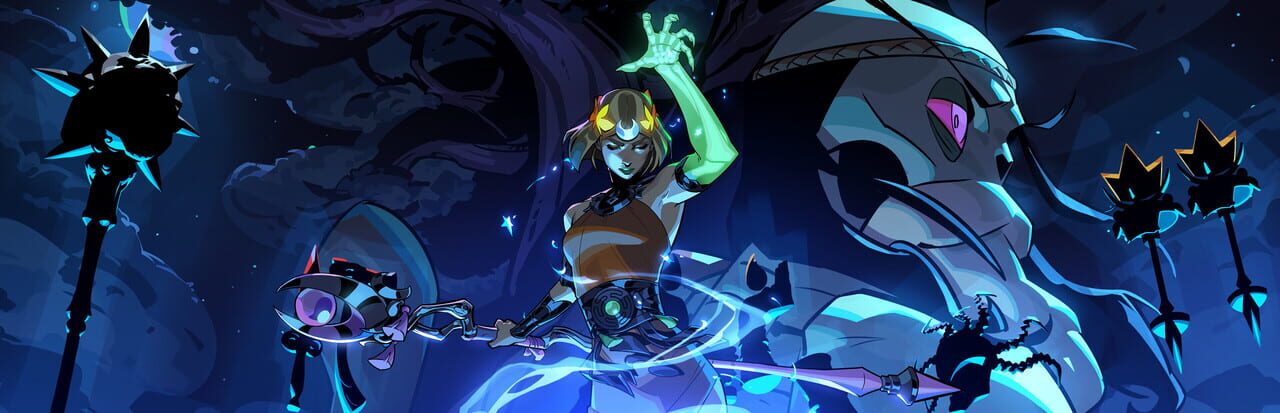
Battle beyond the Underworld using dark sorcery to take on the Titan of Time in this bewitching sequel to the award-winning rogue-like dungeon crawler.
Read moreShow less
The first-ever sequel from Supergiant Games builds on the best aspects of the original god-like rogue-like dungeon crawler in an all-new, action-packed, endlessly replayable experience rooted in the Underworld of Greek myth and its deep connections to the dawn of witchcraft.
As the immortal Princess of the Underworld, you'll explore a bigger, deeper mythic world, vanquishing the forces of the Titan of Time with the full might of Olympus behind you, in a sweeping story that continually unfolds through your every setback and accomplishment.
MASTER WITCHCRAFT AND DARK SORCERY
Infuse your legendary weapons of Night with ancient magick, so that none may stand in your way. Become stronger still with powerful Boons from more than a dozen Olympian gods, from Apollo to Zeus. There are nearly limitless ways to build your abilities.
MINGLE WITH (MORE) GODS, GHOSTS, AND MONSTERS
Meet a cast of dozens of fully-voiced, larger-than-life characters, including plenty of new faces and some old friends. Grow closer to them through a variety of new interactions, and experience countless unique story events based on how your journey unfolds.
EVERY RUN IS ITS OWN ADVENTURE
New locations, challenges, upgrade systems, and surprises await as you delve into the ever-shifting Underworld again and again. Reveal the mysteries of the Altar of Ashes, tame witchy familiars, and gather reagents using Tools of the Unseen to get closer to your goal.
THE PERKS OF IMMORTALITY
Thanks to a variety of permanent upgrades and the return of God Mode, you don't have to be a god yourself to experience what Hades II has to offer. But if you happen to be one, you can brave escalating challenges for greater rewards, and prove just how divine you really are.
SIGNATURE SUPERGIANT STYLE
Rich, atmospheric presentation and storytelling fused with responsive action is the hallmark of Supergiant's titles. Vivid new hand-painted environments, even smoother real-time 3D characters, and an electrifying original score make this mythic world burst with life.
From the game's Steam store page.
THE GAMEQ VERDICT9,998 reviews analyzed
What players are actually saying
1. Summary
Hades II is reviewed almost entirely as a sequel. 67% of the longer reviews compare it with the first game, and 22% say in one sentence that it improves on or surpasses Hades. The improvements they name are mostly mechanical: Omega moves, Magick, hexes, Arcana cards, weapon aspects and two full routes (the Underworld and the Surface) give runs more variety than the original had. The art, the soundtrack (Scylla and the Sirens above all) and the voice acting are praised far more often than criticized, and reviewers describe the same "one more run" pull that kept them playing.
Reviewers disagree about the story. 18% of the longer reviews praise the story or writing, while 13% criticize the story, the ending or the characters, some calling Melinoë's tale less personal than Zagreus's. The original 1.0 ending drew pointed complaints. Reviewers say a post-launch patch rewrote it, and several who played the revised version say they liked it, though some still find the post-game justification thin. The other frequent complaint is a heavier meta-progression grind: more currencies, gardening, once-per-run relationship limits and repeated final-boss wins before the true ending. Most negative longer reviews measure the game against Hades, and several open by saying they loved the original before calling the sequel slower, busier or less charming.
2. What keeps coming up
What players praise
Combat depth and build varietyHigh
32% of the longer reviews praise the combat or gameplay in the same sentence, the most frequent praise in the longer reviews. Players single out the Omega versions of every attack, the cast as a central tool, hexes, Arcana cards that replace the Mirror of Night, and weapon aspects; one reviewer wrote that almost every aspect "provides a way to use the weapon completely differently". Some say builds come together more often than in Hades and that every weapon has at least one aspect they enjoy. One review puts it plainly: "The gameplay and mechanics are significantly better than Hades 1." The new systems can take a while to land: one reviewer felt the game was a downgrade from the original for the first 10 to 15 hours, while their early builds hit weakly. Players who never warmed to the slower, charge-based style are covered under Where players are split.
Art, music and presentationHigh
28% of the longer reviews mention the art or visuals, and only a handful of those criticize it; 17% praise the music in the same sentence. Players name Jen Zee's character art, the redesigned returning cast and Mount Olympus. For the soundtrack, the Scylla and the Sirens boss fight, with its changing songs, is a favorite, and one player wrote that "I Am Gonna Claw" "should be nominated for song of the year". A small number prefer Hades 1's soundtrack or feel parts of it are remixes.
A sequel that builds on HadesHigh
22% of the longer reviews say in one sentence that the game improves on or surpasses the first, and some short reviews boil it down to "Hades but better" or "more Hades". Players credit quality-of-life changes, better-balanced gods and keepsakes, more bosses and the Vow of Rivals boss variants. A smaller group calls it "more of the same" or "Hades 1.5", though most who write "more of the same" mean it as praise. Several advise newcomers to play Hades first for the story.
Voice acting and reactive dialogueMedium
12% of the longer reviews mention the voice acting, and only a few of them criticize it ("The voice acting is incredible, and I loved listening to each and every character."). A few name Amelia Tyler or Judy Alice Lee, whom reviewers credit as Melinoë's voice, and others like that characters comment on specific deaths, boons and bosses even after a hundred runs. The same volume of dialogue is a complaint for some, covered under frustrations.
Amount of content and the two routesMedium
8% of the longer reviews stress the size of the game ("Its twice as much game"), and 5% praise having two routes, with the Surface's Ephyra, Thessaly ship rooms, Olympus and the Summit each named for their own twists. Players like that getting stuck on one path lets them progress on the other, and that the credits roll is far from the end.
Addictive loop and progress on every runMedium
9% of the longer reviews describe it as addictive or invoke "one more run". Failed runs still feel productive, players say, because every death unlocks dialogue, materials or upgrades, and God Mode lets story-focused players lower the difficulty without losing anything.
Runs well, including on handheldsLow
4% of the longer reviews praise performance and 3% mention Steam Deck or another handheld. Players report smooth play on low-end PCs, Macs and Linux, long Steam Deck battery life and working cross-saves with Switch 2 ("Steam Deck performance is top-notch. No tweaking needed.").
Price and valueLow
Reviews that mention price mostly call it good value for the amount of game, some comparing it with full-price AAA releases. A few negative reviewers suggest waiting for a sale.
Where players are split
Story, characters and the endingHigh
18% of the longer reviews praise the story or writing in the same sentence, while 13% criticize the story, the ending or the characters, and 11% bring up the ending at all. Critics say the plot is bigger but less personal than Zagreus's family drama, that side arcs (Arachne, Echo, Hypnos, Prometheus, the Fates) do not resolve, and that the roguelike loop makes the post-game justification weak: "Brilliant game, frustrating writing." Reviewers were blunt about the original 1.0 ending ("That ending was just so, so bad."). They report that a post-launch patch rewrote it, and 3% of the longer reviews mention that change, several of them approvingly; one player wrote that "the revised ending had me crying - in a good way". Others say even the new ending "felt flatter" than Hades. Some story critics say the combat makes up for it: "While the story for Hades 2 isn't as good as Hades, the game play is step above an already amazing system."
Melinoë versus ZagreusMedium
9% of the longer reviews mention Zagreus, usually to compare protagonists. A few find Melinoë too serious and driven, which they say drains the banter that made Hades funny; more prefer her or find her well drawn ("I liked playing as Melinoe (personally liked it more than Zagreus)"). One reviewer split the difference: "Melinoe is cool, but Zagreus is cooler still."
Magick, Omega moves and the new weaponsMedium
10% of the longer reviews discuss Magick, Omega moves, hexes or the cast, and this is also where Hades veterans push back. Some find charged attacks slow and exposed ("The whole charging your attacks thing just feels really really bad and leaves you vulnerable for way too long."), dislike sprint replacing the double dash, or miss the first game's straightforward weapons, with the axe, Argent Skull and Umbral Flames named as weak. Others say the same mechanics became the highlight once they adjusted: "The omega channeling is a bit annoying at first but then it becomes very fun once you understand the right combo."
DifficultyMedium
8% of the longer reviews call the game harder, tougher or more punishing, and 4% call it easier. Some say the standard encounters are harder than in Hades and the Surface is a big step up ("Hades 2 is harder because the combat is less forgiving."); others found it "Slightly easier than the first one but a lot more intricate", especially once Arcana cards are upgraded. Reviewers on both sides credit God Mode and the Fear system with letting them tune it.
What frustrates players
Grind and layered meta-progressionMedium
8% of the longer reviews complain about grind, chores or tedium, and 6% call the systems complicated or bloated. Players point to the number of currencies and reagents, gardening, fishing and gathering tools, Arcana upgrades and waiting on shop restocks. Among negative longer reviews, 22% raise grind, the most common complaint there after the story. One summed it up: "In Hades 1, the grind was the fun. Here, the grind is the game." A smaller group says the opposite ("It never feels like a grind, even after dozens of runs.").
Repetition and late-game paddingMedium
7% of the longer reviews call the game repetitive, often specifically about the stretch after the credits. Players object to the number of repeat wins the true ending requires ("Beating Typhon four times, then a fifth time to finalize it, felt like artificial padding."), an epilogue that advances one small conversation per run, and endgame Fear runs against the same bosses.
Relationship and quest progress gated by chanceLow
Completionists complain that relationships and quests depend on characters showing up in runs, and that gifting or talking is limited to once per run. They name Icarus, Narcissus, Arachne, Echo and the Fated List, and one called the once-per-run rule a mechanism that "gates progress for no reason". Another wrote: "I feel like I had to force more conversations than would have naturally happened which took away from some of the fun."
Visual clutter and readabilityLow
A small group says arenas get too busy to read, especially on the Surface and at higher Fear: "Arenas are so chaotic and the screen so cluttered that it is difficult to know what is even hitting you." Some mention poorly telegraphed or same-colored attacks. One player found the opposite, saying it "has more visual clarity than the first".
Specific boss and enemy mechanicsLow
A handful of reviews, mostly negative, single out Chronos's instant-kill attack, Hecate's sheep transformation, enemies with block or invulnerable phases, Typhon's health pool, Eris's early "too strong" debuff, and Nemesis's coin gamble. On the one-shot, one player wrote: "you can have everything in the game unlocked and be all powerful but you still get one shot by a mechanic when nothing else in the game does?"
Too much dialogue and unskippable creditsLow
Some players skip most conversations, saying "the dialogue feels hollow, I find myself skipping most of it as it's saying nothing with too many words." A few object to "unskippable credits at the end that span for 7-8 minutes".
Interface and controlsLow
A few players want an in-run boon list and journal access while choosing a boon, and report input buffering, inconsistent dashes through walls and keyboard and mouse aiming issues.
Early access historyLow
A few early-access players say they replayed the story at 1.0 or felt they had bought an unfinished game ("I paid full price but I'm getting 80% of the game."). Others who started in early access say each update made the game better.
Bugs and crashesLow
Reports are rare: freezes on weaker PCs, a Mac crash, black screens on Linux and a hammer upgrade that softlocks attacks. A few reviewers say they hit no bugs at all.
3. The player conversation
The tone is warm and often effusive, with a large share of one-line reviews ("peak", "Hades but better") alongside long, structured comparisons with the first game. 67% of the longer reviews reference Hades, and so do the negative ones, so the disagreement sits inside the fan base. Several negative reviewers open by saying they loved the original, then describe the sequel as slower, busier or less charming. Among negative longer reviews, 29% criticize the story, ending or characters and 22% the grind; slower combat, weapons and complexity follow well behind.
Story complaints appear across the whole range of opinions, including positive reviews that name the narrative as their one reservation. Grind, chance-gated relationships and repeated boss wins come mainly from players chasing the true ending, the epilogue or 100% completion, while visual clutter and difficulty spikes come from those pushing the Surface and higher Fear. Complaints about the original ending are more frequent in reviews written around the 1.0 launch, which are few in this slice; later reviewers who bring up the ending sometimes say they played the revised version. In every week with a substantial number of reviews, the positive share stayed between roughly 90% and 98%.
4. What the developers could do
- Loosen chance-based relationship and quest gates. Completionists describe waiting many runs for Icarus, Narcissus, Arachne or Echo to appear, and call the once-per-run gift and talk limit a gate on progress.
- Trim the repeat wins needed for the true ending and speed up the epilogue. Players single out beating Typhon and Chronos again and again, and an epilogue that releases one short conversation per run, as padding.
- Streamline the resource economy. Grind is the most common complaint in negative longer reviews after the story, with players naming too many reagents, gardening and unclear sources for items such as gemstones.
- Rework or better telegraph one-shot and lockout mechanics. Chronos's instant kill, Hecate's sheep spell, invulnerable phases and Eris's early debuff are named as the moments that feel unfair.
- Add visual clarity options for busy fights. Surface and high-Fear players say they lose track of attacks amid effects, and a few cite same-colored telegraphs.
- Improve in-run information and controls. Players ask for a viewable boon list and journal while picking boons, and report input buffering and inconsistent dashes.
- Make the credits skippable and offer a faster way through filler dialogue. Players who skip conversations, and those who sat through long unskippable credits, ask for both.