Nine Sols
Red Candle Games · Action, Indie, Metroidvania
Overview
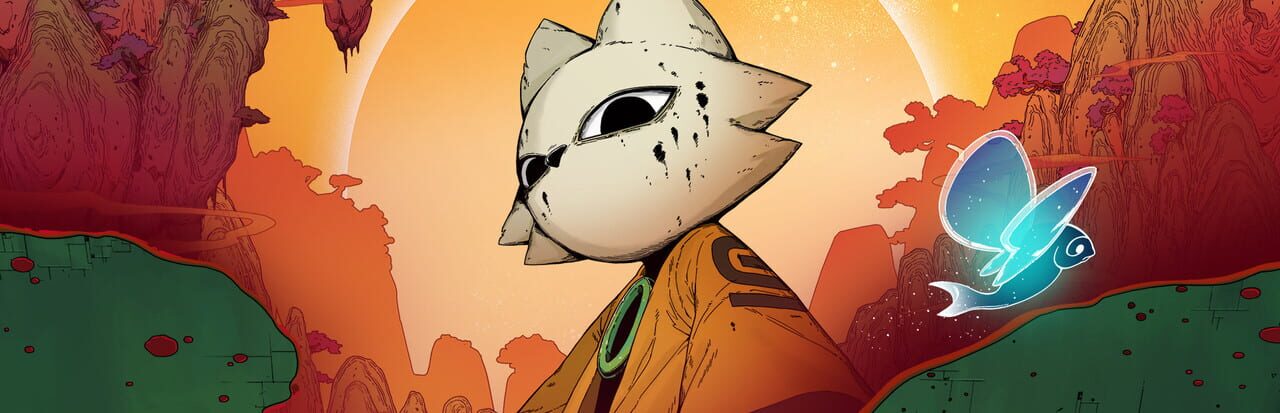
Nine Sols is a lore rich, hand-drawn 2D action-platformer featuring Sekiro-inspired deflection focused combat. Embark on a journey of eastern fantasy, explore the land once home to an ancient alien race, and follow a vengeful hero’s quest to slay the 9 Sols, formidable rulers of this forsaken realm.
Read moreShow less
Nine Sols is a lore rich, hand-drawn 2D action-platformer featuring Sekiro-inspired deflection focused combat. Embark on a journey of Asian fantasy, explore the land once home to an ancient alien race, and follow a vengeful hero’s quest to slay the 9 Sols, formidable rulers of this forsaken realm.
Story
In New Kunlun, hero Yi has awakened the 9 rulers of this forsaken realm. To defeat the 9 Sols in the deserted city.
“Becomes one with the way of Tao…”
New Kunlun, the Solarian’s last sanctuary, has remained quiet for centuries. Inside this vast realm, the ancient gods left mortals with a promised land that is forever protected by the sacred rituals, yet the truth of this world remains unknown to most. Everything changes when Yi, a long forgotten hero from the past, is awoken by a human child.
Follow Yi on his vengeful quest against the 9 Sols, formidable rulers of this forsaken realm, and obliterate any obstacles blocking your way in Sekiro-lite style combat. Explore in unique “Taopunk” setting that blends cyberpunk elements with Taoism and far eastern mythology. Unravel the mysteries of an ancient alien race and learn about the fate of mankind.
Features
2D Sekiro-lite Combat: Slash, deflect, charge into enemies and blow them up with the Taoist talisman! Each fight combines fast, brutal action sequences with classic platforming mechanics.
Intriguing Boss Fight: Ready yourself to fight the vicious ancient guardians and gruesome creatures. Be patient and utilize every move in your arsenal, mix up with Yi’s godly bow to defeat these larger than life figures.
Taopunk Setting: When cyberpunk clashes with Taoism, melding sci-fi elements with eastern mythology/fantasy, the experimental genre of Taopunk was born.
Exploration: Traverse in the interconnected regions of New Kunlun. Discover secrets, piece together the story behind Yi’s revenge.
Aids from inhabitants: Meet interesting NPCs of this world and interact with them to receive upgrades, gain new abilities, and discover useful technology.
Hand-drawn Environments/Animations and Manga: Nine Sols is filled with meticulous hand-crafted, anime style landscapes, sprite based hand-drawn animations, blending with Japanese manga inspired cutscenes.
Red Candle Games
From the creators of award-winning psychological horror games Detention and Devotion, comes Red Candle Game’s latest title Nine Sols. The studio aims to deliver a stylized action platformer that’s cohesive and complementary to its lore-rich narrative. It’s an ongoing, most ambitious project from this indie studio.
From the game's Steam store page.
THE GAMEQ VERDICT9,998 reviews analyzed
What players are actually saying
1. Summary
Players describe Nine Sols as Hollow Knight crossed with Sekiro: a 2D action game set in a "Taopunk" world of Taoist myth and cyberpunk tech, drawn by hand, with combat built almost entirely around parrying. Some thank its studio, Red Candle Games, by name. Fans love how fights turn into a rhythm once the parry clicks, and plenty call the bosses, the true final boss above all, the best they have fought. The story hits harder than they expected from a game about cat-like alien warriors, and many admit it made them cry. With the art and the soundtrack on top, "masterpiece" comes up again and again, sometimes with "underrated" attached.
Only 6% of the reviews are negative, and many of their complaints come from the same design the fans love: Standard mode is punishing, the game wants you to parry nearly everything, and the final boss is a sharp step up from what comes before. Critics also point to unreliable hitboxes and no invincibility after taking a hit, long dialogue and cutscenes that can't be skipped, a map you can't mark, and fast travel that only runs through the hub. Some negative reviewers sum up their verdict as a well-made game that just wasn't for them.
2. What keeps coming up
What players praise
Parry combat that turns fights into a rhythmHigh
A third of reviews (33%) mention combat or parrying, and for fans the parry is the whole appeal. They describe a rough start, then a point where it "clicks", after which fights feel like a dance or a rhythm game, with the gong of a perfect parry as the reward. One self-described dodge-roller says the game rebuilt them into a parry player, and another went further: "this game has ruined the combat in every other game for me". Players also single out the talisman system (parry to build charge, then detonate it on an enemy), the lack of contact damage, and the feeling of mastery on a second run.
That same mechanic draws the most criticism among negative reviews (see the parry entry under frustrations). The argument there is about taste more than execution: fans enjoy holding their ground and reading attacks, while critics wanted more ways to fight.
A story and cast that hit harder than expectedHigh
Players who talk about the story often get emotional. They say the revenge tale turns into something about mortality, immortality and letting go, that the true ending made them cry, and that Yi's growth and the small moments with Shuanshuan and the other residents of the Four Seasons Pavilion stayed with them. A few contrast how plainly it is told with the cryptic storytelling of Souls games: "the story here is actually intelligible and absolutely gripping". A minority find the plot predictable or the writing flat, and many fans who like the story still dislike how much dialogue it takes to tell it (see frustrations).
Boss fights, with the true final boss at the topHigh
For its fans the boss roster is what sets the game apart, and 24% of reviews talk about bosses. Lady Ethereal, Ji and especially the true-ending version of Eigong get named as all-time favourites, and reviewers say the back half of the game delivers boss after boss at a level few games reach. "Every boss battle feels fair despite being brutally difficult." Some find the early bosses weaker and say the game only shows its best after the midpoint. The final boss itself divides players and has its own entry among the split topics below.
Hand-drawn Taopunk art and comic-panel cutscenesHigh
Players praise the hand-drawn animation, the mix of Chinese mythology with sci-fi machinery, the manga-style panels used in key scenes, and how readable the art stays in fast fights. Some negative reviews open by calling the game beautiful before explaining why they quit. A few find some areas samey or the enemy designs less striking than the characters.
Music and sound designMedium
The score gets praise (the credits song in particular), as do the boss themes and the sound of a successful parry: "The soundtrack is otherworldly". A handful of critics call the music forgettable.
Runs well, including on Steam DeckLow
Some players report smooth performance on old laptops and low-end PCs, and good results on Steam Deck. Technical complaints are rare (see the bugs entry under frustrations).
Battle Memories and replay valueLow
Fans like refighting bosses after the credits through Battle Memories, and some came back for a second run on Standard mode or for the other ending. Others wanted more post-game content or a New Game Plus.
Where players are split
Standard mode: hard but fair, or punishingHigh
18% of reviews call the game hard, difficult, brutal or punishing, and the two camps read the same fights differently. Fans say every death is their own fault, that the game teaches its tools well, and that beating a boss after dozens of attempts is the point. Critics say basic enemies kill in two or three hits while bosses soak up damage, healing is scarce, and spikes such as Yingzhao (the first major boss), the Fengs and Lady Ethereal arrive without enough warning. A couple of reviewers call the default "Standard" mode a hard mode in all but name, and fans often warn that the game is not for everyone. Lady Ethereal shows the split in miniature: one fan says "The game is worth buying just for the Lady Ethereal boss fight alone", while a critic complains: "Wasted to many hours on lady ethereal."
Hollow Knight and Sekiro set the expectationsHigh
Hollow Knight or Silksong come up in 17% of reviews and Sekiro in 11%. For fans the comparison is the selling point: earlier reviews recommend it to people waiting for Silksong ("Play this if you're still waiting for Silksong"), and many say it matches or beats Hollow Knight on combat and story. The same games set the bar for critics, and more than a quarter of negative reviews name one of them. Hollow Knight fans miss the open exploration, faster movement and air dash ("You can only dash on flat ground, not in the air."), and one later review's verdict is "just play Silksong instead". Sekiro fans complain that there is no posture system, so a perfect parry doesn't build toward a kill: "In Sekiro, if you perfect parry, you're winning. In Nine Sols, if you perfect parry, you're in a stalemate."
The final boss, EigongMedium
About 10% of reviews mention the final boss or Eigong by name, and players split sharply over it. Fans call the true-ending version the best boss they have played ("The true final boss of this game is the best boss in gaming, I said what I said."), and many say it took them hours and was worth every attempt. Critics who were enjoying the game call it a wall far above everything before it, with confusing patterns, large hitboxes and a third phase that only appears on the true-ending route. "Perfect game ruined by an absolutely tremendous and completely unwarranted difficulty spike in the final boss." Several say they gave up at this fight or dropped to Story mode to finish.
A light, linear metroidvaniaMedium
Many reviews call the structure linear: areas can usually be cleared on the first visit, story events open up progress more than new abilities do, and exploration mostly pays out money and charm-like jades. Players who came for the combat don't mind, and some prefer it, like the reviewer who called it "more linear with weaker exploration than HK, but with an interesting narrative and really strong combat and boss fights." Players who wanted exploration first are disappointed, and a few argue it shouldn't carry the metroidvania tag at all.
Story mode and the difficulty optionsLow
Besides Standard there is a Story mode with damage sliders. Supporters say it opens the game to casual players and lets them see the story: "it's nice that a game designed to be difficult has considered more casual players". Critics say the jump between the two is too large, with Story mode making them close to invincible, and that it does nothing for the real problem of parry timing: "what the hell is the point of a story-mode if you only edit irrelevant stats like hp and damage?"
Gore and dark themesLow
Behind the cute art sits a grim, often gory story, and players react both ways. Fans enjoy how dark it gets, and some recognise the horror flavour of Red Candle's earlier games. Others were caught off guard by the early executions and body horror, and one fan's advice to new players is: "careful if you're sensitive about gore". A few also found some character designs uncomfortable.
Value for moneyLow
Players who bring up price mostly say the game is worth it or more, and many bought it on sale. A minority object that "it costs twice of hk price", or find it short for the money.
What frustrates players
Parry is the only real answerMedium
Among negative reviews, 35% mention parrying. Their complaint is that the game is built to be played one way. Dodging and dashing feel unreliable against bosses whose attacks track and turn mid-swing, enemies rarely stagger from your hits, and damage comes mostly from talismans you earn by parrying. Later mechanics get singled out: the aerial parry against red attacks and the charged "unbounded counter" you must hold and release. "The charge parry near the end of the game is legitimately one of the worst mechanics I've ever seen in a game like this". A few players also say the audio and visual cues don't line up with the real parry timing, so fights turn into memorization.
Too much dialogue, and too little of it skippableMedium
Critics describe frequent interruptions in the opening hours, conversations padded with filler lines, and upgrades locked behind long talks in the hub, and plenty of positive reviews raise the same thing. "Am I playing a game or reading a novel?" Unskippable boss intros on every retry are a particular sore point ("for 5 seconds of fight you have to watch animations that last over 20."), and so are the end credits: one player gave the game a negative review because "the post final boss credits cant be skipped". Fans who love the story still ask for a skip-all option for second playthroughs.
Hitboxes, stunlocks and no recovery invincibilityMedium
Negative reviews describe being hit from behind enemies or by attacks that look like misses ("You get hit while you're behind the opponent and stuff like that."), getting knocked down and hit again before they can act, and taking chained damage when a fall resets them into an enemy attack. Some positive reviews raise the same issue as their one complaint.
Map, navigation and hub-only fast travelMedium
The map can't be marked ("There is no ability to mark the map"), doesn't show blocked paths, and has to be zoomed in to see where you are, so critics lose track of where to go next, mostly in the middle of the game. Fast travel arrives late and runs through the hub: "you have to go from the bonfire BACK to the hub and THEN you can fast travel somewhere else". Some fans list navigation as their only gripe.
Sluggish feel in the opening hoursLow
Players who quit early often describe Yi as slow and stiff, with a short attack range, sprint locked behind a skill, no air dash and a slight delay on inputs. Some fans say the early feel is deliberate and that movement improves as abilities unlock.
Group fights that break the parry systemLow
Parrying works best one on one, and players dislike the gauntlets, mini-bosses with adds and crowded rooms such as the prison: "a mechanic that really only functions well in 1-on-1 scenarios. So, what does this game do? Swarm you with enemies of course!" Goumang's two-zombie fight and the Kanghui gate fight come up by name.
Losing money and experience on deathLow
As in a Souls game, dying drops your jin and your progress toward the next skill point, and dying again before you recover it loses everything. Some players say this wastes their time and discourages exploring; one calls "losing progress upon dying twice" the worst mechanic the game borrowed from Dark Souls.
The forced stealth section and the late escape corridorLow
Two set pieces draw specific complaints. The prison stealth section after the forge made some players quit, and even a fan who calls the game fantastic writes: "There's a awful stealth section a few hours in. It was almost bad enough to make me uninstall. Thankfully it's only about ten minutes long". A late scrolling escape through crowds of enemies "takes away your hud so you cant even tell how much health you have", and locks your loadout.
Save loss, controller and crash bugsLow
A small number of players lost save files after crashes or power cuts ("Randomly ate my savefile."), and one says the only fix was to email the developer. Others report controller input dropping after alt-tabbing, prompts swapping between keyboard and controller, slowdown on Mac and ultrawide monitors, and a progression bug in a side quest.
Missable content and the point of no returnLow
Some players skipped past the warning before the final stretch and found themselves locked out of upgrades for the final boss, or missed the true ending. One critic says "the game has an arbitrary point of no return it doesn't warn you of". Completionists also dislike missable and mutually exclusive achievements and the hard parry challenges they require.
3. The player conversation
"Peak", "masterpiece" and "absolute cinema" recur, and many reviewers admit to rage and tears in the same breath. Positive reviews tend to praise the whole package at once (combat, bosses, story, art, music). Negative reviews are usually specific and often respectful, and some critics call the game well made but not for them, like the player who wrote "I really wish Steam allowed "mixed" reviews because the story, art, and world-building are all top notch." Outright hostility is rare, and joke reviews about the smoking cat protagonist or "ten Sols" turn up on the positive side.
What critics raise depends on how far they got. Those who stopped within the first few hours talk about sluggish movement, the dialogue-heavy opening, parry timing and the first major boss. Critics in the middle of the game focus on the map, getting lost and the hub-based fast travel. Those who reached the end talk about the final boss: it comes up in about a third of the critical reviews written after 20 or more hours and rarely in shorter ones, together with hitboxes, the charged counter and the point of no return.
From May 2025 onward the weekly positive share stayed between 88% and 98%. The lower weeks fell in December 2025 and January 2026, when several reviewers mention getting the game through a Humble Choice bundle, and in mid-May 2026. Hollow Knight and Silksong are the yardstick throughout. Earlier reviews recommend Nine Sols as something to play while waiting for Silksong; from autumn 2025 Silksong comes up more often, and some reviewers write that they came to Nine Sols after finishing it. Even fans who score it highly sometimes rank it "not as good as Silksong".
4. What the developers could do
- Add a middle difficulty or a parry-timing assist. Players stuck between a punishing Standard mode and a near-invincible Story mode asked for something in between, and some said Story mode doesn't help with the real problem of landing parries in time.
- Let players skip cutscenes, boss intros and credits. Critics object to unskippable boss introductions on every retry, long dialogue and end credits that can't be skipped, and even fans want a skip-all option for replays.
- Tighten hitboxes and add brief invincibility after knockdowns. Critics describe being hit from behind enemies and stunlocked through combos, and some positive reviews name this as their only complaint.
- Add map markers and direct checkpoint-to-checkpoint fast travel. Mid-game players lose track of where to go because the map can't be marked or show blocked paths, and fast travel that routes through the hub feels like padding.
- Make the final boss easier to practise. Some players who stalled at Eigong say an attempt takes so long, with no way to practise a single phase, that they could only manage a few tries; a phase-select option in Battle Memories would address that.
- Warn clearly before the point of no return. Players who missed the warning lost access to upgrades for the final fight or to the true ending.
- Protect save files and fix controller input bugs. Lost saves after crashes, controller input dying after alt-tab and prompts flickering between devices led some players to abandon the game, and backup saves would remove the worst outcome.
- Clarify the parry cues and the charged counter. Players say the audio and visual tells don't match the real timing and that it's hard to see when the unbounded counter starts and ends, so clearer feedback would help.