Ori and the Blind Forest: Definitive Edition
Moon Studios · Action, Indie, Metroidvania
Overview
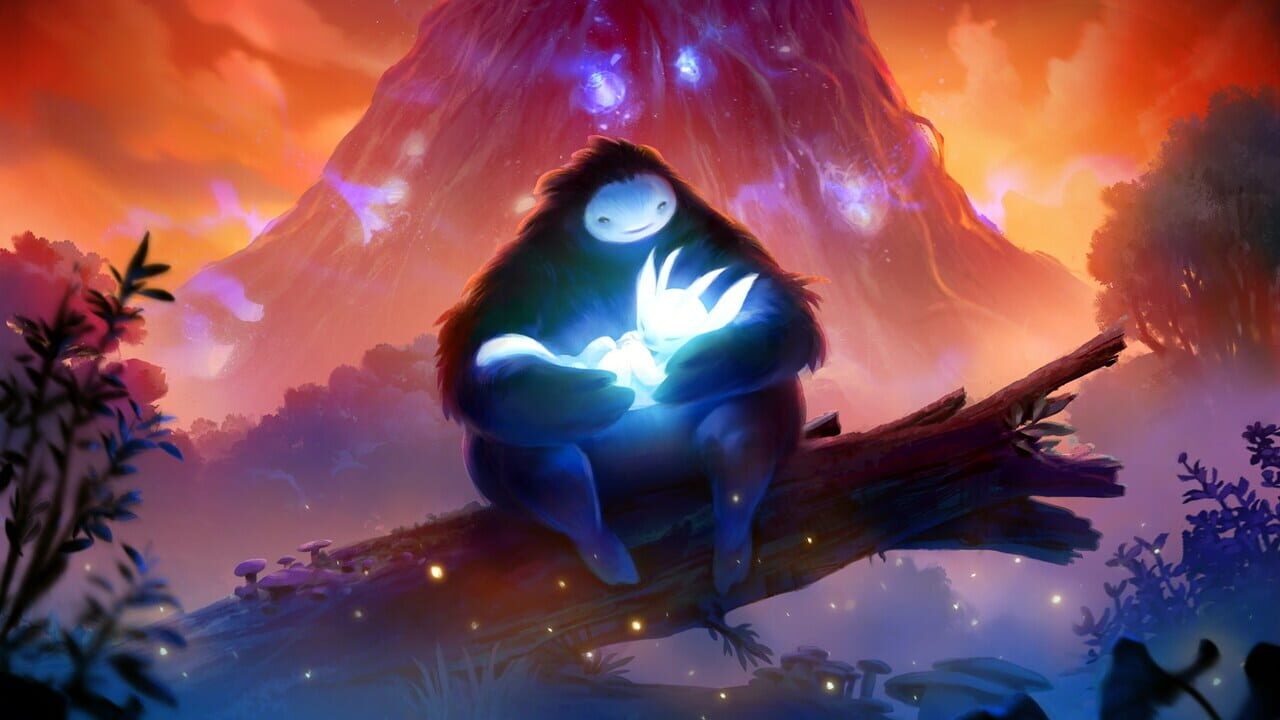
“Ori and the Blind Forest” tells the tale of a young orphan destined for heroics, through a visually stunning Action-Platformer crafted by Moon Studios.
Read moreShow less
NEW IN THE DEFINITIVE EDITION
- Packed with new and additional content: New areas, new secrets, new abilities, more story sequences, multiple difficulty modes, full backtracking support and much more!
- Discover Naru’s past in two brand new environments.
- Master two powerful new abilities – Dash and Light Burst.
- Find new secret areas and explore Nibel faster by teleporting between Spirit Wells.
The forest of Nibel is dying. After a powerful storm sets a series of devastating events in motion, Ori must journey to find courage and confront a dark nemesis to save the forest of Nibel. “Ori and the Blind Forest” tells the tale of a young orphan destined for heroics, through a visually stunning Action-Platformer crafted by Moon Studios. Featuring hand-painted artwork, meticulously animated character performance, a fully orchestrated score and dozens of new features in the Definitive Edition, “Ori and the Blind Forest” explores a deeply emotional story about love and sacrifice, and the hope that exists in us all.
From the game's Steam store page.
THE GAMEQ VERDICT9,996 reviews analyzed
What players are actually saying
1. Summary
The Definitive Edition is recommended in 91.4% of reviews, and the praise centers on how it looks, sounds and feels to play. 36% of reviews comment on the visuals, 25% on the story and 20% on the music, and 15% reach for words like masterpiece, peak, 10/10 or one of the best games they have played. Players describe a hand-painted forest, an opening that makes people cry within minutes, and movement that grows from a weak jump into chained wall climbs, triple jumps and Bash launches off enemies and projectiles. Reviewers who know the original credit this edition with two new areas, a dash, fast travel and difficulty modes.
How hard the game is, and how fair, is where players disagree. Difficulty comes up in 19% of reviews, positive and negative alike: some players say dying hundreds of times was worth it, while others feel the cute look and soft music hid a punishing platformer. 60% of negative reviews name difficulty, frustration, the controls, the save system, the escape sequences or the combat, and their complaints get specific: a save system that spends the same energy needed for doors and attacks, long escape runs with no checkpoints, floaty wall jumps, button-mash combat, and hazards lost in the glow. Stutter, slow motion and resolution bugs on newer PCs are a separate problem, raised in 10% of negative reviews. They left some players unable to play, although others report that turning off V-Sync fixed it. On the presentation players broadly agree. On the challenge they split, and a small minority say the sequel or Hollow Knight does the same things better.
2. What keeps coming up
What players praise
Hand-painted art and animationHigh
Reviewers comment on the visuals more than on any other theme (36% of reviews), usually in single words: beautiful, gorgeous, stunning, breathtaking. They praise the layered forests, the lighting, the color and Ori's animation, and some say the game still looks current a decade after release. "An excellent demonstration of why video games are an art form," one wrote. The praise reaches into the negative reviews too: 22% of them still call the game beautiful or praise its art or music before getting to their complaints. Criticism of the art is practical. Some players say the glow and the scenery hide what can hurt you (see the readability item under the frustrations below).
A simple, emotional story and a famous openingHigh
Much of the story talk is about the prologue: "Holds the record for the game that makes me cry the fastest. That opening is a lot." 25% of reviews mention the story and 7% use words like cry, tears or emotional. Players like that it is told mostly through pictures and music, with a narrator rather than long dialogue, and some say the ending landed just as hard. Critics call the plot thin or the tear-jerking manipulative, a few found the antagonist's turn at the end confusing, and some say repeated deaths and replayed cutscenes drained the emotion out of it.
The soundtrackHigh
Reviewers describe the score as emotional and orchestral, and some listen to it outside the game. The music comes up in 20% of reviews, often alongside the art, and these two are what players dispute least. Dissent is rare. A few negative reviews found it sappy or repetitive, and one player said the main theme woven into every track grew tiresome.
Fluid movement and a growing movesetMedium
"One of the most fluent movement systems I've seen," one reviewer wrote, and about 5% of reviews praise the movement in words like fluid, smooth and responsive. Players enjoy how each new ability changes the way they cross the world, and they single out Bash, which launches Ori off enemies and their projectiles. Some say the first hour or two is slow and the game opens up once wall climbing, the double jump and Bash arrive. A few coming from Hollow Knight prefer Ori's movement ("Like Hollow Knight with better-feeling and more responsive movement"). The control complaints under the frustrations describe the opposite experience, so the feel of the movement is itself contested.
What the Definitive Edition addsLow
Reviewers credit the Black Root Burrows and Lost Grove areas with extra backstory, and they list the dash and Light Burst abilities, fast travel between Spirit Wells, the ability to return to areas that sealed off in the original, and difficulty options from Easy to a One Life mode. 3% of reviews compare this edition with the original or talk about its additions, mostly in its favor. "Definitive Edition is better than the original, for one you can revisit dungeons, so you aren't locked out of 100% anymore," one wrote, and another said "the 2 new areas are some of the best in the game and the new dash makes the original feel slow in comparison." The complaints are specific. Some players say this edition stutters where the original ran smoothly ("The original, on the other hand, is rock solid."). One reviewer warned that saves from the original don't transfer. A few got stranded in the optional Black Root Burrows without the skills to finish it or leave ("I stuck in Black Root Burrow and don't have sufficient skill to pass and unable to go back anymore"). Others note that the skill tree sells upgrades for abilities found only in the optional areas, so points can go to moves you don't have yet.
Where players are split
Difficulty: rewarding challenge or a rage game in disguiseHigh
Positive reviewers often count their deaths with pride ("I died 502 times on my first playthrough. You should absolutely play this game.") and say beating a hard stretch felt earned. Negative reviewers describe the same thing as trial and error: one-hit deaths from spikes and lasers, sections that can only be learned by dying, and long runs back after each failure. Difficulty comes up in 19% of reviews, 18% of positive ones and 30% of negative ones. Players on both sides say the look sets the wrong expectation. "Frequently mentioned as a chill, atmospheric game, however, it is more like a brutal souls-like," says a positive review, and a negative one reads "Was hoping for a relaxing experience. Nope just frustrating no fun :(" Some players who picked Easy for the story found it did little for the platforming ("Even the easy mode is hard."), and one said Easy seemed to change only how much damage enemies deal. A parent who bought the game to play with their kids is among those who stopped partway, after finding even Easy mode too hard.
Measured against Will of the Wisps and Hollow KnightMedium
Positive reviews mostly treat the sequel, Ori and the Will of the Wisps, as the next step, telling readers to play this one first for the story or to play both. The sequel comes up in 7% of reviews and Hollow Knight or Silksong in 4%. Negative reviews use both games as a yardstick: 5% of them say outright that the sequel is better or that readers should play it instead, and some players who started with Will of the Wisps found this game's save system and combat a step back ("Will of the wisps is so much better," wrote one who still recommended it). Hollow Knight fans are divided. Some call Ori an easier, more approachable cousin with better movement, while others reply "Just Play Hollow Knight." and point to tighter controls and real combat there.
Metroidvania or linear platformerMedium
Fans enjoy returning to old areas with new abilities, hunting energy cells, life cells and secrets, and filling in the map, and some went for 100% completion. 10% of reviews call the game a metroidvania or compare it with Metroid and Castlevania. Critics say the critical path is linear, waypoints point you at the next goal, backtracking rewards are small, and the game plays more like a platforming course than an exploration game. Some players also found progression unclear, getting lost or unsure whether a gap needed a skill they did not have yet or just better execution.
Achievements and One Life modeLow
Completionists like hunting achievements, which come up in 3% of reviews, but the challenge ones (finishing without dying, under three hours, without upgrades, and the "Unhinged" One Life run) draw both pride and anger. "adding a one life difficulty is genuinely evil tho i died 490 times :P," one positive reviewer wrote. A few players warn that achievements don't unlock, and progress toward them isn't counted, when playing offline.
LengthLow
Players describe a campaign of about 8 to 15 hours, and 4% of reviews mention length. Some like that it stays focused ("Short but beautiful game"), and others wished it were longer or that they could keep exploring after the ending.
What frustrates players
Button-mash combat and spongy enemiesMedium
The main attack is an auto-targeting spirit flame, and critics describe fights as mashing one button while dodging: "Just stand still and mash the attack button until you have to dodge an invisible pixel or the enemy is dead." Combat comes up in 9% of reviews and in 24% of negative ones. Critics add that basic enemies take many hits, enemy variety is low, and there are almost no real boss fights, with escape sequences standing in for them. Positive reviews that mention combat often call it the weak part of an otherwise great game, and a smaller group enjoys it, especially once Stomp and Bash give more options.
A save system that runs on energyMedium
As players explain it, Soul Link lets you make a save point almost anywhere, but it spends the same energy you need for doors, obstacles and the charged attack. Saving comes up in 5% of reviews and 21% of negative ones. Dying sends you back to the last save and undoes everything since: pickups, opened paths, and the cutscenes you just watched. "If you watch a cutscene be sure to save or else you will be watching it every time you die." A few players saved with low health in a bad spot and got stuck there, and one says that after an early hit in a long stretch you end up dying on purpose to reset. Some reviewers like placing their own checkpoints right before a hard jump and call it forgiving once energy upgrades pile up, while others call it "Absolutely AWFUL save mechanic."
Escape sequences with no checkpointsMedium
Players name the Ginso Tree's rising water, the end of the Forlorn Ruins, the chases by the owl Kuro and the final escape from Mount Horu. These escape and chase sequences come up in 5% of reviews and 13% of negative ones. Reviewers describe long scripted runs where one mistake restarts the whole thing, timing that depends on an enemy firing a projectile you can Bash off, and dozens to hundreds of attempts. Some quit for good at the Ginso Tree. "All of the emotional weight was entirely dampened by my rage at the escape sequences," one wrote. Positive reviews are divided on them: some call the escapes a highlight, and others recommend the game in spite of them. "If there is a "skip annoying chase" option, it would flip to a Highly Recommended in a heartbeat," one negative review says.
Floaty controls and unreliable wall jumpsMedium
"Ori controls like he is on ice the entire time." Complaints like this appear in 3% of reviews and in 19% of negative ones. Players call Ori floaty, slippery and imprecise, say the same input gives different results, and describe jumps placed right at the edge of Ori's range. Wall jumping and wall climbing come up again and again: "The amount you slide down when you are wall climbing is the most ridiculous thing ive ever seen in my life." Others mention dropped inputs, a ground pound that triggers on a diagonal stick, and accidental double jumps off walls. A few suspect the feel is worse with V-Sync on, and some of the stutter complaints below describe the same symptom.
Hazards and projectiles lost in the glowLow
Ori, the spirit flame, enemy shots and pickups are all glowing orbs, and reviewers describe projectiles they mistook for experience orbs, spikes that blend into the background, and foreground scenery covering the action. 3% of reviews say the visuals get in the way of play, and 10% of negative reviews do. "art is pretty but also really impractical for gameplay like I actually cannot see anything I'm supposed to pay attention to most of the time," one player wrote. A couple of players say Ori is too small to follow on the Steam Deck screen, and others note there is no zoom or option to turn off screen shake.
Stutter, slow motion and resolution bugs on newer PCsLow
"Ori and the stuttering forest," one review reads in full, and another found that "the more powerful the computer hardware you use to play the game, the worse the game runs". Technical problems come up in 2% of reviews and 10% of negative ones, some of them from players with high-end hardware. They describe heavy stutter, the game running in slow motion, frame drops, resolutions above 720p or 1080p that won't stick, the game opening on the wrong monitor, black screens on launch and crashes. Some blame high refresh rates. Positive reviews often include fixes: turning V-Sync off ("turning off vsync fixed it tho, so if you also have that issue, turn off vsync."), the -force-d3d9 launch option, capping the display at 60Hz, or a high-DPI override on the executable. A few Steam Deck OLED owners say the game misbehaves at 90Hz and runs well when lowered. For other players nothing worked and they refunded.
No in-game key rebindingLow
Changing keys means editing a text file in the game folder, which players found clumsy or, on Linux and non-English keyboards, not workable: one "spent 14 minutes trying to rebind keys." Fewer than 1% of reviews raise this, but it comes up in 3% of negative reviews, mostly from keyboard players. Left-handed players and those with PlayStation pads report wrong mappings or on-screen prompts that don't match their buttons, and several say the game only felt right on an Xbox-style controller.
Progress-blocking bugsLow
Bugs that block progress appear in 1% of reviews. One player's completion run ended at a boulder that never appeared: "my 100% run died when I got soft-locked by missing boulder that was supposed to block a laser in moon grotto/black root burrows". Another got stuck at 99% in the Moon Grotto without knowing whether it was a bug. Others mention a glide that stopped working in the Valley of the Wind escape, inputs that stopped registering, and deleted saves, one of them after a power cut during a cutscene.
3. The player conversation
The tone is warm and mostly short: "peak," "masterpiece," "beautiful," "I cried." Longer positive reviews tend to add a caveat, usually an escape sequence, the save system, the combat or a V-Sync tip. Negative reviews are a small minority, and some of them are reluctant: more than a fifth praise the art or music, and a few say they wished Steam had a neutral option. The presentation is barely disputed. The argument is over whether the difficulty is fair and whether Ori's movement feels precise or floaty, and the same game draws both "fluid" and "on ice."
Playtime shows who raises what. Negative reviewers who stopped within two hours bring up stutter, slow motion and resolution problems far more often than those who played longer, along with the controls, the save system and the combat. Those who played ten or more hours before turning negative talk mostly about difficulty, with the combat, the save system and the escape sequences close behind, and they bring up the sequel more often.
Sentiment held steady over time: 92% of reviews written in 2023 recommended the game, 91% in 2024 and 2025, and 92% in 2026. The share of negative reviews about performance did change, rising from 5% of those written in 2023 to about 12% in each year from 2024 through 2026, in line with reports of stutter on newer hardware. Comparisons with Hollow Knight also became somewhat more common, from 4% of reviews in 2023 to 6% in 2026, with several 2026 reviewers naming Silksong.
4. What the developers could do
- Fix the PC version's stutter, slow motion and resolution handling on modern hardware. It is a frequent complaint from players who quit within two hours, players on high-end PCs and high-refresh displays call the game unplayable, and the community workarounds (V-Sync off, -force-d3d9, 60Hz, DPI overrides) show the faults are known.
- Separate saving from the energy used for doors and attacks, and save automatically after cutscenes and new abilities. A fifth of negative reviews bring up saving, describing lost pickups, replayed cutscenes and saves made in spots they could not escape.
- Add checkpoints inside the escape sequences, or a way to skip them after repeated failures. Some players quit for good at the Ginso Tree escape, and one said a skip option would turn their review positive.
- Tighten wall jumps and jump input. Negative reviewers describe sliding down walls, inconsistent jump distance and dropped inputs, and they tie these to the deaths that made them stop.
- Make Easy mode cover platforming and escape timing as well as damage. Players who chose Easy for the story say it still blocked them, and one read it as changing only how hard enemies hit.
- Give combat more weight by trimming enemy health or adding aim to the basic attack. Critics call the auto-targeting flame button mashing and say basic enemies take far too many hits for how little the fights add.
- Offer in-game key rebinding and correct prompts for non-Xbox controllers. Keyboard, left-handed and PlayStation-pad players report editing text files or giving up.
- Add an option to reduce bloom and make hazards and projectiles stand out from the scenery. Players died to spikes and shots they say blended into the glow, and some found Ori too small to track.