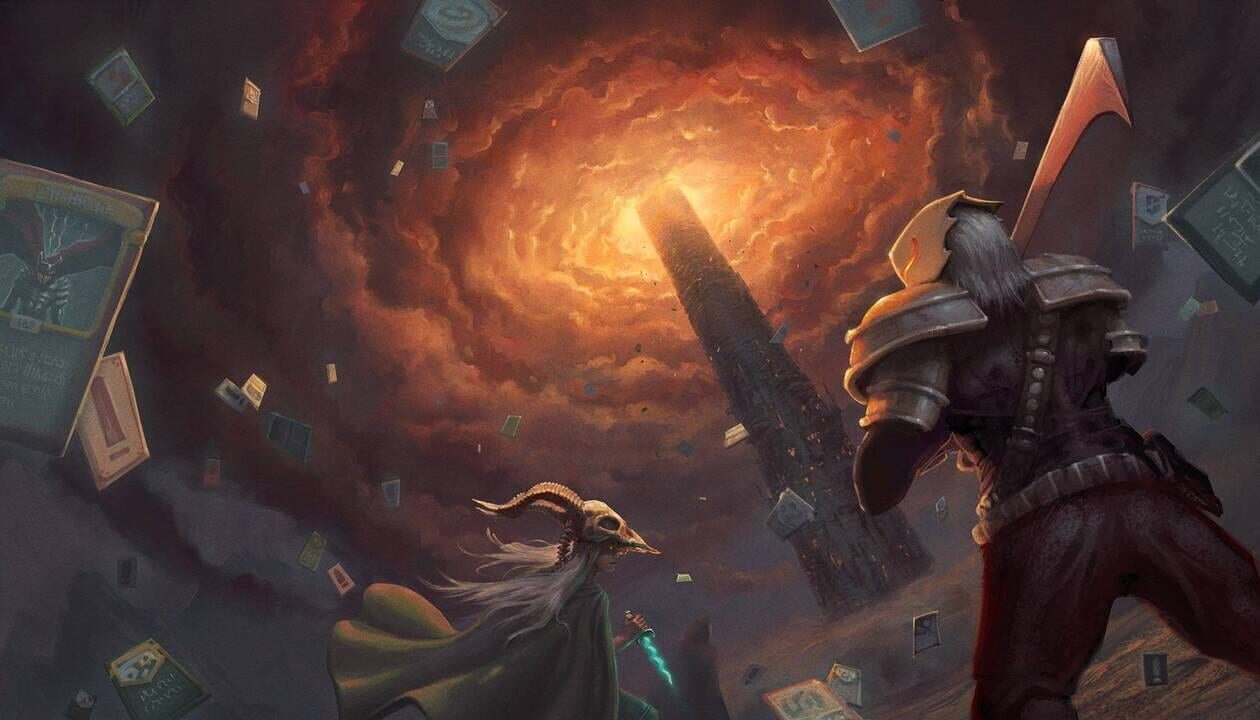
Slay the Spire
Mega Crit Games · Strategy, Indie, Roguelike Deckbuilder
Overview
We fused card games and roguelikes together to make the best single player deckbuilder we could. Craft a unique deck, encounter bizarre creatures, discover relics of immense power, and Slay the Spire!
Read moreShow less
Features
- Dynamic Deck Building: Choose your cards wisely! Discover hundreds of cards to add to your deck with each attempt at climbing the Spire. Select cards that work together to efficiently dispatch foes and reach the top.
- An Ever-changing Spire: Whenever you embark on a journey up the Spire, the layout differs each time. Choose a risky or safe path, face different enemies, choose different cards, discover different relics, and even fight different bosses!
- Powerful Relics to Discover: Powerful items known as relics can be found throughout the Spire. The effects of these relics can greatly enhance your deck through powerful interactions. But beware, obtaining a relic may cost you more than just gold...
Slay the Spire left Early Access and comes with:
- Four characters that each have their own unique set of cards.
- 350+ fully implemented cards.
- 200+ different items to be found.
- 50+ unique combat encounters.
- 50+ mysterious events that can help or harm you.
- Daily Climbs allow you to compare yourself with every other player in the world.
- Custom mode that allows mixing and matching various crazy run modifiers.
From the game's Steam store page.
THE GAMEQ VERDICT9,966 reviews analyzed
What players are actually saying
1. Summary
Most of this slice is about why people keep playing. Reviewers praise a "one more run" loop that eats whole evenings, a card and relic system that keeps turning up new synergies after hundreds of hours, four characters that each play like a separate game, and a sale price they call a bargain. 11% of reviews call it addictive in some form, and hundreds more call it the best deckbuilder or roguelike they have played. Mods, especially the Downfall expansion and a co-op mod, keep PC players going, and some reviewers already own it on phone, Switch or PlayStation and bought it again here.
Luck is the main catch. About a third of negative reviews blame random draws, card offers and relics for ending runs they felt they had played well, sometimes an hour into building a deck, and some add that certain bosses seem built to wreck particular decks. Other negative reviews find the runs repetitive, miss permanent upgrades between runs, or dislike the art. A smaller group hit technical problems: crashes, display settings that do not stick, and saves lost to Steam Cloud sync. Comparisons with Slay the Spire 2 run through the later months, with players split over which game is better. Luck also comes up in positive reviews, where some treat it as a frustration and others as part of the fun.
2. What keeps coming up
What players praise
An addictive "one more run" loopHigh
No other kind of praise comes up as often. 11% of reviews call the game addictive, compare it to a drug, or describe losing track of time, and some tell of sitting down for one run and finding the evening gone. "The hardest part of playing this game is closing it," as one player put it. Nearly all of this is meant as praise. A few negative reviewers use the same language to argue the loop is compulsive rather than fun: "This game perfectly explains how a game can be addictive but not fun." Others say a lost run mostly makes them want to start the next one straight away.
Deep card and relic synergies that are easy to learnHigh
7% of reviews mention synergies, combos, strategy or depth, often describing the payoff of finding a broken combination, going "infinite", or stacking hundreds of block or poison. "Easy to build an OK deck, hard to build a great one," wrote one player. Newcomers say the basics are quick to pick up, and players with hundreds of hours say they are still finding new interactions. Some praise the balance, and a few single out the way enemies show their next move, which turns each turn into a small puzzle. A handful disagree and call the strategy shallow.
The genre's benchmarkHigh
Some reviews call it the original, the gold standard or the game that set off a wave of imitators, and more simply call it the best deckbuilder or roguelike they have played. "Often imitated but never matched," as one player summed it up. A few take the opposite view: one respects it as "the one that spawned its genre" but says it "has not aged well" and that better games have come since.
Every run plays differentlyHigh
Reviewers describe the changing maps, events, card offers and relics as what keeps each climb fresh, and the 20 Ascension difficulty levels, the daily climb and custom runs as reasons to keep going. Players with hundreds or thousands of hours say they still learn something new.
Four characters that feel like different gamesMedium
The Ironclad, Silent, Defect and Watcher each have their own fans, and reviewers like that switching character means relearning the game; one wrote that "the card pools are distinct enough that each character feels like a different game." The Silent's poison and shiv decks and the Defect's orbs come up often as favourites. The Watcher and the Defect also draw criticism, covered under the split topics below.
Huge value, especially on saleMedium
5% of reviews talk about price or sales, nearly always to call the game a bargain. Paying around $2 in a sale is a recurring detail, and some buyers add that it would have been worth full price. "Best game I've ever spent $2.50 on," wrote one player. A few value that it has no microtransactions or paid DLC. The handful who find the full price too high are covered under frustrations.
Mods and the Steam WorkshopMedium
About 3% of reviews bring up mods. The Downfall expansion mod, character packs and the "Together in Spire" co-op mod are the ones named, and a couple of players say they bought the PC version again just to mod it. Some say mods made the game feel fresh after they had finished the base game and added hundreds of hours. A few report mods breaking or crashing the game.
Runs on almost anything, on any platformMedium
Some reviewers mention it running well on old laptops, MacBooks and Steam Deck, and others say most of their hours are on phone, Switch, PlayStation or Xbox. A few Steam Deck players praise the battery life; one called it a "perfect Steam Deck battery sipper." A few Mac, Linux and Steam Deck users had the opposite experience (see technical problems below).
Play at your own paceLow
Players like that turns have no timer and that a run can be saved and resumed between fights. "Turn-based, so you can step away at any time to handle life," wrote one, and another plays it one-handed while holding a newborn.
Music and soundLow
When audio comes up, it is mostly praised, with compliments for the soundtrack, the boss themes and the sound design. A few find the music repetitive or annoying after a while, and one plays their own playlist instead.
Where players are split
Art style and animationsMedium
Reviews that criticise the art and reviews that praise it turn up in roughly equal numbers. Critics call it dated, flash-like or "like a mobile game", and some dislike the near-absent attack animations, where characters slide forward instead of swinging. Several say the look put them off at first and grew on them once the gameplay took hold: "Mechanics are so incredibly well designed in this game it actually makes me like the art style." Others call the card art charming or unique, and a few enjoyed unlocking the beta art. For a handful of negative reviewers the visuals are a reason in themselves not to recommend it.
How hard it is, and for whomMedium
Many describe a steep curve: lots of failed runs before a first win, then a long climb through the Ascension levels. Some find it rough on beginners. One otherwise enthusiastic reviewer called it "hostile for new players" and wished for a longer tutorial, and a few negative reviewers resent being told to watch guides or streamers to get better. A few say the opposite, that they won or nearly won early and found it too easy to stay interested.
The Ascension climbMedium
Some veterans call the 20 Ascension levels the best part of the game; one called the system "roguelike difficulty perfected." A few others say the ladder is too long, that later levels add punishment without new rewards, or that climbing it separately for each character is a chore. "I hate having to play them seperately with each character," wrote one otherwise enthusiastic player. A few completionists warn that some achievements come down to luck.
Slay the Spire 1 or 2Medium
5% of reviews mention the sequel, which reviewers report entered early access in March 2026. Some came to this game because of the sequel and plan to buy it next, or got both in a bundle. A small group say the sequel is better and newcomers should start there, and about as many argue the original is the better game. "This is the good one," wrote one player who went back to it after the sequel frustrated them.
Character balance: the Watcher and the DefectLow
A few reviewers have strong views on the fourth character. Some call the Watcher overpowered, one describing her as "so critically, fundamentally overpowered that playing her is practically a free win," while another finds her "overly complicated". The Defect is a favourite for some, but a couple of negative reviews single it out as too dependent on luck.
Story and loreLow
Some players wish the game had a real story; one wrote that "the only thing I wish this game had was a story to follow." Others enjoy piecing together the hinted lore from events and enemies, and several say pure gameplay with no filler is exactly the appeal.
What frustrates players
Luck decides too many runsHigh
About a third of negative reviews blame randomness: drawing only attacks when a boss winds up a huge hit, only blocks when it buffs, card rewards that never fit the deck, or relics that do nothing for the build. Several call it a slot machine, rigged or gambling. Because runs are long, losing one to a single bad hand stings; players resent throwing away an hour of deckbuilding. "Welcome to a game where you can make ALL the right choices and still lose," wrote one. Some add that higher Ascension levels make a strong start almost mandatory. Some positive reviews push back, saying better players learn to manage the odds and that most losses trace back to their own choices: "Every time you die, you know exactly where you messed up." Other positive reviewers still name luck as the game's main flaw.
Bosses and elites that counter specific decksMedium
Some reviewers say certain fights seem designed to wreck particular builds. They name the Time Eater, which they say punishes decks that play many cards, the Awakened One, which they say punishes power cards, and the final Heart fight, along with elites such as Gremlin Nob and the Book of Stabbing. Players describe building a strong deck only to meet its counter in the last act, too late to change course: "Time Eater completely screws over any attempt at a Shiv Deck unless you play perfectly." Some veterans defend this as the point of the design, since it forces flexible decks.
Repetitive runs and little carried between themMedium
9% of negative reviews call the game repetitive, tedious or grindy, and more simply call it boring. They point to a small pool of enemies and bosses, the same starter cards and opening fights every run, and a slow start before a deck becomes interesting. Reviewers who compare it with Hades and its permanent upgrades find the lack of carried-over power demotivating; one said "this game offers almost nothing to help you in the next run." Some see unlocking new cards as slow and, because those cards only enter the random pool, unsatisfying. Several also want more ways to shape the deck, especially more chances to remove cards.
Technical problems and lost savesLow
8% of negative reviews describe a technical problem. Reported issues include crashes and freezes mid-run, stuttering, borderless fullscreen and HDR not working, settings that reset every launch, resolution changes that break the game, failure to launch on some Linux, Mac and Steam Deck setups, and controllers not working. A few lost progress to Steam Cloud sync conflicts; one reviewer warned of "a known issue with steam cloud sync that can cause loss of progress." A few also want their phone or console progress to sync with the Steam version.
Full price next to the sequelLow
A handful of reviews call the regular price too high for a game this old and this small, and one points out that it costs the same as the sequel. Several advise waiting for a discount.
Missing quality-of-life featuresLow
A scattering of reviews ask for an undo button, a way to restart a fight without quitting, an easier way to copy seeds, a confirmation before using potions, and a win counter at the highest difficulty. Some players get around the lack of undo by closing and reloading the game, and admit it feels like cheating.
Cheaters on the daily leaderboardLow
A few daily-climb players mention cheated scores at the top of the leaderboard; one saw "someone on the daily leaderboards with over a 2 billion score while everyone else is in the 1 too 2 thousand score." Another says it happens "every single day" and will switch to a positive review once it is fixed.
3. The player conversation
The tone is overwhelmingly warm and often playful. A large part of the slice is very short: one-word raves, in-jokes about Neow the whale, "CAW CAW", the Time Eater and the Silent, and the recurring "slaying the spire" joke. Longer reviews tend to come from two groups. Newcomers, some of whom mention buying it for a couple of dollars on sale, write about being surprised that a card game hooked them, and they raise many of the complaints about luck, the lack of permanent upgrades and the art. Veterans with hundreds or thousands of hours write tributes ahead of the sequel, and their criticisms are narrower: Ascension 20 balance, luck-dependent achievements, the Watcher, and cards they consider useless.
The slice begins in late November 2025. Weekly volume climbed through December and peaked over the turn of the year, when some reviewers mention buying it on sale, then rose again in March 2026, when reviews start talking about the sequel's early access and buying the two games together. The positive share stayed in a narrow band throughout: 95% to 96% from late November to early March, 94% across March and April, and 93% from July to October, with comparisons to the sequel becoming a steady thread after March.
4. What the developers could do
- Give players more tools to soften bad luck. About a third of negative reviews blame randomness, and the fixes reviewers suggest include more card removal, better drafting choices, or a light guarantee against completely dead hands.
- Fix the crashes, display bugs and settings that do not stick. Technical complaints make up 8% of negative reviews, citing mid-run crashes, broken borderless fullscreen and HDR, resolution changes that stop the game launching, and settings that reset on every launch.
- Make saves safe across devices. A few players lost hours of progress to Steam Cloud sync conflicts, and a few who own the game on phone or console ask for their progress to sync with the Steam version.
- Let Ascension progress feel less like a separate grind per character. Veterans praise the difficulty ladder, but a few object to repeating it on each character and to higher levels adding punishment without any new reward.
- Teach the game better to newcomers. Players who found it hostile to beginners or felt pushed toward guides and streamers ask for a longer tutorial, and a few want clearer explanations of mechanics they say are hidden, such as rare card and potion odds.
- Add small quality-of-life options. Reviewers ask for an undo or restart-fight option, easier seed copying, potion confirmations and a high-difficulty win counter.
- Clean up the daily climb leaderboard. A few daily-climb players report cheated scores at the top of the board, and one is holding back a positive review until it is fixed.
- Revisit the full price next to the sequel. A handful of reviewers feel the regular price is too high for an older game that costs the same as Slay the Spire 2, and several advise waiting for a sale.