Ultrakill
Arsi "Hakita" Patala · Shooter, Indie, Action
Overview
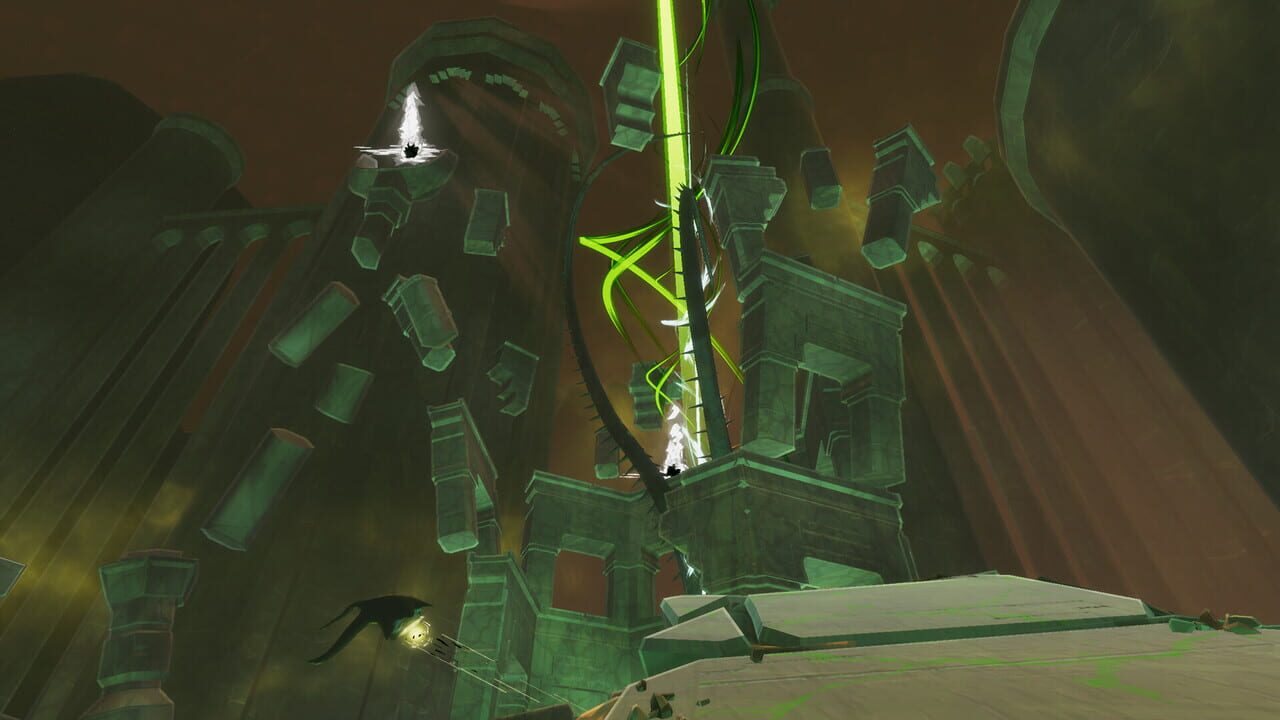
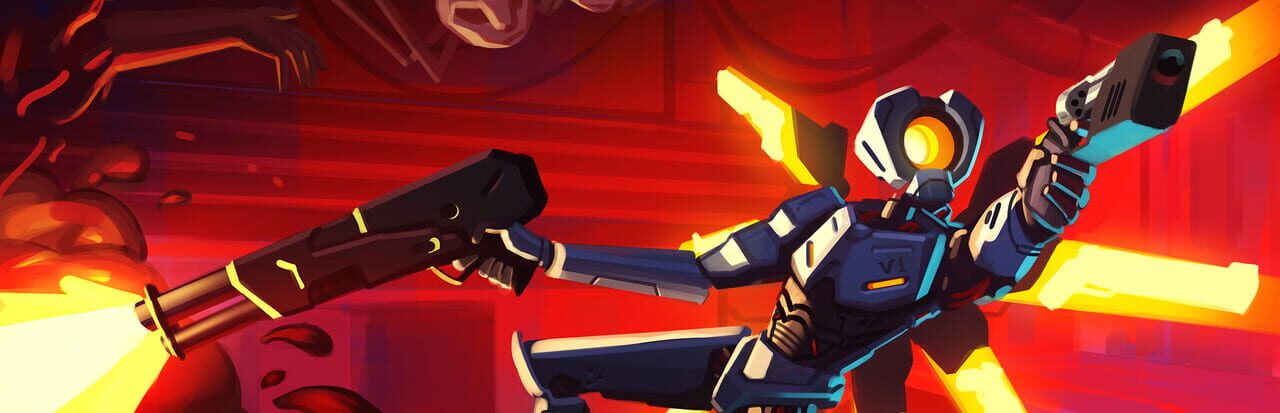
Ultrakill is a fast-paced ultraviolent retro FPS combining the skill-based scoring from character action games with unadulterated carnage inspired by the best shooters of the 90's. Rip apart your foes with varied destructive weapons and shower in their blood to regain your health.
THE GAMEQ VERDICT9,999 reviews analyzed
What players are actually saying
1. Summary
Players love ULTRAKILL's combat. They describe a fast shooter where movement, parrying, coin tricks and five weapon types with several variants all feed into each other, and where healing comes from staying close to enemies. Around that core they praise the replay hooks (P-ranks, the Cybergrind wave mode, secret levels, mods), a soundtrack many listen to outside the game, lore that rewards anyone who goes digging, and boss fights with standout voice acting. In this slice 96% of reviews are positive, and both English and all-language lifetime ratings sit at 97 to 98%.
Many players enjoy the difficulty, though some find it exhausting or uneven. The eighth layer, Fraud, divides reviewers: some call it the best layer, others call it overlong, disorienting and unfair, and about half of the performance complaints on modest PCs mention it. Smaller groups ask for in-game explanations of advanced techniques, warn about flashing lights and motion sickness, and complain about the years between layer releases.
2. What keeps coming up
What players praise
Combat, movement and weapon combosHigh
29% of longer reviews talk about the combat: movement, parrying, weapon swaps, coins and combos. The appeal is how many systems interact. Players describe throwing coins and ricocheting shots off them, punching their own shotgun pellets, riding rockets, and chaining weapon variants for style points. One summed it up: "Everything you think would be cool if it could be done in this game CAN be done." Several stress that no weapon feels wasted ("every weapon variant has a clear use. everything is worth using.") and that the blood-for-health rule pushes aggression: "Instead of relying on traditional healing, you have to play aggressively." Newcomers to the genre show up here too: 2% of longer reviews (40) say they don't usually like shooters or that this was their first one.
Replay depth: P-ranks, Cybergrind, secrets and modsHigh
19% of longer reviews mention what keeps them playing after the campaign: chasing P-ranks (the top grade for time, kills and style), the endless Cybergrind arena, secret levels, encores, the sandbox, speedruns and the modding scene. "Even when I've already completed a level, I always find myself going back to it to improve my scores and performance." A few say the game gets repetitive once everything is completed, and one asked for more Cybergrind modes.
Lore and worldbuildingHigh
15% of longer reviews mention the story or lore. Players like that it is optional and hidden in terminal entries, books and environments, with the Dante's Inferno structure giving each layer its own identity: "the game doesn't give you lore unless you care and go look for it". Several admit they learned it from video breakdowns. A few critics find the delivery too vague, one writing "anytime a game obscures its plot as "lore" I'm checking out".
SoundtrackHigh
12% of longer reviews praise the music, often as a reason on its own to buy the game: "the soundtrack is so good its worth listening to on its own". Reviewers name specific tracks and say the music matches the pace of fights. A small number dislike it, mostly because breakcore is not their genre or because they felt later acts reuse a similar sound.
Bosses and voice actingMedium
8% of longer reviews talk about bosses, and Gabriel, Minos Prime and Sisyphus Prime come up by name. Most describe hard but readable fights: "they are VERY difficult, but its a completely fair fight". The voice work gets its own praise ("Gabriel has the best voice acting i have ever heard in any piece of media"). A few find bosses samey ("Nearly every boss feels the same") and single out the Flesh Prison's healing and the Geryon fight in Fraud as the weak ones.
Retro art styleMedium
7% of longer reviews discuss the low-poly, PS1-style look. Many say it suits the speed and keeps the chaos readable, and some mention the option to switch between retro filters and cleaner textures. A minority call the graphics plain or ugly, though even some of them shrug it off: "The graphics are not that good, but we all know that gameplay is more important."
Value for the priceMedium
5% of longer reviews (100) call the game worth its price, often comparing the hours they got to pricier releases: "Grab it on a sale and its 200% worth it. Pay full price and its still 100% worth it." Fewer than 1% (15) call it overpriced or a bit steep ("Not really a 30 dollar game."), and a couple of reviewers object that the price went up between updates while the game is unfinished.
Difficulty options and accessibilityLow
3% of longer reviews credit the five difficulty settings, assists (including aim assist) and options such as turning off gore or adding enemy silhouettes. Players who struggle say these let them finish: "There's no shame in making the game a little easier, rather than not playing the game at all." Reviewers also note that harder settings give enemies new attacks and behaviour.
Where players are split
How hard it is, and how evenly the difficulty risesHigh
20% of longer reviews discuss difficulty. Many of them treat it as the point and describe dying dozens of times to a boss and enjoying the climb. "It beats you. It keeps beating you. Until you improve." Some negative reviews call the game exhausting or overwhelming ("Gameplay is exhausting and has difficulty spikes that made me hate it."), and even fans describe an uneven curve, with easy stretches followed by sudden walls at bosses or in later layers: "the difficulty slope was a bit weird". A smaller group argues the opposite, that the game is too easy once you find a strong weapon combo.
Fraud, the eighth layerMedium
9% of longer reviews mention Fraud or its levels, and it shows up in 27% of the longer negative reviews (28 of 105). Fans call it the high point of the game, praising its non-Euclidean tricks and set pieces: "Fraud is the new best layer and its not close." Critics, including some who say they P-ranked every earlier layer, describe long levels, dense rooms of elite enemies and disorienting gravity and portal gimmicks: one called it a design that would "throw EVERYTHING at the player in 10+ minute levels", and another wrote "I legit couldn't see what was shooting me while trying to figure out if i was up or down". Level 8-3 comes up far more than the other Fraud levels (87 reviews, against 16 for 8-2), both as a highlight and as the place players stopped.
How well it runsMedium
2% of longer reviews (45) praise how well the game runs on old laptops, integrated graphics and cheap office PCs ("this game runs like a dream"). Another 2% (42) report lag, stutter or frame drops, and over all reviews about half of those complaints (33 of 64) also mention Fraud: "Layer 8 (Fruad) has huge performance drops like nowhere else in the game". Some say later patches improved things, while others still report drops in Fraud and in the Cybergrind after that update.
The early-access waitMedium
3% of longer reviews talk about waiting for the final layer, Treachery, or the full release, mostly with eager impatience. A smaller group turns that into a complaint about the time between updates, some recommending against the game until it is finished: one says it "has been in early access for far far too long at this point". Others accept the trade-off: "The updates take very long times, 1-3 years usually but they value quality over quantity".
Weapon balanceLow
2% of longer reviews discuss balance and they disagree. Some say "each of the weapons are so perfectly balanced that nothing feels obsolete even in the late game". Critics argue a few tools carry everything, and the coin revolver is the usual example: "The Marksman Revolver Genuinely removes any reason to use anything else against single-targets/bosses". The base rocket launcher and nailgun get called weak, and some players dislike nerfs to their favourite weapons.
What frustrates players
The fanbase around the gameLow
About 2% of longer reviews warn newcomers away from the online fandom rather than the game, citing spoilers, unsolicited advice and repetitive in-jokes: "just please for the love of god do NOT interact with the fandom at all." This sits outside the game itself, and several other reviews praise the modding community instead.
Overstimulation, flashing and motion sicknessLow
2% of longer reviews mention sensory overload, visual clutter, flashing lights or motion sickness. Some treat it as part of the fun, while others give a sincere warning: "If you have motion sickness, epilepsy, or any kind of sickness involving flashing lights or fast paced gameplay, do NOT play this game." One ties the motion sickness to the levels in Fraud that flip around.
Bugs and enemy AILow
2% of longer reviews mention bugs. Several call them minor, and some say bugs became features, but specific reports recur: enemies stuck in walls, enemies or the player falling out of bounds in Fraud's portals, and AI that stops chasing. "The enemy AI can be really buggy at times and get stuck". For players chasing P-ranks, a stuck enemy means a restart.
Specific enemies and bossesLow
A recurring set of enemies draws complaints: Powers, the Mirror Reaper, Virtues, Guttermen, the Flesh Prison and Geryon. Players describe attacks that are hard to parry or dodge and fights that undo the movement the rest of the game builds. "Powers need re evaluation before the game releases along with Geryon." Several singled out Powers and the Mirror Reaper in the Cybergrind after the Fraud update.
Advanced tech left to wikis and videosLow
Under 1% of longer reviews say the game shows the basics but hides the interactions that hard content expects, sending players to guides: one only learned "it's expected that you know how to make a nuke using a core eject and malicious railcannon" after looking it up. Their suggested fix is modest: mention key interactions in weapon descriptions. Some players reply that discovering tech yourself is the fun.
Small extras players missLow
A few reviews ask for Steam achievements, better controller support ("the lack of controller configuration options in game"), a way to disable controller input, and fewer secrets gated behind P-ranks: "I don't like how the game locks content behind the P-ranks".
3. The player conversation
Most reviews are one-liners ("peak", boss quotes, "blood is fuel") and many are jokes, while the long ones are mostly enthusiastic write-ups about combat, music and lore. Even some negative reviews are joking: in-character rage at a boss, or the running gag about the missing romance option. Serious negative reviews often circle the later content, especially Fraud, and some come from players who say they P-ranked everything before it. Newcomers raise different things: difficulty walls at Gabriel or V2, sensory overload, and relief that easier difficulties exist. A recurring story is the player who pirated the game, loved it and then bought it, and a few quote the developer's line about supporting the game if you can afford it.
In this slice the positive share stayed between 96% and 99% in every week from late June to October 2026.
4. What the developers could do
- Optimize Fraud and the post-Fraud Cybergrind for modest PCs. About half of the performance complaints mention Fraud, some from reviewers whose machines ran the first seven layers smoothly, and one asks "PLEASE MAKE MORE EFFICENCY SETTINGS HAKITA".
- Smooth Fraud's difficulty and length. Negative reviews about Fraud return to 8-3's length, its elite-heavy rooms and the gap between Fraud and earlier layers, and some players stopped playing there.
- Even out the difficulty curve on Standard. Fans and critics both describe easy stretches followed by sudden walls at specific bosses and layers.
- Fix enemy pathing and out-of-bounds bugs. Stuck enemies and portal clipping force restarts, which costs players chasing P-ranks a whole run.
- Teach advanced interactions inside the game. Players ask for weapon descriptions that mention key combos such as coins taking hits from any hitscan weapon, so hard levels don't send them to guides.
- Revisit Powers, the Mirror Reaper and Geryon, especially in the Cybergrind. Reviewers name these enemies as unfair or unfun, and some Cybergrind players say their spawns made the mode worse.
- Share clearer progress toward the final layer. Impatience with the wait for Treachery recurs, and a few players hold back their recommendation until the game is finished.
- Add achievements and fuller controller options. A few reviews keep asking for these small additions.