Control Resonant
Remedy Entertainment · ARPG, Action
RELEASE MILESTONES
Dates from IGDB release data
Overview
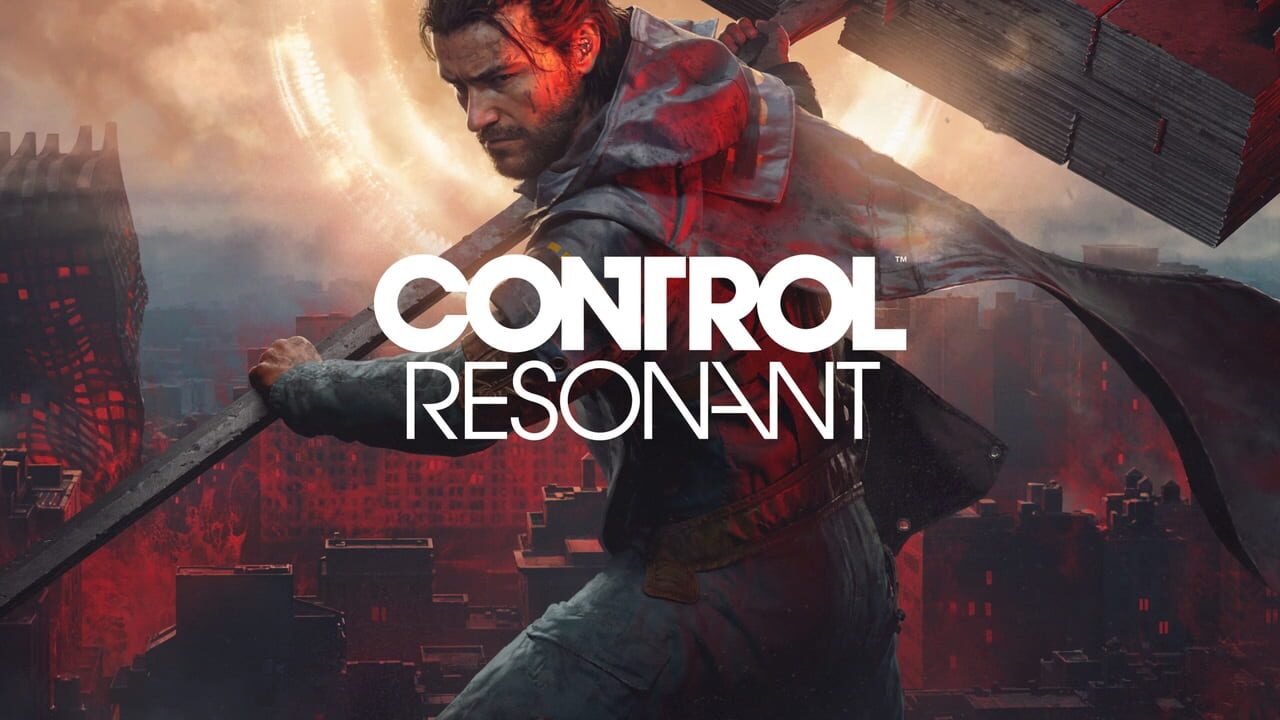
Explore a warped Manhattan on the brink of paranatural annihilation in this thrilling action-adventure RPG. Unleash the extraordinary powers of Dylan Faden as he fights for his humanity and our survival against a reality-bending cosmic threat.
Read moreShow less
After years in confinement at the hands of the Federal Bureau of Control (FBC), Dylan Faden emerges into a warped Manhattan at the peak of a paranatural crisis.
Charged with combating a mysterious cosmic entity as it alters fundamental aspects of our reality, Dylan must harness his new-found powers to take the fight to the myriad threats overwhelming Manhattan.
Join Dylan in this sequel to the multi-award-winning CONTROL to explore the expansive zones of a city overrun by the corrupting influences of the chaotic Hiss, invasive micro-organism, the Mold, and other twisted paranatural threats.
On the path to unlocking the full potential of his paranatural abilities Dylan will also seek out his sister, FBC Director Jesse Faden, as he bids to comprehend and contain the dangers that have spilled beyond the confines of the Oldest House to tear our world apart.
STEP INTO A WARPED REALITY
Explore multiple areas of a ravaged Manhattan in an expansive, unfamiliar, and exciting world.
Traverse perception-bending locations and grapple with gravity anomalies that distort the vertical and horizontal plane, adding additional dimensions to puzzles and new tactical decisions to combat.
Meet faces old and new on a path fraught with risk but rich in opportunity as the cityscape is reshaped and reality is redefined by a godlike force.
MASTER THE PARANATURAL
Channel the raw experiences of Dylan’s past to help understand his present and dig deeper into the inner workings of the FBC and reveal the horrors threatening humankind.
Tap into power he must learn to master and take choices to shape how his abilities manifest and grow.
Explore a deep progression system to define how Dylan adapts to emerging dangers. Forge connections crucial to Dylan’s fight to retain his humanity as he journeys from former test subject to paranatural superweapon.
THE FIGHT SHIFTS. YOUR WEAPON SHIFTS WITH IT.
Meet constantly evolving threats head-on, utilising the environment, deploying elemental abilities and using the raw force of Dylan’s shapeshifting melee weapon, the Aberrant.
Wield the Aberrant in its many deadly forms. Deliver bone-crunching blows with a two-handed hammer and flow seamlessly into the swift precision of dual-wielded blades as this paranatural weapon morphs on demand to meet each new challenge.
SHARED LEGACY. NEW THREAT
FBC Director Jesse Faden's lockdown is no longer holding. A paranatural catastrophe has spilled beyond the Oldest House and onto the streets of Manhattan, and the Bureau's grip on containment is failing.
Jesse Faden walked into the Oldest House to confront the threat within. Now Dylan must walk out of it to contain the threat beyond.
From the game's Steam store page.
THE GAMEQ VERDICT6,529 reviews analyzed
What players are actually saying
1. Summary
CONTROL Resonant landed as a clear hit with its players. The reviews keep returning to the same strengths: a warped, folding Manhattan that players compare to Inception and M. C. Escher, Remedy's dense lore and odd side stories, a sound design built around The Board's booming new voice, and traversal that hands you a double jump, dash and float in the first hour. Many reviewers are relieved that a 2026 release ran smoothly on day one, and 7% of all reviews call it a game of the year contender. Comparisons to Prototype and inFAMOUS appear in 4% of reviews, usually to describe the superhero power fantasy of moving through the city.
The main argument is about the switch from the first game's gunplay to melee. Combat comes up in 30% of all reviews and in half of the negative ones. Fans say it opens up once you unlock weapon forms, finishers and abilities. Critics, many of them devoted fans of the first game, call it a button-mashing three-hit combo with spongy enemies, no mid-fight weapon swap and a camera that sits too far back. The other major frustration is technical and hit only part of the audience: launch audio that stutters or falls out of sync in cutscenes, performance that degrades over long sessions, GPU crashes, and a day-one patch that forced a full 93 GB redownload of preloaded copies. Complaints about the world, story and presentation are rare; the disagreement is over whether the combat and the open-world structure live up to them.
2. What keeps coming up
What players praise
A warped Manhattan with standout art and level designHigh
Visuals, art direction and level design come up in 18% of reviews. Players describe streets that fold over themselves, buildings hanging upside down and gravity shifts that turn the city into a puzzle box. "It feels like a perfect blend of the movie Inception and the video game Prototype." was the single most upvoted review. Specific set pieces get named repeatedly, along with the Hiss and Mold enemy designs, and several players wish they could screenshot it properly. A minority found parts of the city samey: "rectangles everywhere", patterned blocks, or a starting district that "looks the same". Some miss the brutalist interiors of the first game's Oldest House, but even they usually praise the look of the new setting.
Remedy's story, lore and side contentHigh
A quarter of reviews mention the story, lore, writing or worldbuilding. Players read every document, chase the connected Remedy universe references and enjoy that the game picks up where Control and Alan Wake 2 left off, with a recap for newcomers. Players like the side quests for how strange they get: a haunted karaoke machine, a suspicious vending machine that runs away, finding a toy for a dog you can pet, Dylan's sketchbook puzzles. Some found the main plot thinner or the ending abrupt, and a handful blamed the absence of Sam Lake from the lead creative role (see the split section on story).
Traversal and movementHigh
8% of reviews single out traversal, and the Prototype, inFAMOUS and Spider-Man comparisons cluster here. Players love that the powers arrive early: "Here's double jump, dash, double dash, rush, float. Go have fun king". The later gravity-shifting ability is described as the moment the map opens up. The complaints are small: some traversal abilities unlock late if you miss the right path, ledge grabs can be fiddly, and a few found the constant verticality disorienting.
Sound design and musicMedium
7% of reviews bring up the sound or music. The Board's new deep, alien voice draws repeated comparisons to the throat-singing in Dune ("Didn't know the Dune Sardaukar throat singing priests would make a cameo"), and players credit the ambient sound with much of the atmosphere: "I've never played a game whose ambient sound is crawling on my skin." Zoe's mixtape needle drops and the karaoke song get named. A few missed the Old Gods of Asgard tracks from the first game, and some found the battle music weaker.
A polished, well-optimized launch for manyMedium
Players with mid-to-high-end PCs repeatedly report that the game ran smoothly with ray tracing or path tracing on, and treat that as rare in 2026. 5% of reviews explicitly praise the optimization or how smoothly it runs. Linux and Proton players mostly report it working out of the box, with ray tracing crashes as the main caveat. Steam Deck results were mixed: some ran it at 30 to 50 fps with the handheld preset, others found it unplayable. The stutter and crash reports below come from a smaller group of players.
Assist Mode and difficulty tuningMedium
Players who struggled with the early bosses often praise how granular the Assist Mode is: separate sliders for damage dealt and taken, with no penalty to achievements. "Fortunately powerful difficulty scaling tools means you don't need to waste 50 attempts learning the same boss attack pattern". Some players use it the other way to make fights faster and more lethal. The catch is that several struggling players didn't find it at all, which feeds the difficulty complaints below.
Puzzles and exploration with no hand-holdingLow
A recurring compliment is that the game trusts the player. "Exploration is great with zero handholding." and "Puzzles take you seriously and let u figure stuff out on your own." Players enjoy stumbling into hidden cafes, bunkers and side areas. The same design is the root of the navigation complaints, and a few players found specific puzzles obtuse or repetitive.
Fair price and no monetizationLow
A smaller group praises the $60 / €60 price, regional pricing, the lack of microtransactions and the absence of Denuvo. Some of these reviewers say they bought at full price specifically to support the studio.
Where players are split
Melee combat: fluid power fantasy or button mashingHigh
Combat appears in 30% of all reviews and in half of the negative ones. Supporters call it fluid, snappy and satisfying, compare it to Devil May Cry, Prototype and Doom, and say it transforms after the first few hours once primary and secondary forms, finishers, abilities and buffs combine. Several argue that critics never engaged with the systems; one tells players having issues with "button mashy gameplay" to use the Dominance streak to burst down big enemies.
Detractors describe the opposite. 22% of negative reviews call the combat button-mashy, spammy, shallow or repetitive. One of the most upvoted negative reviews is titled "An Amazing Game Held Back By A Boring Combat System" and sums up the loop: "Your 3 hit combo becomes a 4." The specific complaints repeat across independent reviews:
- No way to swap primary and secondary weapon forms mid-fight or switch loadouts quickly. "This game desperately needs a system to allow you to switch Primary and Secondary weapons on the fly."
- Dodge does not cancel an attack string: "the dodge is not responsive enough during attack combos", so queued swings land you in hits.
- Small enemies keep respawning until the heavy one dies, and ranged fodder pelts you from off screen.
- Hits lack weight or feedback for some, while others call the same combat "crunchy".
About 2% of reviews miss the first game's Service Weapon and Jesse's telekinesis, and a few say the opening throw power feels weak by comparison. Judging by the comparisons they draw, the divide seems to run between players who enjoy character-action games and Control fans who wanted another shooter.
Enemy health and difficultyMedium
The early game drew two opposite complaints. Some players hit a wall at the first boss, The Artist, compared it to a Souls game and refunded; others called it a fair tutorial or even too easy. Spongy enemies were a launch-week talking point, and a day-one hotfix lowered enemy health. After that, many reviews say enemies no longer feel spongy, while others still found trash mobs tanky. A few later players report the opposite problem once they do side content and stack buffs: they become overpowered. Difficulty scales with zone level as you defeat Resonant bosses, which some like and some found unclear.
Open-world structureMedium
Fans like that Manhattan is dense, zoned rather than sprawling, and full of things to stumble into. Critics see a familiar open-world checklist: radar towers to reveal the map, power-routing puzzles repeated across districts, enemies that respawn stronger, and copy-pasted interiors. "Why are there still Ubisoft-style towers in open-world games??" Some long-time fans miss the claustrophobic, interconnected Oldest House: "I miss the brutalist design and feel from the Oldest House setting of Control." Others say leaving it was the right call.
Dylan, Zoe and the dialogueMedium
Dylan is widely discussed and mostly liked. Players praise his awkward, childlike voice as a fitting result of decades of captivity, and enjoy how FBC staff fear and resent him. A smaller group finds him meek, whiny or constantly apologizing, and some expected him to be angry at the people who imprisoned him. Zoe, the voice on the radio, splits harder: some love her, while a handful of negative reviews cite her as snarky or bossy enough to quit. A few reviewers find the dialogue melodramatic or tropey, and Dylan's stiff facial animation and oddly large head come up as a smaller presentation gripe.
Story compared to the first game and Alan Wake 2Medium
Story praise is common (see above), and some call the ending the best Remedy has done. A vocal minority finds it less mysterious than the first Control, more action-movie than eerie, or thinner without Sam Lake's direct involvement. Some miss Ahti and the Old Gods of Asgard. Several finished players found the final stretch and ending abrupt. A late retro, 16-bit-style section split players between those who loved the surprise and those who found it too long.
Bosses: spectacle versus mechanicsLow
Boss design is praised visually, from the giant head of the opening fight to the Dancer. Several players say the fights themselves are simple: few attacks, heavy telegraphs, then dodge and repeat, or long health bars. Others name the boss fights as a highlight.
What frustrates players
Audio desync and stutter in cutscenesMedium
Of the launch bugs, this is the one negative reviews mention most. Players describe dialogue lagging seconds behind cutscenes, music cutting in and out, and voice lines overlapping later scenes. For some it made the story unplayable: "The audio de-syncs during cutscenes AND gameplay". 7% of negative reviews cite audio bugs. Several noted the same problem in Alan Wake 2 and the first Control. Reviewers who installed on a hard drive found it worse, and "Take the SSD REQUIRED warning seriously lol" sums up the advice. DualSense users reported radio audio playing through both the controller and the speakers.
Performance drops, stutter and long-session degradationMedium
10% of negative reviews cite stutter, frame drops or poor optimization, mostly in open-world areas, during traversal and when combat starts. A distinct complaint is performance that degrades over a session. Another heavily upvoted negative review reports losing 30 to 40 fps after an hour or two until a restart: "Constantly having to restart the game after every hour or so is souring the experience for me." Others report a broken frame limiter, bugged V-sync modes, and textures or models failing to load. Many other players report excellent performance, which suggests these problems depend on hardware and settings.
Crashes and launch bugsMedium
Crashes appear in a smaller set of reviews: GPU-fault crashes with the game's own error message, crashes during cutscenes fixed by turning off ray tracing, and ray tracing crashes on Linux. Other bugs include a controller that won't reconnect once it disconnects ("Controller will NOT reconnect to the game."), soft locks, falling through the map, slow elevators in the opening, a slow-motion state after dying, and corrupted map icons. Most reviewers with these bugs still recommend the game.
Map and navigationMedium
Navigation is the most frequent design complaint after combat. The map is flat while the city is vertical and has underground layers, quest areas are often not marked, collectibles don't appear, and the minimap works mainly as a compass. "This is probably the worst navigation in a Remedy game." Players who enjoy getting lost tend to shrug this off ("Remedy can't do a map."), but it appears in reviews of every sentiment.
Camera distance and combat readabilityMedium
Players repeatedly ask for a camera distance slider. The default view sits far from Dylan, and FOV changes only partly help: "The camera angle and FOV are way too wide." In busy fights the red Hiss effects, particles and off-screen projectiles make enemies hard to read, auto-targeting picks the wrong enemy, and the camera struggles in corridors. A few players also reported motion sickness from the gravity shifts.
The preload redownloadLow
On launch day, the day-one hotfix invalidated preloaded files, forcing players to download about 93 GB again. Reviewers on capped connections were especially angry: "Don't make players download 93 GB twice." The complaint is confined to launch day and several affected players still recommend the game.
Deluxe Edition soundtrack and artbook locked in-gameLow
Deluxe buyers found the soundtrack and artbook only accessible through the game's menu, with no files to export and the GPU running in the background. "DO NOT BUY THE DELUXE VERSION IF YOU WANT THE OST OUTSIDE OF THE GAME." That review was among the most upvoted of the whole launch.
Menus, conversations and missing featuresLow
Several smaller quality-of-life points recur. Players must restart a conversation for every question ("then you have to re-engage them to ask a new question"), the dialogue wheel is awkward on mouse and controller, new documents aren't marked as unread, tutorials stack on screen, and respecs are a limited resource with no way to try an ability first. There is no photo mode at launch, which players of a game this visual noticed: "this game is desperately pleading for a PHOTO MODE".
The EULALow
A few launch-day reviews objected to the license agreement, which has no decline button and includes a US arbitration clause with a mailed opt-out. One of these was the most upvoted negative review, but the topic barely appears after launch day.
3. The player conversation
The tone is celebratory and loyal. Many reviews are short endorsements ("peak", "absolute cinema", "Remedy never misses"), jokes written in The Board's slash-bracket style, and calls to support an independent studio that self-published at a $60 price. Many reviewers are long-time Remedy fans, and that loyalty colors both sides. Most fans followed the studio into melee combat happily, and many of the angriest negative reviews also come from fans of the first Control who wanted its shooter combat and its single eerie building back.
Who raises what is fairly clear. Players who refunded inside Steam's two-hour window mostly cite the combat's early feel, the first boss, launch audio and performance problems, or the preload redownload. Players several hours in talk more about the combat opening up, the map, the camera and the respawning enemies. The handful who finished, including PlayStation 5 owners who played early and came to PC, praise the story and ending, and point to late-game boss quality, the open-world checklist and navigation as the lasting flaws.
The conversation improved after launch week. The positive share rose from 90.5% among reviews written in launch week to 93.3% in the following week. Launch-day complaints about the preload, the EULA and spongy enemies before the hotfix faded quickly, while the combat-depth debate and the navigation complaints carried on through both weeks.
4. What the developers could do
- Fix the audio desync and stutter in cutscenes and gameplay. It is the most common bug in negative reviews, and several players say it made the story unplayable or forced them to mute the game.
- Find and fix the long-session performance decay and stutter. Players report losing 30 to 40 fps after an hour or two until they restart, plus traversal and combat-start hitches and a broken frame limiter.
- Let players swap weapon forms or loadouts mid-fight and cancel attacks into dodges. These are the most specific, repeated requests from players who found the combat repetitive, including many who still recommend the game.
- Rework the map for a vertical city. Players ask for layered or 3D maps, marked quest areas, collectible markers and a more useful minimap, and navigation is the top design complaint after combat.
- Add a camera distance slider and improve combat readability. Players say the default camera is too far away, and that effects clutter and off-screen projectiles hide attacks.
- Make Assist Mode easy to find before the first boss. Several players who refunded at The Artist did not realize the difficulty sliders existed, while those who found them praise them.
- Fix crash and controller issues. Players report GPU-fault crashes, ray tracing crashes on PC and Linux, and controllers that won't reconnect without restarting the game.
- Give Deluxe owners the soundtrack and artbook as files, and add a photo mode. Deluxe buyers felt misled by an in-game-only soundtrack, and many players asked for a photo mode to capture the city.