Rivage
Exnilo Studio · Puzzle, Indie, Walking Simulator
Overview
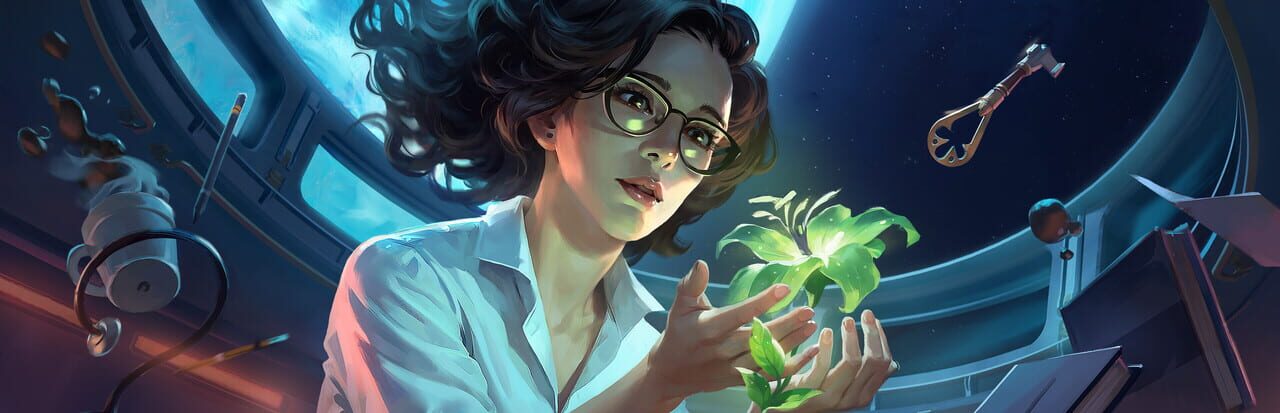
Rivage is an immersive sci-fi puzzle adventure set aboard the A.R.E.S. space station trapped in a space phenomenon. Wake up as Miranda, forced to explore, solve intricate puzzles to unravel the fate of your missing crew.
Read moreShow less
In the 25th century, humanity has been forced to expand beyond its solar system. Among the stars, the planet VESTA is discovered, a world that may hold the promise of a new home. To study it, the A.R.E.S. space station is launched into orbit to analyze its potential. But when the station, and the crew, was caught up in a space phenomenon, calamity struck…
You play as Miranda, who awakens alone aboard the station trapped in a strange phenomenon. With clues of the past echoing through the world: an object out of place, a door newly unlocked, a message left behind almost as if the station itself challenges you. To survive, Miranda must rely on her mind, solving intricate puzzles, experimenting with strange objects, and piecing together the truth behind what happened to her crew and the station itself.
As you unravel the mystery, one truth becomes clear: progress always has a cost. Rivage is an atmospheric sci-fi puzzle adventure that blends exploration, logic, and narrative discovery into a deeply beautiful experience, where each step brings you closer to escape.
Step aboard the A.R.E.S. station, a meticulously detailed, fully interactable environment where every item tells a story. Examine artifacts, analyze research data, and uncover hidden notes scattered across abandoned workstations.
The station was once home to a crew, each with their own goals, fears, and philosophies. Now, only fragments of their lives remain: journals, personal logs, and encrypted messages scattered throughout the station. Piece together their relationships, uncover the emotional toll of isolation, and experience a narrative that weaves scientific mystery with human vulnerability.
Every puzzle in Rivage is woven into the fabric of the story. You’ll repair broken systems, realign malfunctioning mechanisms, and solve environmental challenges that play with gravity, magnetism, and the very flow of time.
With the K9 System, Miranda can log discoveries and retain certain puzzle solutions, allowing players to focus on what truly matters; uncovering the truth behind the distortions that have consumed the station. This balance keeps gameplay engaging, rewarding cleverness and persistence over repetition.
From the game's Steam store page.
THE GAMEQ VERDICT275 reviews analyzed
What players are actually saying
1. Summary
Rivage is a first-person puzzle game on a failing space station, built around a power-limited time loop, and reviewers describe it as an escape room more than an Outer Wilds-style mystery. The station itself gets the most praise: players call it beautiful, eerie and detailed. Many found the puzzles fair and satisfying, and several want every puzzle game to copy its in-game photo and log tool, the K9.
Puzzle difficulty swings from trivial key hunts to spikes that come down to brute force, and the optional true ending asks players to solve a full Rubik's cube with awkward controls, decode long Morse code by ear and scan QR codes with a real phone. Players also criticize the crew's writing and voice acting, many found the ending abrupt, and the one-item carry limit and overlapping controls made backtracking a chore. Launch week brought a blurry, grainy image problem and no colour-blind options, and players credit quick patches for fixing both. Many positive reviews are soft recommendations with long lists of caveats, and several negative ones begin by saying the player wanted to love it.
2. What keeps coming up
What players praise
A beautiful, atmospheric stationHigh
Reviewers on both sides call the station gorgeous, lived in and quietly unsettling, with distinct rooms, good music and small details everywhere. One player stopped in every new room "and just take in my surrounds"; another described the moment the power runs out, when "everything goes dark and quiet its creepy as hell." Several negative reviews open by granting that the game looks great before turning to puzzles or story. The objections here are technical (see the launch image problems below), along with a few players who found rooms so full of interactable junk that the one important object got lost.
The K9 photo and log toolMedium
The K9 interface takes in-game screenshots and stores every log, password and recording. "I love the screenshot mechanic" is a typical line, and players note that solved locks and passwords re-enter themselves on later loops, which cuts repetition. Their requests are just as specific: faster photo deletion, sorting and annotation, and an end to typing some late-game codes (a constellation chest, a safe) by hand.
Randomised solutions that make guides less of a shortcutLow
Several reviewers like that codes and many puzzle answers are randomised per save, so "even guide followers must do all the steps". A few players who got stuck saw the other side of it: a walkthrough could show the method but not their own answer.
Where players are split
Puzzle quality and difficultyHigh
Puzzles are the topic reviewers write about most, and they disagree about them. Fans describe puzzles that are "logical and fair", challenging without a guide and full of a-ha moments; one called it "the best escape room I've ever played." Critics come at it from two directions. Some found most puzzles too simple, mostly "find number, put number somewhere else", and one wrote "It feels much more like an escape room than a puzzle game". Others hit sudden spikes where trial and error replaced reasoning: "playing trial and error mini-games is boring and not really a puzzle." The puzzles reviewers name as unfair are the observatory light beam, the containment-unit cog puzzle, a colour-mixing grid, an amino acid puzzle that one player says rejected a correct orientation, and a timed sequence that depends on luck. Positive reviewers often name the same two or three puzzles as the ones that stopped them. One player described the range this way: "Puzzles vary wildly in difficulty from absolutely trivial to ones that are so difficult they make you feel like you missed a clue."
The time loop and power systemHigh
Supporters like that every action costs limited power, so each loop is a small plan, and that progress carries over: "Yes you restart but everytime you do you learn a little bit more." Detractors say the loop rarely matters to the puzzles and mostly forces backtracking; one felt it was "like they decided they wanted a loop and wrote a story around it and forgot to make the game actually need the loop at all." Players also complain that there is no way to restart a loop from the menu, so a wasted loop means a long walk back to the arcade cabinet. A few found that quitting to the menu silently cost them a loop, which matters for the 25-loop achievement.
Linearity and the Blue Prince and Outer Wilds comparisonsMedium
Many players arrived expecting something like Blue Prince or Outer Wilds, and that expectation shaped how they took the game. Those who wanted a linear, polished escape room were happy ("Gargantuan, top-shelf escape room in video game form"). Those who wanted open-ended deduction found one fixed path through one puzzle at a time, and several told readers to play Blue Prince instead. A few positive reviewers say the comparison itself hurt the game: "Expectations were too high when the delivery did not match up to the hype for me".
Length and priceMedium
Players report finishing in roughly 6 to 15 hours, more for every secret. Some think that is fair for the price and the art; others call it "way too short for the cost" and suggest waiting for a sale. It is usually a side note rather than the reason for a vote.
What frustrates players
Unlikeable characters, writing and voice actingHigh
Positive and negative reviews alike criticize the crew. Players describe the scientists as petty, childish and hard to believe as a mission team, "a crew with less chemistry and cohesion than bio-dome". Several reviewers found the portrayal of an autistic crew member, a character's eating disorder and mental illness clumsy or insensitive. The voice acting is often called cheesy, and the protagonist's quips and running commentary broke immersion for some. Some players found the story compelling and liked piecing the logs together, and a few call the voice acting good. Many fans treat the story as set dressing for a puzzle game.
Optional end-game puzzles that leave the gameHigh
The true ending requires collecting tarot cards, and the steps to get them draw a lot of the anger in the reviews. The Rubik's cube comes up in 13% of all reviews, nearly always as the low point: players object to being asked to solve a real cube and to the clumsy rotation controls, and one otherwise glowing review ends on "terrible cube." A patch reworked the cube puzzle, which one player says left online guides out of date. Long Morse code by ear and QR codes scanned with a real phone draw the same objection: "It's a cardinal sin to me if you have puzzles that take you out of the game for any reason." A few players enjoyed learning the cube for it, and many watched the secret ending online instead.
Clunky controls, inventory and readingHigh
Players can carry only one item at a time, and many call it pointless back-and-forth: "Not being able to pick more than 1 item at any given time is awful, you're running back and forth constantly". The inspection and HUD controls overlap, so "the same keys are used to interact with the in-game objects and your overlay", though some say the lock-navigation toggle helps. Dark rooms, flashlight glare, reflections and white text on green message bubbles make notes and screens hard to read, and several players ask for a plain-text reader. Others mention slow hold-to-confirm prompts, awkward key rebinding and slow photo deletion.
Launch image problems and performanceMedium
In launch week many players hit a forced low-resolution, grainy and blurry image: "Blurry, grainy, horrible to look at regardless of settings." A cluster of very short-playtime negative reviews were refunds over this alone, alongside broken resolution options and no DLSS or FSR. Patches arrived within days and later reviews say so ("Blurring issue has been resolved with the latest patch, game looks fantastic!"), though some players still report graininess, frame drops on mid-range hardware and occasional stutters or a possible memory leak. Plenty of players had no problems at all.
The endingMedium
Many players describe the normal ending as abrupt or anticlimactic, with late twists they felt were never set up and threads left unresolved. Reactions range from "a bit anticlimactic" to "The ending was absolute poo." Some say the secret ending improves it; others never wanted to do the cube to find out.
Not getting stuck: no hints and unclear next stepsMedium
Players who stall often cannot tell what they missed, sometimes an object in a cluttered room that is not highlighted. Several ask for an optional hint system: "A hint system like the one in The Room series would have been a great addition." Very short-playtime negative reviews often say exactly this, that they never worked out what to do next.
No colour-blind support at launchMedium
Colour-blind players (5% of reviews raise it) found several colour-matching puzzles near impossible, with no accessibility setting and no skip, and a few players without colour blindness struggled to match colours in poor light too. A patch added colour-blind options in launch week ("Impressive turnaround on adding the colorblind options."), but some later reviews still describe the colour puzzles and the audio-only Morse puzzle as accessibility barriers.
Scattered bugsLow
A small number of reviews report bugs that blocked progress: pieces disappearing from the clock puzzle, a missing ID number, crashes on launch after an update, no audio with a USB headset, and screenshots lost when switching between devices. Most reviewers mention no bugs.
3. The player conversation
Many reviews, positive and negative, are written as lists of pros and cons. A common shape is a reviewer who loved the station and most puzzles but cannot forgive one thing, usually the cube, a timed puzzle or the crew. Positive reviews often argue with the score directly, saying the negative reviews were harsh or that the game deserved better.
Players with an hour or two in the game wrote mostly about the blurry image, the settings menu and the UI, plus a few who never found their way past the first rooms. Players who finished the story focus on the writing and the ending, and completionists who chased the tarot cards write about the Rubik's cube, the Morse code and the QR codes. Comparisons to Blue Prince, Outer Wilds and Myst turn up in every group.
Launch week reviews were dominated by image quality and colour-blind complaints. After the patches, reviews concentrate on puzzle design, loop friction and writing, and the share of positive reviews rose from 70% in launch week to 76% in the second week.
4. What the developers could do
- Add an optional, layered hint system. Players who stalled on unclear next steps or on the hardest puzzles asked for nudges in the style of The Room rather than full answers, and early players who got stuck wrote some of the most negative reviews.
- Rework the cube, Morse and QR requirements for the true ending. Players who went for the secret ending repeatedly complain about the Rubik's cube controls and the out-of-game QR and audio steps; better cube rotation, a Morse waveform aid like the other sound puzzle, and an in-game way to reach the QR content would address it.
- Smooth the worst difficulty spikes. Reviewers name the observatory light beam, the containment cog puzzle, the colour grid and the luck-dependent timed sequence as brute force; clearer rules or extra clues would keep the a-ha moments players praise elsewhere.
- Loosen the one-item limit and fix control overlap. Many reviews call single-item carrying pointless backtracking, and shared keys between inspection and the K9 HUD cause constant misinputs.
- Add a plain-text reader and better lighting for documents. Glare, dark rooms and low-contrast message screens make the clues hard to read, and players asked for this directly.
- Let players restart a loop from the menu and stop menu exits from costing a loop. Both waste time, and the second hurts the 25-loop achievement.
- Keep improving image quality and accessibility. Some players still report grain, frame drops and no modern upscaler, and colour-blind and hearing-impaired players asked for alternatives to the colour and audio puzzles.
- Give the K9 photo tool sorting, notes and faster deletion. Its fans listed exactly these gaps.