Dwarf Eats Mountain
Green Wizard · Simulation, Strategy, Indie
Overview
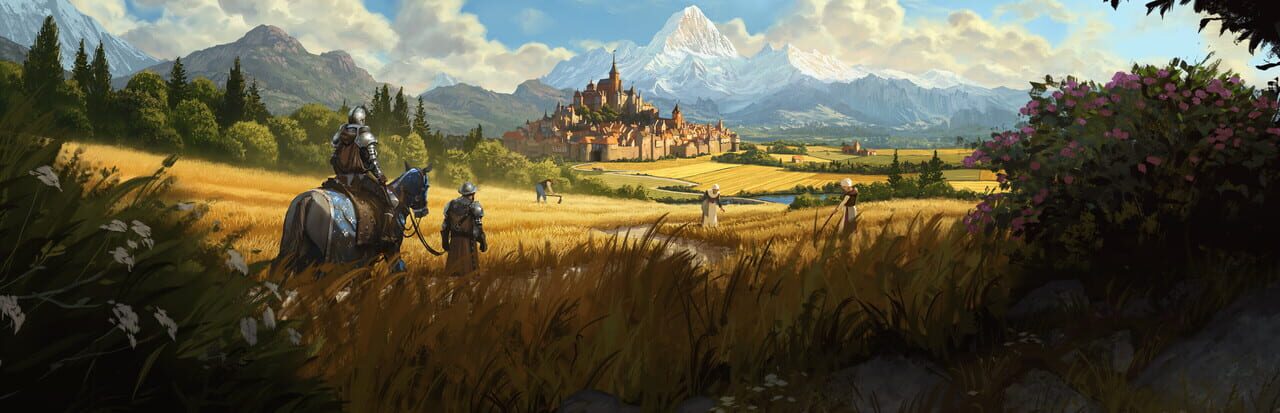
Dwarves hunger for gold, and no mountain shall stand in their way! Mine riches, unearth artifacts, and upgrade your dwarves to devour ever-bigger peaks in this whimsical incremental game.
THE GAMEQ VERDICT711 reviews analyzed
What players are actually saying
1. Summary
Dwarf Eats Mountain is a semi-idle incremental in the vein of The Gnorp Apologue: dwarves batter a mountain with bombs, flamethrowers and lasers while runners haul the gold and gems back home, and you reset for prestige points and then ascend for deeper upgrades. Most reviewers recommend it. They praise how hard it is to put down, the jokes and flavor text, and the noisy, physics-driven chaos on screen, and some keep it running on a second monitor while they work. Many of the reviewers who had played the demo or the itch.io build wrote in launch week, and several said the full release gave them more of what they liked.
About half of the negative reviews say the prestige and ascension resets feel too weak or that progress is too slow and grindy. Smaller groups point to endgame gates that hinge on random artifact drops and timed bosses, one unit type (Flamers and their Flame Lord upgrade) that outclasses the rest, runners stun-locked by calamities, and a busy interface that explains too little. Players also disagree about whether the price, which reviewers put at around $10, is fair, and whether a game you have to babysit counts as an idler. Many positive reviews raise the same flaws while still recommending it.
2. What keeps coming up
What players praise
Hard to put down, in a good wayHigh
Dozens of reviews call the game addictive, a time sink or a "dopamine" machine, or joke that they had to uninstall it. Reviewers describe losing whole days: "Took over my life for 4 days." Another sums up the loop as "I'll prestige...juuust after this one mountain". These reviews are nearly all positive, and they come from every kind of player, from launch-day buyers to people who went on to finish every achievement. Some turn the compulsion into a mock warning, one joking that they can't recommend buying it because it is "excessively addictive".
Jokes, flavor text and dwarven charmMedium
The item descriptions, the puns and references, and the Wilhelm scream as dwarves get flung across the screen all get praised for their humor. One player wrote "+Funny Tooltips Had Me Literally Laughing Out Loud", and another that "The humor is sardonic and fun, with innuendo that never goes too far over the top." A few reviewers disagreed sharply and found the jokes crude or dated, one writing that "The writing seems to have been done by someone stuck in the mid-2000's internet"; another negative review called the many borrowed references a stand-in for creativity. Complaints like these are rare next to the praise.
Pixel art, physics and soundMedium
Players like watching piles of loot tumble and dwarves bounce around, and the soundscape gets singled out: "the audio is 11/10, the sounds of the lasers, rocks breaking, screaming and explosions are soo well crafted, you could fall asleep to them." Another player called it "a great Zen idler with one of the least Zen themes ever." One reviewer credited the physics with lifting it above the genre's plainer entries: "All the systems revolve around physics". The main dissent is about readability late in a run (see the interface item below).
Runs light, including on Steam DeckLow
Reviewers mention that it runs on modest hardware. One player wrote that it "Runs great on Steam Deck! The right track pad works perfectly as a mouse", and another adds "Runs great on Steamdeck, laptop, or a potato." A native Linux build also got a thank-you. A handful of players reported the opposite, including a laptop running hot and a high-end PC that struggled in early walls.
Fast, responsive patchesLow
A few reviewers changed or softened their verdict after launch patches. One wrote that "almost the same day that I posted this review, the dev patched out the one major thing I had an issue with", and another flipped from negative to positive after quality-of-life updates landed. Others mention a progression and ascension rework in the first weeks and a quick fix for an endgame relic problem.
Where players are split
Build depth versus one dominant unitMedium
How much real choice the game offers is in dispute. Supporters praise synergies, experimentation and meaningful decisions. One called it "a DIFFICULT idler thanks to the PP system", and another found "a lot of different builds are viable." Critics say the choices collapse into one answer. One wrote "you just keep clicking whatever buffs flamers as they're like 100x better than anything else", and a player who still recommends the game put it as "Flame Lord >>>>> literally anything else at all no matter the investment." Others add that miners, cannons and some buildings are traps, and that prestige points can't be refunded once spent. A few defended the balance: "Flamers seem overpowered at first but you can figure out other strategies if you try."
Is it worth the price?Medium
Reviewers on both sides bring up the price, which they put at around $10 or €9.99. Some positive reviews call it great value for the hours ("Best value PC game I've bought in years."). A handful of negative reviews say it costs too much for an incremental, valuing it as low as "$1-2" or "2-5$ at most" and pointing to free genre games. A few positive reviews still say to wait for a sale, such as "worth getting on sale, probably not full price."
Idle game or active game?Medium
How idle it really is depends on who you ask. Several reviews like that it works both ways, kept on a second screen or played closely for faster progress, and one praised "how great the window scaling is so that I can have it in the background or wherever on my window while I multi-task." Others find that it falls between two stools: "Too fast-paced and active to be an idler, and too slow-paced and passive to be a tower defense." The specific complaints are no offline progress ("There is no progress when the game is closed - and this is an Idler game!"), no pause button, and timed events you can miss if you look away.
Measured against The Gnorp ApologueMedium
Dozens of reviews compare it to The Gnorp Apologue, and they don't agree. Fans call it "As good as or better than Gnorp" or what Gnorp "should have been". Detractors call it a worse copy with weaker synergies, and one advised newcomers to play Gnorp first. The middle view is that it "falls short of Gnorp Apologue but not by too much." Negative reviews bring Gnorp up more often than positive ones do, about one in eight of them.
Too short or too longLow
Some players finished the main game in about 12 to 22 hours and wanted more ("beat it in about 12 hours. wish there was more"), asking for more bosses, artifacts or an expansion. One player needed well over 100 hours to reach the end, and another liked that the game "isn't afraid to be long and grindy." Mostly the difference comes down to whether a player stopped at the main ending or chased ascensions and every achievement.
What frustrates players
Prestige and ascension resets feel too weakHigh
More than a third of negative reviews bring up prestige or ascension, most of them to say the resets do too little, and some positive reviews make the same point. The objection is that resetting rarely makes you feel stronger: "Restart your game for ridiculously minimal changes in gameplay, essentially just slightly bigger numbers each time." Another player wrote, "I can see the numbers go up but I don't actually feel more powerful." Ascension, the second reset layer, gets its own criticism, because it wipes most prestige upgrades for small permanent boosts. One otherwise positive reviewer said it "doesn't unlock new gameplay modes or features". Some detailed reviews add that prestige points come fastest from short runs ("it's taken me 7 minutes to get 20 PP, and 45 minutes to get 50"), which pushes players to restart over and over instead of pushing deep. One defender argues that people are simply resetting too early: "folks complaining about the small prestige progress are just triggering it too soon."
Slow progress and a grindy endgameHigh
More than a third of negative reviews call the game slow, tedious, repetitive, boring or a chore, and a fair number of positive reviews carry the same caveat. The early minutes of each run are a common sore spot ("the start feel so slow until you get all your runners back"). So is the long tail after the main ending, especially the achievement for a billion gold, which one fan called the only problem: "you did everything and then u just have to wait this long for the final achivment." One review calls it "an interesting incremental with a blatant disregard for the player's time". Fans of slow incrementals pushed back ("it's not slower than any other clicker game you've played."), and some said they loved the grind.
Endgame gated by luck and timed bossesMedium
Players going for the true ending describe gates that depend on random artifact drops and timed boss fights. One wrote that "You could know everything and play like an absolute god and still lose because RNG determines whether you win or lose." Another described the end as "locked behind an RNG gate", where each attempt "requires a 5+ hour run to get to it." Others object that timed bosses and forced prestiges punish anyone who leaves the game idle, since "if you stop paying attention to it, you fail events." These complaints come mostly from players deep into the game, and one reviewer says an update fixed a relic they had been unable to get.
Cluttered screen and unexplained systemsMedium
Several reviews, most of them negative, say the interface explains too little and gets hard to read. One player wrote "The UI is unintuitive and the tooltips require SO MUCH MORE INFORMATION", and another that "This game's interface feels like it actively hates the player." Later runs fill the screen with debris until "it's hard to see what's going on," overlapping pop-ups block clicks, and players ask for ways to see what an upgrade or stacked buff actually does. One player did praise the options menu, especially the setting that enlarges the cursor, "because finding the default cursor becomes a nightmare fast."
Runners stun-locked by calamitiesLow
About one in ten negative reviews complain about runners being knocked out by falling rocks and calamities. One says "basically 3/4 of your stash runners will be stunlocked the entire game because of the horribly tuned calamity mechanic." Others say screen-wide events like volcanic eruptions leave no counterplay, and that knocked-out runners take forever to wake up and stall gold income. A couple of players enjoy the slapstick, such as slapping stunned runners awake.
Rebuilding every run by handLow
Players who reset often grow tired of setting up the same buildings again: "The amount of clicking in each building for every upgrade is insane." Requests include saved building layouts that auto-buy, auto-closing artifact pop-ups, hotkeys for the abilities you spam in the late game, and a speed-up button. One player modded in a 3x speed and said the game "feels better".
Crashes, save loss and platform hiccupsLow
Bug reports are rare but serious when they hit. Players describe a crash that deleted a 12-hour save, a save wiped 40 hours in (which the developer restored by sending a save file), a bug that blocked rebuilding a shrine, four crashes in under 90 minutes, and an early update that broke the game on Linux and Steam Deck. One demo player was disappointed that demo progress did not carry over.
3. The player conversation
Many reviews are one-line jokes about eating rocks, "Rock and Stone" chants and dwarf puns, which shows affection but says little about the game. The detailed reviews are more mixed. Many of the long ones, positive or negative, spend their space on progression design: how prestige points are earned, whether ascension is worth it, which units dominate. A good number of positive reviews recommend the game while listing the same complaints the negative reviews make.
The game arrived with a built-in fanbase. 6% of reviews mention the demo or the itch.io version, several from players who logged dozens of hours there before launch, and most of those wrote in launch week. Launch week produced 37% of all reviews (263), and the first four weeks after release were the high point at 90% positive (410 of 456). From mid-June onward reviews slowed to fewer than 25 a week and settled at 82% positive (209 of 255). The early patches won some critics over.
Who raises what follows how far players got. The complaints from people who stopped within the first couple of hours are scattered: an interface they had to fight with, crashes or heavy hardware load, and comparisons that put Gnorp ahead. Most of the arguments about prestige strength and Flamer dominance come from players in the middle stretch. The long-haul players, many of whom finished every achievement, talk most about ascension, the luck-based endgame gates and the billion-gold achievement.
4. What the developers could do
- Make each prestige and ascension reset feel like a power jump. More than a third of negative reviews take issue with prestige or ascension, and one player wrote that each run still feels "exactly the same" after resets, while others call ascension just a bigger wipe.
- Reward longer runs with prestige points instead of rapid restarts. Some detailed reviews say prestige points flow fastest from short runs, which pushes players into the slow, tedious early game over and over.
- Remove the luck from the true ending. Players who reached the end describe losing multi-hour runs to a single missing random artifact or a boss fight they looked away from.
- Rebalance Flamers and Flame Lords against the other units and allow a prestige respec. Several reviews say every build ends in Flamers, and players who tried other units can't refund the points they spent.
- Cut the busywork of rebuilding each run. Players asked for saved building layouts that auto-buy, auto-closing artifact pop-ups, more hotkeys and a speed-up option.
- Explain systems in the interface and declutter late runs. Both early quitters and veterans asked for fuller tooltips, visible stats for stacked buffs and less screen clutter.
- Give runners an early answer to calamities. Reviewers describe runners stun-locked by unavoidable events for long stretches, especially at the start of each run.
- Add offline progress or a pause, and warn before timed bosses. Players who treat it as an idler object that progress stops when the game closes and that timed events fail while they look away.