Welcome to Elderfield
Chris Cote · Horror, RPG, Simulation, Survival
RELEASE MILESTONES
Dates from IGDB release data
Overview
Welcome to Elderfield, a cozy horror RPG with hand-drawn art and dark lofi music. Manage your farm, befriend or romance the locals, investigate mysteries, decorate your home, fight terrifying creatures, fish, cook, seek the Old Gods, die in your sleep, and more... There's lots to do in Elderfield!
Read moreShow less
Welcome to Elderfield is a cozy horror RPG where the abnormal is normal, the townsfolk are odd, the eldritch beings watch over you and the local news reports seem stranger by the day.
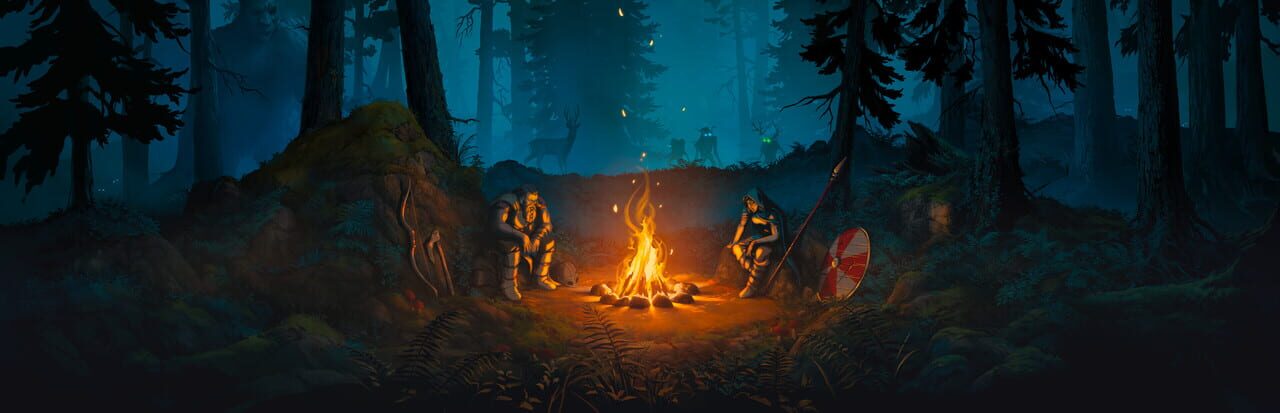
Everything in Elderfield is unsettling, from the haunting, horror manga-inspired, hand-drawn visuals to the dark, lofi soundscapes composed by Dated. Despite the strange creatures lurking just outside your home, those who wander into Elderfield rarely find a reason… or option, to leave.
Customize your home and character, unravel daily mysteries, befriend the odd townsfolk (or even marry one!), go fishing, spend your afternoons mining and forage through the surrounding wilds… There's lots to do in Elderfield!
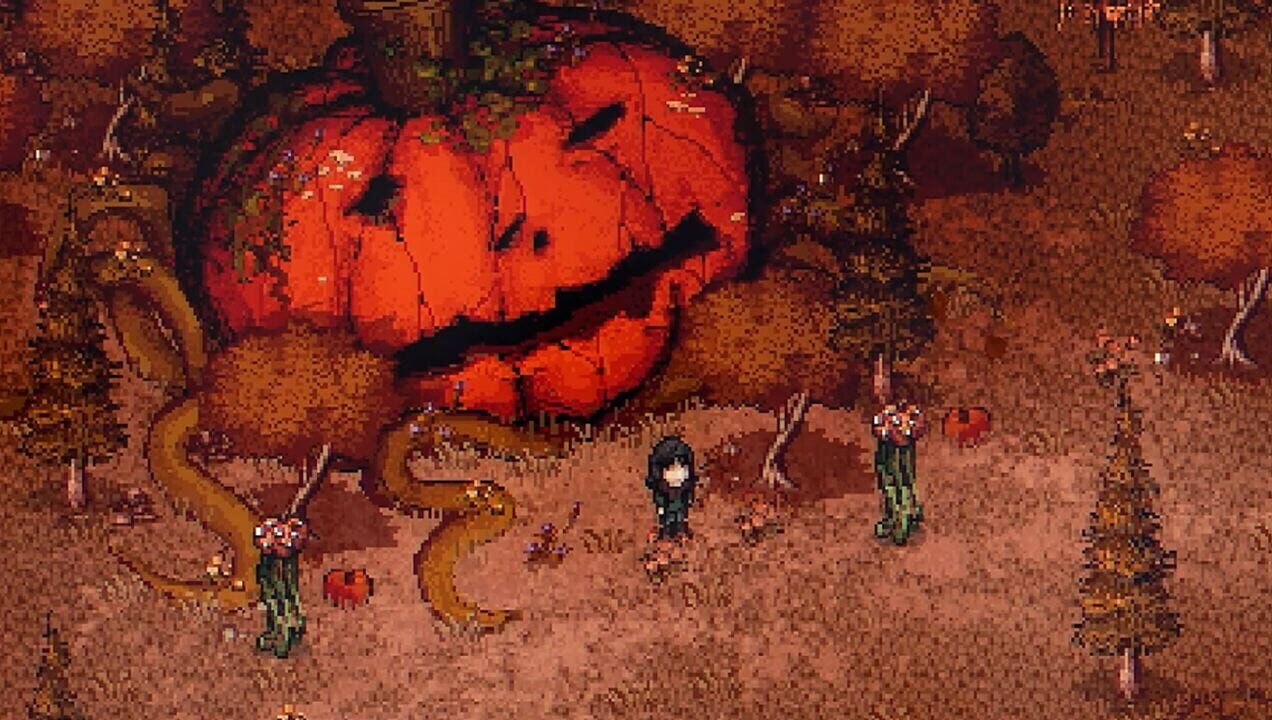
Cultivate your land, harvest your crops, and stop the growth of unruly tentacles. Manage a variety of strange, otherworldly livestock, grow useful crops like corn, pumpkins, teeth or eyeballs and hope that beings from the woods don’t wander onto your farm.
Choose your difficulty, how much suffering can you endure? For players seeking a peaceful life of harvest and discovery, cozy difficulty offers a more laid-back experience. For those who crave a challenge, the Old Gods are waiting.
Elderfield features a deep, turn-based combat system where you must utilize gathered resources, strategic buffs and diverse equipment to survive encounters with ancient, Lovecraftian horrors.
Die, learn, farm, and forage… Then die again.
Full RPG life sim with relationships, customization, fishing and more
Dark lofi soundtrack by Dated
Build your farm, manage animals, mine and forage to build resources
Play on cozy mode or test your skills and resource building with in depth turn based combat
From the game's Steam store page.
THE GAMEQ VERDICT1,367 reviews analyzed
What players are actually saying
1. Summary
Welcome to Elderfield is a solo-developed, RPG Maker-built farming and life sim set in a Lovecraftian small town where the horrifying is treated as ordinary. You grow crops that sprout heads and wander off, tend a ranch for a giant skeleton farmer, fish, mine, cook, decorate and romance townsfolk (a skeleton, a ghost and a sewer slime among them), while a Welcome to Night Vale-style TV and radio station reports the day's anomaly. Underneath it is a turn-based RPG: gear, stats, skills and rituals, dice rolls on nearly every action, curses and blessings, and dungeons such as a derelict mall, shifting woods and catacombs. The praise is mostly about that identity: the hand-drawn, horror-manga art, the eerie lo-fi soundtrack, the deadpan humor and the sense that every corner hides a mystery. Several reviewers who had bounced off or burned out on Stardew Valley say this is the farming sim that finally held them, and those who mention the price (under $20) generally call it good value.
The complaints are about pacing and balance. Players who love the mood still describe a game that keeps slowing them down: an ambush or a "piece of debris hits you in the face" every few pickaxe swings, unskippable dice animations, slow walking, weekly resource respawns and 10-day crafting timers. Of the 107 substantive negative reviews, 40 mention grind or tedium and 40 mention dice or luck, against 7% and 10% of positive reviews. Grind comes up more the longer people have played, in about a quarter of substantive reviews from players past 25 hours and over a third from players past 50, who describe late-game money walls, enemies acting four to six times per turn against the player's two, and a final requirement to complete the gallery collection. Reviewers want rebalancing and quality-of-life work, and the quick early patches bought the developer some patience.
2. What keeps coming up
What players praise
Art, music and a creepy-cozy atmosphereHigh
Art, music or atmosphere comes up in 504 of the 1,174 substantive reviews, and in 37 of the 107 negative ones, which often compliment the look before getting to their problems. The hand-drawn character and monster portraits remind dozens of reviewers of Junji Ito, with others naming Kazuo Umezu, Shintaro Kago, Mike Mignola and Edward Gorey, and players single out enemy designs (mall shoppers, the laundry monster, the Tall Man, crops with faces) as creepy in the best way. The developer makes dark lo-fi music as Dated, and some long-time listeners bought the game partly for that reason. The soundtrack comes up in 192 reviews with only a few complaints, that it repeats or has a single battle theme, and some reviewers compare it to Silent Hill. People describe the mood as "cozy and creepy at the same time", "the vibe of 3am in late October" or "a warm, spooky hug". A few find the item pixel art hard to read, and a handful dislike the heavy VHS and CRT filters.
A town where the weird is normal: writing, radio and humorHigh
After Stardew Valley, Welcome to Night Vale is the comparison reviewers make most (96 reviews), and they mean it as praise. The Weather Channel broadcasts, voiced news segments, townsfolk who shrug at skeletons, cursed bus stops that demand offerings ("typical bureaucracy") and a Tax Man who comes to collect are the parts of the writing players quote. Reviewers enjoy the dry, deadpan humor: dying in your sleep, murdering your own crops, Dave the talking cat, Farmer Hans who took off his skin to farm forever. A minority find the writing weak, with typos, stray random capitalization and dialogue that is uncanny in the wrong way; one early negative review argues that "horror lives and dies in the writing".
Exploration and daily mysteries that reward curiosityHigh
One reviewer's advice is to "check everything": trash cans, signs, odd objects and random NPCs hand out gear, rituals and secrets, and the TV announces a new anomaly to investigate each day. The map is larger than people expect (sewers, a haunted apartment block, a mall that predates the town, a library that rearranges itself weekly), and reviewers describe "one more day" sessions that run to 4 AM. Being free to go anywhere, with no time limits on tasks, is part of the appeal. Some players 20 to 30 hours in say the TV anomalies start repeating and some event rewards (two slices of pizza after a long investigation) feel thin.
A farming sim with real RPG teethHigh
Several fans who usually don't care for farming sims, or had burned out on them, say this one clicked because the farming feeds something: crops become the food you need to survive fights, fights unlock areas, and areas unlock the story. Players who like turn-based RPGs (EarthBound, Dragon Quest, Fear & Hunger, Look Outside, World of Horror) enjoy building physical or ritual-caster loadouts, gem upgrades and luck builds, and one calls it a "gritty, dark RPG first" with approval. The players who wanted a cozy farm are disappointed by the same design (see the split section).
Difficulty you can tune at any timeMedium
When reviewers discuss whether the game is too hard, they point to Cozy, Easy, Normal, Hard, Nightmare and a fully custom mode, changeable from the bed. Cozy-mode players describe one-shotting enemies and enjoying the story and farming, Nightmare players like the pressure, and custom players turn combat up and death penalties down. One negative reviewer counters that turning the difficulty down "only affects combat", leaving the curses, debris damage and time-gating as they were, and a positive one warns that changing difficulty affects achievements.
Smart genre fixes: no stamina, no forced bedtime, shared storageMedium
Farming sim veterans praise a list of changes to genre conventions: no energy bar (risk replaces stamina), no passing out at 2 AM, shops that never close, tools that switch automatically, a bottomless home chest linked to chests at the farm and forge, crafting that pulls from storage, loot that overflows to storage when pockets are full, a warp home, and a fishing minigame that pauses when a fish bites.
Plenty of game for under $20Medium
Reviewers who bring up the price generally call it a bargain: dozens of hours with much left to discover, and several who finished the main story at around 60 hours say it was worth well over the price. A few negative reviews call it steep for the experience they had.
Fast patches in the first weeksMedium
The first patches fixed Steam Deck stutter, softened early combat, halved dungeon key-item costs, reduced crafting materials and made a thrown-away fishing rod replaceable. A handful of reviews were edited upward because of them: one switched to "a tentative recommend as of Hotfix v1.0.1", another fully recommends the game now that it "runs fine on the Steam Deck". A few negative reviewers say they want to recommend it and are waiting on specific fixes.
A generous demo that carries overLow
The free demo comes up in 136 reviews. Some fans put 20 to 100+ hours into it or the Patreon alpha before buying, and saves transfer to the full game. A few reviewers on both sides suggest trying the demo first to see whether the combat-heavy loop suits you.
Where players are split
"Spooky Stardew" or a horror RPG with farming?High
A third of substantive reviews bring up Stardew Valley, and the comparison cuts both ways. Fans who expected a horror reskin are delighted to find something deeper, and some say the label does the game a disservice. Players who wanted a relaxing farm with spooky paint feel misled: farming is limited to three fixed fields unlocked tile by tile with scarce cleansing balm, you do not live on your farm, there is no shipping bin, and combat interrupts almost everything. Some blame marketing and store tags; others say the demo makes the game's nature obvious. A few of the 30 negative reviews written with under two hours played are about this mismatch, among them one calling it "misleading marketing trying to attract stardew fans", though more of them (9) are about stutter and performance.
The dice: charm or chore?High
Dice rolls govern loot, fleeing, searching, events, sleeping and more, in the style of Fear & Hunger's coin flips. Fans like the tabletop feel (one calls it a "well balanced application of RNGesus"), note that luck gear and items let you tilt the odds, and treat bad outcomes as part of the horror. Others find it exhausting: rolling a 6 and still getting early-game junk, the same loot on a 1 and a 6, a one-in-three chance of getting the right contest bait, library and woods layouts that decide progress by luck, and a luck stat whose effect is never explained. The negative reviews that bring up dice mostly object to how often rolls happen and how little a player can do about a bad one early on; one says the RNG is "way overdone in terms of what you roll for".
Combat: tense challenge or shallow stat check?High
Combat is the most discussed system after the atmosphere, coming up in about a third of substantive reviews and more than half of the negative ones. Fans describe fights that feel dangerous and earned, satisfying boss fights, and a system that opens up once you find the second action point, craft armor and stop hoarding food. Critics say that past the early game it turns into attacking and healing on repeat: debuffs are too small to justify a turn, elemental weaknesses are hard to use because the bestiary sits in an NPC's house and is not visible in battle, skills beyond basic attacks trigger rarely, and most enemies give identical XP. Reviewers on both sides ask for faster fights (see frustrations).
Farming as a support systemMedium
RPG-minded players like that farming stocks the kitchen for your healing supply: it makes cooking matter and forces a real choice between selling crops and eating them. Farm-sim players find it thin: rudimentary fields, little layout freedom, no automation, one-at-a-time machine loading, and an economy where fishing out-earns crops. Several note that once scarecrows are placed, crops barely need attention at all.
How hard is too hard?Low
Several players who struggled early say it evened out after gear and the second action point, and advise running from fights and using items freely. A few Nightmare and Hard players describe abrupt spikes and no autosaves. On the other side, one experienced player felt the first balance patch removed too much danger from mining and made the game hollow. Players disagree on whether early boss gates (the Mall Administrator guarding the basic axe) are fair.
FishingLow
The minigame itself gets unusual praise for not being annoying. The fishing economy does not: huge fish pools with no way to target a species, max-quality requests that take dozens of catches, seasonal and contest-only fish, and slow bait gathering make fishing quests a grind of their own.
What frustrates players
Grind and time-gates that deepen with every hourHigh
Veterans raise grind more than anyone. Early on, the friction is weekly: ore, forage and trash only respawn once a week, so a bad week of iron veins stalls tool upgrades. By the Catacombs it becomes money walls: single-use wire cutters at 7,000 gold, bridge materials totaling tens of thousands, a 10,000 to 50,000 gold key, energy generators costing 25,000 per step, and a Catch-22 where a generator needs the very ingots it is meant to produce. Several long-time players describe needing the full gallery collection (seasonal crops sold on one day a year, contest-only fish, max-quality aged goods) to reach the final boss, likening it to being forced to finish Stardew's museum. Some who hit these walls quit, installed money mods, or left negative reviews after 100+ hours while still praising the first 60.
Every chore gets interruptedHigh
Players like replacing stamina with risk in principle, but those who mine and chop a lot find the rate wearing. Each swing of a pickaxe or axe can deal percentage damage from debris, stack a curse or spawn a multi-enemy fight, so a single copper node can cost a quarter of your health. Showering cures curses and restores health but also removes blessings and respawns every enemy; fleeing or dying respawns them too. Players describe mining sessions that end after two ore, a pumpkin patch that turns into 30 consecutive fights, and farm debris that summons unbeatable bosses. The developer acknowledged the debris rate in replies, and players ask for the hard hat or tool upgrades to reduce it.
Slow by design: walking, dice, animations and fightsMedium
A long list of small waits adds up. The character walks slowly even while sprinting (coffee helps temporarily), battles against enemies you one-shot cannot be skipped or sped up, every loot roll plays a dice animation, "the body is too mutilated to loot" needs a click every time, sleeping plays several screens and loads, and the in-game clock runs fast relative to travel. Players ask for combat fast-forward, EarthBound-style auto-wins against weak enemies, skippable rolls and seen dialogue, a permanent speed option and toggle sprint.
Thin townsfolk and romanceMedium
Reviewers who recommend the game raise this one too. Marriage candidates have a small pool of lines that loop (one reviewer says the number of times Tanner has told them "the farm is lookin' good, but I should be careful cause it's near the woods" cannot be overstated), there are few heart events, relationships are built almost entirely by gifting, and background NPCs have no schedules or conversations with each other and teleport between spots. Several find the bachelors blander than the bachelorettes, and a running joke asks for Farmer Hans, the Tax Man or more monsters to be romanceable.
Enemies act four to six times while you act twiceMedium
This complaint comes mostly from negative reviews and from players past the Mall. Players are capped at two action points (the third never arrives, even after major bosses), while later enemies take four to six actions and chain stun and dizzy effects that reduce the player to one or zero actions. Casting spells or eating costs one of your two actions, so fights become a resource drain. Some players note a hidden quest grants the second point and is easy to walk past, which makes the early game feel harder than intended.
Sleep rolls that kill you or cost stats permanentlyMedium
"Died in my sleep" is a running joke in short positive reviews, some of them reporting it on day two or three. The complaint is the permanent part: an unlucky night can remove stat points for the rest of the game or steal gold. Because the loss lasts in a long-form sim, some players say it trains them to save before bed and reload, and they ask for temporary penalties instead.
Little direction: map, quests and hidden mechanicsMedium
The map shows few landmarks, no NPCs, no quest markers and sometimes not even your own position, and players say its paths do not match the world. Quests often say only "Town (North)", and NPCs asked to find are hard to locate. Key mechanics go unexplained: what each god does before you pledge, how luck and energy work, how leather is made, where the basic axe comes from, which areas are too dangerous. Some players ended up on the wiki, which one reviewer found still thin. Fans of the no-hand-holding approach defend it, but even some of them ask for quest tracking and a better map.
Inventory, storage and menusMedium
Tools occupy regular inventory slots and get dumped into chests with everything else, some crafting stations and the fridge do not pull from shared storage, item icons are hard to tell apart (copper ore that looks like crushed bone), gems lack their own tab, and the gallery brochure must be opened painting by painting. Players also complain about menus that switch on hover, controller layouts that need workarounds on Steam Deck, keybinds and settings that reset on restart, and F5 returning to the title screen without saving.
Launch performance and Steam Deck stutterMedium
Nine of the 41 negative reviews from launch week are about stutter, low frame rates or jerky movement, on capable PCs and on the Steam Deck despite its Verified badge; some traced it to the game using integrated graphics. After that week the topic nearly disappears from negative reviews (3 of 52 in the second week, none of 20 in the partial third), and some reviewers edited to positive after the patch around September 19, reporting smooth play on Deck. A few still mention frame drops in rain and a lack of graphics options such as frame rate caps between 30 and unlimited.
Bugs, lost saves and broken questsLow
Reported bugs include saves reverting or vanishing, gear lost on reload, a frozen discard menu costing a day of progress, a black-screen bug, a character stuck on a bus sign, an animal-husbandry skill stuck at zero blocking the gallery, a vanished basic pickaxe, and anomaly quests (the Lake Ghost) that never complete.
Crafting that loses to lootingLow
Drying racks take 10 days to cure a single piece of rawhide or jerky, furnace jobs can take 56 in-game hours, and by the time crafted armor is affordable, random loot from trash cans and events is already better. Players ask for stackable, faster processing and for forge gear to be worth making.
Visual comfort and accessibilityLow
A few players report migraines, vertigo or eye strain from flashing battle effects and screen shake, and several found dark areas like the mines nearly unreadable without cranking brightness. Some praise the existing toggles for blur, chromatic aberration and location effects and ask for a way to reduce battle flashes and a warning for photosensitive players.
Limited character creationLow
Two face types, few hairstyles and colors, a narrow range of skin tones, no name for your character and a portrait seen only in combat disappoint players who want to see themselves in the town; most of them simply want more options.
No co-opLow
A handful of players wish they could explore Elderfield with a friend, while acknowledging turn-based combat makes that hard.
3. The player conversation
The tone is affectionate and often evangelical. Short reviews read like love letters ("Stardew Valley meets Junji Ito", "I died in my sleep. 10/10 no notes."), and negative reviews often start by praising the art, the music and the fact that one person made it. What separates the two sides is mostly whether the game is what they wanted. Players who enjoy turn-based RPGs, dice-driven risk and self-directed exploration stay and rave, while players who came for a relaxing farm, or who hate interruptions and luck, write much of the negative side. Veterans form a second, smaller critical group who loved the first 40 to 60 hours and then hit the late-game economy and the action-point wall.
Sentiment drifted down gently over time, from 94% positive in launch week to 90% in the second week and 87% in the partial third week, and the complaints changed with it. Launch-week negatives were about performance, Steam Deck stutter and early combat difficulty, and a few of those reviews were revised upward after the first patches. Later negatives come from players deeper in, describing the grind, repeating anomalies, thin NPCs and the money walls of the Catacombs and beyond: grind comes up in 7 of the 41 negative reviews from launch week, 22 of 52 in the second week and 12 of 20 in the partial third. Some fans use their reviews to tell newcomers to lower the difficulty and stop expecting Stardew.
4. What the developers could do
- Rebalance the late-game economy and gates. Some veterans who enjoyed their first 60 hours describe quitting at the Catacombs over 7,000-gold single-use wire cutters, tens of thousands for bridge materials and keys, energy costs, and a full gallery collection required for the final boss.
- Add speed controls everywhere. Combat fast-forward, auto-resolving fights against enemies you one-shot, skippable dice and loot animations, faster sleep transitions and a permanent walk-speed option would answer the complaint, made in positive and negative reviews alike, that the game wastes the player's time; one negative reviewer says it "does not respect your time".
- Dial down interruptions on basic chores. Players accept risk instead of stamina but not a debris hit, curse or ambush every few swings; lower the rates, let hard hats and tool upgrades reduce them, and stop respawning a whole dungeon when a player flees.
- Fix the action economy. A path to a third action point, fewer enemy actions per turn, and less stun and dizzy chaining are what players past the Mall ask for when they describe fights they cannot act their way out of.
- Make sleep penalties temporary. Permanent stat loss and instant death from a sleep roll push players into save-scumming before every bed, and some reviewers who enjoy the dice still ask for this change.
- Give the cast more to say. Players ask for more daily dialogue, heart events, NPC schedules and interactions, and more distinctive bachelors, including reviewers who otherwise love the game.
- Improve the map, quest tracking and in-game explanations. NPC and quest markers, an accurate map with your position, an in-combat bestiary, and clear explanations of luck, gods, energy and key crafting chains would cut the reliance on a wiki that was still thin at launch.
- Polish inventory, storage and settings. A separate tool bar, every station pulling from shared storage, a gallery tracker, clearer item icons, settings and keybinds that persist, a confirmation on F5, and an option to reduce battle flashes would cover most of the quality-of-life requests.